
REVIEW · BUCHAREST WALKING TOURS
Guided Walking Tour of Historical Bucharest
Bucharest’s past walks right past you. This guided 3-hour historical stroll strings together monarch-era leftovers, Ottoman-era intrigue, Communist-era power symbols, and the Revolution of 1989 into one easy route. I especially like the mix of photo-stop landmarks (Palace of Parliament area and Unirii Boulevard) and the way the guide brings the Cold War and dictatorship story down to street level. One drawback to consider: you cover a lot on foot, and the commentary can get political, which may not match your style.
I also like that the meeting point is friendly and central at Manuc’s Inn (Hanul lui Manuc), and the tour keeps moving at a pace that still lets you look up, look down, and take photos. The guides are known for being lively and personal, with names like Alina and Elena showing up in past experiences. Bring water, expect uneven sidewalks, and wear shoes you trust.
In This Review
- Key highlights at a glance
- Meeting at Manuc’s Inn and getting your bearings in old Bucharest
- From St Anton Orthodox Church to Vlad’s Old Princely Court ruins
- Unirii Square and Unirii Boulevard: the view that makes Bucharest feel dramatic
- Churches, the CEC Palace, and Victoria Avenue’s everyday Bucharest
- Passage Macca and Villacrosse, the old center, and why lanes matter
- Suţu Palace and Colțea Hospital: institutions with stories you can read
- Biserica Kretzulescu and the churches that keep the narrative personal
- The Revolution of 1989 route: balcony moments, monuments, and memory
- Military Circle and Sărindar Fountains to close on a calmer note
- What the best guides do (and what can be a mismatch)
- Price and value for about $30.77 per person
- Who should book this Bucharest historical walking tour
- Should you book it?
- FAQ
- How long is the guided walking tour of historical Bucharest?
- What sights will I see on this walk?
- Is pickup and drop-off included?
- Is the tour private and in English?
- Are there any admission fees at stops?
- What if the weather is bad or I need to cancel?
Key highlights at a glance
- Palace of Parliament viewpoints from the Unirii area, built for maximum impact
- Revolution of 1989 landmarks tied together into a clear story of how events unfolded
- Historic passages and old-center lanes where you’ll hear how Bucharest evolved over centuries
- Architectural variety in one walk: churches, courts, hospitals, theaters, banks
- Free-entry stops noted for several squares and key outdoor ruins
- A guide who talks through the why, not just the what
On foot through the city, more routes
- Bucharest: City Highlights Guided Walking Tour★ 4.9 · 1,482 reviews
- Bucharest: Communism and History Guided City Walking Tour★ 4.9 · 918 reviews
- Bucharest Highlights Walking Tour★ 5.0 · 469 reviews
- Bucharest: Hidden Markets Walking Tour with Tastings★ 4.9 · 329 reviews
Meeting at Manuc’s Inn and getting your bearings in old Bucharest
Most “see the sights” tours start with a list. This one starts with a place that already feels like a story. You meet at Hanul lui Manuc (Manuc’s Inn), at Strada Franceză 62 in Bucharest’s old center. The tour also includes hotel pickup and drop-off, so you’re not stuck figuring out transit or where to stand.
Why that matters: Bucharest is a city where big landmarks can feel far apart until you connect them by walking. Starting at Manuc’s Inn puts you in the right mindset immediately. You’re close to the older fabric of the city, but you can still reach the late-20th-century political drama later on.
If you’re doing this early in your visit, you’ll like what happens next. The walk doesn’t feel random because the guide keeps linking sites to the city’s changing power story. That makes later sightseeing easier, even if you don’t join another tour.
From St Anton Orthodox Church to Vlad’s Old Princely Court ruins
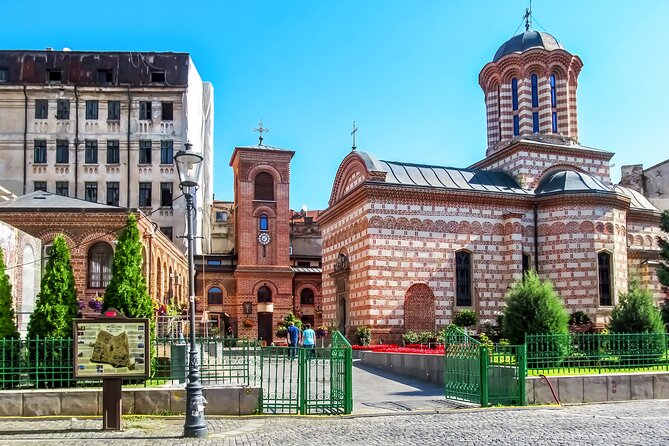
The tour begins by grounding you in religious and political roots. You’ll hear about St Anton Orthodox Church, described as the former Coronation Church of Wallachian rulers. That alone is a useful anchor: it tells you Bucharest wasn’t always about boulevards and big squares. It started with ceremonies, rulers, and institutions tied to faith.
Next comes Old Princely Court, where you’ll see the ruins of the Old Princely Palace—one of the oldest buildings in Bucharest, and tied to the time of Vlad the Impaler. You’re not paying for the ruin itself (admission is listed as free), and the setting is ideal for street-level history. Look around and you’ll understand why ruins matter more than museum displays here. You’re seeing the bones of earlier Bucharest decisions.
One practical tip: take a moment at each stop to orient yourself before snapping photos. The streets can look similar, especially once you start moving through smaller lanes later. Your guide’s job is to connect dots, but your job is to keep your compass in your head.
Unirii Square and Unirii Boulevard: the view that makes Bucharest feel dramatic
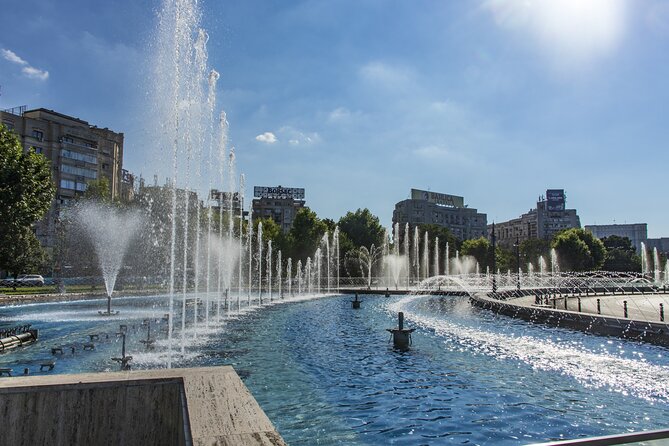
Then the tour shifts gears to the city’s big statement areas. Piaka Unirii (Unirii Square) is next, with refreshed fountains that make for easy photos. It’s also the kind of open space where you can see how Bucharest’s plan moves: broad avenues, clear sightlines, and public architecture meant to be seen from far away.
From there you step into Bulevardul Unirii, described as the former Boulevard of Socialist Victory—Romania’s answer to a grand central promenade. Even if you’re not chasing political meaning, the boulevard style teaches you something about the city: power tends to build in straight lines and visible materials.
The highlight in this stretch is the Palace of Parliament viewpoint. The tour is designed so you get to see it from the Unirii Boulevard direction and then again from Piaka Constitukiei, directly in front of the Parliament buildings for more photo opportunities. The Palace of Parliament doesn’t just sit there. It dominates the way your eyes travel across the city, and the guide’s context makes that feel less random.
This is a solid place to pause, grab a drink of water, and re-check your route. You’re walking in daylight corridors with lots of space between stops. If you’re visiting in hot months, this is where you’ll want your cooling breaks.
Churches, the CEC Palace, and Victoria Avenue’s everyday Bucharest
After the heavy-hitter architecture comes a more human scale. You’ll learn about additional church history, including one where the information notes it was built in 1724. Bucharest’s older churches can look modest until you slow down and listen. With the guide’s storytelling, details like patronage, purpose, and changing roles stop feeling like trivia and start sounding like local history you can picture.
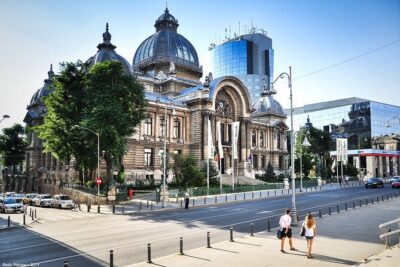
Next: the CEC Palace. You’ll hear the building’s history in relation to Bucharest life and institutions. This is one of those stops that helps your brain connect architecture to everyday power. It’s not just pretty. It’s functional, and it reflects how the city organized money, work, and public authority.
Then you walk along part of Victoria Avenue, lined with shops. This section is useful because it breaks the “big landmark” rhythm. You’re moving through an active commercial street where people actually live their day. It’s a reminder that Bucharest isn’t frozen in 1989 or any other year. After you’ve been hit with politics and monuments, this street helps everything feel more grounded.
Deeper into old Bucharest

Passage Macca and Villacrosse, the old center, and why lanes matter
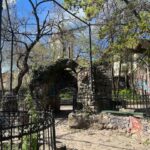
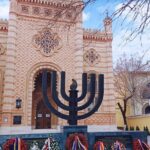
At some point, the walk becomes the kind of experience you can’t recreate with a map screenshot. You’ll enter the old center, described as an area rich in culture and history dating back over 500 years. Then you’ll pass through passage Macca and Villacrosse and hear about its past.
Covered passages like this are worth your attention because they show how cities connect commerce, community, and architecture under one roof. They also give your feet a mini-break from long open stretches. The guide’s narration makes you look at what you’d otherwise pass by quickly.
One reason this portion is valuable: it helps you understand Bucharest as layered. You’re not just collecting landmarks; you’re watching how styles and functions stack over time. That makes the larger squares and institutions make more sense later, because you’ve already seen the city’s older logic.
Suţu Palace and Colțea Hospital: institutions with stories you can read
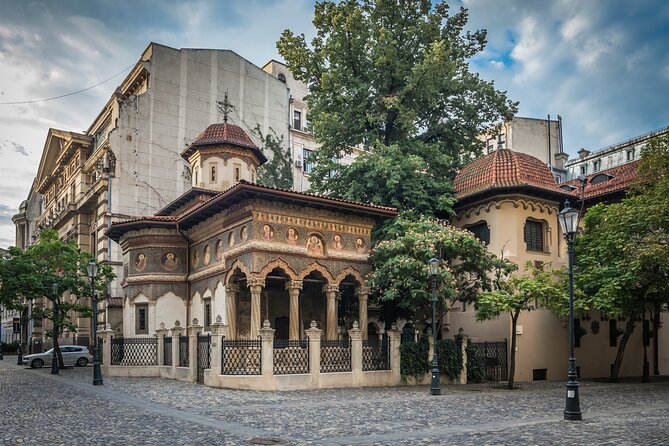
The walk continues into the realm of grand institutions. You’ll see the National Bank of Romania area and hear its history. The building’s presence is meant to impress, and the guide explains why that kind of design was important.
Then comes Suţu Palace, home to the history museum of Bucharest (as described on the tour). The tour frames it as the former residence of Costache Suţu. Even if you don’t go inside, the outside tells you who held status and how that status liked to display itself.
Next: Colțea Hospital and church, called an iconic center-of-city building, built in 1888. Hospitals can feel like background places until someone tells you why they were built where they were, and why they mattered to urban life. This stop often lands as a favorite because it mixes civic care with religious and architectural presence.
Along the way you’ll also pass the National Theatre of Bucharest, noted as an iconic building with many design changes through its relatively short history. If you like architecture, look up at the facade details and try to picture how those redesigns reflect changing tastes and political realities.
Biserica Kretzulescu and the churches that keep the narrative personal

You’ll see Biserica Kretzulescu, described as a beautiful church with an interesting history to discover. This matters because the tour’s Cold War and Revolution stops can feel heavy fast. Churches bring the story back to daily life—ritual, community, and continuity.
What to watch for: don’t treat each church like a quick photo. Spend 30 seconds looking for the architectural style elements the guide points out. The guide’s approach is to connect the church’s role to the bigger timeline, not to just list dates. When you do that, even a short stop becomes meaningful.
The Revolution of 1989 route: balcony moments, monuments, and memory
This is where Bucharest stops being a postcard city and starts being a place that holds memory in public space.
The tour takes you to the area where the 1989 Revolution started, including memorials that commemorate the life-changing events. Specific landmarks mentioned include:
- the balcony where Nicolae Ceaușescu made his final speech
- the former headquarters of the Communist party
- the Monument of National Rebirth
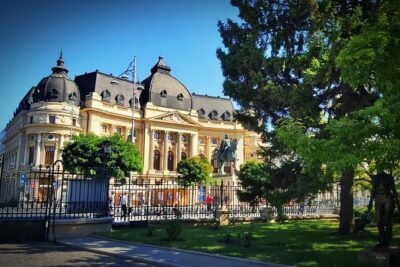
- King Carol the First’s equestrian statue
- the University library
Even if you already know the broad story, seeing these points in relation to each other helps your understanding click. The guide’s explanation about how dictatorship and the Cold War affected the city gives the route meaning beyond the headlines.
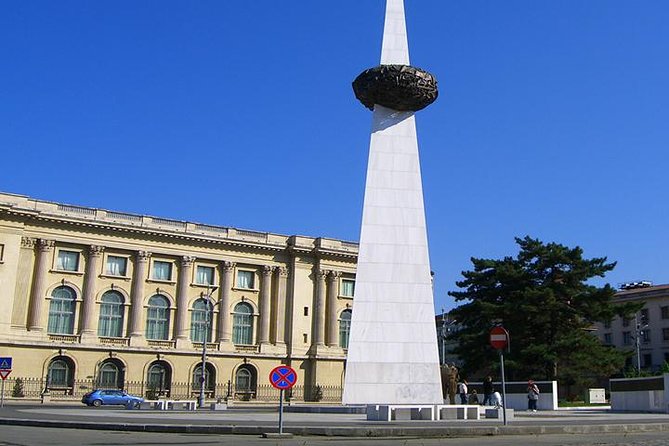
Then you’ll visit Memorial of Rebirth, described as a 25-meter monument commemorating the struggles and victims of the Romanian Revolution of Christmas 1989. It’s a shorter stop on paper, but the height and positioning make it hard to ignore. Take a photo if you want, but also take a moment to just read the mood of the place. In a city built for visibility, memorials like this are built for remembrance.
Military Circle and Sărindar Fountains to close on a calmer note
After the intensity, the tour ends with something more scenic. You’ll see the Military Circle and the Sărindar Fountains. The information frames the Military Circle as built for the people of Bucharest by people of Bucharest over 100 years ago, with beautiful gardens and a stunning historical building.
This ending works well. You’ve spent hours learning how power shaped the city. Finishing with gardens and fountains gives your brain a soft landing.
If you’re photographing, this is a good spot to reset your camera settings and slow your pace slightly. Your feet will feel it by now, and a gentle stop at the end keeps the experience from turning into a march.
What the best guides do (and what can be a mismatch)
The strongest praise about this tour is about the guide’s energy and how they connect architecture to real life. Guides named Alina and Elena show up repeatedly in past accounts as animated, funny, and very knowledgeable about Romanian history and how it intersects with wider European and Western narratives.
You can also expect the storytelling to include the city’s Communist-era impacts and the Cold War context. That’s part of why this tour feels different from a pure photo walk.
That said, there are a few things to consider if your preferences are specific:
- English clarity can vary. Some past experiences noted the guide’s English sometimes made questions hard to follow, even while the passion and information were clear.
- Political commentary can be strong. One account complained about the guide’s personal political views and even conspiracy-style claims. Another noted that politics took more space than expected. If you prefer neutral, strictly factual guiding, you might want to set expectations before the tour starts.
- It can feel like a lot. Even happy reviews mention the walk covers so many stops that it can feel almost like too much, or a bit repetitive if you want only a tight set of highlights.
My advice: if you want the best fit, go into it expecting history with opinions, not opinions with history. And if you’re sensitive to political talk, kindly ask the guide to focus on architecture and facts.
Price and value for about $30.77 per person
At $30.77 for roughly three hours, this is priced like a budget-friendly walking tour, not a full-day excursion. What you’re really paying for is concentrated access: a route that hits key Bucharest signals in a short time, plus a guide who can explain why the buildings matter.
The value improves if you’re early in your trip. You’ll get a mental map fast: Manuc’s Inn area, Old Princely Court ruins, Unirii Square and Parliament viewpoints, passage lanes, major institutions, then the Revolution memorial stops. Most self-guided walks won’t give you that stitched narrative.
Also, the tour notes hotel pickup and drop-off included and uses a mobile ticket. That cuts friction, especially on a first day when you’re still learning where things are.
Bottom line: if you want an overview that connects architecture to political change, it’s good value. If you already know Romanian history well and only want the fastest set of photo spots, you might feel it’s heavy on explanation.
Who should book this Bucharest historical walking tour
This tour is a great match if you:
- like history that connects buildings to power and daily life
- want Parliament-area photos plus the Revolution context in one morning/afternoon chunk
- enjoy walking city centers and can handle steady movement
- prefer a guided route that saves you time figuring out what matters
It’s less ideal if you:
- want a relaxed stroll with minimal talking
- dislike political discussion or strong opinions
- struggle with walking for extended stretches (the tour is described as requiring moderate physical fitness, and one Apple Watch estimate mentioned about 17,000+ steps)
If you’re traveling with kids, they must be accompanied by an adult. Service animals are allowed. The tour is also described as private, so only your group participates.
Should you book it?
Book it if you want Bucharest’s “why” along with the “wow.” The route is built around major visual moments—especially Palace of Parliament and the 1989 Revolution sites—yet it also takes you into older lanes and institutions that make the city feel lived-in, not just monumental.
Skip it or shop carefully if you only want neutral commentary, or if you’re looking for a short, gentle walk with fewer stops. In that case, you might prefer a lighter architecture-focused option.
If you do book: wear comfortable shoes, bring water, and ask the guide at the start what they’ll prioritize. You’ll get the most out of the time that way.
FAQ
How long is the guided walking tour of historical Bucharest?
The tour runs about 3 hours.
What sights will I see on this walk?
You’ll pass key landmarks such as University Square, the Palace of Parliament area for photo views, Old Princely Court ruins, major institutions like the National Bank area and Suţu Palace, and memorials connected to the 1989 Revolution, including the Memorial of Rebirth.
Is pickup and drop-off included?
Yes. Hotel pickup and drop-off are included, with the tour starting outside the main entrance of Manucs Inn at 62 Strada Franceza in the old center, and ending back at the meeting point.
Is the tour private and in English?
Yes. It’s a private tour for only your group, and it is offered in English.
Are there any admission fees at stops?
Some stops are listed with admission ticket free, including Old Princely Court and multiple square/photo locations. Other locations may vary, but the tour notes these free-entry points for several major moments.
What if the weather is bad or I need to cancel?
The experience requires good weather. If it’s canceled due to poor weather, you’ll be offered another date or a full refund. You can cancel up to 24 hours in advance for a full refund.
Old Bucharest, Properly Walked
- Bucharest: Communism and History Guided City Walking Tour
★ 4.9 · 918 reviews - Bucharest: Small Group History, Art & Secrets Tour
★ 4.7 · 152 reviews - Roma Culture, Realities and Slavery History, Walking tour
★ 4.9 · 52 reviews - Bucharest Jewish Heritage | Holocaust Memorial | Private Car Tour
★ 5.0 · 38 reviews - Private Bucharest: History & Food with Traditional Meal
★ 5.0 · 34 reviews - Bucharest Historical Food Tour in Old Center
★ 5.0 · 21 reviews
More Tour Reviews in Bucharest
- Bucharest: Dracula’s Castle, Peles Castle, & Brasov Old Town
★ 4.5 · 17,858 reviews - Bucharest: Dracula Castle, Peles Castle & Brasov Old Town
★ 4.6 · 10,891 reviews - Bucharest: Dracula’s Castle, Peleș Castle & Brașov Day Trip
★ 4.4 · 6,100 reviews - Bucharest: Palace of Parliament Tickets and Guide
★ 4.3 · 3,182 reviews - Bucharest: Day Trip to Dracula Castle, Peles Castle & Brașov
★ 4.4 · 3,049 reviews - Bucharest to Dracula Castle, Peles Castle and Brasov Guided Tour
★ 4.5 · 2,933 reviews
Bucharest on Foot, Continued
- Bucharest: City Highlights Guided Walking Tour
★ 4.9 · 1,482 reviews - Bucharest: Communism and History Guided City Walking Tour
★ 4.9 · 918 reviews - Bucharest Highlights Walking Tour
★ 5.0 · 469 reviews - Bucharest: Hidden Markets Walking Tour with Tastings
★ 4.9 · 329 reviews - Bucharest: Ghost Stories & Romanian Mythology Walking Tour
★ 4.9 · 287 reviews - Bucharest: Guided Walking Tour with Romanian Snack
★ 4.9 · 228 reviews
Just In: The Latest Bucharest Reviews


Bucharest Walking Tours, compared.
 ★ 4.9City Highlights Guided Walking TourFrom $211,482 reviews
 ★ 4.9Communism and History Guided City Walking TourFrom $31918 reviews
 ★ 5.0Bucharest Highlights Walking TourFrom $21469 reviews
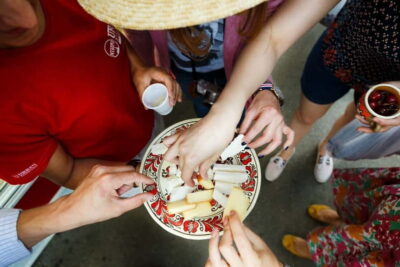 ★ 4.9Hidden Markets Walking Tour with TastingsFrom $100329 reviews
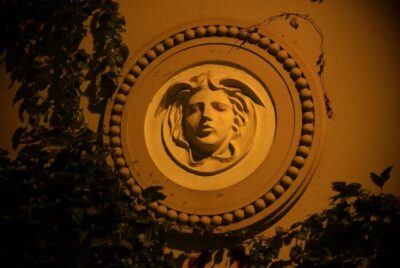 ★ 4.9Ghost Stories & Romanian Mythology Walking TourFrom $35287 reviews
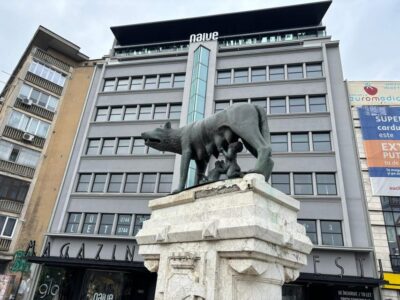 ★ 4.9Guided Walking Tour with Romanian SnackFrom $45228 reviews
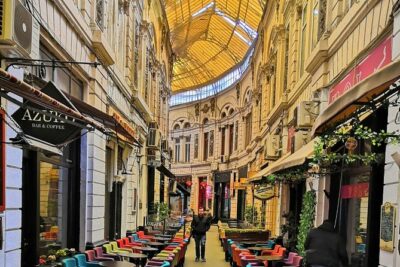 ★ 5.0Best of Bucharest | Private Walking TourFrom $314199 reviews
 ★ 5.0Walking Tour- Delightful Bucharest (Highlights, Stories, Sights)From $22145 reviews
Browse the lists this tour appears in