

REVIEW · BUCHAREST FOOD TOURS
Private Bucharest: History & Food with Traditional Meal
Bucharest tastes like its history. On this private 4-hour walk, you get a guided sweep through the city’s big turns, from Revolution Square and the 1989 uprising to the Old Town’s mix of Ottoman, Russian, and Austro-Hungarian food influences, then you land at a traditional hanu for a three-course Romanian meal. I especially love how the guide connects what you see (churches, palaces, architecture) to what you eat, and I also like the calmer pace of a private group for real questions along the way. The one thing to consider: if you were hoping for many extra small tastings beyond the end-of-tour meal, you may find the food sampling feels lighter than you expected.
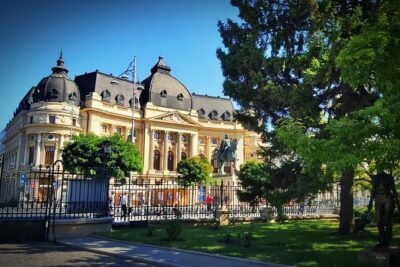
I also like the practical setup. The tour meets at the Equestrian Statue of Carol I, so you start with an easy landmark, and the day is built for first-timers who want quick bearings without drowning in random facts. It’s also run as a carbon neutral experience by an eco-certified, B Corp–style operator, which matters to me when I’m choosing tours.
This is a solid pick if you want Bucharest in walking form, with a meal that actually feels like it belongs to the city. It’s child-friendly too (kids under 6 can join free), and guides are used to pacing for families. If you hate walking for four hours, or you’re only interested in one “main attraction” type stop, then this may feel like too many chapters in one go.
In This Review
- Key reasons this tour is worth your time
- Starting at the Equestrian Statue of Carol I: a fast orientation you can build on
- Revolution Square and the 1989 turning point that changed everything
- Victory Street: from independence victory to 1918 unification, with food geography in mind
- Old Town lane-hopping: Ottoman, Russian, and Austro-Hungarian influences you can taste
- People’s Palace: the communist megaproject you can’t ignore
- The hanu meal: three courses, local beer or wine, and the Dacian beer story
- Price and value: why $140 for a private 4-hour tour can work
- Who should book this Bucharest history and food tour
- Final call: should you book it?
- FAQ
- What is the duration of the tour?
- Where does the tour meet?
- Is the tour private?
- Is the guide available in English?
- What food is included?
- Are drinks included?
- Is the tour carbon neutral?
- How far in advance can I cancel for a full refund?
- Are there any extra costs for food or souvenirs?
- Can children join the tour?
Key reasons this tour is worth your time
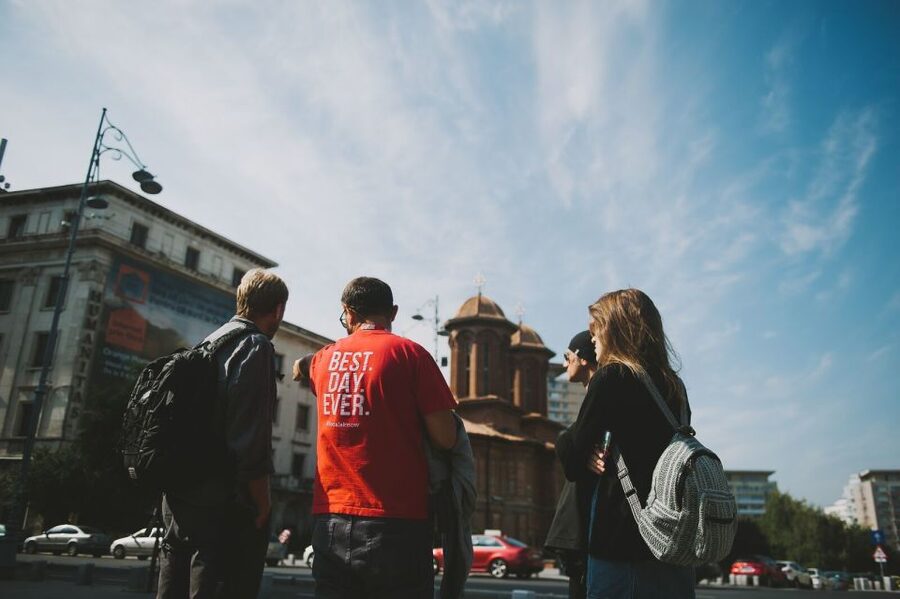
- Revolution Square to People’s Palace in one story: you see how politics reshaped streets and buildings.
- Old Town crossroads explained through food: you connect mici, sarmale, sour soups, and schnitzel to past rulers.
- Inter-war Bucharest details you can still spot today: landmarks tied to the independence era and 1918 unification.
- Real traditional meal at a hanu: three courses plus house beer or wine or a soft drink.
- Private, kid-friendly pacing: guides named Elaina, Ioanna, Andra, Mara, Monica, Dana, and Andrei are noted for being patient and friendly with families.
- One clear value point: the guide + meal + local drink are bundled into the price.
Still hungry? More markets, mici and mtitei
- Street Food’n’Culture Tour★ 5.0 · 209 reviews
- Wine Tasting in Bucharest★ 5.0 · 183 reviews
- Discover Bucharest: Private Highlights and Traditional Food Tour★ 5.0 · 86 reviews
- Bucharest: Romanian Wine Tasting Experience at Corks★ 4.6 · 84 reviews
Starting at the Equestrian Statue of Carol I: a fast orientation you can build on
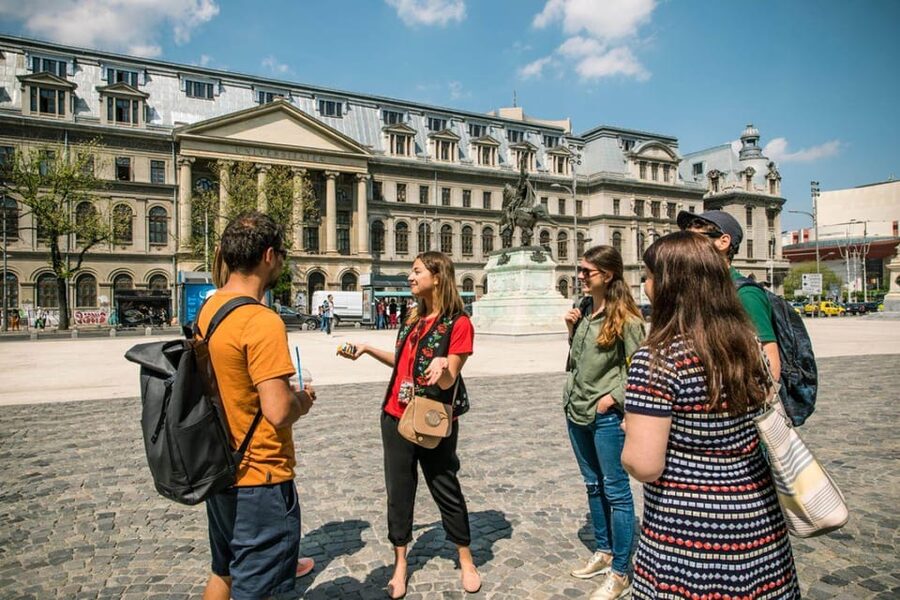
You begin at the Equestrian Statue of Carol I in Sector 1. That’s a good choice because it puts you in the part of Bucharest where history is layered and easy to discuss. From the first moments, your guide frames the tour like a guided walk through cause-and-effect: rulers changed cities, and the food followed.
I like that this isn’t just sightseeing for sightseeing’s sake. You’re told what each place meant in its time, then you’re shown how that meaning still shows up in the streets, buildings, and neighborhoods. Even if you only have one day in Bucharest, this kind of framing helps you read the city later on your own.
Because it’s private, you can ask quick questions as you go. That matters when a child needs a moment, when jet lag hits, or when you want clarity on why something looks the way it does. The guide experience names that come up a lot in bookings—Elaina, Ioanna, Andra, Mara, Monica, Dana, and Andrei—hint at the same theme: people remember the person leading the walk almost as much as the stops.
Revolution Square and the 1989 turning point that changed everything
The tour starts in Revolution Square (it was once called Palace Square), and it’s hard to overstate how central this spot is. In 1989, it was from here that dictator Ceausescu made a rallying speech that quickly turned on him, helping ignite the Romanian revolution.
Around the square you also see landmarks that give you context for how Romania’s modern story played out at street level: the former Royal Palace, the Athenaeum concert hall, and Athenee Palace. The last one matters because it connects to the years between the wars, when espionage and intrigue were part of everyday reality for the politically connected.
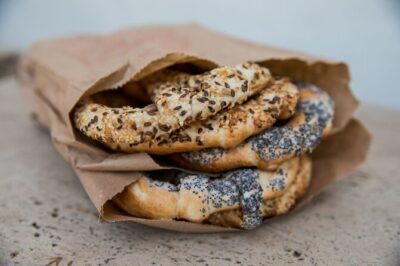
Then you get a snack that feels street-level, not museum-level. Your guide treats you to a covrig, a salty snack that many Romanians eat as part of daily life. It’s described as having likely been introduced by Hapsburg or German merchants in medieval times. I like this kind of detail because it’s not just “food exists.” It’s food as a record of contact between cultures.
Practical thought: this first leg sets the tone for the rest of the walk. If you’re the type who learns best by story, pay attention here. You’ll better understand why the guide keeps linking past power to present-day tastes.
Victory Street: from independence victory to 1918 unification, with food geography in mind
After Revolution Square, you head south along Victory Street. The name ties to the spectacular victory of the new Romanian nation in the 1871 War of Independence. But the tour also makes an important point: full unification of the three Romanian principalities didn’t happen until 1918.
That gap matters because it helps explain why Romania isn’t one single flavor. Different regions develop different traditions, and your guide uses that idea to make sense of the food you’ll meet later. For example, the tour connects cuisine traits to regions like sweet for Moldova, earthy for Transylvania, and spicy for Muntenia. You’re not just being told trivia—you’re being set up to taste the patterns.
Along Victory Street, you pass several inter-war landmarks: the Telephone Palace, the Military Circle, and the former National Theatre. You also stop at the church of Kretzulescu, one of Bucharest’s best-known churches. I like that your guide gives you enough architecture to notice details without turning the walk into a lecture.
If you’re a first-timer, this stretch is also where you start to feel the “shape” of the city. You see how Bucharest balances grand buildings with tighter older streets ahead. It’s a smooth transition from monumental to medieval, which keeps the day from feeling like random movement.
Old Town lane-hopping: Ottoman, Russian, and Austro-Hungarian influences you can taste
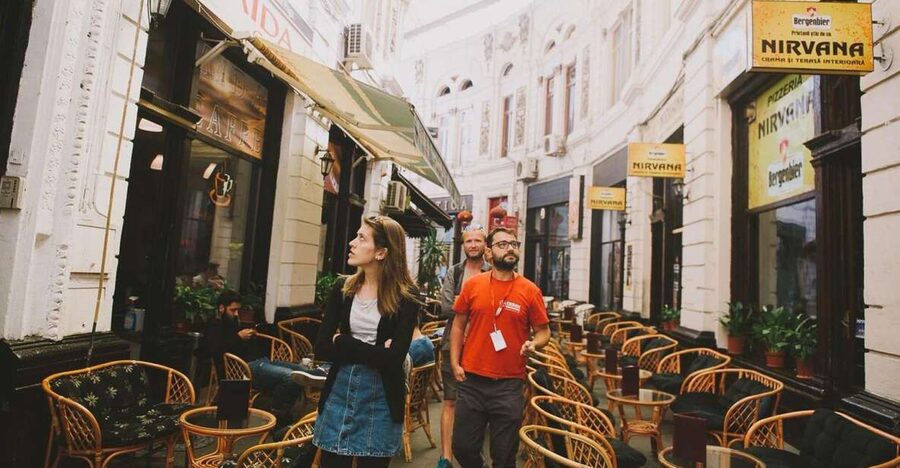
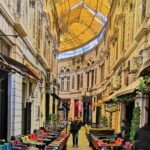
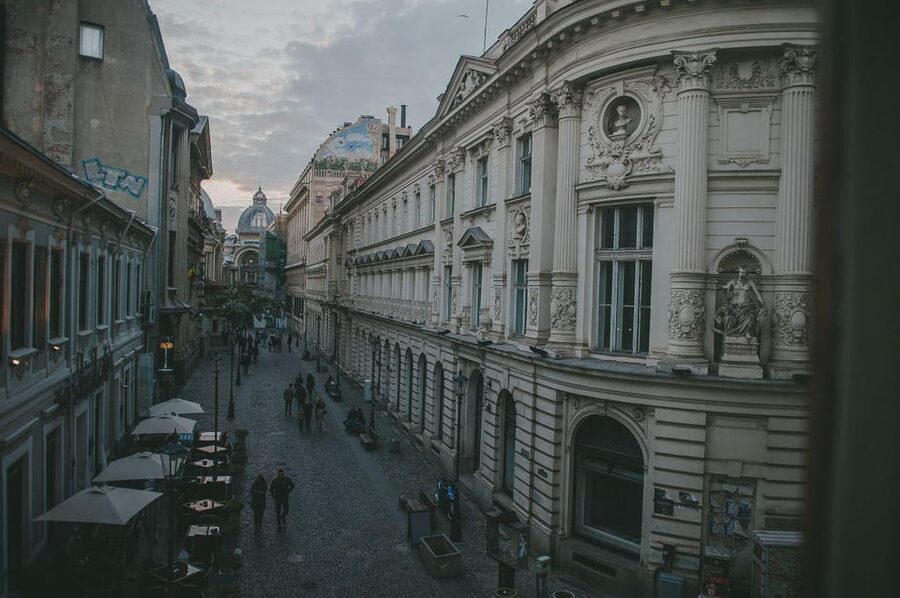
Old Town is where Bucharest gets fun. You move into the older parts of the city, with paths and passageways that feel built for wandering. The idea here is the medieval crossroads between East and West, where Ottoman pashas rubbed shoulders with Transylvanian princes, and where churches and mosques stood side by side.
This is also the section where the food logic really clicks. Your guide points out how Romanian dishes reflect contact between empires and neighboring cuisines. You’ll hear about mici (skinless sausages) and sarmale (Ottoman-style stuffed cabbage leaves). You’ll also get references to Russian borscht and ciorba, sour soups, plus Austro-Hungarian schnitzel.
Even if you’ve tried some of these foods before, the tour’s approach helps you see them as history on a plate. That’s a big reason this experience works for people who care about food but don’t want a food-only tour that ignores context.
Stops and atmosphere to look for:
- You’ll see hints of lavish interiors and princely courts that show older power structures.
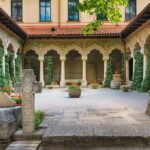
- You get a calm contrast with an orthodox monastery setting—quiet when the streets are not.
- You’ll encounter Hanul Lui Manuc, a famous wooden inn, which helps explain how trade and travelers shaped local life.
Practical thought: Old Town streets can be uneven and tight, so comfortable shoes matter. This is also when you’ll appreciate having a private guide who can keep the group moving at a pace that feels right for you.
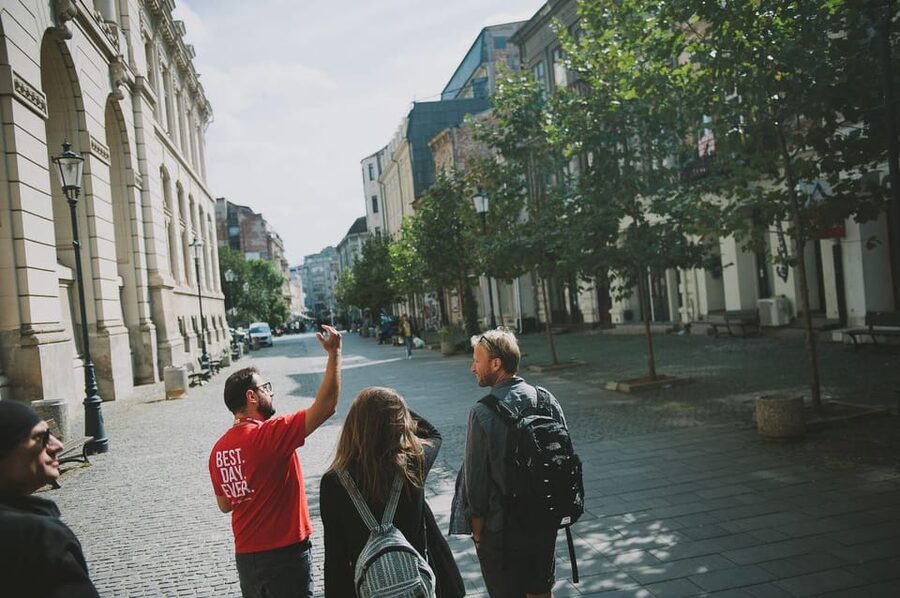
Only your group, at your own speed

People’s Palace: the communist megaproject you can’t ignore
As you head toward the last part of the walk, you’ll take in the People’s Palace, linked to Ceausescu’s megalomaniac attempts to reshape Bucharest. The tour calls out that it’s the second largest building in the world, only the Pentagon being bigger.
This stop changes the emotional tone of the walk. Up to this point, you’ve moved through layers of trade, regional identity, and inter-war design. People’s Palace brings you into the era of forced modernization—big, heavy, and designed to impress.
I like that the guide treats it as more than a photo-op. It becomes a turning point that helps you understand why Bucharest’s city center has such visible contrast. You start to see how different political periods left physical fingerprints, and how those fingerprints influence what locals accept as normal today.
If you’re someone who likes context—who wants to know why a place looks the way it does—this segment will feel like the “middle payoff” of the tour.
The hanu meal: three courses, local beer or wine, and the Dacian beer story
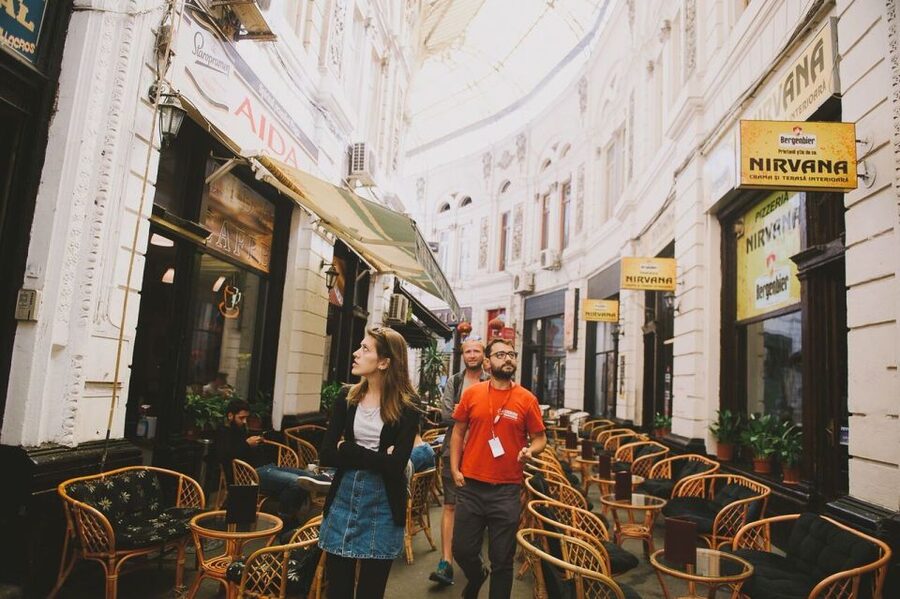
The tour ends at a traditional hanu (an inn), described as one of the most charming in Bucharest. This is where the history becomes food you can eat.
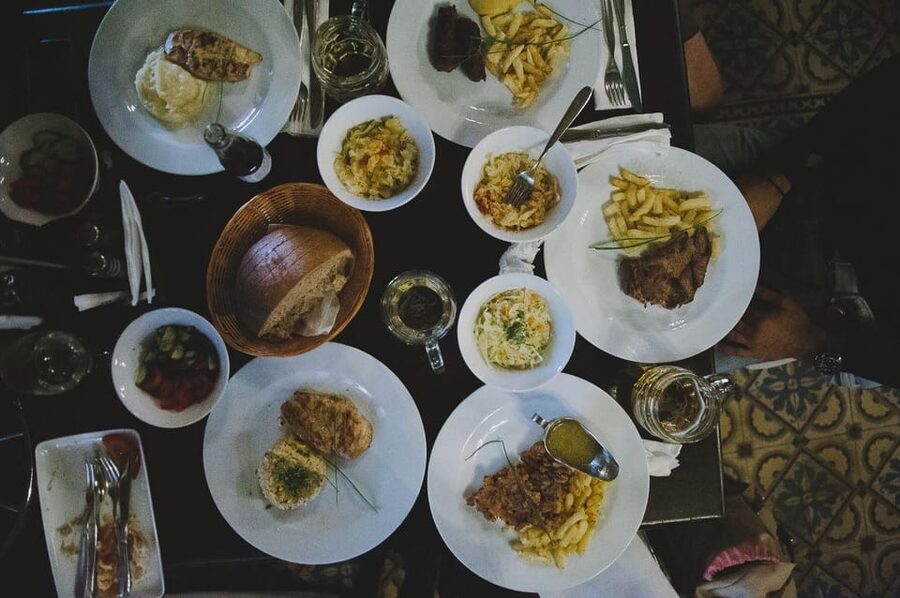
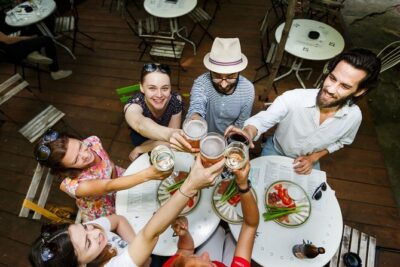
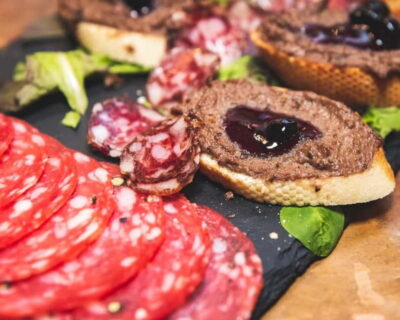
You’ll get a three-course traditional Romanian meal with platters of local delicacies. On top of that, the tour includes a house beer or wine or soft drink. This matters because it turns the final stop into a real meal, not just a snack. It’s also why the price can make sense even for a short 4-hour experience—lunch isn’t an add-on you still have to pay for.
The tour also includes a neat mythic-historical touch: it’s said that ancient Dacians drank so much wine that their leader, Burebista banned its production, and they quickly shifted to brewing beer. Even if you take the story lightly, it’s a useful narrative frame: it helps you taste like a local would—beer or wine alongside traditional dishes.
One balanced note from the overall experience: one participant felt the food sampling mentioned in the description didn’t match what they ate. The three-course meal still landed as good, but if you’re expecting lots of small bites throughout the walk (beyond the included covrig early and the final meal), you might feel a little shorted on quantity variety. I’d treat this as a tour with one strong food moment at the end.
Price and value: why $140 for a private 4-hour tour can work
At $140 per person for a private 4-hour experience, you’re paying for three things that travel budgets usually split into separate purchases:
- A local English-speaking guide
- A guided walking circuit through major historical zones
- A full three-course traditional meal plus a house drink
For me, the value is strongest if you’re the type who asks questions and wants someone to connect architecture and history to daily life and food. If you’re more “I just need a map and will wander,” you may not get the same payoff.
I also like the carbon-neutral angle, because this tour is built by an eco-certified operator committed to using travel as a force for good. It’s not the only factor, but it’s a plus when you’re making choices thoughtfully.
The private format matters too. In a group, you can lose time waiting. Here, you keep moving and you can stop for details when they actually matter to you.
Who should book this Bucharest history and food tour

This tour is best for:
- First-time Bucharest visitors who want a clear framework of what shaped the city
- People who enjoy architecture and political history but don’t want dry storytelling
- Food lovers who like dishes with explanations, not just plates
- Families, since the experience is described as child-friendly and guides show patience (especially important for kids working through jet lag)
The included meal also makes it a good choice on a day when you don’t want to spend time hunting for a reputable place to eat. And because it’s private, you’re less likely to feel rushed.
If you’re traveling with older teens who are into culture, this could be a memorable way to connect “Romania in school” to real streets, real buildings, and real dishes.
Final call: should you book it?
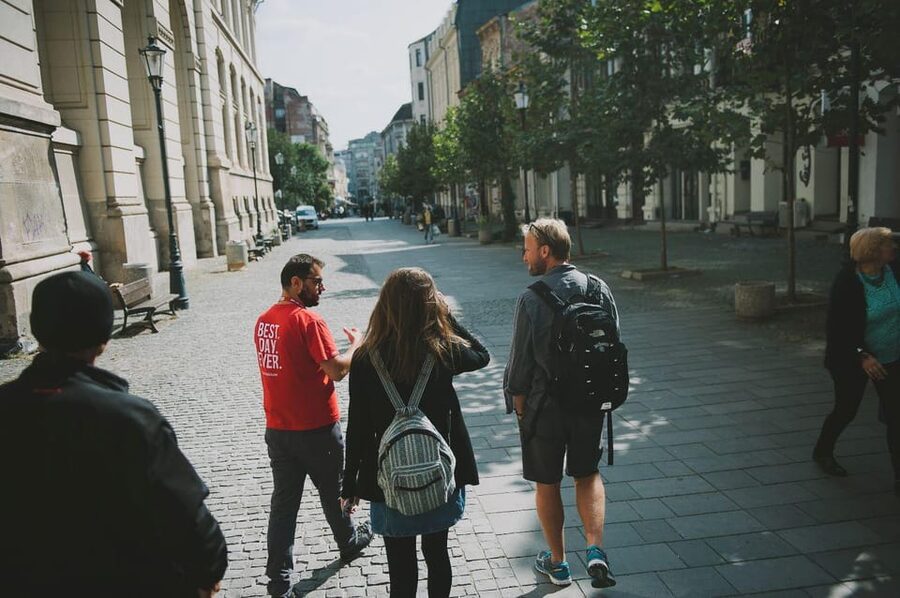
Yes, if you want Bucharest as a story you can walk and taste, with a real end-to-end meal included. You’ll likely like the mix of Revolution Square, Old Town influences, and the People’s Palace contrast, then finish with a traditional hanu meal that ties the whole day together.
Maybe reconsider if your top priority is maximizing food tastings at many stops. This experience centers the included food at the end, with only small street-level sampling earlier. Also skip it if you dislike walking four hours or you want only one neighborhood, not a full-city arc.
FAQ
What is the duration of the tour?
The tour lasts 4 hours.
Where does the tour meet?
It meets at the Equestrian Statue of Carol I, Sector 1, Bucharest 030167, Romania.
Is the tour private?
Yes, it’s a private group.
Is the guide available in English?
Yes. The tour includes a local English-speaking guide.
What food is included?
You’ll enjoy a three-course traditional Romanian meal.
Are drinks included?
Yes. The tour includes a house beer or wine or soft drink.
Is the tour carbon neutral?
Yes. The tour is described as carbon neutral and operated by an eco-certified company.
How far in advance can I cancel for a full refund?
You can cancel up to 24 hours in advance for a full refund.
Are there any extra costs for food or souvenirs?
Additional food and drink, as well as souvenirs and items of a personal nature, are not included.
Can children join the tour?
Yes. Children under age 6 are permitted to join free of charge, and you should inform the supplier when booking if you’re bringing one.
More Tour Reviews in Bucharest
- Bucharest: Dracula’s Castle, Peles Castle, & Brasov Old Town
★ 4.5 · 17,858 reviews - Bucharest: Dracula Castle, Peles Castle & Brasov Old Town
★ 4.6 · 10,891 reviews - Bucharest: Dracula’s Castle, Peleș Castle & Brașov Day Trip
★ 4.4 · 6,100 reviews - Bucharest: Palace of Parliament Tickets and Guide
★ 4.3 · 3,182 reviews - Bucharest: Day Trip to Dracula Castle, Peles Castle & Brașov
★ 4.4 · 3,049 reviews - Bucharest to Dracula Castle, Peles Castle and Brasov Guided Tour
★ 4.5 · 2,933 reviews
Just the Party You Came With: More Private Days
- Castles of Transylvania: Private Day Trip from Bucharest
★ 4.5 · 248 reviews - Dracula’s Castle, Peles Castle and Brasov – Private Day Trip from Bucharest
★ 5.0 · 211 reviews - Best of Bucharest | Private Walking Tour
★ 5.0 · 199 reviews - Bucharest Panoramic Sightseeing – Private City Tour
★ 5.0 · 128 reviews - THERME “Take It Easy” Pack: Full Spa Access + Private Transfers
★ 4.0 · 117 reviews - 4h Bucharest Private Tour (2h by Car and 2h Walking in Old Town)
★ 5.0 · 90 reviews
Eat Bucharest: More Food Walks
- Taste Bucharest: A Food Lover’s Tour of Markets & Neighbourhoods
★ 5.0 · 689 reviews - Street Food’n’Culture Tour
★ 5.0 · 209 reviews - Wine Tasting in Bucharest
★ 5.0 · 183 reviews - Discover Bucharest: Private Highlights and Traditional Food Tour
★ 5.0 · 86 reviews - Bucharest: Romanian Wine Tasting Experience at Corks
★ 4.6 · 84 reviews - Bucharest Beer and Culture Tour with a Local
★ 5.0 · 47 reviews
Just In: The Latest Bucharest Reviews


Bucharest Food Tours, compared.
 ★ 5.0Taste Bucharest: A Food Lover’s Tour of Markets & NeighbourhoodsFrom $102689 reviews
 ★ 5.0Street Food’n’Culture TourFrom $153209 reviews
 ★ 5.0Wine Tasting in BucharestFrom $59183 reviews
 ★ 5.0Discover Bucharest: Private Highlights and Traditional Food TourFrom $14386 reviews
 ★ 4.6Romanian Wine Tasting Experience at CorksFrom $3484 reviews
 ★ 5.0Bucharest Beer and Culture Tour with a LocalFrom $11847 reviews
 ★ 5.0Private Wine Tasting ExperienceFrom $6444 reviews
From Bucharest: Romanian Wine Tasting TourFrom $9932 reviews
★ 5.0Private Wine Tasting ExperienceFrom $6444 reviews
From Bucharest: Romanian Wine Tasting TourFrom $9932 reviews
Browse the lists this tour appears in