
REVIEW · BUCHAREST FOOD TOURS
Taste Bucharest: A Food Lover’s Tour of Markets & Neighbourhoods
Meat plates meet street history in Bucharest. I love how this tour pairs market tastings with Revolution-and-neighborhood stories, and how guides like Angelica and Bogdan keep things lively and easy to follow. With a maximum of 12 people, the whole day feels personal instead of rushed.
One heads-up: if you’re expecting lots of hot, classic dishes like soups or cabbage rolls, you may find the lineup leans more toward cured meats, cheeses, dips, and seasonal bites. That can still be great, but it’s good to know before you go.
In This Review
- Key highlights to know before you go
- Why this Bucharest food-and-history tour feels like a local day
- The route: Revolution-era streets to Obor Market by tram
- National Theatre Ion Luca Caragiale: where modern Bucharest’s drama starts
- Strada Batiștei and Batiștei Church: Neo-Romanian and Orthodox heritage in one corridor
- The Armenian Church and the Armenian Quarter: one of the oldest neighborhood stories
- Calea Moșilor and the tram ride: a quick ticket into Communist-era street life
- Piata Obor Bucuresti: where the food-and-people part really happens
- What you eat on this tour (and what to expect if you’re picky)
- A fair warning on “hot food” expectations
- Drinks, pace, and why the group size changes everything
- How to handle tuica if you’re unsure
- How the history stops make the food taste better
- Price and value: what $102.79 buys you in real terms
- Who this tour suits best (and who might want a different plan)
- Start and finish points: where you’ll be when the day begins
- Should you book Taste Bucharest?
- FAQ
- FAQ
- What foods and drinks are included?
- Is the tour only for meat lovers?
- How much walking is involved?
- How big is the group?
- What language is the tour offered in?
- Can the route or food change on the day?
- Where does the tour start and end?
- What if I need to cancel?
Key highlights to know before you go
- Max 12 people with English-language guiding, so you actually get time for questions.
- Obor Market tasting plus shopping time in a real neighborhood market setting.
- A short tram ride that takes you into Communist-era street life, not just the center.
- Included Romanian sampler foods like a peasant platter, artisan cheeses, seasonal produce, and mici.
- Included drinks with tuica, Romanian beer, and non-alcoholic options like coffee/tea.
- About 6 km of walking across roughly 5 hours, with comfortable shoes as your best friend.
Still hungry? More markets, mici and mtitei
- Street Food’n’Culture Tour★ 5.0 · 209 reviews
- Wine Tasting in Bucharest★ 5.0 · 183 reviews
- Discover Bucharest: Private Highlights and Traditional Food Tour★ 5.0 · 86 reviews
- Bucharest: Romanian Wine Tasting Experience at Corks★ 4.6 · 84 reviews
Why this Bucharest food-and-history tour feels like a local day
This isn’t a museum-style history tour that ends with a token snack. You move through streets that connect Bucharest’s big political moments to everyday local life, then you eat your way through Romanian flavors that match those neighborhoods.
I also like that the pace is built around food stops. You get a structured itinerary, but it still has that human feel you get when you’re with a guide who’s actually proud of the food and the city.
Small group matters here. When the max is 12, it’s easier to hear details, keep up on sidewalks, and stop for quick questions. Reviews often call out guides such as Angelica, Bogdan, Mihaela, Andrea, and Julian for mixing humor with practical context, which helps the history land without feeling heavy.
The route: Revolution-era streets to Obor Market by tram
Your day has a clean flow: you start with Bucharest’s defining 20th-century story, then gradually shift into architecture and community spaces, and finally land at Obor for the food payoff.
National Theatre Ion Luca Caragiale: where modern Bucharest’s drama starts
You begin at the National Theatre Ion Luca Caragiale area. The focus is how this part of town connects to the Romanian Revolution and the street battles that shaped the city. Even if you only know Bucharest as a capital with a few famous landmarks, this opening gives you a sharper mental map.
The theatre itself is a useful anchor: it makes the later neighborhood stops feel less random. You’re not just walking; you’re building context.
Strada Batiștei and Batiștei Church: Neo-Romanian and Orthodox heritage in one corridor
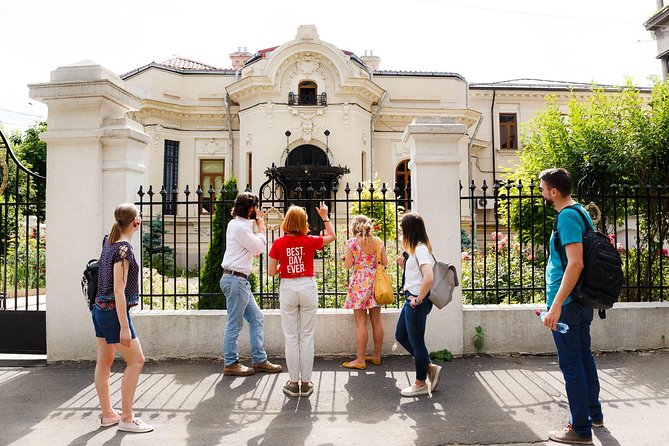
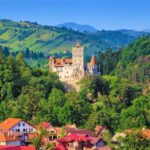
Next you head toward Strada Batiștei, a street tied to the old American embassy and its 19th-century Neo-Romanian architecture. Then you pass Batiștei Church, highlighted as an Orthodox heritage example with architectural significance.
This part works well if you like looking up and noticing details. The tour is short at each stop, but you come away with a sense of what people meant by Romanian identity in buildings—long before today’s food scene.

The Armenian Church and the Armenian Quarter: one of the oldest neighborhood stories
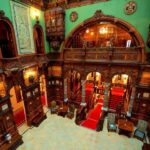
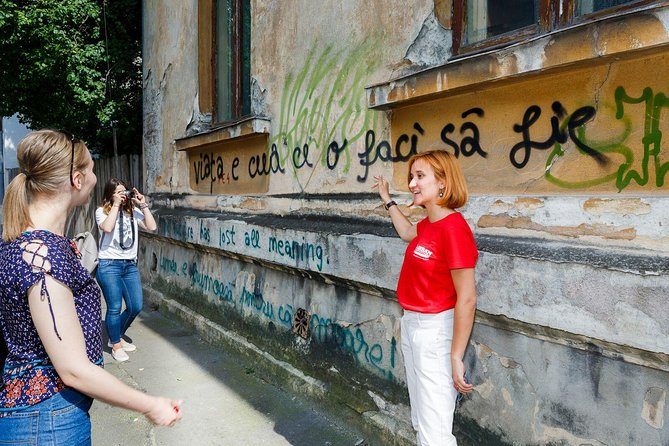
Then you enter the Armenian Quarter, where you visit the Armenian Church and learn about Bucharest’s older residential history, including mention of its oldest documented house.
This is the kind of stop that’s hard to assemble on your own. You’re not just visiting a church. You’re learning how minority communities shaped the city’s streets, and how those layers show up in the architecture and the neighborhood layout.
If you like walking tours that give you more than one photo stop, this segment is a good “aha” moment.
Calea Moșilor and the tram ride: a quick ticket into Communist-era street life
After the Armenian Quarter, the tour moves toward Calea Moșilor. You take a short tram ride that helps shift you into Communist-era Bucharest and toward the outer-neighborhood energy of the markets.
That tram segment is smart for two reasons:
- It’s efficient, so you don’t burn the whole day just on transportation.
- It breaks the “one zone only” feeling that many city tours have. You actually see how different the city looks when you’re moving through local routes.
Piata Obor Bucuresti: where the food-and-people part really happens
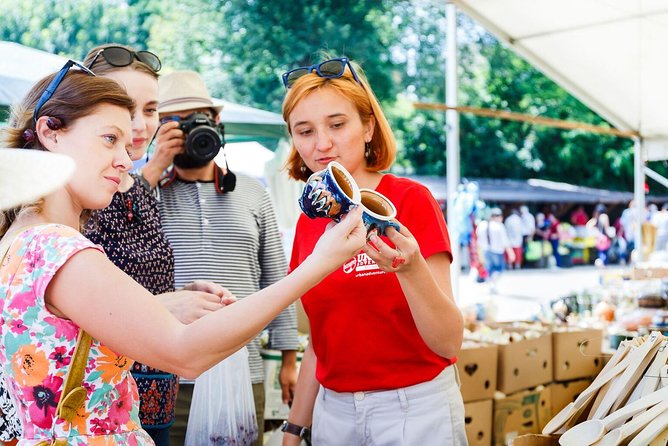
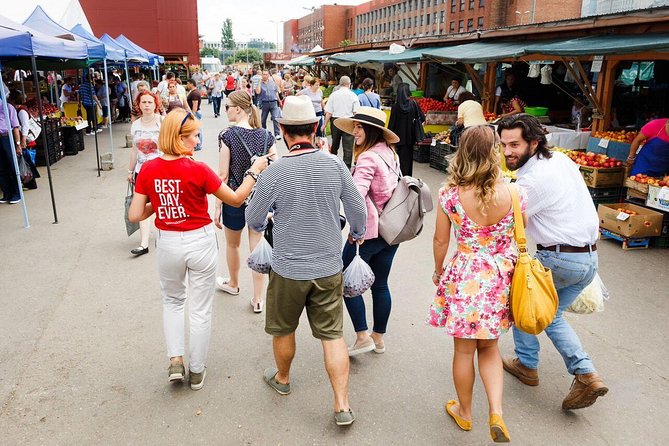
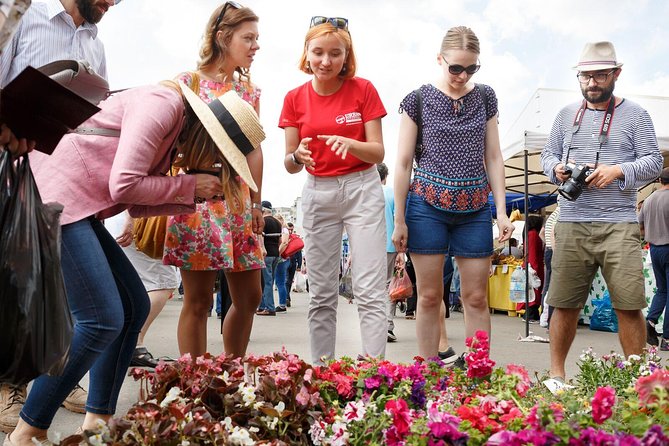
Finally, you reach Obor Market and get time to explore. Expect the sensory stuff right away: color, smells, and the kind of everyday motion you only get when you’re not in a tourist bubble.
You’ll shop briefly for traditional items, then sit down to taste local delicacies. This is where the tour’s title makes sense. The food isn’t random. It’s tied to how Romanians buy and eat—cheese and cured meats alongside produce, pickles, small plates, and grilled favorites.
One practical note: markets involve a lot of standing and slow walking. If you’re the type who likes to linger, you’ll appreciate this stop. If you hate crowds or busy alleys, this is the place where you’ll feel it most.
What you eat on this tour (and what to expect if you’re picky)
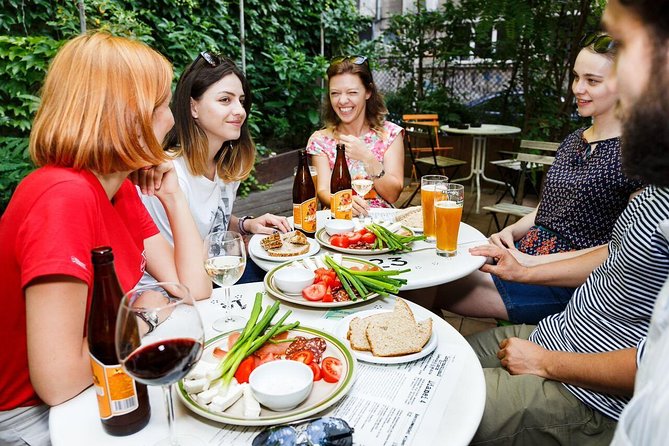
This tour is built around a generous set of traditional Romanian samples, and it’s designed to cover sweet, salty, dairy-forward, and meat-based tastes.
Here’s the typical lineup you should plan around:
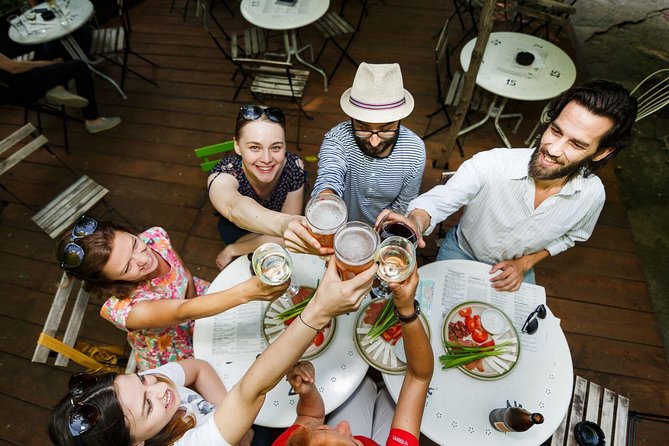
- A peasant platter with aubergine dip, zacusca, whipped beans, fish roe, and several cheeses like telemea and burduf
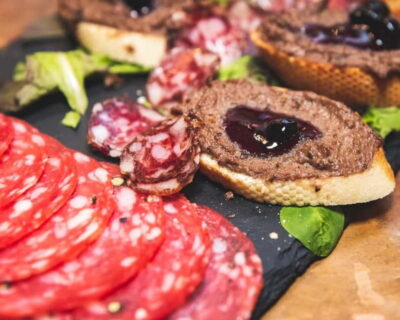
- Sausages, smoked bacon, and other cured-meat styles, plus onions, tomatoes, and toast
- Artisan cheese tasting across cow, sheep, and goat varieties
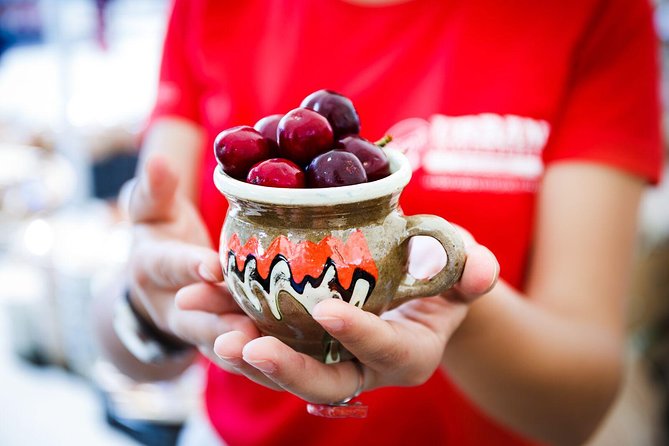
- A seasonal produce bite that might include wild strawberries, wild garlic, spicy pickles, watermelon, or grapes
- Mici (small grilled sausages) served with mustard
- A sweet Wallachian doughnut at the end
Drinks are included too. Usually you’ll get:
- A shot of tuica (Romanian brandy)
- Up to three beers
- Non-alcoholic options such as soft drinks, and coffee or tea
This is a classic Romanian flavor strategy: start with spreads, cheeses, and cured meats; then move toward grilled favorites; finish with something sweet. It also means you won’t feel like you need to hunt for lunch elsewhere. Most people leave full.
A fair warning on “hot food” expectations
One review called out disappointment because the meal didn’t include more hot comfort foods like cabbage rolls or soup. That matches the overall pattern of the tasting list you’re given: it leans toward platters, cheese, dips, and grilled mici rather than hearty bowls of stew.
So here’s my advice: if your idea of Romanian food is mostly hot mains, you may want to pair this tour with a separate restaurant meal later. If you’re open to cured meats, dairy, and savory spreads, you’ll likely be in your element.
Drinks, pace, and why the group size changes everything
You’re on the tour for about 5 hours, covering roughly 6 kilometers on foot, plus a short tram ride. That’s not “race-walk” distance, but it’s also not a sit-down tasting. Comfortable shoes aren’t optional.
The drink portion helps keep the day fun without turning it into a party tour. Reviews mention guides like Julian (fun jokes), Mihaela (warm and relaxed), and Elena (informative and easygoing), and that mix tends to make the tastings feel like a guided hangout rather than a lecture with food.
Also, multiple guides have been praised for letting the day run a little longer when the group is enjoying itself. That’s not something you should assume, but it fits the general tone: friendly, not overly strict.
How to handle tuica if you’re unsure
Tuica is included as a shot. If you’re new to it, treat it like a curiosity, not a dare. Sip slowly, follow with water or coffee/tea if offered, and remember the tour isn’t only about alcohol—it’s about the food context around it.
If you’d rather avoid alcohol entirely, check dietary needs ahead of time. The tour offers soft drinks and coffee/tea as non-alcoholic alternatives.
How the history stops make the food taste better
This tour works because the history isn’t just dates. It’s a way of reading Bucharest’s identity through space.
- At the National Theatre, you start with the Revolution context, which gives you a reason to pay attention to the city’s “why.”
- Along Strada Batiștei and Batiștei Church, architecture teaches you how tradition shows up in stone and style.
- The Armenian Quarter adds another layer: Bucharest isn’t one single story, it’s multiple communities stacked over time.
- The tram ride into Communist-era streets helps you see how everyday life shifted under different political eras.
- Then Obor Market lands the message in the simplest way possible: people eat. They trade. They keep traditions alive through taste.
That’s why the history feels practical instead of academic. You’re not collecting trivia; you’re learning how to interpret what you’re seeing.
Price and value: what $102.79 buys you in real terms
At around $102.79 per person, this tour isn’t the cheapest “walk and snack” option. But it’s also not overpriced for what you get.
The big value drivers:
- All food and drink samples are included, including cured meats, cheeses, produce, mici, and a sweet doughnut
- Beer and tuica are included (plus non-alcoholic drinks)
- You also get guided neighborhood exploration with a route that uses public transport, including the tram ride
What you should budget for beyond the tour:
- Any additional food or drinks you buy on your own
- Tips/gratuities for your guide (not included)
Also, tours like this are often at their best when you’re only in town for a short time. The price can make sense because you’re stacking history + markets + multiple tastings into one organized outing rather than paying separately for guides, transport, and food stops.
Who this tour suits best (and who might want a different plan)
I think this tour is a strong match if you:
- Love markets and want to see how locals buy food
- Want to try a broad Romanian sampler without planning each stop yourself
- Prefer small-group guiding and a friendly, conversational flow
- Like food that’s dairy-forward and meat-forward (cheeses, cured meats, sausages, and grilled mici)
It might be less ideal if you:
- Only want hot, cooked main courses like soups or stews
- Are very sensitive to strong flavors (fish roe, pickles, or pungent ingredients can be part of the tasting menu depending on availability)
- Don’t handle walking well, since you’ll do about 6 km over 5 hours
If you have allergies or dietary restrictions, you’ll want to notify the operator at least 24 hours in advance. Accommodations depend on what’s available that day.
Start and finish points: where you’ll be when the day begins
You meet at the Ion Luca Caragiale National Theatre area (Bulevardul Nicolae Bălcescu 2). The tour ends near Saint George Square / Unirea Square.
That matters because Bucharest sightseeing often needs a good start point and a convenient end point. Here, you end closer to central connections, which makes it easier to continue exploring afterward or grab dinner on your own.
Should you book Taste Bucharest?
Yes, I’d book it if you want a well-fed introduction to Bucharest. The strongest reason is the pairing: you don’t just taste Romanian food; you learn why it belongs to these neighborhoods.
My call comes down to one key fit question: are you open to a tasting format heavy on cheeses, cured meats, dips, and grilled mici, with tuica and beer included? If yes, this is a very efficient way to get variety without guesswork.
If your heart is set on hot comfort dishes like soups or cabbage rolls, treat this as your market-and-sampler day, then plan a separate hot meal afterward.
If you like friendly guides and you don’t mind a market stop where the city feels like a real place, Taste Bucharest is a solid use of your time.
FAQ
FAQ
What foods and drinks are included?
The tour includes traditional Romanian food samples like a peasant platter (dips, beans, fish roe, and cheeses), a selection of Romanian cheeses, seasonal produce, mici with mustard, and a sweet Wallachian doughnut. Drinks typically include a shot of tuica, up to three beers, and non-alcoholic options like soft drinks and coffee or tea.
Is the tour only for meat lovers?
Not strictly, but the tasting includes cheese and cured meats, plus smaller bites like dips and seasonal produce. If you’re vegetarian or have restrictions, you should notify the operator at least 24 hours in advance since options can be limited depending on availability.
How much walking is involved?
It’s an active walking tour covering about 6 kilometers on foot, plus a short tram ride, over roughly 5 hours.
How big is the group?
The tour is limited to a maximum of 12 travelers, which is meant to keep the experience more personal and easier to manage.
What language is the tour offered in?
The tour is offered in English.
Can the route or food change on the day?
Yes. The route and places visited can change, and food inclusions may vary based on seasonal availability and what’s fresh and accessible.
Where does the tour start and end?
It starts at Ion Luca Caragiale National Theatre (Bulevardul Nicolae Bălcescu 2, București 010051) and ends near Piata Sf. Gheorghe in Bucharest (Saint George Square / Unirea Square).
What if I need to cancel?
You can cancel for a full refund up to 24 hours before the experience starts. If you cancel less than 24 hours before, the amount you paid won’t be refunded.
More Tour Reviews in Bucharest
- Bucharest: Dracula’s Castle, Peles Castle, & Brasov Old Town
★ 4.5 · 17,858 reviews - Bucharest: Dracula Castle, Peles Castle & Brasov Old Town
★ 4.6 · 10,891 reviews - Bucharest: Dracula’s Castle, Peleș Castle & Brașov Day Trip
★ 4.4 · 6,100 reviews - Bucharest: Palace of Parliament Tickets and Guide
★ 4.3 · 3,182 reviews - Bucharest: Day Trip to Dracula Castle, Peles Castle & Brașov
★ 4.4 · 3,049 reviews - Bucharest to Dracula Castle, Peles Castle and Brasov Guided Tour
★ 4.5 · 2,933 reviews
Eat Bucharest: More Food Walks
- Street Food’n’Culture Tour
★ 5.0 · 209 reviews - Wine Tasting in Bucharest
★ 5.0 · 183 reviews - Discover Bucharest: Private Highlights and Traditional Food Tour
★ 5.0 · 86 reviews - Bucharest: Romanian Wine Tasting Experience at Corks
★ 4.6 · 84 reviews - Bucharest Beer and Culture Tour with a Local
★ 5.0 · 47 reviews - Bucharest: Private Wine Tasting Experience
★ 5.0 · 44 reviews
Just In: The Latest Bucharest Reviews


Bucharest Food Tours, compared.
 ★ 5.0Street Food’n’Culture TourFrom $153209 reviews
 ★ 5.0Wine Tasting in BucharestFrom $59183 reviews
 ★ 5.0Discover Bucharest: Private Highlights and Traditional Food TourFrom $14386 reviews
 ★ 4.6Romanian Wine Tasting Experience at CorksFrom $3484 reviews
 ★ 5.0Bucharest Beer and Culture Tour with a LocalFrom $11847 reviews
 ★ 5.0Private Wine Tasting ExperienceFrom $6444 reviews
 ★ 5.0Private Bucharest: History & Food with Traditional MealFrom $14034 reviews
From Bucharest: Romanian Wine Tasting TourFrom $9932 reviews
★ 5.0Private Bucharest: History & Food with Traditional MealFrom $14034 reviews
From Bucharest: Romanian Wine Tasting TourFrom $9932 reviews
Browse the lists this tour appears in