

REVIEW · COMMUNISM & CEAUșESCU TOURS
Bucharest: Communism and History Guided City Walking Tour
Communism is still stamped on Bucharest. This tour is a street-level history lesson, with stops that connect the House of People to daily life under the regime and explain why the Secret Police mattered so much. I especially like how it pairs famous landmarks with ordinary details, and I also love that the guide’s storytelling makes the timeline feel real. One heads-up: you’re on your feet for the full 3 hours, including hills around the meeting spot and uneven sidewalks.
If you want to understand Bucharest beyond photos, this is a strong way to do it early in your trip. You get a clear picture of how Romania slid into dictatorship, how nationalisation reshaped neighborhoods, and what ended with the Revolution in 1989.
In This Review
- Key things that make this tour worth your time
- Starting at Patriarchal Cathedral: why the walk begins uphill
- Secret Police fear, without turning it into a scary movie
- Nationalisation and neighborhood scars you can still see
- House of People (Parliament) outside: learning the story behind the symbol
- Antim Monastery and the idea of saving beauty mid-destruction
- The daily-life stops: the Alimentara moment and the communist snack
- Calea Victoriei and the communist symbols you can read on the street
- Caru’ cu bere and the Revolution Square ending that puts dates in context
- Price and value: what $31 buys you in real terms
- Pacing, comfort, and who this tour fits best
- What to do before and after the tour
- Should you book this communism and history walking tour?
- FAQ
- Where is the meeting point for the Bucharest Communism and History guided walking tour?
- How long is the tour?
- Do you visit the House of People (Parliament) inside?
- What is included in the price?
- Is the tour canceled for bad weather?
- Is hotel pickup or drop-off included?
- Is the tour suitable for wheelchair users or people with back problems?
Key things that make this tour worth your time
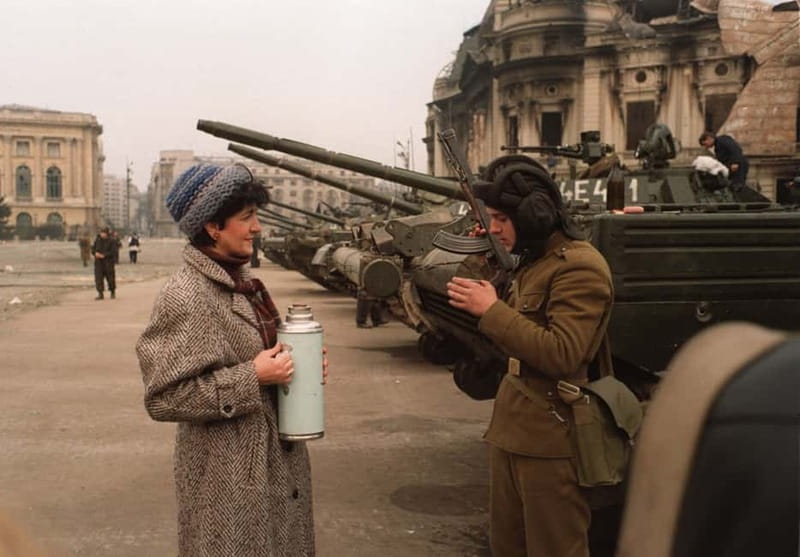
Street-level clarity on how communism worked in daily life
The Parliament building context, with a key outside photo viewpoint
A route tied to nationalisation, demolitions, and the cost of power
Stops referencing the Secret Police and the fear built into the city
A comfort break plus a communist-style snack for the human touch
English guides who keep questions welcome and explanations clear
The communist decades, walked and explained
- The Real tour of Communism★ 5.0 · 666 reviews
- Life under Communism★ 5.0 · 358 reviews
- 3-Hour Guided Tour of Communist Bucharest★ 4.9 · 303 reviews
- Bucharest: Parliament, Ceausescu House & Village Museum Tour★ 5.0 · 208 reviews
Starting at Patriarchal Cathedral: why the walk begins uphill
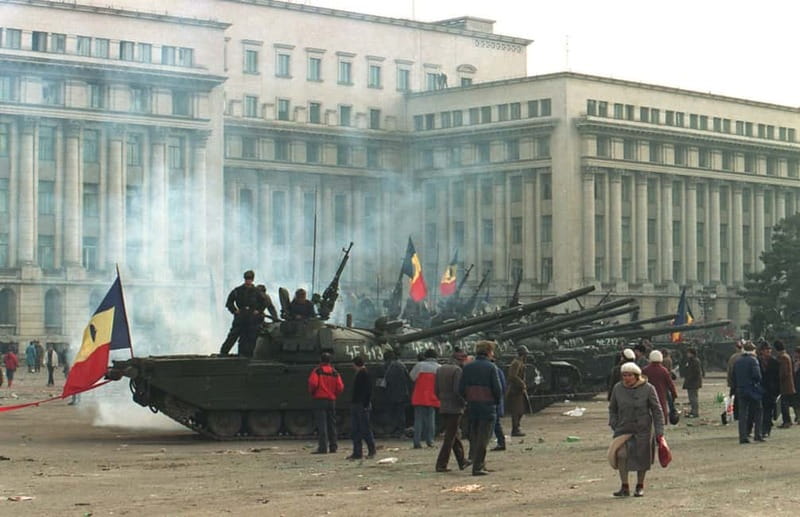
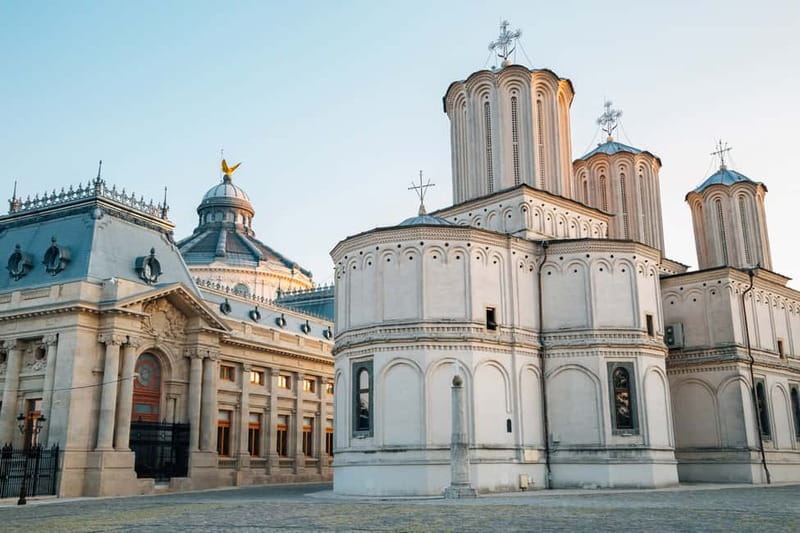
The tour kicks off in front of the Patriarchal Cathedral, a strong starting point because it anchors the story in Romanian identity rather than just politics. From the nearby Piata Unirii (Union Square) metro, you’ll climb a hill to reach the cathedral, so wear shoes with grip and give yourself an extra few minutes if you’re not used to walking up gradients.
This first segment sets the stage: you’ll hear how religion and religious life were affected as communism took hold. It’s not just about what the regime did, but about the historical events that helped push Romania toward communist rule. You’re basically getting the “before” needed to understand the “after.”
You’ll want to show up ready to listen, then keep moving. The whole point is that the city itself becomes your timeline.
Secret Police fear, without turning it into a scary movie
One of the hardest things to grasp about communism is how it shaped people’s choices. This tour gives you that context in a practical way, by talking about the influence of the Secret Police and why fear was part of everyday life.
As you walk down the route, you’ll see communist symbols tied to power and repression. In at least one part of the walk—on or near Calea Victoriei—you’ll be pointed toward what used to be a center connected with torture. The guide frames it as a system, not as a one-off horror story, which makes it hit harder and makes the bigger political picture easier to understand.
I like that the tour doesn’t rely only on buildings. It keeps returning to how people adapted: what changed in public behavior, what changed in private life, and what people learned to keep to themselves.
Nationalisation and neighborhood scars you can still see
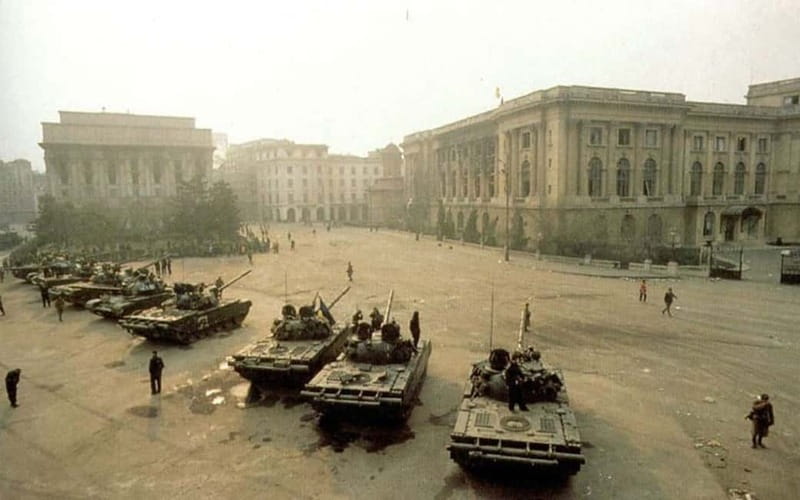
Next, you move through nearby streets where you can see the visible results of nationalisation. Even if you don’t know Romanian history, the tour makes you notice what the regime altered: property, institutions, and the physical layout of everyday spaces.
This is the part that helps you avoid the common mistake of treating communism as a single monument or a single era. Here, communism becomes something architectural and street-level. You start to recognize the logic of control in how neighborhoods shifted and how the city was reshaped.
The guide’s job is to connect these street corners to the broader timeline. When that connection clicks, you suddenly see Bucharest as a living document.
House of People (Parliament) outside: learning the story behind the symbol
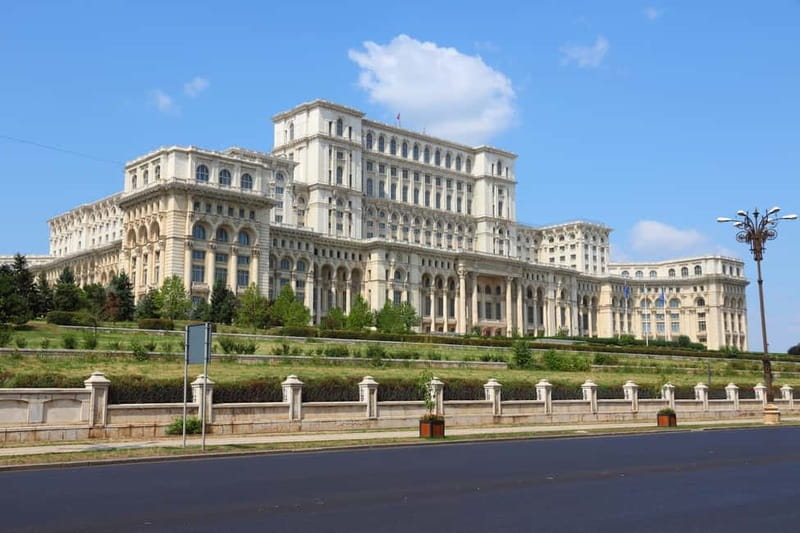
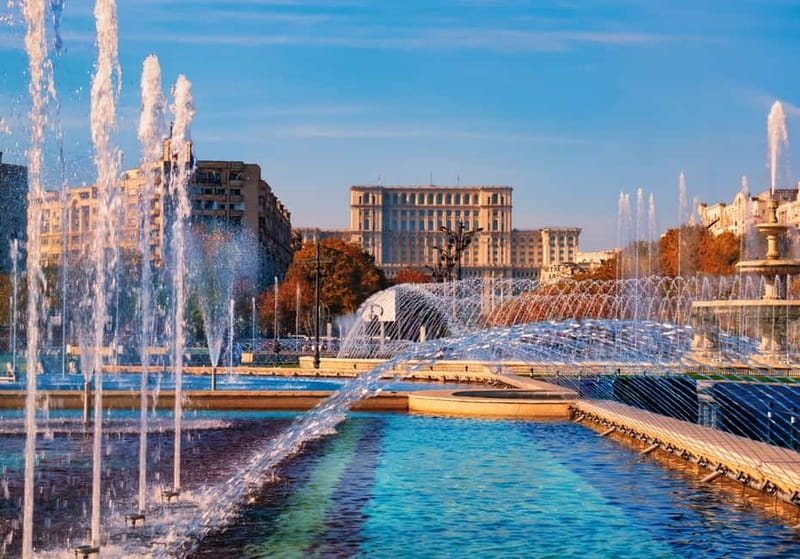
Then comes the big one: the House of People, now the Parliament building. You don’t go inside, but you do get a proper outside photo stop plus explanation from the curb—enough to understand the symbolism.
This stop centers on the construction of this mega-project and the megalomania of Nicolae Ceausescu. The guide helps you read the building as propaganda: a statement of power meant to dwarf ordinary life. That changes how you see it. Instead of just a striking façade, it becomes a warning about what happens when a ruler treats a country like personal stage scenery.
One practical tip: plan your photos early here, because you’ll still be walking afterward. If you’re traveling with someone who loves architecture, this is the moment to slow down and actually look.
On foot through the city, more routes


Antim Monastery and the idea of saving beauty mid-destruction
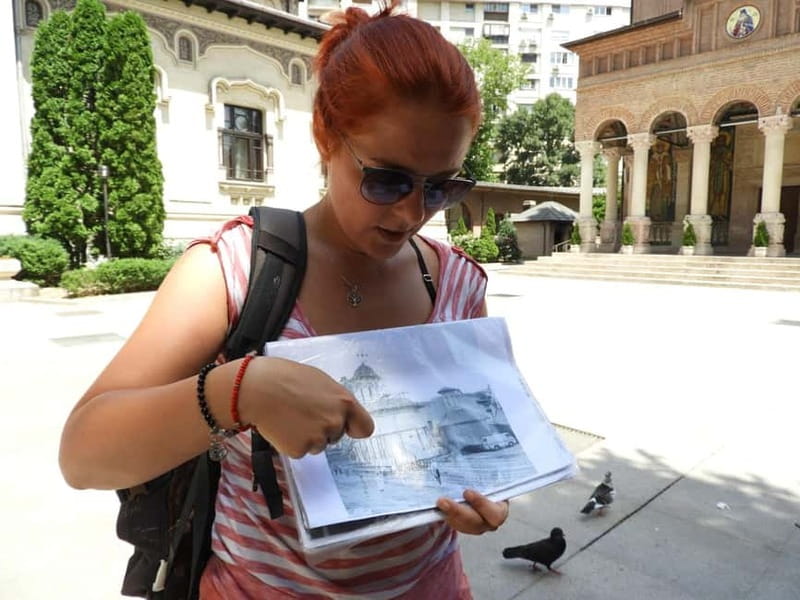
After that, the walk turns toward the theme of destruction during peace time—and how some landmarks were protected or relocated. One of the most memorable points in this segment is Antim Monastery, which you’ll see because it relates to buildings that were moved to avoid total loss.
This is one of those details you’d miss alone. On your own, a monastery is just a beautiful stop. On the tour, it becomes evidence of a city under pressure—where even religious and cultural sites were treated as something to be managed, not just revered.
The guide ties this back to the larger story of demolitions and urban transformation under the regime. You leave feeling you understand not only what was built, but what was erased.
The daily-life stops: the Alimentara moment and the communist snack
History hits hardest when it reaches the stomach. So the tour includes a break tied to everyday life, including time in front of an old Alimentara grocery store. That kind of stop matters because it explains the everyday challenges ordinary Romanians faced under communism.
You also get a short break at a local café, about 15 minutes, which is a helpful reset in a 3-hour walk. You’ll handle what you drink or buy on your own.
And then there’s the snack: a communist-type bite. In recent guide experiences, that’s sometimes been something like a rum-flavored biscuit, which sounds small until you realize it’s part of how the tour teaches rationing and scarcity. Even when it’s just a cookie, it’s a story you can taste.
Calea Victoriei and the communist symbols you can read on the street
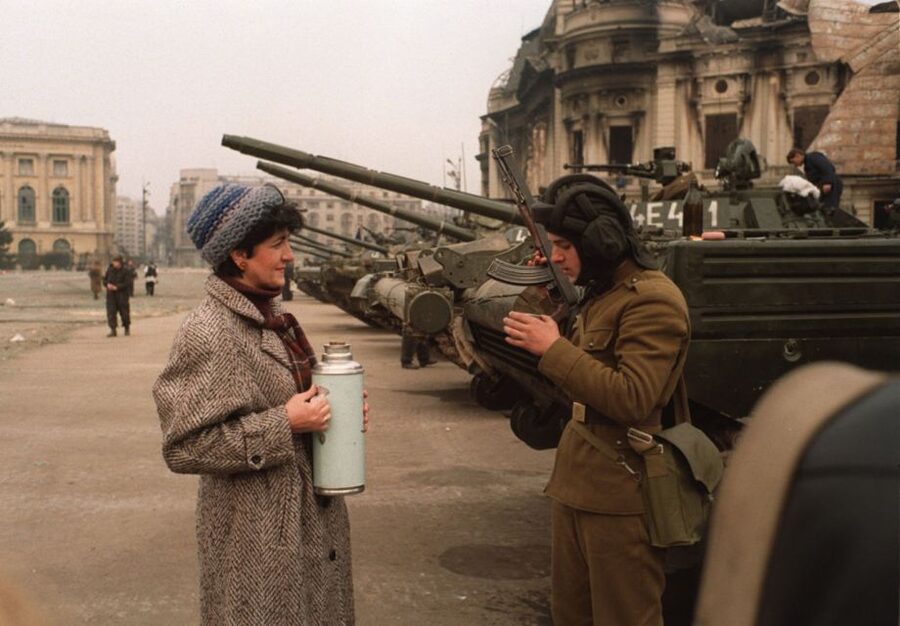
The later part of the tour moves at a normal walking pace along Calea Victoriei, one of Bucharest’s most beautiful boulevards. This is a nice contrast: wide streets and grand views on one side, and the lingering presence of the communist regime on the other.
You’ll be shown communist symbols again here, including connections to the Secret Police as the route brings you closer to the culmination of the Revolution story. It’s a smart way to end the historical arc: the city’s beauty doesn’t erase what happened. It sets the stage for it.
If you’re the type who likes to connect architecture with meaning, you’ll enjoy this stretch. It turns a pretty walk into a meaningful one.
Caru’ cu bere and the Revolution Square ending that puts dates in context
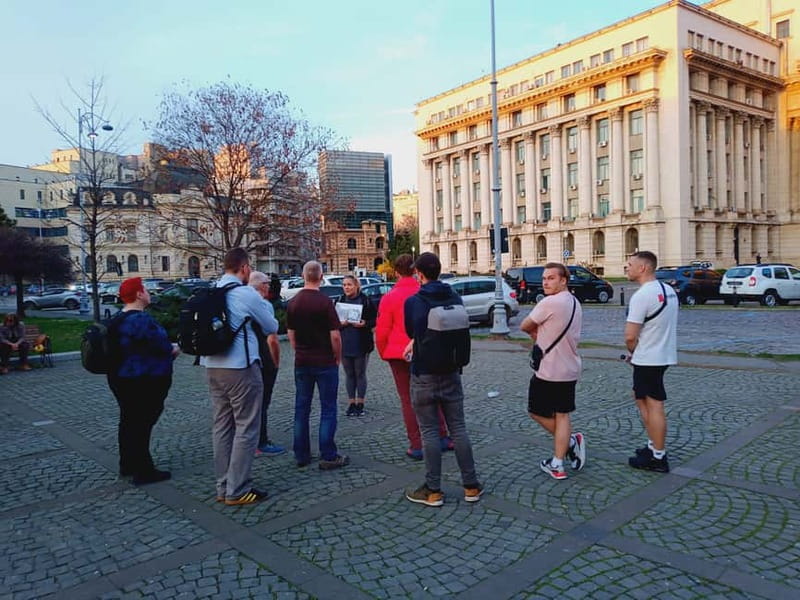
You’ll also pass Caru’ cu bere, a well-known spot in Bucharest’s restaurant scene. On this tour, it isn’t about food tourism. It’s about where the city was and where people lived through changing decades.
Then you finish at Revolution Square, with the guide telling the story of the end of communism in 1989 and the start of democracy. This is where the tour earns its practical value: you leave with the timeline straight. The Revolution isn’t treated like a single day; it’s placed in context so you understand why it mattered and what came next.
The closing works best if you’re ready to ask questions. Several guides in this tour style take time to answer, and you can often get personal or family-level context that makes 1989 feel less like a textbook event.
Price and value: what $31 buys you in real terms
At around $31 per person for 3 hours, this tour is priced like an entry-level guided experience, but with a higher payoff than you might expect. You’re getting about 15 stops tied to specific moments in the communist timeline, plus English live guiding and a snack.
What makes it good value isn’t just the length. It’s how the route is built: famous landmarks (Parliament) plus lesser-seen connections (nationalisation effects, moved buildings, Secret Police references). Many cheap tours show you photo stops only. This one tries to explain what you’re looking at.
For first-time visitors, that matters a lot. A walk like this can save you hours of reading later, because it gives you a framework that museum visits and self-guided wandering can plug into.
Pacing, comfort, and who this tour fits best
This is a 3-hour walking tour on city streets, rain or shine. That means you should plan on being outside most of the time and wear comfortable shoes. The route includes a hill to the cathedral at the start, and the general walking is steady.
It’s also not suitable for people with back problems, and wheelchair access isn’t offered. If you have mobility concerns, it’s better to think twice and choose a different option that matches your needs.
That said, the pace is described as a normal walking pace with a short café break. It’s not a sprint. You’ll be able to keep up, and the guide can manage questions along the way.
What to do before and after the tour
I’d do this tour early. When you start with communism, the rest of Bucharest makes more sense: you’ll notice symbols, planning choices, and why certain places look the way they do.
After the walk, you’ll be better equipped to explore on your own. If you head out to museums or church sites later, you’ll recognize connections the first time you see them. You won’t be staring at buildings wondering what they mean.
Also, bring a few questions. If the guide offers extra context or mentions historical details, you’ll get more out of it when you ask follow-ups in plain language.
Should you book this communism and history walking tour?
Book it if you want a fast, street-level way to understand Bucharest under communism. It’s especially useful if you’re visiting for the first time and want context before you start picking attractions on your own.
Pass or reconsider if you hate walking, if hills and uneven sidewalks are a problem for you, or if you’re looking for a light, purely sightseeing route. This tour tackles serious topics, including repression and Secret Police connections, so it’s best for people who want meaning, not just scenery.
If you’re comfortable with 3 hours outside, you’ll likely come away with a clearer timeline of Romania’s 20th-century turn, and with a very different way of looking at the city you came to see.
FAQ
Where is the meeting point for the Bucharest Communism and History guided walking tour?
You meet in front of the Patriarchal Cathedral. The closest metro station is Piata Unirii (Union Square), and you’ll need to climb the hill from there to reach the cathedral.
How long is the tour?
The tour lasts about 3 hours.
Do you visit the House of People (Parliament) inside?
No. You can see the House of People from outside, with a photo stop and guidance around the building.
What is included in the price?
The tour includes the 3-hour guided walking experience in English, about 15 objectives/stops along the way, and a communist-type snack. Your café break drink or food is not included.
Is the tour canceled for bad weather?
The tour runs rain or shine, but it can be canceled or rescheduled if conditions are too risky for the guide and guests, such as heavy rain, blizzard, extreme wind, or extreme heat.
Is hotel pickup or drop-off included?
No. Hotel pickup and drop-off are not included.
Is the tour suitable for wheelchair users or people with back problems?
No. It is not suitable for people with back problems, and wheelchair users are not included.
All of Bucharest in a Day
- Bucharest: City Highlights Guided Walking Tour
★ 4.9 · 1,482 reviews - Bucharest Highlights Walking Tour
★ 5.0 · 469 reviews - Bucharest: 2-Hour City Highlights Bike Tour
★ 4.8 · 269 reviews - Best of Bucharest | Private Walking Tour
★ 5.0 · 199 reviews - Bucharest Tuk Tuk city tour
★ 5.0 · 188 reviews - Bucharest Tuk Tuk City Tour
★ 4.9 · 167 reviews
Bucharest on Foot, Continued
- Bucharest: City Highlights Guided Walking Tour
★ 4.9 · 1,482 reviews - Bucharest Highlights Walking Tour
★ 5.0 · 469 reviews - Bucharest: Hidden Markets Walking Tour with Tastings
★ 4.9 · 329 reviews - Bucharest: Ghost Stories & Romanian Mythology Walking Tour
★ 4.9 · 287 reviews - Bucharest: Guided Walking Tour with Romanian Snack
★ 4.9 · 228 reviews - Best of Bucharest | Private Walking Tour
★ 5.0 · 199 reviews
The Communist Years, Up Close
- The Real tour of Communism
★ 5.0 · 666 reviews - Life under Communism
★ 5.0 · 358 reviews - 3-Hour Guided Tour of Communist Bucharest
★ 4.9 · 303 reviews - Bucharest: Parliament, Ceausescu House & Village Museum Tour
★ 5.0 · 208 reviews - Bucharest Essential Tour: Old Town, Calea Victoriei & Communism
★ 5.0 · 142 reviews - Communism in Bucharest – Landmarks, Museum & Communist Appetizers
★ 5.0 · 111 reviews
Just In: The Latest Bucharest Reviews



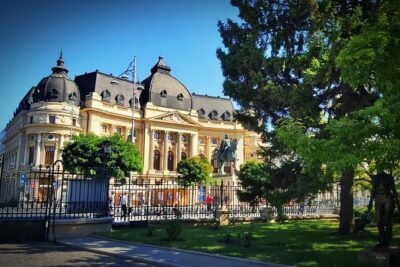
Communism & Ceaușescu Tours, compared.
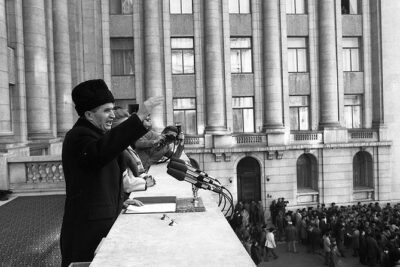 ★ 5.0The Real tour of CommunismFrom $32666 reviews
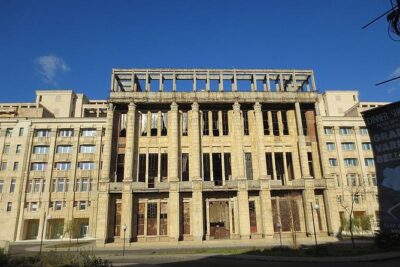 ★ 5.0Life under CommunismFrom $42358 reviews
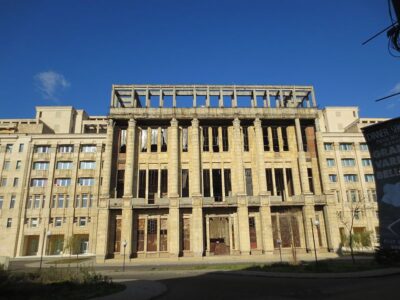 ★ 4.93-Hour Guided Tour of Communist BucharestFrom $29303 reviews
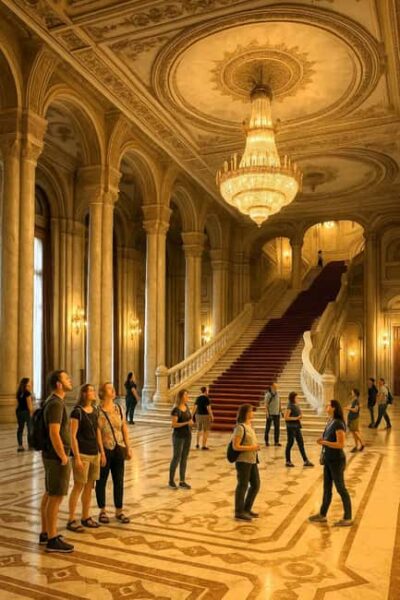 ★ 5.0Parliament, Ceausescu House & Village Museum TourFrom $1208 reviews
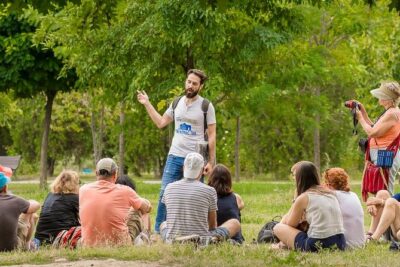 ★ 5.0Bucharest Essential Tour: Old Town, Calea Victoriei & CommunismFrom $24142 reviews
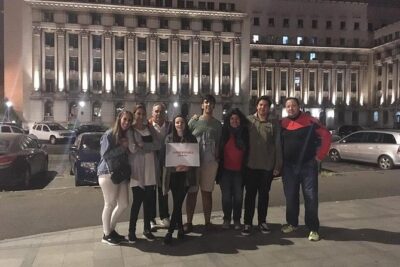 ★ 5.0Communism in Bucharest – Landmarks, Museum & Communist AppetizersFrom $48111 reviews
 ★ 4.9Palace of Parliament, Ceausescu House & Village MuseumFrom $186 reviews
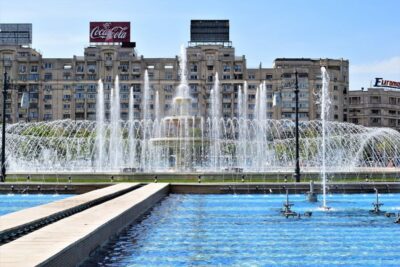 ★ 4.9Relics of Communism 3-Hour Walking TourFrom $4477 reviews
Browse the lists this tour appears in