
REVIEW · COMMUNISM & CEAUșESCU TOURS
Life under Communism
Communism leaves visible scars. Bucharest’s Life under Communism tour links the rise and fall of Ceaușescu to real places like the Palace of Parliament and Revolution Square. I like how the route mixes major monuments with smaller “you’ll miss it” reminders of everyday control, and I also like the clear English storytelling that keeps the story understandable. One drawback: the Palace of Parliament stop has admission not included, so you may need to budget extra if you want to go inside.
I also like that this is a focused 3-hour walking loop with a small cap of 20 people, which usually makes it easier to ask questions and adjust your pace. You’ll move between churches, a monastery, and political sites tied to the 1989 upheaval, so you get more than one angle on the era. Do wear comfortable shoes, because even when the pace is friendly, you’re still on your feet for several hours.
In This Review
- Key things to know before you go
- Why Bucharest’s Communist Corners Still Feel Intense
- Price and logistics for a 3-hour walking circuit
- Stop 1: Catedrala Patriarhala and the first shock of Communism
- Stop 2: Palace of Parliament’s scale, and the price of power
- Stop 3: Manastirea Antim and how religion got squeezed
- Stop 4: Old Town and Caru’ cu bere’s foreign-policy role
- Stop 5: Revolution Square and Ceaușescu’s downfall in 1989
- What the guides do really well (and why it matters)
- How to prep so the tour hits harder (without burning you out)
- Who should book Life under Communism in Bucharest
- Should you book this tour or pass?
- FAQ
- How long is the Life under Communism tour in Bucharest?
- What is the price per person?
- Is the tour offered in English?
- Is it a walking tour?
- How many people are in the group?
- Where does the tour start and end?
- Is admission included for all stops?
- What’s included in the tour price?
- Is food included?
- Does the tour operate in bad weather?
Key things to know before you go
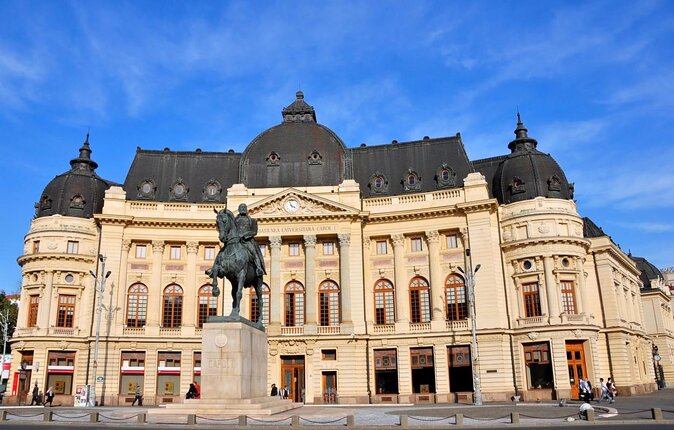
- Ceaușescu through places, not just dates and names
- Mixed stops: church, monastery, Old Town, and Revolution Square
- Small-group feel with a max of 20 people
- Some admissions are free, but the Palace of Parliament is not included
- English guide with strong clarity, often praised for good pacing
- Weather-proof plans: it runs in all weather, so dress for rain or heat
The communist decades, walked and explained
- The Real tour of Communism★ 5.0 · 666 reviews
- Life under Communism★ 5.0 · 358 reviews
- 3-Hour Guided Tour of Communist Bucharest★ 4.9 · 303 reviews
- Bucharest: Parliament, Ceausescu House & Village Museum Tour★ 5.0 · 208 reviews
Why Bucharest’s Communist Corners Still Feel Intense
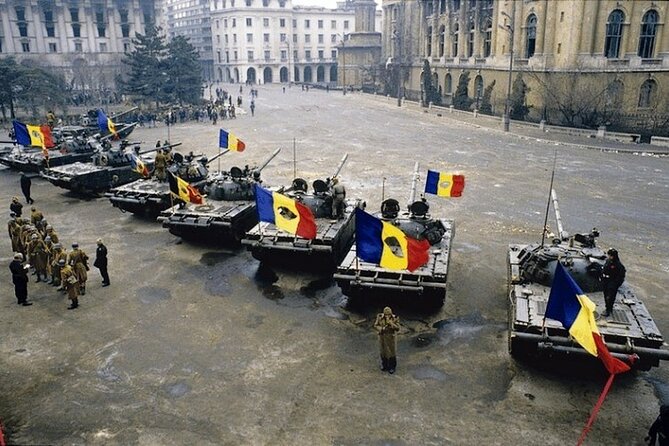
Bucharest’s Communist era isn’t locked behind museum glass. It’s on streets, on facades, in the scale of buildings, and in the way key sites mark the city’s turning points. This tour gives you a way to read those spaces like clues.
What makes it especially compelling is the balance between power and daily life. You’ll hear how the regime shaped public spaces and personal routines, and then you’ll end at the center of the 1989 collapse. In other words, you don’t just learn what Communism was. You get the feeling of how it operated—and how it unraveled.
The tone matters here. Multiple guides connected to this experience are praised for sharing personal context and for keeping the story grounded, not propaganda-flavored. That helps you form your own view instead of getting pushed toward one side.
And yes, it can be heavy. But it’s also one of the fastest ways to turn Bucharest into a 20th-century classroom you can walk through.
Price and logistics for a 3-hour walking circuit
This experience costs $42.33 per person for about 3 hours. For that price, you’re paying mainly for a professional guide and a structured route through several major “you’ll see it on photos” sites plus smaller, more specific reminders of control and resistance.
A few practical points that affect value:
- Admissions: Catedrala Patriarhala and Manastirea Antim are listed as free. The Old Town stop is also free. Revolution Square is free. The only clearly flagged paid stop is the Palace of Parliament, where admission is not included. So your total cost may rise if you want the inside experience there.
- Walking: It’s an all-weather walking tour. That means you should assume rain, wind, or heat can shape your comfort more than history does.
- Group size: A maximum of 20 people. Smaller groups usually mean less time waiting and more time for questions.
- Meeting points: You start at Aleea Dealul Mitropoliei 19, Buchști 030167, and you finish at Revolution Square (Piața Revoluției). Ending at the revolution focal point is convenient if you plan to keep exploring after the tour.
- Language and tickets: It’s offered in English with a mobile ticket. You’ll be near public transportation, and there’s no hotel pickup/drop-off.
- Animals: Service animals are allowed, and most people can participate.
If you’re the kind of traveler who likes to understand a city’s political background without getting lost in paperwork, this is a solid use of a half-day.
Stop 1: Catedrala Patriarhala and the first shock of Communism
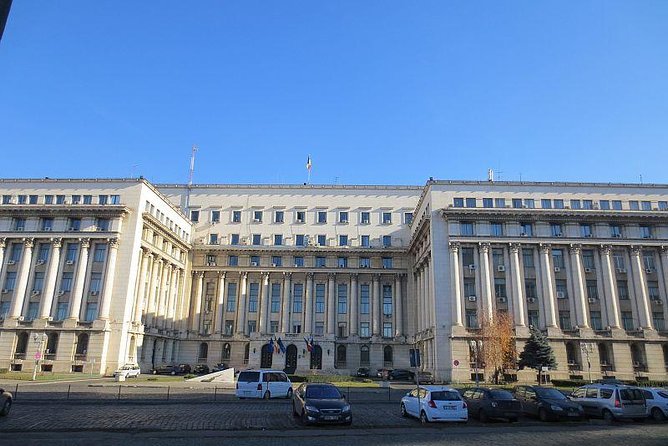
Your tour starts with Catedrala Patriarhala. It’s a church setting, which immediately matters because Communism in Romania wasn’t just about government. It also competed with religious authority and public faith.
At this first stop, the discussion focuses on the violent beginning of the Communist period. Even if you know the big outline of Eastern European history, this is where the tone gets real: you’re in a sacred place that helps you feel how much power was being challenged, not just reorganized.
Admission is listed as free, so it’s a straightforward start: come here ready to listen closely. You’ll likely get your first set of “what changed and why it mattered” context before the tour moves into bigger, more famous symbols of regime power.
Practical tip: When you arrive, take a minute to orient yourself. Church architecture can be visually overwhelming, and you’ll benefit from having the guide’s key points in your head as you look around.
Stop 2: Palace of Parliament’s scale, and the price of power
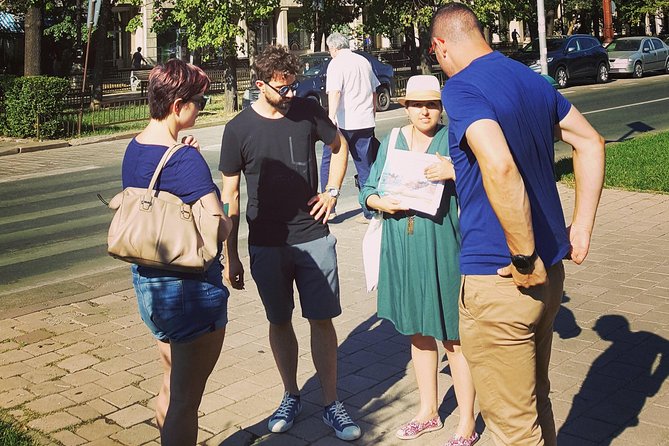
Then you move into the Palace of Parliament, a building described as the world’s second largest administrative structure. Even before you get any deeper detail, the size does half the teaching.
This is one of those places where the Communist-era message is built into the material. The regime used scale to signal permanence. It’s a building that feels like politics poured into stone and concrete—big enough that it’s hard to mentally shrink it back into a normal city block.
The key consideration here: admission is not included. That doesn’t make the stop less useful, but it does mean you should decide in advance whether you want inside time. If you do, budget for tickets and keep your expectations realistic about crowds and time.
What I like about this stop: It helps you connect the abstract idea of dictatorship to something you can measure. Power has a physical presence here.
Stop 3: Manastirea Antim and how religion got squeezed
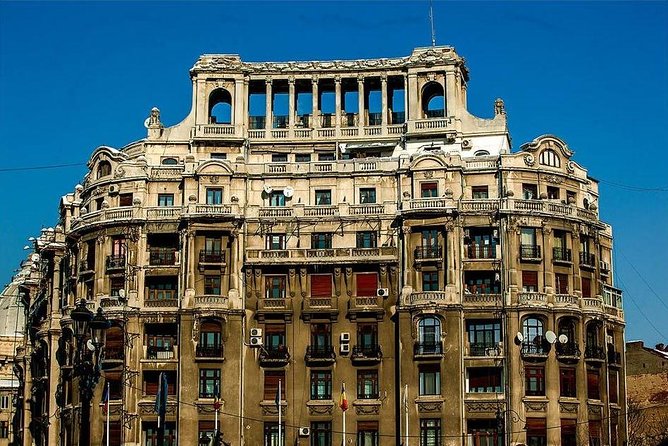
Next comes Manastirea Antim, a monastery stop with a different mood from the Parliament. It’s also listed as free, which makes it easy to enjoy without worrying about extra entry steps.
The guide’s focus at this stage is on how the Communist regime impacted religion. That’s not just a “laws changed” story. It’s a reminder that authoritarian systems don’t only control elections and police. They also try to control meaning—what people believe is legitimate, and what they’re allowed to practice publicly.
Monasteries tend to slow you down naturally. That helps here. After the massive, political scale of the Parliament area, you get a quieter setting where the story becomes more personal: faith, identity, and the pressure to conform.
Practical tip: If it’s rainy, monastery areas can get slippery. Bring grippy shoes, even if you’re only walking short stretches between stops.
Stop 4: Old Town and Caru’ cu bere’s foreign-policy role
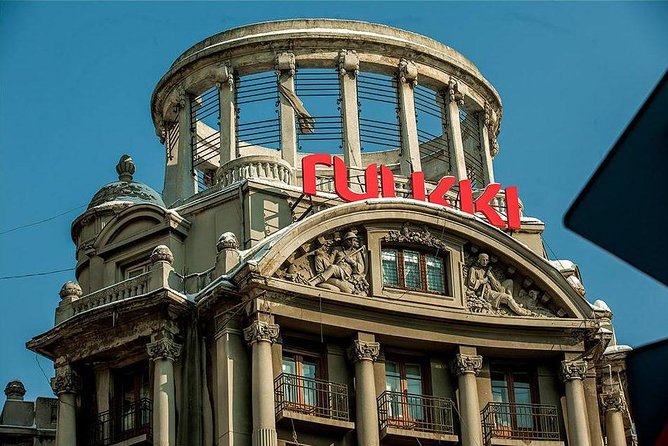
From religious history, the tour shifts into the city’s social and public life in Old Town, including a focus on Caru’ cu bere. This is where things get interesting in a different way: the discussion links the restaurant scene to foreign policy under Communism.
It’s a smart stop because it reminds you that regimes don’t operate only through threat. They also use controlled access, curated encounters, and carefully managed public spaces. A famous restaurant isn’t just about food. In a tense political system, it can become a stage where outsiders are seen, guided, and observed.
Admission is listed as free here, so this is an easy moment to absorb the “how society functioned” angle. It’s also a good time to ask questions that go beyond buildings—like how communication and diplomacy worked in practice.
If you like photo stops: This is one of the places where the setting and the story align well, so pictures feel meaningful instead of random.
Stop 5: Revolution Square and Ceaușescu’s downfall in 1989
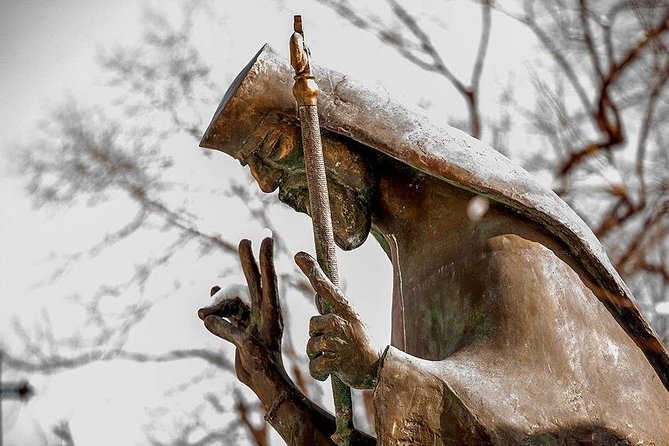
The tour ends at Revolution Square (Piața Revoluției), a fitting finish line because this is where the story turns from controlled messaging to open collapse.
Here, the focus is on the violent collapse of Communism and Ceaușescu’s downfall. The square acts like a historical punctuation mark. Everything you learned earlier—power’s physical presence, the pressure on religion, and the city’s political shaping—comes back into focus as the system breaks.
Even if you don’t know the details, the atmosphere of the place helps you understand why 1989 became such a turning point. It’s not theory anymore. It’s the moment of rupture you’ve been walking toward.
There’s also a practical reason Revolution Square is a strong ending point: once you’re there, you can keep exploring Bucharest by foot or transition to other sites around the center.
Practical tip: Have a little energy left for your post-tour plans. This ending point is a natural launchpad, not just a drop-off.
What the guides do really well (and why it matters)
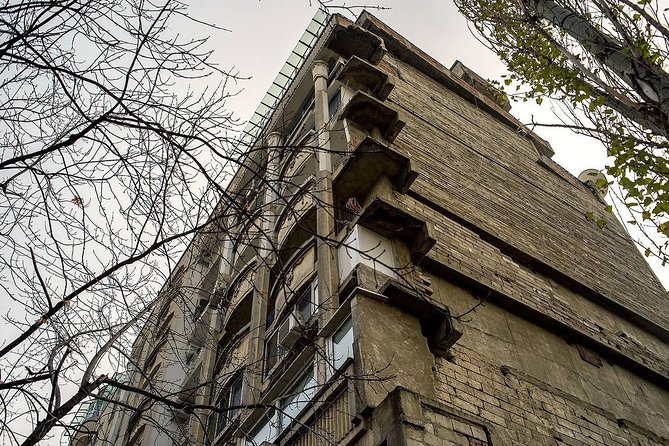
A tour about Communism can go two ways: it can sound like a lecture, or it can sound like history you can actually picture. This experience is repeatedly praised for the second approach.
Guides tied to this experience—names that show up include Cristina/Cristine, Stefan, and Victor—are often credited with several things that make the tour work:
- Clear English delivery, so you don’t have to fight the language to follow the plot
- Personal family context, which helps you connect political structure to real consequences
- Direct answers to questions, which keeps the tour from becoming a one-way talk
- A balanced tone, described as aiming to present facts with nuance rather than pushing either side as a cartoon villain
- Flexible pacing, including accommodations for slower movement and needs like hearing impairment
That flexibility matters more than you might think. A 3-hour walking tour leaves little room for mental fatigue. When the guide adjusts and keeps explanations crisp, you finish with understanding instead of “I saw buildings.”
If you prefer to learn actively, bring one or two questions. For example: how did daily routine shift under control, or what did political messaging look like on the street?
How to prep so the tour hits harder (without burning you out)
This is one of those tours where a tiny bit of prep makes a big difference. You don’t need to memorize dates. You just need context in your head so the stops don’t blur together.
Here are three ways to get more out of it:
- Wear shoes that can handle wet pavement. It’s weather-ready, not weather-proof.
- Decide what you want most: architectural power, religion under pressure, or the road to 1989. The guide will cover it all, but your focus helps you catch the main threads.
- Take short mental notes. For each stop, try to answer one question: What did this place mean to the regime, and what did it cost ordinary people?
Also, don’t try to turn it into a pure “facts only” exercise. The strongest moments tend to come when the guide ties history to human details—how people navigated fear, bureaucracy, and public life.
And yes, expect a bit of emotional weight. That’s not a problem. It’s the point. Just pace yourself and give your brain breaks when the group moves quickly between stops.
Who should book Life under Communism in Bucharest
Book this if you want:
- A short, high-impact way to understand Romania’s Communist era
- A route that includes both big monuments and smaller political reminders
- History explained in a way you can follow in English
- A finish at Revolution Square so the ending lands where it should
You might skip it if:
- You hate walking and would rather do a mostly indoor, sit-down style tour
- You want guaranteed long time inside the Palace of Parliament, since admission there isn’t included
Should you book this tour or pass?
I think this is a smart booking for most first-time Bucharest visitors who want political context without a full-day commitment. For $42.33, you’re getting a guided route through the era’s most important symbols, with several free stops and an ending that drives home the 1989 turning point.
The main “make your decision” factor is your comfort with walking—and whether you plan to add Palace of Parliament admission on your own. If you’re okay with that, this tour is one of the best ways to leave Bucharest with more than postcard memories.
FAQ
How long is the Life under Communism tour in Bucharest?
It runs for about 3 hours.
What is the price per person?
The price is $42.33 per person.
Is the tour offered in English?
Yes, it is offered in English.
Is it a walking tour?
Yes. It’s described as walking, and comfortable shoes are important.
How many people are in the group?
The tour has a maximum of 20 people.
Where does the tour start and end?
It starts at Aleea Dealul Mitropoliei 19, București 030167 and ends at Revolution Square (Piața Revoluției).
Is admission included for all stops?
No. Palace of Parliament admission is not included. Other listed stops are free.
What’s included in the tour price?
The tour includes a professional guide.
Is food included?
No. Food and drinks are not included, unless specified.
Does the tour operate in bad weather?
It operates in all weather conditions and you should dress appropriately. If the experience is canceled due to poor weather, it offers a different date or a full refund.
More Tour Reviews in Bucharest
- Bucharest: Dracula’s Castle, Peles Castle, & Brasov Old Town
★ 4.5 · 17,858 reviews - Bucharest: Dracula Castle, Peles Castle & Brasov Old Town
★ 4.6 · 10,891 reviews - Bucharest: Dracula’s Castle, Peleș Castle & Brașov Day Trip
★ 4.4 · 6,100 reviews - Bucharest: Palace of Parliament Tickets and Guide
★ 4.3 · 3,182 reviews - Bucharest: Day Trip to Dracula Castle, Peles Castle & Brașov
★ 4.4 · 3,049 reviews - Bucharest to Dracula Castle, Peles Castle and Brasov Guided Tour
★ 4.5 · 2,933 reviews
The Communist Years, Up Close
- Bucharest: Communism and History Guided City Walking Tour
★ 4.9 · 918 reviews - The Real tour of Communism
★ 5.0 · 666 reviews - 3-Hour Guided Tour of Communist Bucharest
★ 4.9 · 303 reviews - Bucharest: Parliament, Ceausescu House & Village Museum Tour
★ 5.0 · 208 reviews - Bucharest Essential Tour: Old Town, Calea Victoriei & Communism
★ 5.0 · 142 reviews - Communism in Bucharest – Landmarks, Museum & Communist Appetizers
★ 5.0 · 111 reviews
Just In: The Latest Bucharest Reviews


Communism & Ceaușescu Tours, compared.
 ★ 4.9Communism and History Guided City Walking TourFrom $31918 reviews
 ★ 5.0The Real tour of CommunismFrom $32666 reviews
 ★ 4.93-Hour Guided Tour of Communist BucharestFrom $29303 reviews
 ★ 5.0Parliament, Ceausescu House & Village Museum TourFrom $1208 reviews
 ★ 5.0Bucharest Essential Tour: Old Town, Calea Victoriei & CommunismFrom $24142 reviews
 ★ 5.0Communism in Bucharest – Landmarks, Museum & Communist AppetizersFrom $48111 reviews
 ★ 4.9Palace of Parliament, Ceausescu House & Village MuseumFrom $186 reviews
 ★ 4.9Relics of Communism 3-Hour Walking TourFrom $4477 reviews
Browse the lists this tour appears in