
REVIEW · COMMUNISM & CEAUșESCU TOURS
Bucharest: Relics of Communism 3-Hour Walking Tour
Communism still feels close. This 3-hour Bucharest walking tour ties together Revolution Square and the buildings of power with a clear, human explanation of how daily life worked under Ceausescu. I love how the walk mixes heavy topics with street-level stops you can actually see, and I also like the contrast of hidden churches against the regime’s official architecture.
The biggest practical trade-off is that it’s a true walking experience with no hotel pickup, so you’ll want to get yourself to the Memorial of Rebirth in time and wear comfortable shoes.
In This Review
- Key highlights you’ll actually notice
- Bucharest’s communist story, told block by block
- Memorial of Rebirth and Revolution Square: the ‘89 Revolution starts here
- Piața 21 Decembrie 1989: the city’s street names carry politics
- Michael the Voivode Church: where faith survived the regime’s forgetfulness
- Piața Unirii: everyday Bucharest energy under a historical lens
- Palace of the Parliament: power built into a daily view
- New districts of socialist realism and the Civic Centre buildings
- How the 3-hour format works (and how to get more from it)
- Included extras: the English guide and a Romanian snack souvenir
- Price and value: why $44 can be fair for this kind of tour
- Who should book this communist history walking tour
- Should you book MARA’S TOURS & TRAVEL Relics of Communism?
- FAQ
- How long is the Bucharest Relics of Communism walking tour?
- Where do I meet the guide?
- Is the tour guide available in English?
- What’s the group size?
- What’s included in the price?
- Is hotel pickup or drop-off included?
Key highlights you’ll actually notice
- Memorial of Rebirth start gives you the timeline at ground level, right in Revolution Square’s orbit
- Ceausescu’s last-speech balcony area anchors the story of the Romanian Revolution where it happened
- Socialist realism architecture on purpose lets you read the city like propaganda in concrete form
- Hidden churches stop shows religion as something the communist system tried to erase
- Palace of the Parliament focus explains why power was built as a monument
- Small groups (up to 10) keep questions in the conversation, with guides like Elena, Stefan, and Tudor often leading
The communist decades, walked and explained
- The Real tour of Communism★ 5.0 · 666 reviews
- Life under Communism★ 5.0 · 358 reviews
- 3-Hour Guided Tour of Communist Bucharest★ 4.9 · 303 reviews
- Bucharest: Parliament, Ceausescu House & Village Museum Tour★ 5.0 · 208 reviews
Bucharest’s communist story, told block by block
If you’ve ever wondered why Bucharest can look both elegant and severe in the same glance, this walk answers that. The tour treats the city like a map of decisions: what the regime wanted people to see, what it tried to hide, and what survived anyway.
I especially like the tone: you get the political context, but the guide keeps returning to everyday realities. You’ll hear about how people handled shortages and pressure, including the role of ration cards, propaganda, and the secret police in daily life. That matters because the architecture is only half the story; the other half is how it felt to live there.
One more reason this works well is the structure. You start at the Memorial of Rebirth in Revolution Square, then you move through the civic and religious spaces the regime could not fully control. Even if you’re new to Romanian history, the route helps your brain attach names and events to real places.
Memorial of Rebirth and Revolution Square: the ‘89 Revolution starts here
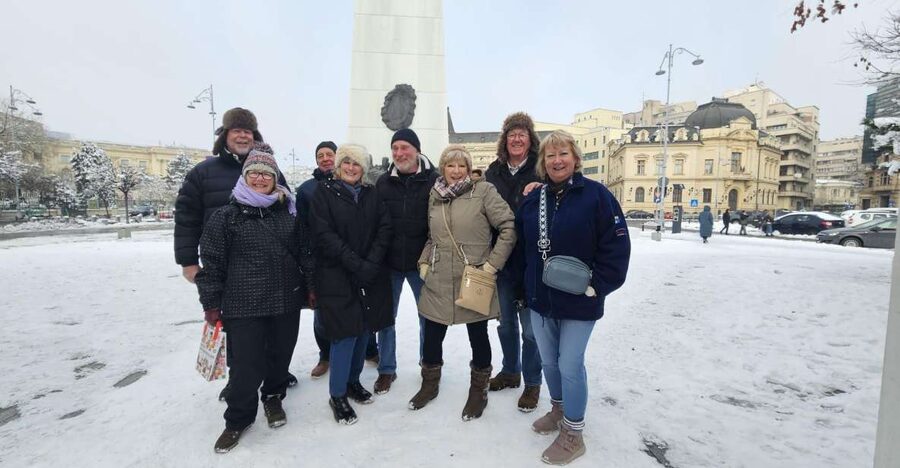
Your walk begins at the Memorial of Rebirth at Revolution Square. It’s a strong opening because it frames the communist-to-democracy shift as something physical and immediate, not just a date in a book.
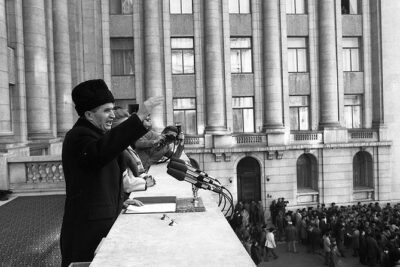
From there, you head to Revolution Square and you’ll get a guided explanation centered on the moments around the revolution. The focus includes the balcony where Ceausescu held his last speech, which is the kind of detail that turns abstract history into something you can picture. You also spend time on the 1989 timeline as you walk the space, including how the revolution unfolded at this location.
Why I think this is a smart first stop: Revolution Square functions like a reference point. Once you understand what happened there, later contrasts in the city architecture hit harder and make more sense.
Practical note: this area can get busy, so go in with the mindset that your guide’s spoken narrative is your best “view.” If you’re aiming for photos, do them between explanations rather than trying to shoot while the guide is talking.
Piața 21 Decembrie 1989: the city’s street names carry politics
Next you’ll move to Piața 21 Decembrie 1989, which is directly tied to the revolution’s turning point. You get another guided segment here, building the story instead of repeating it.
This stop is useful because it shows how politics lingers even after regimes fall. Street and square names become a kind of public memory—who gets honored, what gets erased, and what gets kept visible. In a short walk like this, that theme helps you connect the dates to the spaces.
If you like history that feels grounded in daily navigation, this is a good moment to slow down and pay attention to how the city communicates through its layout. The point is not just what happened, but how the city teaches that story to anyone walking through.
Michael the Voivode Church: where faith survived the regime’s forgetfulness
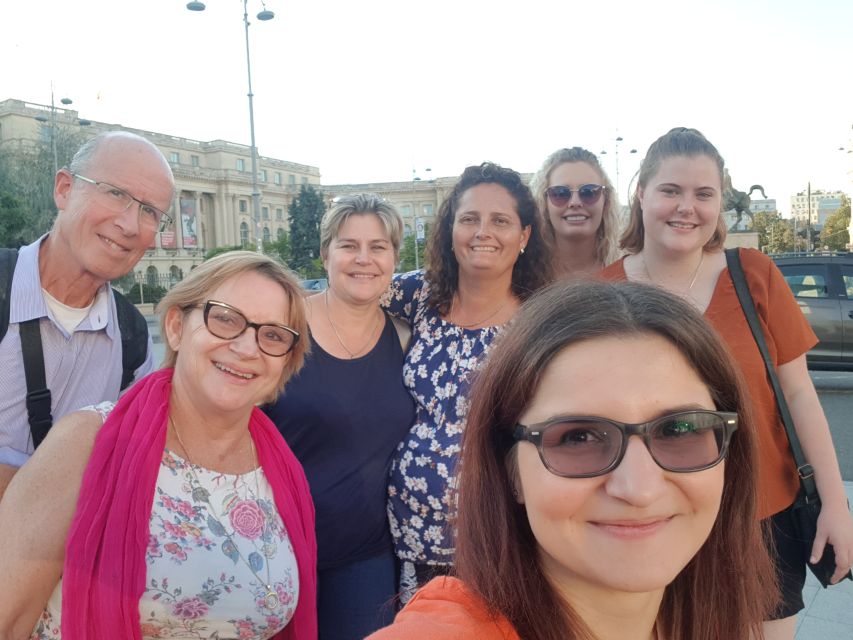
One of the most interesting parts of the tour is the stop at the Michael the Voivode Church. This is where the walk shifts from civic power to religious life—specifically the churches that the communist system wanted people to forget.
You get a visit and a guided tour inside this kind of religious space, and that change in atmosphere matters. In many communist-era narratives, religion gets treated as a footnote. Here, it becomes a central thread: the guide explains that official ideology didn’t just control politics and media. It also pressed on belief and community memory.
This is a great stop if you’re the type of person who enjoys seeing how different systems treat the same human needs—spiritual life, identity, tradition. You’ll also likely appreciate the contrast: heavy state architecture nearby versus quieter corners tied to faith and survival.
A small drawback to consider: church stops can involve some rules (like where to stand or how long you’ll be inside). The tour is scheduled to keep things moving, so be ready to follow the guide’s pace rather than wandering independently.
On foot through the city, more routes

Piața Unirii: everyday Bucharest energy under a historical lens
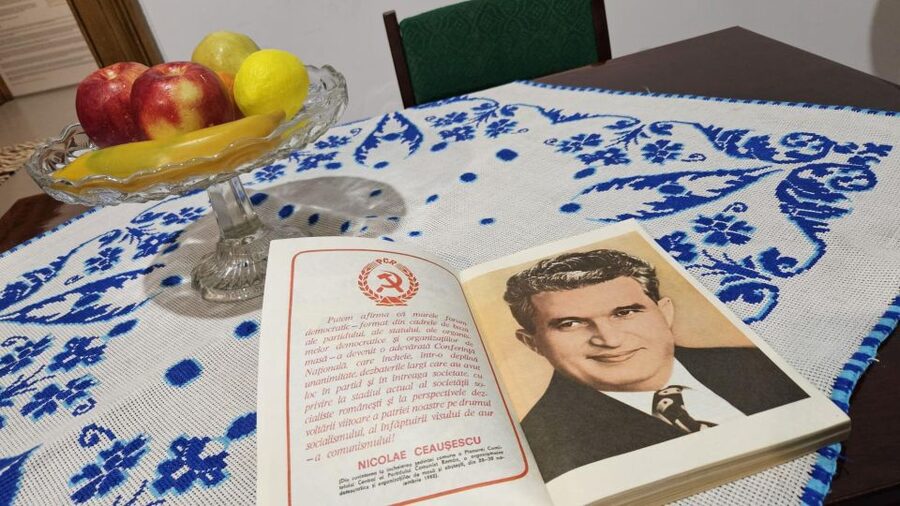
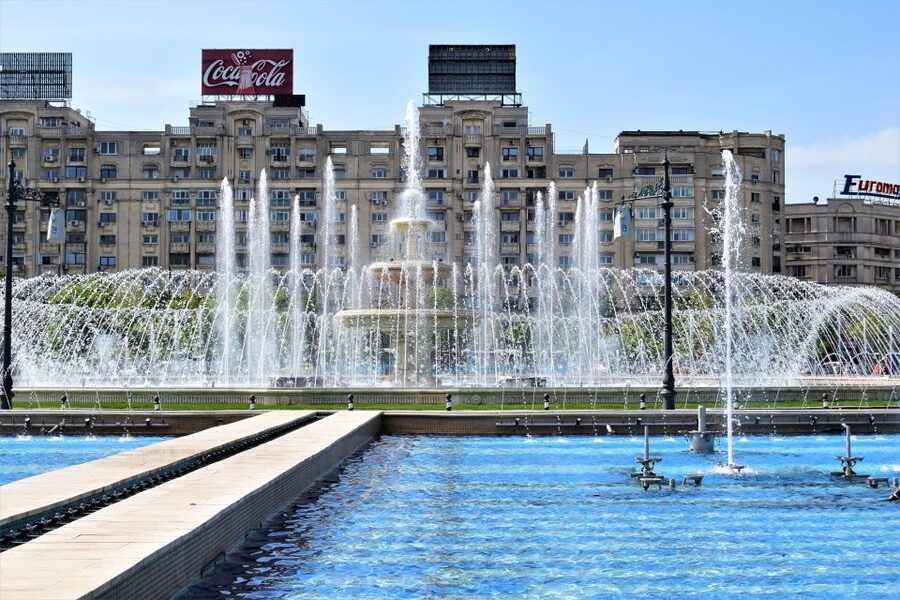
From the church stop, the tour moves toward Piața Unirii. This part of the walk is a bridge. You’re heading toward the grand government structures, but you’re also moving through a more street-normal Bucharest atmosphere.
The guide’s job here is to keep you from treating the city like a museum. By connecting the revolution story and life under Ceausescu’s rule to the areas people actually use now, the tour helps you understand how the past lives alongside ordinary routines.
If you want a souvenir-style takeaway, this is where it helps to keep asking questions. You might wonder how people adapted, how propaganda showed up day to day, and how different neighborhoods were shaped. The small group format (up to 10) makes that easier than in big bus tours.
Palace of the Parliament: power built into a daily view
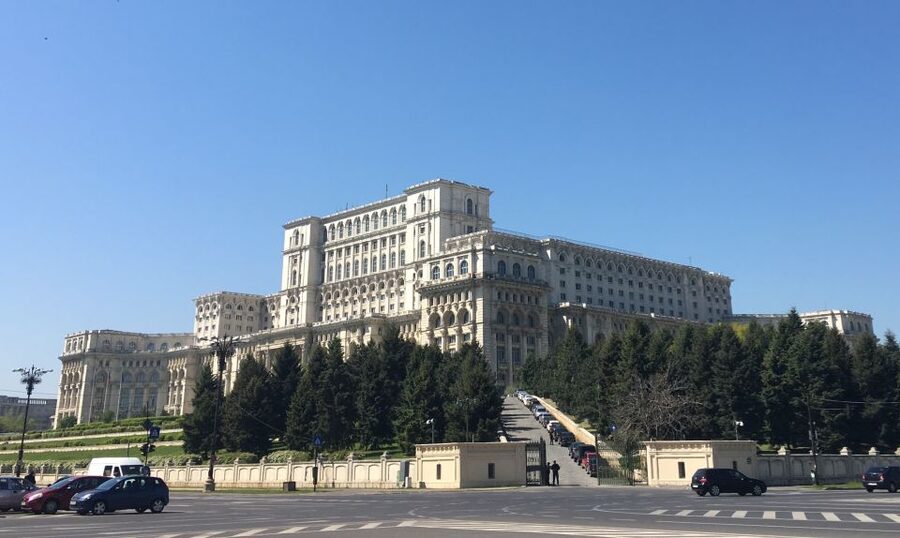
Then comes the big one: the Palace of the Parliament. You’ll get a guided segment here, timed to fit the 3-hour structure without turning into a rushed sprint.
What you’ll learn is not just that the building is impressive. You’ll get the logic behind it—how it was designed as the absolute center of power and how it fits into the era’s official aesthetics. The guide ties this back to the idea of socialist realism, the state-approved style that aimed for clarity, authority, and control.
You’ll also encounter the psychological effect. Huge government architecture is never only about materials. It’s about messaging. Standing in its shadow helps you understand why the communist era’s propaganda wasn’t confined to posters. It showed up in scale, in perspective, and in what the city insisted you should take seriously.
A practical tip if you’re sensitive to crowds or scale: the palace area can feel intimidating just because it’s so monumental. Go slow, listen to the guide’s framing, and don’t worry about trying to see everything at once. This tour focuses on meaning, not on checking off every angle.
New districts of socialist realism and the Civic Centre buildings
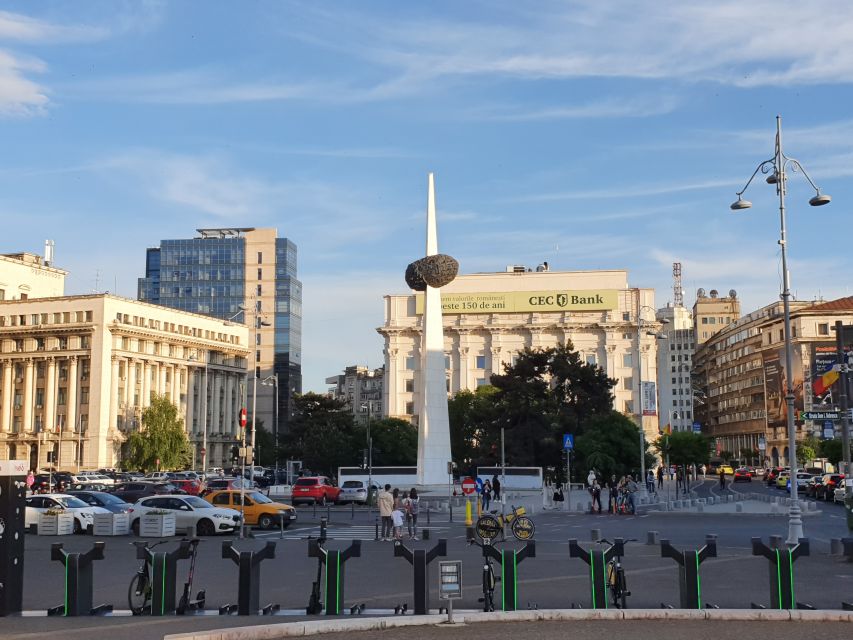
Between the revolution squares and the palace, you’ll walk through the “socialist realism” districts developed during Nicolae Ceausescu’s reign. This is where Bucharest can feel like a planner’s dream and a dictator’s billboard at the same time.
You also see the buildings connected to the Civic Centre project. The point of these stops is to show how the regime used architecture as policy—turning ideology into streetscapes, and civic life into something designed from above.
I like this stretch because it helps you read Bucharest like an essay. You start to notice patterns: building massing, repetition, and the way open space and avenues support state narratives. Even if you don’t know architecture terms, you’ll understand the message the guide is pointing to.
One consideration: because the walk is short, these areas can feel “dense” in information. If you have extra questions, save them for moments when the guide pauses to cover the key idea. In past tours led by guides like Elena, Stefan, and Tudor, the pacing has been described as relaxed enough for real interaction, so you shouldn’t feel stuck listening only.
How the 3-hour format works (and how to get more from it)
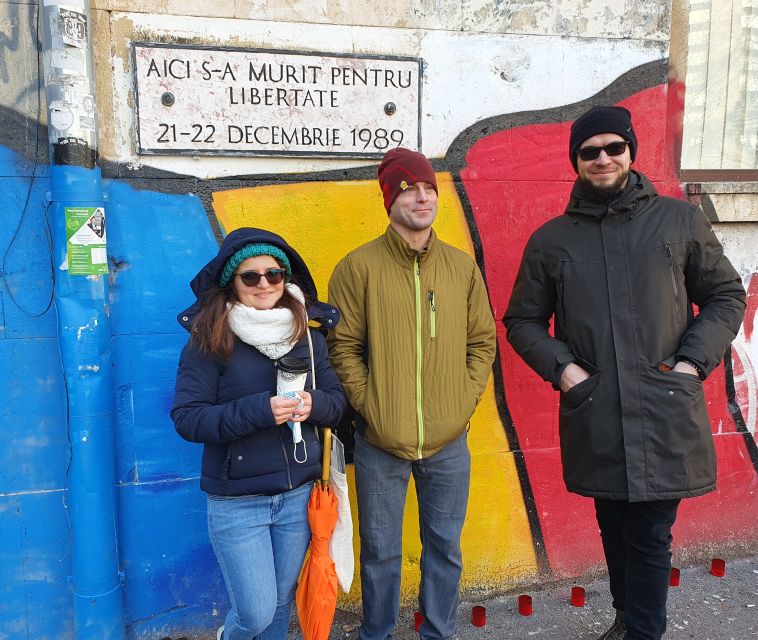
This is a tight, 3-hour walking route, and the fact that it stays small (up to 10 participants) is a big part of the value. You’ll get time at each stop for guided explanation, including visits like the church and a longer segment at the Palace of the Parliament.
One pattern I noticed in the tour feedback is how long some sessions run compared with the nominal duration. That suggests the guide is willing to spend extra minutes when people ask good questions. For you, that’s a benefit if you care about context and not just highlights.
Here’s how I’d plan your day around it:
- Start the tour rested and ready to walk at a steady pace.
- Bring water, since you’ll be outside for the whole story arc.
- Have one or two topics in mind, like rationing, propaganda, or how the revolution changed daily life.
If you’re a WW2 enthusiast or you’re simply a history person, the guide will usually have the mental connections ready. One guide even shared extra material like old communist school items and photos comparing old and new Bucharest, plus documentary-style visuals of the revolution. That kind of evidence-based storytelling is where the walk becomes more than a tour; it becomes a learning experience that feels connected to real objects.
Included extras: the English guide and a Romanian snack souvenir
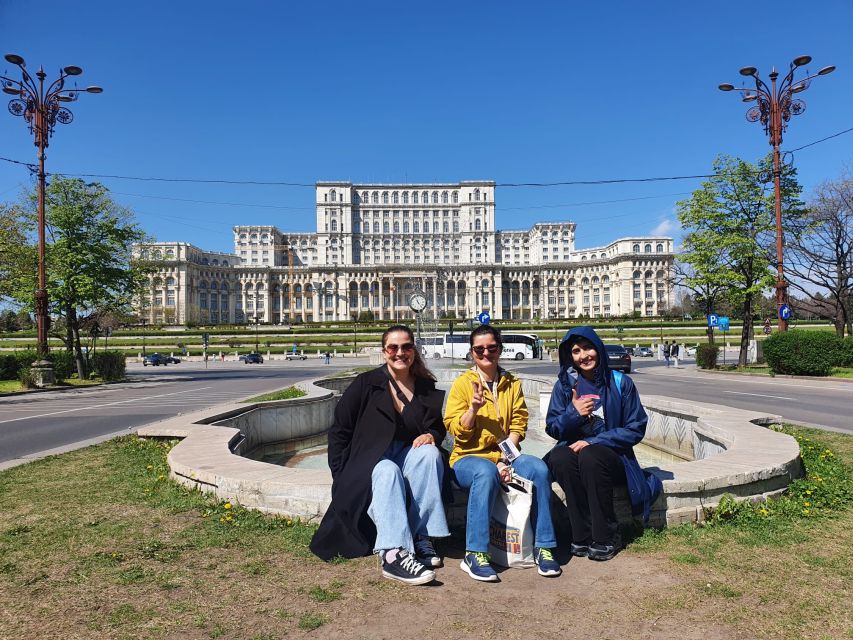
You get an English live guide throughout the walk. In the past, guides named Elena, Stefan, and Tudor were specifically praised for detailed explanations and for answering questions directly. That’s important in a topic like this, because communist-era history can get confusing fast if you’re only given dates.
You’ll also receive a Romanian snack souvenir. It’s a small thing, but I like these little food ties because they keep the experience from feeling purely academic. You’re tasting something from the place you’re learning about, which is exactly what you want on a short city walk.
One note on comfort and expectations: this is not a sit-down lecture. If you prefer passive sightseeing, you might find the walking pace and constant context challenging. If you like conversation and questions, you’ll likely enjoy the format a lot.
Price and value: why $44 can be fair for this kind of tour
At $44 per person for about 3 hours, the pricing is in the “reasonable” zone for a guided walking tour that includes multiple guided stops and at least one interior visit. The math isn’t just the time. It’s also the amount of expertise you get for each site.
This tour’s value comes from three things:
- You get English narration on political and social history, not just architecture commentary.
- You cover key Bucharest touchpoints tied to the 1989 revolution and the communist period.
- The small group size helps the guide tailor explanations and handle questions.
Could cheaper tours exist? Sure. But with a topic like communism, clarity matters. I’d rather pay for a guide who can explain how propaganda and secret policing shaped daily life than save a few dollars and get only surface descriptions.
Who should book this communist history walking tour
This tour is a great fit if you fall into one of these groups:
- You want Bucharest that goes beyond palaces and parks and into real 20th-century politics.
- You enjoy walking tours where the route tells a story, not just a list of landmarks.
- You care about contrast: socialist realism versus what the regime tried to erase.
- You like small group settings where you can ask questions and get straight answers.
It might not be ideal if you hate heavy topics, since the guide addresses the communist period’s pressure and control. It also isn’t designed for people who want a relaxed “wander and snack” afternoon without structured stops.
Should you book MARA’S TOURS & TRAVEL Relics of Communism?
I’d book it if you want a focused, guided 3-hour route that turns Bucharest’s communist past into something you can see and understand quickly. The combination of Revolution Square context, the Palace of the Parliament segment, and the church visits makes the tour feel balanced rather than one-note.
Also, the guide quality seems to be a consistent strength, with Elena, Stefan, and Tudor named in highly positive experiences for detailed explanations and good question handling. For $44, that’s exactly the kind of value you want: not just a walk, but guided understanding that follows you through the city.
If you’re on the fence, think about your personal goal. If your goal is to learn how Bucharest became what it is—politically and physically—this tour gives you a strong starting point.
FAQ
How long is the Bucharest Relics of Communism walking tour?
The tour lasts 3 hours.
Where do I meet the guide?
Meet your guide at the Memorial of Rebirth in Revolution Square.
Is the tour guide available in English?
Yes, the live tour guide speaks English.
What’s the group size?
It’s a small group limited to 10 participants.
What’s included in the price?
You’ll get a walking tour with an English guide and a Romanian snack souvenir.
Is hotel pickup or drop-off included?
No, hotel pickup and drop-off are not included.
More Tour Reviews in Bucharest
- Bucharest: Dracula’s Castle, Peles Castle, & Brasov Old Town
★ 4.5 · 17,858 reviews - Bucharest: Dracula Castle, Peles Castle & Brasov Old Town
★ 4.6 · 10,891 reviews - Bucharest: Dracula’s Castle, Peleș Castle & Brașov Day Trip
★ 4.4 · 6,100 reviews - Bucharest: Palace of Parliament Tickets and Guide
★ 4.3 · 3,182 reviews - Bucharest: Day Trip to Dracula Castle, Peles Castle & Brașov
★ 4.4 · 3,049 reviews - Bucharest to Dracula Castle, Peles Castle and Brasov Guided Tour
★ 4.5 · 2,933 reviews
Bucharest on Foot, Continued
- Bucharest: City Highlights Guided Walking Tour
★ 4.9 · 1,482 reviews - Bucharest: Communism and History Guided City Walking Tour
★ 4.9 · 918 reviews - Bucharest Highlights Walking Tour
★ 5.0 · 469 reviews - Bucharest: Hidden Markets Walking Tour with Tastings
★ 4.9 · 329 reviews - Bucharest: Ghost Stories & Romanian Mythology Walking Tour
★ 4.9 · 287 reviews - Bucharest: Guided Walking Tour with Romanian Snack
★ 4.9 · 228 reviews
The Communist Years, Up Close
- Bucharest: Communism and History Guided City Walking Tour
★ 4.9 · 918 reviews - The Real tour of Communism
★ 5.0 · 666 reviews - Life under Communism
★ 5.0 · 358 reviews - 3-Hour Guided Tour of Communist Bucharest
★ 4.9 · 303 reviews - Bucharest: Parliament, Ceausescu House & Village Museum Tour
★ 5.0 · 208 reviews - Bucharest Essential Tour: Old Town, Calea Victoriei & Communism
★ 5.0 · 142 reviews
Just In: The Latest Bucharest Reviews



Communism & Ceaușescu Tours, compared.
 ★ 4.9Communism and History Guided City Walking TourFrom $31918 reviews
 ★ 5.0The Real tour of CommunismFrom $32666 reviews
 ★ 5.0Life under CommunismFrom $42358 reviews
 ★ 4.93-Hour Guided Tour of Communist BucharestFrom $29303 reviews
 ★ 5.0Parliament, Ceausescu House & Village Museum TourFrom $1208 reviews
 ★ 5.0Bucharest Essential Tour: Old Town, Calea Victoriei & CommunismFrom $24142 reviews
 ★ 5.0Communism in Bucharest – Landmarks, Museum & Communist AppetizersFrom $48111 reviews
 ★ 4.9Palace of Parliament, Ceausescu House & Village MuseumFrom $186 reviews
Browse the lists this tour appears in