
REVIEW · COMMUNISM & CEAUșESCU TOURS
Bucharest: Communist Tour with Museum & Communist Appetizers
Communism in Bucharest feels uncomfortably close. This 3-hour walking tour connects the big Ceausescu-era buildings to a hands-on Museum of Communism, then finishes with 1980s snacks and nechezol coffee substitute.
I really like how it turns history into something you can see and taste, not just read about, and the vintage tableware makes the whole moment feel specific to the era.
The only real drawback is the topic can feel heavy, and the walk has a moderate pace with no wheelchair access.
In This Review
- 5 Key Things You’ll Notice on This Tour
- Parliament to Revolution Square: the Bucharest Communist Timeline You Can Walk
- The Museum of Communism: Touch History, Not Just Read It
- Nechezol Coffee Substitute and Communist Snacks: Why Food Scarcity Was Personal
- Revolution Square Stop: The Moment History Turns on a Dime
- What the Guide Adds: Personal Life Under the Communist Regime
- Price and Value: What You Get for $47 in 3 Hours
- Meeting Point, Timing, and What to Bring (So You Enjoy It)
- Who Should Book This Tour—and Who Should Skip It
- Should You Book the Bucharest Communist Tour?
- FAQ
- How long is the Bucharest Communist Tour?
- Where does the tour start and how do I find the guide?
- Is the tour guided in English?
- What sights do you visit?
- Is the Museum of Communism ticket included?
- Do you get food or drinks during the tour?
- How many people are in the group?
- Is the tour suitable for wheelchair users?
5 Key Things You’ll Notice on This Tour
- Parliament to Revolution Square: you follow a political timeline you can actually walk through
- Museum of Communism is interactive: you can handle objects, sit on period furniture, and try clothes and hats from the 70s and 80s
- Nechezol and snack pairing: you taste salty and sweet items while learning why food scarcity mattered
- Small group of up to 8: easier questions, less crowd noise during the story stops
- English guide with real storytelling: you hear day-to-day life details, not only official dates
The communist decades, walked and explained
- The Real tour of Communism★ 5.0 · 666 reviews
- Life under Communism★ 5.0 · 358 reviews
- 3-Hour Guided Tour of Communist Bucharest★ 4.9 · 303 reviews
- Bucharest: Parliament, Ceausescu House & Village Museum Tour★ 5.0 · 208 reviews
Parliament to Revolution Square: the Bucharest Communist Timeline You Can Walk
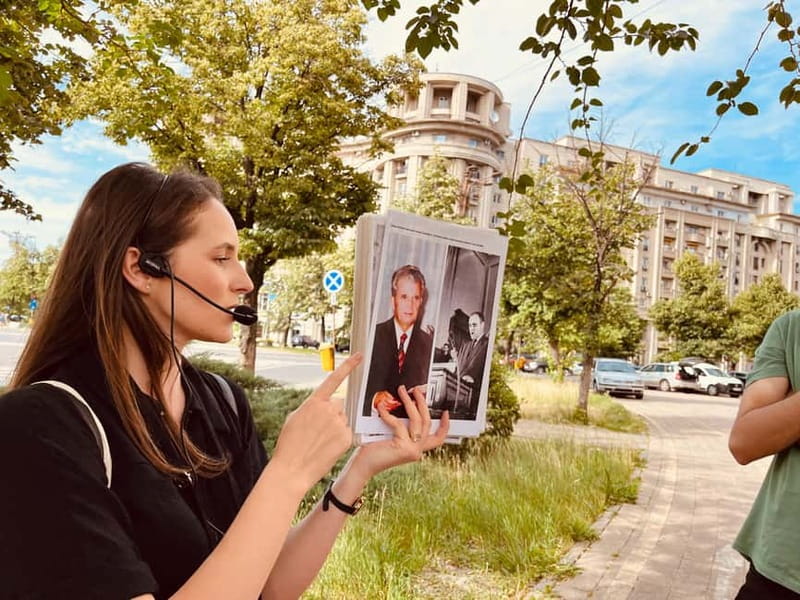
This tour is built like a straight line through the power structures of communist Romania. You start near the Parliament area—often described as the heaviest building on Earth—and then work your way toward Revolution Square, finishing at the spot tied to Nicolae Ceaușescu’s last public speech before both he and his wife, Elena, were publicly killed. Even if you don’t know the names yet, the route helps you see how politics shaped the city.
What I like most is the way the guide frames what you’re looking at. You’re not just told that communism existed. You’re given the “why,” including the international context that led to communism taking hold in Romania, and then you move toward the dawn of the 1989 Revolution. That order matters, because it changes how you read the monuments. Buildings stop being scenery and start acting like messages: who had control, what they wanted people to believe, and how public space was used.
You’ll also pass landmarks connected to the influence of Ceaușescu in Bucharest. The exact stop-by-stop list can vary by pace and what’s practical on the day, but the focus stays the same: you learn to connect architecture and slogans to lived reality. If you’ve ever looked at a famous building and wondered what it was really saying, you’ll appreciate this approach.
One thing to keep in mind: this isn’t a “fun facts” walk. The subject matter is serious. The payoff is clarity—you end with a better grasp of how ideology became daily life.
The Museum of Communism: Touch History, Not Just Read It
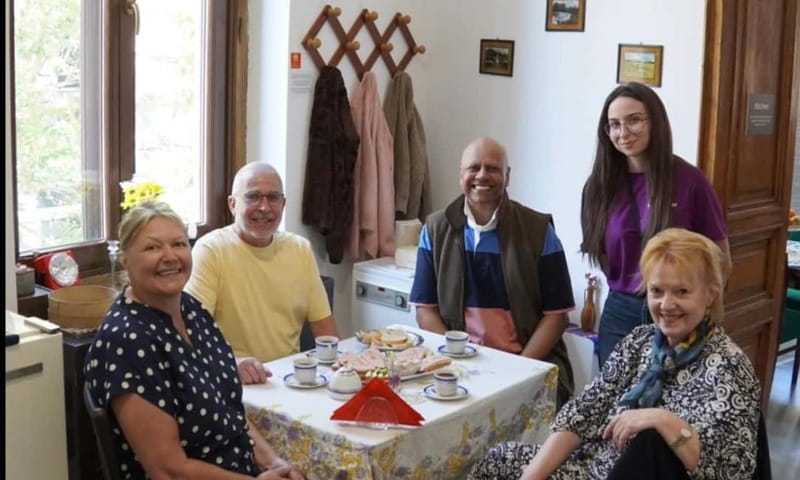
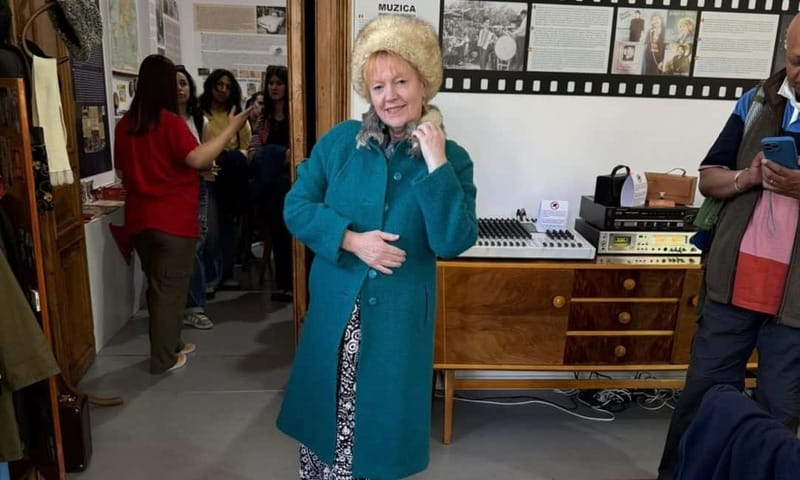
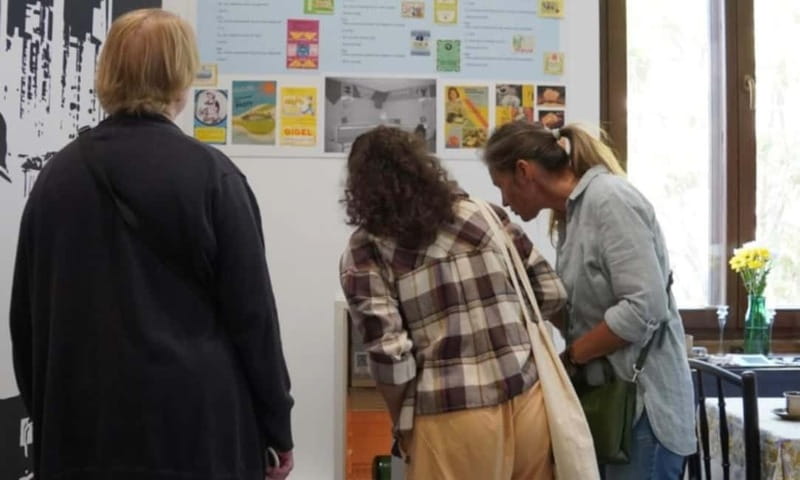
Midway through the tour, you step into the Museum of Communism, and that’s where the experience turns from walking lecture to hands-on learning. The museum is interactive, and it’s very direct about inviting you to use your senses. You may read books, look closely at period materials, take photos in recreated or themed spaces, and sit on old furniture. There’s also time to try on hats and clothes from the 70s and 80s.
I like this because it avoids a common problem with history museums: you stare at objects behind glass and feel like you’re doing homework. Here, you’re given permission to explore. If you’re the type who learns by doing—trying something on, sitting down, looking at details closely—you’ll get more out of it. Even if you’re usually not into museums, the costume and furniture elements help you understand how everyday life looked and felt.
The guided museum portion matters too. It’s not just free wandering. You get an explanation tied to communist ideology and the era’s mindset, and you connect the exhibits back to what you walked past earlier. By the time you leave, you’re meant to understand not only what the regime said, but how it shaped routines, expectations, and power.
Practical note: because this part is hands-on, wear shoes that won’t punish your feet after sitting, moving, and standing around inside.
Nechezol Coffee Substitute and Communist Snacks: Why Food Scarcity Was Personal
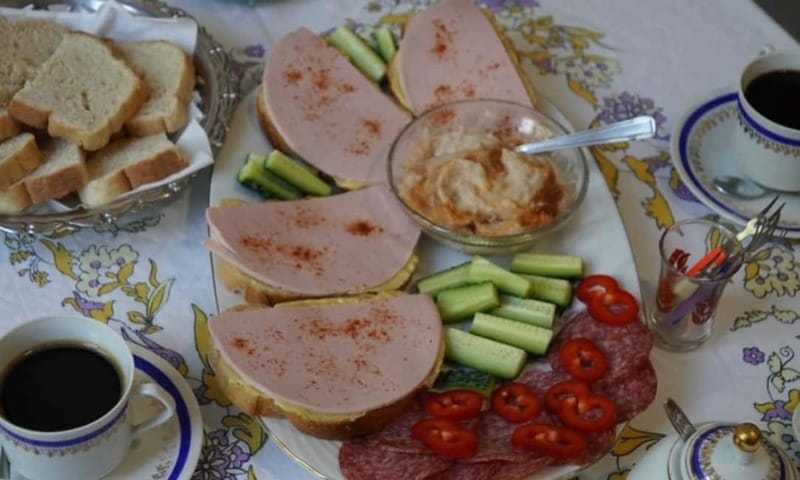
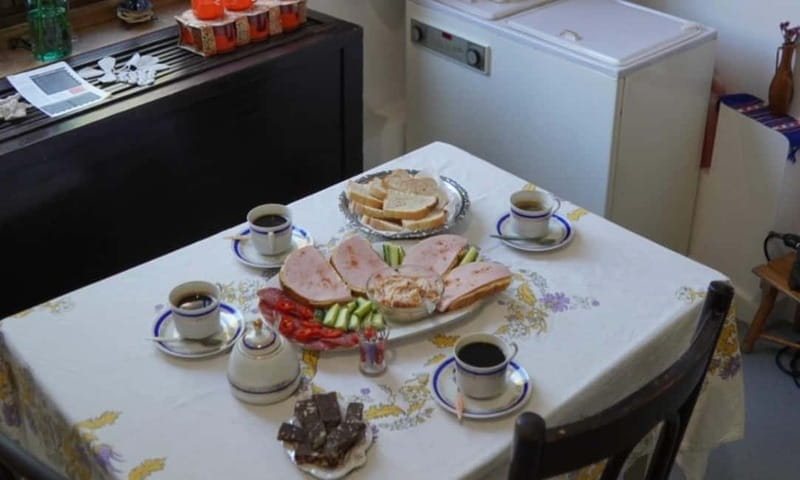
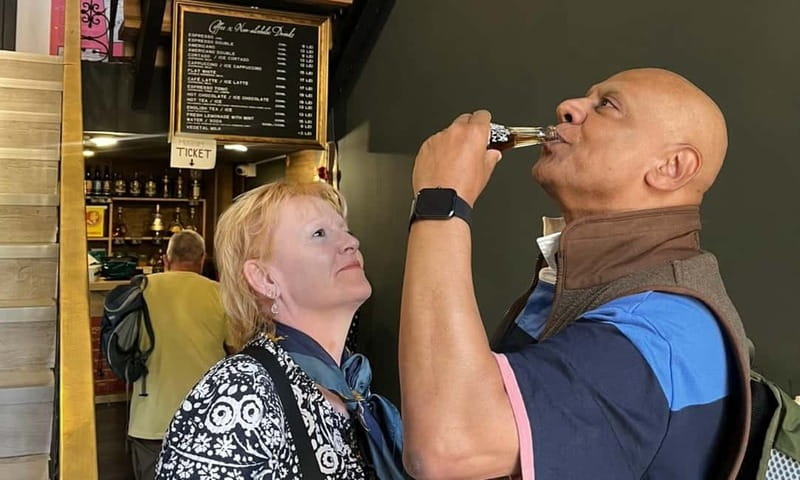
After the museum portion, you get a snack and a cup of nechezol, described as a coffee substitute popularly drank during the 80s. The tour explains why it was a big deal: during the era, Romanians faced dramatic food scarcity. Taste is a strong way to make scarcity real, because you can’t ignore your own reaction.
You’ll also sample typical communist-era snacks—both salty and sweet. The point isn’t just to say you tried something unusual. It’s to understand how shortages shaped daily choices. Food becomes a lens for the broader system: what people could get, what they learned to accept, and how even small comforts were affected.
Another nice touch: the snacks and drinks are served in vintage communist tableware. That matters more than it sounds. It keeps the experience grounded in the era rather than turning it into a modern tasting event with a theme. You’re not just tasting items; you’re stepping into a prop-filled snapshot of the 80s.
If you’re sensitive to strong flavors or have strict dietary needs, you should probably think twice in advance. The tour data doesn’t mention swaps or alternatives, and the experience is designed around typical items from that period.
Revolution Square Stop: The Moment History Turns on a Dime
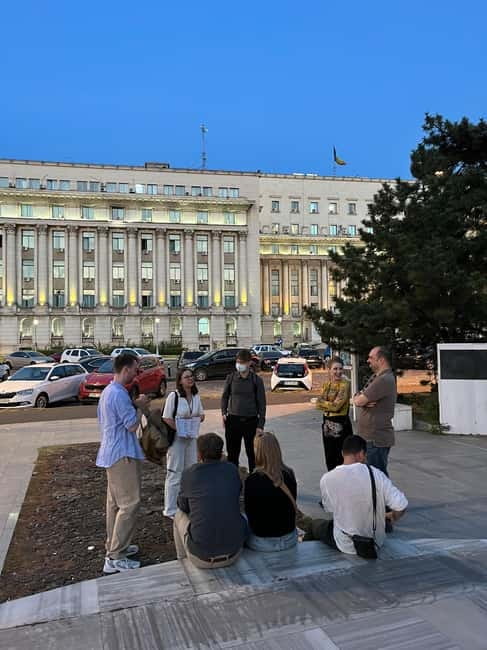
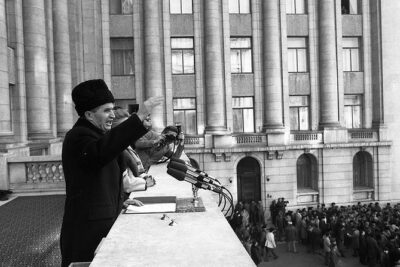
The last major outdoor stop is Revolution Square. This is where the tour anchors its storyline with a specific event: Ceaușescu’s final public speech, and the public execution of him and Elena Ceaușescu soon afterward.
Standing in that kind of place changes how you remember the dates you learned in school. Instead of 1989 being an abstract year, it’s connected to a physical setting where people gathered, watched, and responded. It also gives you a clearer understanding of why the revolution mattered—not only politically, but emotionally. Revolutions are frightening because they’re uncertain. They’re also powerful because people finally see a chance to break a system that had been shaping daily life for years.
Even if you already know the broad outline of Romania’s transition, the tour’s storytelling style makes the square feel like a conclusion, not just another stop on a list of sights.
More Bucharest halls, out of the weather




What the Guide Adds: Personal Life Under the Communist Regime
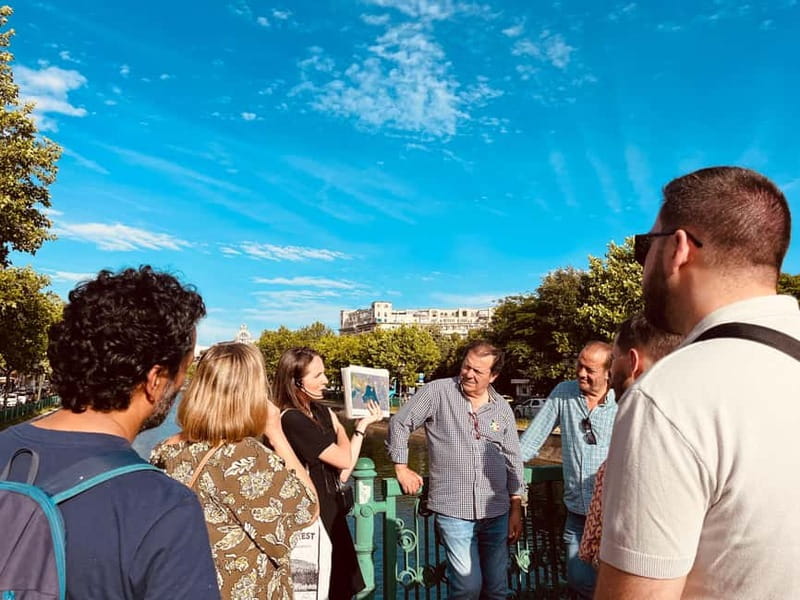
The walking and museum portions are guided by an English-speaking live tour guide, and the most valuable part is how the facts connect to daily life. You hear personal stories about what it was like to live under the communist regime in Romania. That’s the difference between learning history as policy and learning it as routine—standing in lines, managing limited access, understanding what was safe to say and what wasn’t.
One recent tour guide name that’s been mentioned is Ali, and the feedback about his approach is consistently positive—especially his ability to keep the information engaging while still being rooted in real context. Even without the personal-story layer, the route would be interesting. With it, the tour helps you build empathy without turning it into melodrama.
You’ll also get the framing that ties Romania’s situation to the broader communist ideology: why it took hold, how international pressures and alliances influenced the outcome, and how the country eventually moved toward change in 1989. That context helps you avoid the common trap of thinking of communism as only a Romanian story. It was bigger than borders.
Price and Value: What You Get for $47 in 3 Hours
At $47 per person for a 3-hour small-group experience, this tour is priced in the mid-range for Bucharest. The value is strongest if you want more than a standard walking loop.
Here’s why the price feels fair based on what’s included:
- Guided walking tour of Bucharest’s communist past
- Museum admission (and you skip the ticket line)
- Interactive museum time with a guided approach
- A snack plus nechezol coffee substitute
- Vintage communist tableware for the food portion
Add that up and you’re not only paying for someone to point at landmarks. You’re paying for museum access, guided interpretation, and food tasting tied to the era.
If you’re the type who skips museums unless they’re very focused, you might be wondering if the museum portion alone is worth it. For this format, it is, because the museum is treated as a continuation of the walk. You don’t leave the street story behind. You convert it into objects, costumes, and a tangible sense of the time.
One more value point: the small group limit (up to 8) helps keep the experience calmer. For a topic like this, that matters. You want to hear your guide clearly and ask questions without feeling like you’re in a sprint.
Meeting Point, Timing, and What to Bring (So You Enjoy It)
You meet in front of a restaurant. Your guide’s look is part of the system: the company color is purple. Look for a guide wearing a purple t-shirt, a purple umbrella, or a bag marked Bucharest by Foot. If you’re the type who likes to be early (I am), arriving 10 minutes before the start gives you time to locate the group without stress.
The tour is English and runs for about 3 hours, with a moderate amount of walking. You’ll want:
- comfortable shoes
- a camera (there are photo moments inside the interactive museum)
- water, because you’ll be on your feet
Hotel pickup isn’t included, so plan on getting yourself to the meeting area. Also, the tour isn’t suitable for wheelchair users, so if mobility is a concern, this one likely won’t work.
Who Should Book This Tour—and Who Should Skip It
This is a strong fit if:
- you like history, but you want it explained through real spaces and real objects
- you enjoy interactive museum experiences where you can touch, sit, and try period clothing
- you want context that links ideology to daily life, including food scarcity
I’d skip it if:
- you’re uncomfortable with heavy political topics and public-era violence
- you hate walking tours with a moderate pace
- you’d rather do only lightweight sightseeing and avoid serious historical framing
If you’re on the fence, think about what you came to Bucharest for. If you want the city’s layers—not just the postcards—this tour has a clear structure and a strong “why this matters” teaching style.
Should You Book the Bucharest Communist Tour?
I’d book it if you want a focused, story-led look at communist Romania that uses two tools most tours forget: interpretation and interaction. The walking route connects you to the power geography of Ceaușescu’s era, and the museum experience turns that story into something you can handle—plus you taste nechezol and period snacks on vintage tableware.
If you’re sensitive to dark subject matter, or you’re short on energy for walking, you might prefer a lighter-day option. But if you’re ready to understand how politics shaped daily life—through buildings, objects, and even food—this is one of the most practical ways to do it in Bucharest.
FAQ
How long is the Bucharest Communist Tour?
The tour lasts 3 hours.
Where does the tour start and how do I find the guide?
You meet in front of a restaurant. Look for a guide wearing a purple t-shirt, holding a purple umbrella, or carrying a bag marked Bucharest by Foot.
Is the tour guided in English?
Yes, the live tour guide speaks English.
What sights do you visit?
You visit locations connected to communist-era influence in Bucharest, including stops near the Parliament area and at Revolution Square. You also visit the Museum of Communism.
Is the Museum of Communism ticket included?
Yes. Museum admission is included, and you skip the ticket line.
Do you get food or drinks during the tour?
Yes. You get a snack and a cup of nechezol, a coffee substitute associated with the 1980s.
How many people are in the group?
The group is small, limited to 8 participants.
Is the tour suitable for wheelchair users?
No, it is not suitable for wheelchair users.
More Tour Reviews in Bucharest
- Bucharest: Dracula’s Castle, Peles Castle, & Brasov Old Town
★ 4.5 · 17,858 reviews - Bucharest: Dracula Castle, Peles Castle & Brasov Old Town
★ 4.6 · 10,891 reviews - Bucharest: Dracula’s Castle, Peleș Castle & Brașov Day Trip
★ 4.4 · 6,100 reviews - Bucharest: Palace of Parliament Tickets and Guide
★ 4.3 · 3,182 reviews - Bucharest: Day Trip to Dracula Castle, Peles Castle & Brașov
★ 4.4 · 3,049 reviews - Bucharest to Dracula Castle, Peles Castle and Brasov Guided Tour
★ 4.5 · 2,933 reviews
Bucharest Indoors: More Museums
- Bucharest: Museum of Senses Entry Ticket
★ 4.3 · 627 reviews - Bucharest: Parliament, Ceausescu House & Village Museum Tour
★ 5.0 · 208 reviews - Communism in Bucharest – Landmarks, Museum & Communist Appetizers
★ 5.0 · 111 reviews - Bucharest: Entry ticket at the Museum of Communism
★ 4.6 · 57 reviews - Bucharest: Reptiland Bucharest Entry Ticket
★ 4.6 · 56 reviews - Bucharest: Museum of Communism Ticket with Communist Coffee
★ 4.6 · 52 reviews
The Communist Years, Up Close
- Bucharest: Communism and History Guided City Walking Tour
★ 4.9 · 918 reviews - The Real tour of Communism
★ 5.0 · 666 reviews - Life under Communism
★ 5.0 · 358 reviews - 3-Hour Guided Tour of Communist Bucharest
★ 4.9 · 303 reviews - Bucharest: Parliament, Ceausescu House & Village Museum Tour
★ 5.0 · 208 reviews - Bucharest Essential Tour: Old Town, Calea Victoriei & Communism
★ 5.0 · 142 reviews
Just In: The Latest Bucharest Reviews



Communism & Ceaușescu Tours, compared.
 ★ 4.9Communism and History Guided City Walking TourFrom $31918 reviews
 ★ 5.0The Real tour of CommunismFrom $32666 reviews
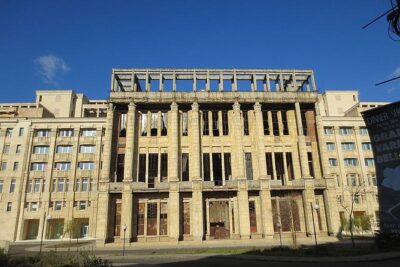 ★ 5.0Life under CommunismFrom $42358 reviews
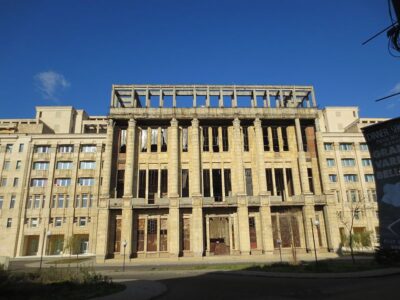 ★ 4.93-Hour Guided Tour of Communist BucharestFrom $29303 reviews
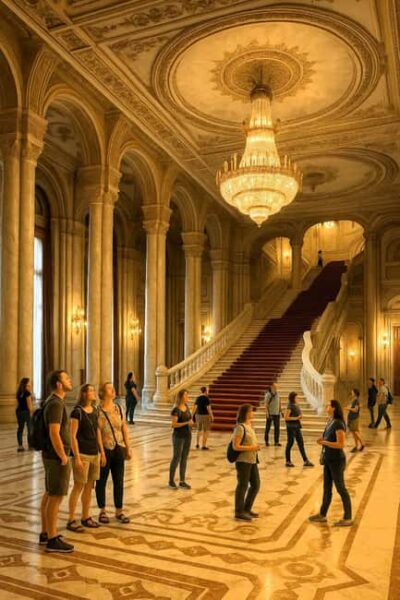 ★ 5.0Parliament, Ceausescu House & Village Museum TourFrom $1208 reviews
 ★ 5.0Bucharest Essential Tour: Old Town, Calea Victoriei & CommunismFrom $24142 reviews
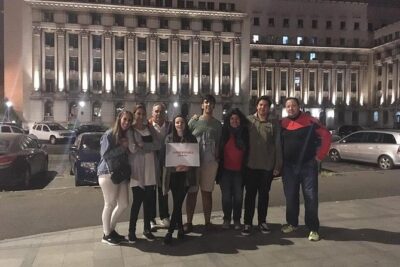 ★ 5.0Communism in Bucharest – Landmarks, Museum & Communist AppetizersFrom $48111 reviews
 ★ 4.9Palace of Parliament, Ceausescu House & Village MuseumFrom $186 reviews
Browse the lists this tour appears in