
REVIEW · COMMUNISM & CEAUșESCU TOURS
Relics of Communism: 3-Hours Walking Tour (Small groups)
A balcony speech, a revolution, and a city planned to advertise power. This is a 3-hour walking tour focused on Bucharest’s communist-era leftovers, told step-by-step as you move through the places where the story actually happened. I like that the group stays small, so questions don’t get lost in the crowd, and you’re not just staring at buildings like they’re background scenery.
Two things I especially enjoyed: the pacing (quick stops with clear context) and the included snack that keeps your energy up as you walk. One consideration: this tour runs on foot and you’ll be outside a lot, so if weather is bad or you tire easily, plan for extra breaks and bring layers.
In This Review
- Key highlights you should care about
- A 3-hour walk that turns Bucharest into a timeline
- Price and value: what you’re paying for
- Before you go: how to get more out of each stop
- Stop 1: Revolution Square and the balcony moment
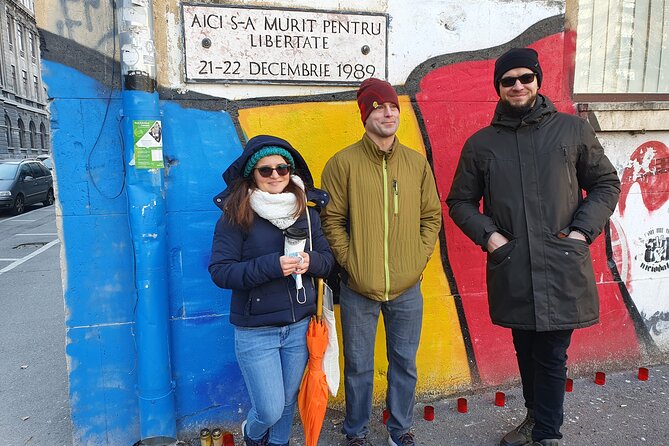
- Stop 2: Piața 21 Decembrie 1989 and the human cost of one date
- Stop 3: Unirii Square and the communist-made new center
- Stop 4: Mihai Vodă Monastery and religion under pressure
- Stop 5: Palace of Parliament as a map of power
- Timing, pacing, and how the walk feels in real life
- The guide matters: Mara and Elena’s storytelling style
- Who this tour suits best (and who might want a different option)
- Should you book Relics of Communism?
- FAQ
- How long is the Relics of Communism walking tour?
- What does the tour cost?
- Is the tour offered in English?
- What’s the group size for this tour?
- Are museum tickets included?
- Where do you start and end the tour?
Key highlights you should care about
- Max 10 people means you get real conversation time, not just a headset of facts.
- Revolution Square start sets the tone instantly, right at the balcony linked to the end of Ceaușescu.
- December 21, 1989 stop puts names and incidents to the date you’ve heard in headlines.
- Unirii Square and Unirii Boulevard shows how the communist center was built to control movement and attention.
- Mihai Vodă Monastery adds an important angle on religion under communist rule.
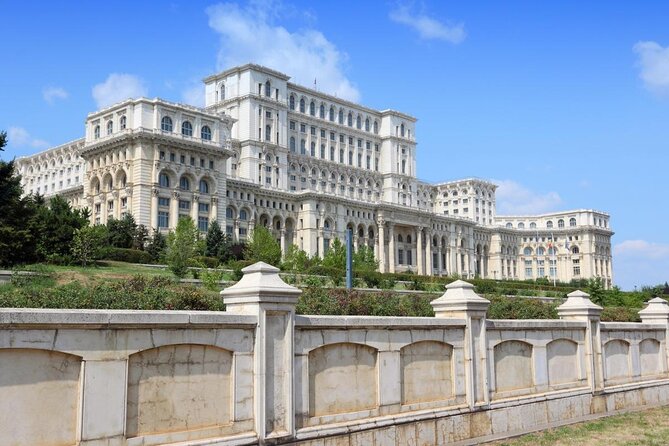
- Palace of Parliament finale closes with Socialist Realism on a massive scale (and museum entry isn’t included).
The communist decades, walked and explained
- The Real tour of Communism★ 5.0 · 666 reviews
- Life under Communism★ 5.0 · 358 reviews
- 3-Hour Guided Tour of Communist Bucharest★ 4.9 · 303 reviews
- Bucharest: Parliament, Ceausescu House & Village Museum Tour★ 5.0 · 208 reviews
A 3-hour walk that turns Bucharest into a timeline
Communist Bucharest can feel like a maze at first. You see monuments, broad avenues, and big, dramatic architecture—but it’s hard to tell what mattered most. This tour helps you read the city like a story, not a sightseeing checklist. You start in the square tied to the 1989 revolution’s final days, then you follow the threads: street-level events, propaganda-era planning, and the way power tried to control both space and beliefs.
The format is also practical. Stops are short, and the guide ties each location to a bigger theme you can carry forward. That means you leave with a clearer mental map of why certain statues are where they are and why certain buildings feel so deliberately intimidating.
Price and value: what you’re paying for
At $48.06 per person for about 3 hours, this tour sits in the “worth it if you want meaning” category. You’re paying mainly for the guide and the structure—because the stops are largely outside or have free admission for the areas visited, and you’re not paying museum ticket prices here.
What you do get:
- A guided walk through major communist-era sites in English
- A mobile ticket
- A small group (maximum 10)
- Snacks during the walk (one famous Romanian snack from communist times)
- Outdoor stop access that doesn’t require you to buy separate museum tickets
What you don’t get:
- Museum admissions aren’t included
- The Palace of Parliament stop lists admission as not included, so if you want to go inside, you’ll likely need separate tickets
For many people, that’s a fair trade. The exterior viewpoints and street-level stories do a lot of the heavy lifting. If you’re the type who needs interiors and collection details, you’ll want to budget extra for optional entry at the end.
Before you go: how to get more out of each stop
You’ll understand the tour faster if you come with two simple habits.
First, look at scale. Communist-era planning in Bucharest isn’t only political; it’s architectural theater. Broad boulevards and heavy building silhouettes were meant to broadcast dominance. Even if you’ve never studied Romania’s twentieth-century politics, you can read those choices with your eyes.
Second, watch for themes. This tour repeatedly comes back to three ideas:
- Revolution and its cost
- How the communist party used city space and symbolism
- How the state treated religion
Wear comfortable shoes. The tour is listed for moderate physical fitness, and you’ll be walking through central Bucharest streets. Also, since the experience is weather-dependent, bring a light rain layer or plan a flexible day.
Stop 1: Revolution Square and the balcony moment
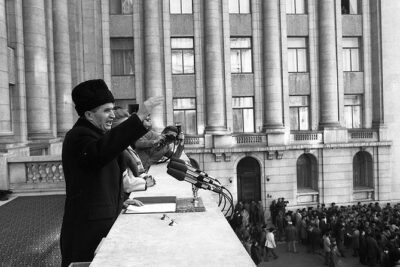
You begin at Revolution Square, at the balcony where Ceaușescu held his last speech. That starting point is the key. It puts you at the emotional center of the 1989 revolution, so the later stops don’t feel random. You’re not just learning dates—you’re standing in the exact kind of public space where speeches, crowds, and sudden shifts in power collide.
The guide explains what happened around that period and why this location matters. Even if you know the broad outline, the value here is in seeing the story anchored to a specific viewpoint.
A small caution: Revolution Square is an open area, which means wind and sun can hit harder than you expect. Bring a hat or sunglasses and expect the stop to feel exposed—worth it, but still outside.
On foot through the city, more routes

Stop 2: Piața 21 Decembrie 1989 and the human cost of one date
Next comes Piața 21 Decembrie 1989. Here, the tour focuses on the incidents that happened on December 21, 1989, along with the heroes of the revolution and the neo-communist era that followed.
This is one of those stops where the date stops being a line in a textbook and starts being a turning point. You’ll likely leave with a clearer sense of why December 21 is remembered at all, and how quickly political narratives can shift after a regime collapses.
Practical tip: take a moment to look around rather than only at monuments. In squares like this, streets and sightlines often explain how crowds move—and the guide’s stories tend to make more sense when you’re paying attention to space.
Stop 3: Unirii Square and the communist-made new center
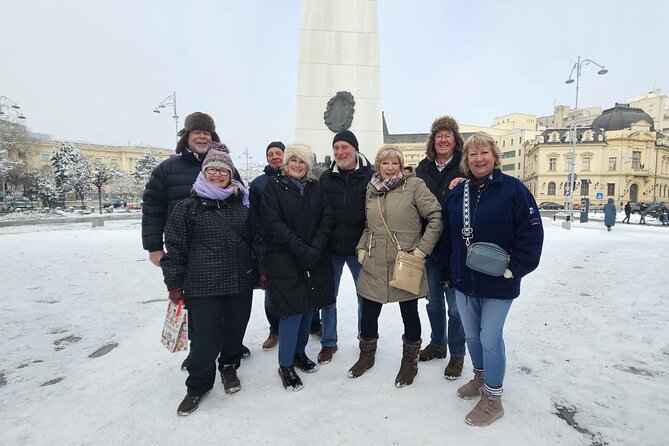
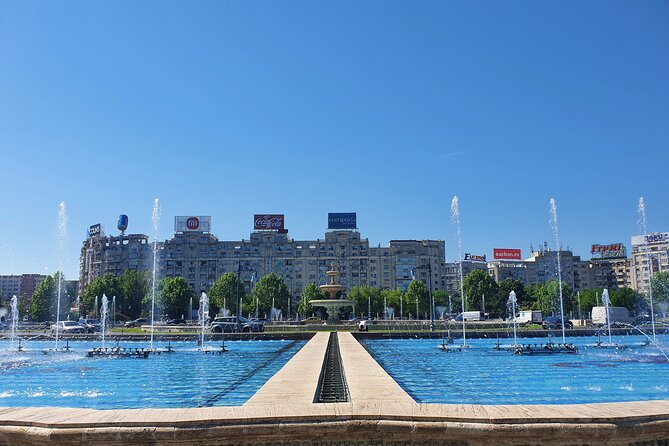
Then you head to Unirii Square, a planned centerpiece of the communist era, bisected by Unirii Boulevard. This part of Bucharest is a useful lesson in how political goals become urban design.
The guide shows you how the square and boulevard connect to bigger themes: the rise to power of the communist party of Romania and Nicolae Ceaușescu’s cult of personality. In plain terms, this stop helps you understand why certain streets feel designed for spectacle. They’re not just for getting from A to B; they shape what people notice, where they gather, and how power looks when you’re walking toward it.
One reason I like this stop: it’s more interpretive than “look at this building.” You learn to spot patterns—big axes, heavy forms, and deliberate visibility. After this, other parts of Bucharest can suddenly feel easier to read.
Stop 4: Mihai Vodă Monastery and religion under pressure
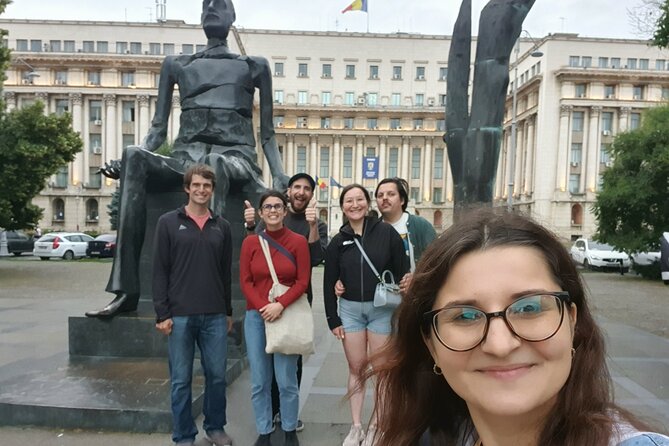
After the grand city-planning statements, the tour turns quieter at Mihai Vodă Monastery. This is where you get a different angle: the relationship between the communist system and religion.
The tour frames it around the idea of hidden or less-obvious sacred spaces in Bucharest. You’re walking from overt power imagery toward places that reflect how beliefs persisted even when public life was pressured to conform.
If you only think of communism as politics, this stop adds balance. It reminds you that control isn’t only about governments and parties. It’s also about culture, practice, and what people are allowed—or pushed—to ignore.
Stop 5: Palace of Parliament as a map of power
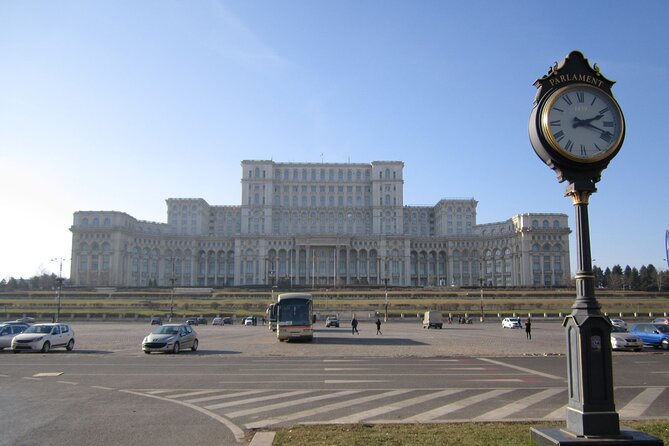
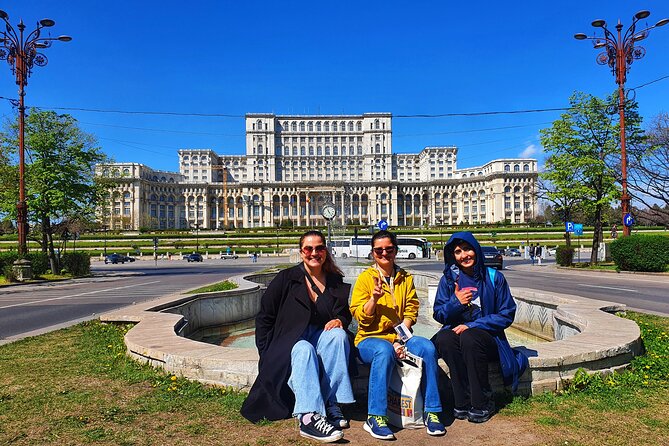
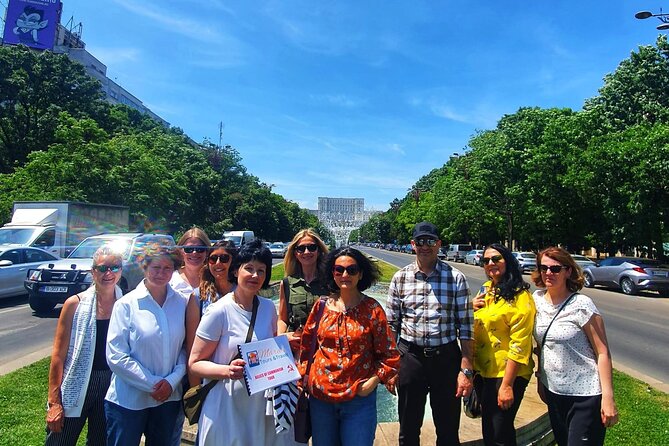
Finally, you end at the Palace of Parliament, with the tour finishing near Constitution Square, right in front of the palace area. This is the tour’s visual climax.
You’ll hear how the palace connects to the era’s architecture of authority—described in terms of Socialist realism and planned as an absolute center of power along Unirii Boulevard. The guide also points out the “wow” scale detail: it’s described as the second largest administrative building in the world.
Here’s what I’d emphasize for you: this place makes more sense when you think of it as propaganda in stone. Even without stepping inside, the sheer mass and placement tell you something about how the state wanted to project permanence.
About interiors: admission is not included, so if you want to go beyond the outside views, you’ll need separate tickets. If you skip interiors, you still get a solid sense of the message the building is broadcasting.
Timing, pacing, and how the walk feels in real life
The tour runs for about 3 hours, starting at 11:00 am. With multiple short stops, it keeps momentum. You’re not stuck in one lecture for the entire time, which matters because attention fades fast on any walking tour.
Snacks help. You get one famous Romanian snack from communist times, which is a small detail but a smart one. It means you’re not forced to find a snack mid-route while everyone else is trying to catch up.
Also, this isn’t a long-distance hike, but it’s still central Bucharest walking. Plan for:
- Comfortable shoes
- Weather layers
- A quick water pause if you need it (snacks are included, but water isn’t listed)
And because it’s a maximum of 10 travelers, the group rhythm is usually manageable. You’re more likely to hear answers to your exact questions.
The guide matters: Mara and Elena’s storytelling style
The quality difference on history tours is often the guide. In this case, the guides who get strong praise share a clear trait: they answer questions with specific detail, not vague generalities.
You may hear names like Mara or Elena in how people describe the experience. The common thread is that the stories connect the dots between buildings and daily life under communism. You don’t just memorize a timeline. You understand why certain symbols exist and what they did to ordinary people’s sense of freedom, work, and belief.
If you enjoy asking questions, this is your kind of tour. Small groups make it easier to steer the conversation toward what you care about most—revolution events, propaganda architecture, or the religion angle.
Who this tour suits best (and who might want a different option)
This walking tour is a great fit if:
- You want Bucharest’s communist history explained through real locations
- You prefer a small group over big-bus sightseeing
- You like your tours structured, with clear stop-by-stop themes
- You’re curious about how politics shaped both streets and beliefs
It might not be ideal if:
- You only care about museum exhibits and want interior access everywhere
- You’re very sensitive to walking outdoors in changing weather
- You expect the Palace of Parliament entry to be included (it isn’t)
Should you book Relics of Communism?
Yes, if you want a focused, story-driven way to understand Bucharest beyond the postcard views. The value comes from the small group size, the tight connection between locations and what they meant in 1989-era politics, and the simple fact that the tour ends at the Palace of Parliament—so you’re not guessing what you’re looking at.
One last practical thought: check the weather for your day. Since the experience depends on good conditions, the tour is best when you can comfortably walk and see the buildings clearly.
If that lines up, this is a smart, meaningful use of a half-day in Bucharest.
FAQ
How long is the Relics of Communism walking tour?
It lasts about 3 hours.
What does the tour cost?
The price is $48.06 per person.
Is the tour offered in English?
Yes, it’s offered in English.
What’s the group size for this tour?
The tour has a maximum of 10 travelers.
Are museum tickets included?
No. Museum admission isn’t included, and admission to the Palace of Parliament is not included.
Where do you start and end the tour?
You start at Revolution Square (Piața Revoluției) and end at Constitution Square in front of the Palace of the Parliament.
More Tour Reviews in Bucharest
- Bucharest: Dracula’s Castle, Peles Castle, & Brasov Old Town
★ 4.5 · 17,858 reviews - Bucharest: Dracula Castle, Peles Castle & Brasov Old Town
★ 4.6 · 10,891 reviews - Bucharest: Dracula’s Castle, Peleș Castle & Brașov Day Trip
★ 4.4 · 6,100 reviews - Bucharest: Palace of Parliament Tickets and Guide
★ 4.3 · 3,182 reviews - Bucharest: Day Trip to Dracula Castle, Peles Castle & Brașov
★ 4.4 · 3,049 reviews - Bucharest to Dracula Castle, Peles Castle and Brasov Guided Tour
★ 4.5 · 2,933 reviews
Bucharest on Foot, Continued
- Bucharest: City Highlights Guided Walking Tour
★ 4.9 · 1,482 reviews - Bucharest: Communism and History Guided City Walking Tour
★ 4.9 · 918 reviews - Bucharest Highlights Walking Tour
★ 5.0 · 469 reviews - Bucharest: Hidden Markets Walking Tour with Tastings
★ 4.9 · 329 reviews - Bucharest: Ghost Stories & Romanian Mythology Walking Tour
★ 4.9 · 287 reviews - Bucharest: Guided Walking Tour with Romanian Snack
★ 4.9 · 228 reviews
The Communist Years, Up Close
- Bucharest: Communism and History Guided City Walking Tour
★ 4.9 · 918 reviews - The Real tour of Communism
★ 5.0 · 666 reviews - Life under Communism
★ 5.0 · 358 reviews - 3-Hour Guided Tour of Communist Bucharest
★ 4.9 · 303 reviews - Bucharest: Parliament, Ceausescu House & Village Museum Tour
★ 5.0 · 208 reviews - Bucharest Essential Tour: Old Town, Calea Victoriei & Communism
★ 5.0 · 142 reviews
Just In: The Latest Bucharest Reviews



Communism & Ceaușescu Tours, compared.
 ★ 4.9Communism and History Guided City Walking TourFrom $31918 reviews
 ★ 5.0The Real tour of CommunismFrom $32666 reviews
 ★ 5.0Life under CommunismFrom $42358 reviews
 ★ 4.93-Hour Guided Tour of Communist BucharestFrom $29303 reviews
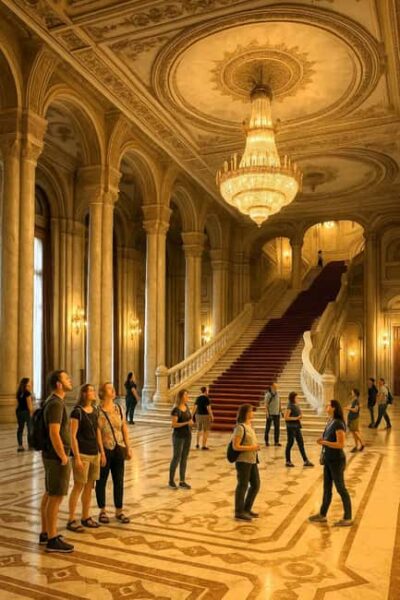 ★ 5.0Parliament, Ceausescu House & Village Museum TourFrom $1208 reviews
 ★ 5.0Bucharest Essential Tour: Old Town, Calea Victoriei & CommunismFrom $24142 reviews
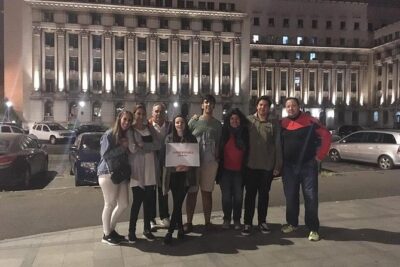 ★ 5.0Communism in Bucharest – Landmarks, Museum & Communist AppetizersFrom $48111 reviews
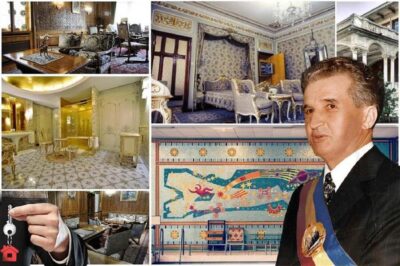 ★ 4.9Palace of Parliament, Ceausescu House & Village MuseumFrom $186 reviews
Browse the lists this tour appears in