
REVIEW · COMMUNISM & CEAUșESCU TOURS
Contrasts of Communism – Small Group Walking Tour in Bucharest
Communism has a footprint in Bucharest. I love the small-group pace and the way you mix big political sites with real street-level context, explained by your guide Elena. One consideration: this is a lot of walking (plus a bit of subway or bus), so you’ll want comfortable shoes and a steady level of stamina.
If you’ve ever wondered how one political system shapes daily life, this tour answers that question with stops that feel emotionally loaded and physically close. You’ll stand at places tied to the 1989 revolution, then move into the working-class blocks where the city is literally being repainted by today’s street art.
At about 3 hours and capped at 8 travelers, it’s structured enough to make sense, but relaxed enough for questions. It’s also offered in English, and you’ll get a mobile ticket, which keeps things simple before you meet.
In This Review
- Key highlights worth knowing
- A Bucharest walk through communism’s last chapters
- Getting started: meet-up, transit, and pacing that makes sense
- Revolution Square: standing where history changed
- University Square: KM0 of free speech and the cost of protest
- Eroii Revolutiei: from grey blocks to street art
- Memorial Cemetery at Eroilor Revolutiei: quiet paths, personal stories
- Parcul Carol I: viewpoint first, then the monument’s meaning
- Palace of Parliament: the scale lesson, without the ticket hassle
- Ending at Bulevardul Unirii and the dancing fountains
- Price and value: $42.05 for a high-impact route
- Your guide: how Elena (and sometimes Martha) makes it stick
- What to bring so the day feels easy
- Who should book, and who might want to choose differently
- Should you book Contrasts of Communism in Bucharest?
- FAQ
- How long is the tour?
- What is the group size limit?
- Is the tour offered in English?
- Where do you start and end the tour?
- Is a mobile ticket provided?
- Is the Palace of Parliament included inside?
- Is the tour mostly walking?
- Is the tour refundable if plans change?
- What happens if the weather is bad?
Key highlights worth knowing
- Revolution Square and Ceaușescu’s last speech spot: the story starts with the moment history flipped.
- University Square, KM0 of free speech: you’ll connect the street-level protest to the 21 December 1989 deaths.
- Off-the-beaten-track ride by public transport: you’ll see how neighborhoods outside the usual loop lived under communism.
- Memorial cemetery with personal stories: quiet paths, heavy meaning, and a calmer pace for reflection.
- Parcul Carol I views: you get height, scale, and context before the tour lands at Unirii Boulevard.
- Small group Q&A instead of headset tourism: you can ask questions and keep the conversation going.
The communist decades, walked and explained
- The Real tour of Communism★ 5.0 · 666 reviews
- Life under Communism★ 5.0 · 358 reviews
- 3-Hour Guided Tour of Communist Bucharest★ 4.9 · 303 reviews
- Bucharest: Parliament, Ceausescu House & Village Museum Tour★ 5.0 · 208 reviews
A Bucharest walk through communism’s last chapters
This tour is built around contrasts. You begin in the public spaces where power was performed, then you move toward places where people lived—apartments, memorials, and ordinary streets. The effect is more human than a museum visit, because you’re standing in the same city where those events and decisions still leave marks.
The guide role matters a lot here, and in this experience you get an English-speaking local who teaches with stories, photos, and discussion. Many departures are led by Elena, and at least one has been guided by Martha as well, so you may get a slightly different speaking style—but the focus stays the same: what communism changed, and how Romania’s story continued after 1989.
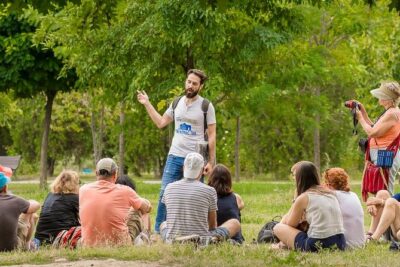
Because the group is small (maximum 8), you don’t feel like you’re being marched through a list. It feels closer to walking with a smart friend who also happens to know how to explain the political mechanics without turning it into a lecture.
Getting started: meet-up, transit, and pacing that makes sense
You’ll meet at Strada Boteanu 3 and finish near Bulevardul Unirii 25. The tour runs about 3 hours, and it’s designed to mix walking with public transport, so you’re not stuck in a long, straight line of pavement the entire time.
The operator keeps the route close enough to be practical, and it’s “near public transportation,” which helps if you’re timing your day around other Bucharest sights. Still, there is a fair amount of walking, so do yourself a favor and arrive with good shoes and a relaxed mindset. One tip that comes up often: eat a solid breakfast beforehand, because you’ll cover ground before you know it.
Weather matters. The tour requires good conditions, and if the weather turns you’ll be offered a different date or a full refund. For a city tour with this much meaning, it’s worth keeping an eye on the forecast.
Revolution Square: standing where history changed
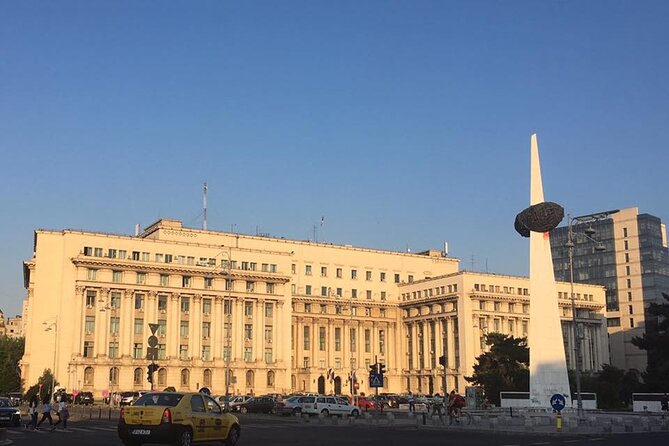
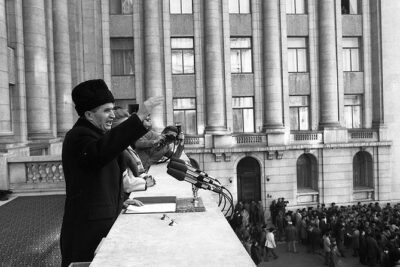
Your first stop is Revolution Square, where Nicolae Ceaușescu held his last speech in 1989. This isn’t just a photo stop. You’ll hear the build-up to the uprising and the quick collapse of a dictatorship that had controlled public life with force and symbolism.
I like how this opening works. Starting here gives you a timeline anchor before you start seeing monuments and memorials later. It also sets the emotional tone, because you’re not looking at abstract “communism”—you’re looking at the last scene of a specific turning point.
Time at the stop is about 30 minutes, and that’s enough to take in the space and still ask questions. If you’re the type who wants context before moving on, this first segment delivers it fast.
University Square: KM0 of free speech and the cost of protest
Next you’ll head to University Square, described as KM0 of Romanian freedom of speech. From this spot, the guide frames the political tension and then connects it to the deaths of heroes for liberty in Bucharest on 21 December 1989.
What makes this stop valuable is the focus on speech itself—how it was controlled, how it was challenged, and what risk people took when they stood up anyway. It’s the kind of topic that can feel distant if you only read about it, but standing in the right place makes it more concrete.
Expect about 30 minutes here. This stop also works well if you’re interested in how the revolution wasn’t only about overthrowing a leader, but about breaking a system of fear and enforced silence.
On foot through the city, more routes


Eroii Revolutiei: from grey blocks to street art
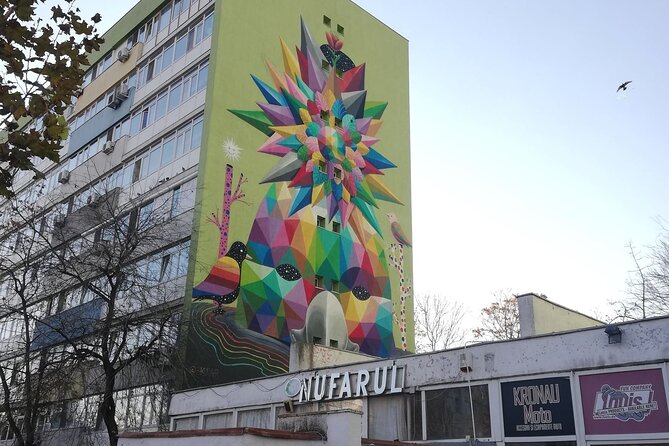
At Eroii Revolutiei, you’ll travel off the beaten route using public transportation to reach a working-class neighborhood. The point isn’t just to see buildings—it’s to see how the same urban fabric that once looked bleak is now being repurposed by artists and residents.
You’ll encounter the 1970s grey communist blocks, then talk about how they’re getting reinvented with colorful street art. I like this contrast because it changes the theme from punishment and propaganda to change and ownership. It makes it easier to understand that post-communist life wasn’t one single switch—it was a long, uneven process.
This segment is shorter, around 15 minutes, so it’s not meant to drag. It’s more like a snapshot: enough time to notice the architecture and the art, then move on to the quieter parts of the story.
Memorial Cemetery at Eroilor Revolutiei: quiet paths, personal stories
Then the tour shifts gears at Cimit. Eroilor Revolutiei (the Heroes Cemetery Memorial). Here you’ll walk quiet paths tied to the revolution of 1989 and learn personal stories of those killed.
This is where I appreciate the pacing. After street art and public history, you get a calmer, more reflective space. You’re not asked to “perform” your emotions; the cemetery naturally slows the conversation down.
Plan about 30 minutes for this stop. The best way to handle it is simple: keep your questions, but also give yourself a minute to look around. The value is not only the facts, but the way the place holds memory.
Parcul Carol I: viewpoint first, then the monument’s meaning
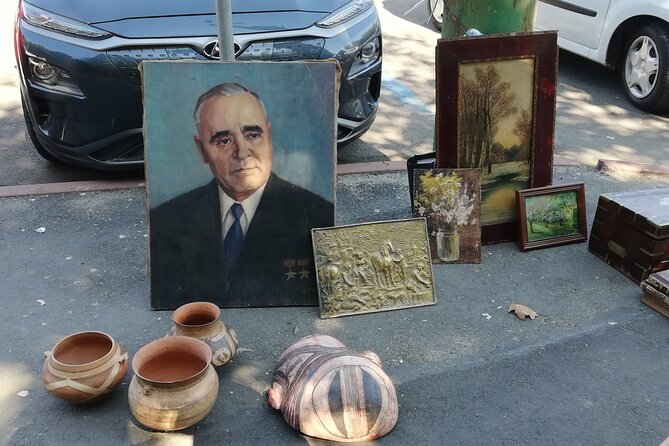
Next comes Parcul Carol I, where you’ll get a unique view from one of Bucharest’s highest hills. It’s a smart move: before you face one of the city’s most politically charged buildings, you see the city from above and understand distance, scale, and placement.
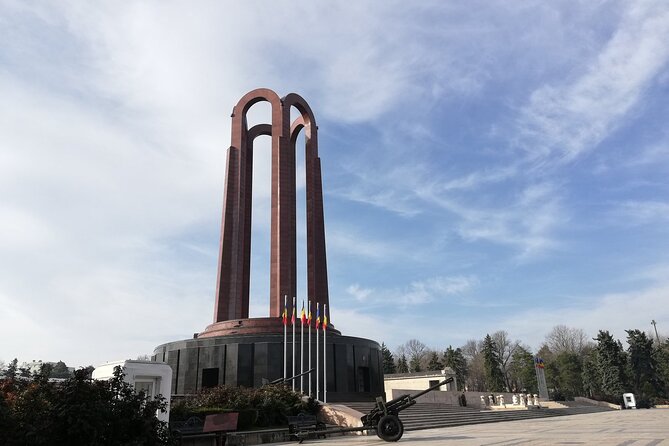
You’ll also see the Monument of the Heroes for the Freedom of the Motherland, built in honor of communist party leaders. This monument is a good reminder that under communism, even “heroism” was organized and named from above.
This stop runs about 30 minutes. The reflection here isn’t just on the past; it’s on how power uses public space and how meaning gets assigned to stone and ceremony.
Palace of Parliament: the scale lesson, without the ticket hassle
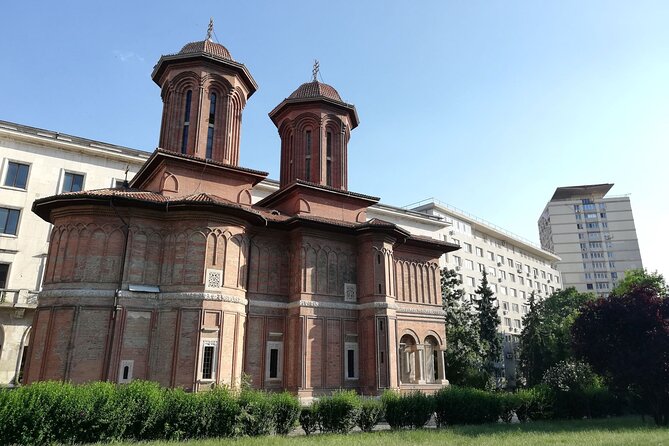
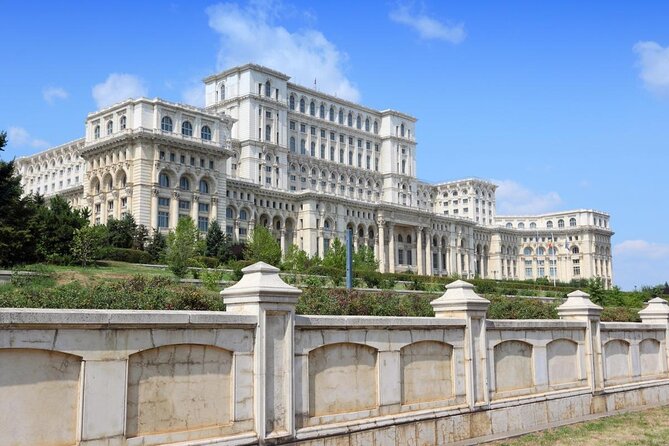
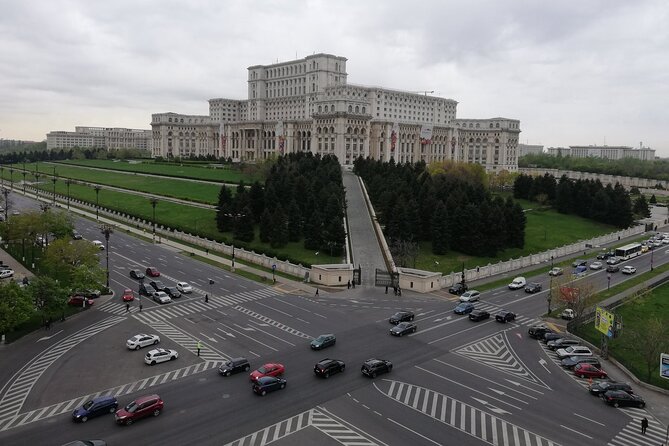
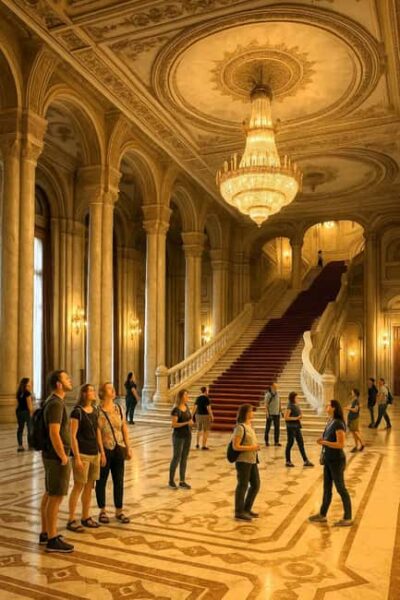
Finally, you return to the city center for a stop outside the Palace of Parliament. This building is described as the second-largest administrative building in the world, and you’ll hear it framed as part of Ceaușescu’s last whims.
Here’s the practical bit: the tour includes standing in front of the palace, but admission is not included. So you’re not forced into an inside visit if you’d rather keep the day moving.
Even from outside, the Palace of Parliament carries its message. It’s built like a statement that wanted to be bigger than the people. If you like architecture, you’ll also enjoy the way the building dominates the surroundings and changes how the street feels.
Plan about 30 minutes at this point, which is enough time to process the scale without turning it into a full museum day.
Ending at Bulevardul Unirii and the dancing fountains
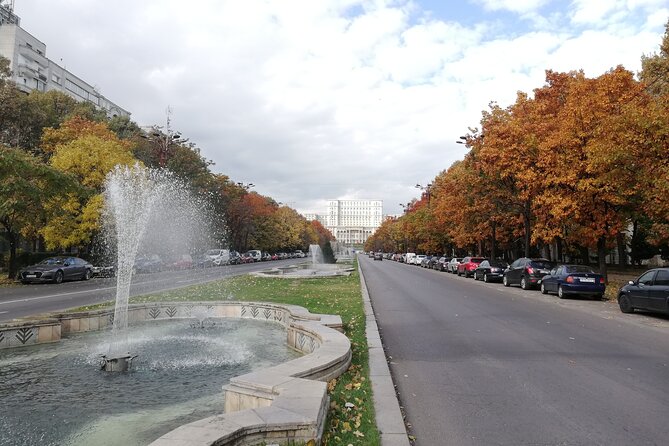
The tour finishes near Bulevardul Unirii, close to the dancing fountains. You’ll hear the idea behind the boulevard’s layout as a kind of “home-court advantage” meant to humble world leaders.
This ending matters because it reconnects the theme to present-day Bucharest. You’re leaving behind revolution sites and moving toward an area that has become part of everyday city life and tourist nights.
The final stretch is about 15 minutes, and it’s a good landing point if you’re planning dinner afterward in the old town or the surrounding area.
Price and value: $42.05 for a high-impact route
At $42.05 per person for about 3 hours, the value is strong if you care about real context and not just surface sightseeing. The structure helps: many stops are tied to free admission (so you’re not paying repeatedly just to stand in interesting places), while only the Palace of Parliament has admission listed as not included.
For me, the best value part is the mix of access and explanation. You’re not just seeing monuments; you’re walking through a narrative: rise, collapse, memory, and what Romania is now doing with the spaces left behind.
Also, the small-group cap of 8 travelers keeps the tour feeling personal. If you dislike tours where everyone lines up behind a headset audio track, you’ll probably prefer this format.
Your guide: how Elena (and sometimes Martha) makes it stick
This is the kind of tour where guide style can make or break the experience. In this one, the emphasis is on clear answers, thoughtful context, and a conversational feel. You’re encouraged to ask questions, and the guide uses photos to help you visualize what changed over time.
That matters in Bucharest, because the city holds layers. Buildings remain; meanings shift. Seeing a photo paired with where you’re standing now can help you understand the transformation without requiring you to be a political science expert.
I also appreciated how the experience connects history to daily life and modern perceptions. The guide doesn’t treat communism as only a chapter ending in 1989; the story continues in how people talk, remember, and build.
If you’re the kind of traveler who likes a personal perspective, you’ll likely get it here, including first-hand context shared in an approachable way.
What to bring so the day feels easy
A few practical moves will help you enjoy the experience more.
- Wear comfortable walking shoes. You’ll be on foot enough that you’ll feel it.
- Bring a layer for changing weather. Outdoor stops and viewpoints can shift fast.
- Bring questions about Romania’s modern political climate if that’s your thing. The format supports discussion.
- Plan your day so you’re not running on empty. A good breakfast before you start is a smart move.
Also, you’ll be using public transportation during part of the route. That means having your ticket ready (you get a mobile ticket) and keeping your transit shoes on.
Who should book, and who might want to choose differently
This tour is a good fit if you want to understand Bucharest beyond the postcard highlights. You’ll enjoy it if you like political history with real places, and if you appreciate seeing both power sites and regular neighborhood settings.
It’s also ideal for travelers who prefer a small group. With up to 8 people, you can ask follow-ups and actually hear the answers.
You might consider another option if you want a light, purely scenic walk. This tour deals with heavy topics tied to revolution and repression, and the memorial setting asks for a respectful pace.
If you have only a low tolerance for walking, the “moderate physical fitness level” guidance is worth taking seriously. There’s transit, but you’ll still walk.
Should you book Contrasts of Communism in Bucharest?
Yes, I think this is worth booking if your goal is to understand how communism shaped Bucharest in real life. The strongest reasons are the small-group feel, the guide-led conversation, and the stop sequence that connects the 1989 revolution to everyday urban change.
It’s also a smart value at $42.05, especially because so many stops don’t require paid admission for you to learn from them. And the route isn’t just downtown monuments—it includes public transport to reach the kind of neighborhood you might not find on your own.
One last practical thought: book with a decent weather window in mind, because you want to take in the viewpoints and outdoor memorial spaces without rushing.
If this theme interests you, don’t overthink it. You’ll leave with a clearer picture of Romania’s past and why it still matters on the streets today.
FAQ
How long is the tour?
It runs for about 3 hours.
What is the group size limit?
The tour has a maximum of 8 travelers.
Is the tour offered in English?
Yes, it is offered in English.
Where do you start and end the tour?
You start at Strada Boteanu 3 in Bucharest and end near Bulevardul Unirii 25.
Is a mobile ticket provided?
Yes, you receive a mobile ticket.
Is the Palace of Parliament included inside?
You stand in front of the Palace of Parliament, and admission is not included.
Is the tour mostly walking?
It includes a good amount of walking and also uses public transportation for part of the route. A moderate physical fitness level is recommended.
Is the tour refundable if plans change?
Yes. You can cancel up to 24 hours in advance for a full refund.
What happens if the weather is bad?
If it’s canceled due to poor weather, you’ll be offered a different date or a full refund.
More Tour Reviews in Bucharest
- Bucharest: Dracula’s Castle, Peles Castle, & Brasov Old Town
★ 4.5 · 17,858 reviews - Bucharest: Dracula Castle, Peles Castle & Brasov Old Town
★ 4.6 · 10,891 reviews - Bucharest: Dracula’s Castle, Peleș Castle & Brașov Day Trip
★ 4.4 · 6,100 reviews - Bucharest: Palace of Parliament Tickets and Guide
★ 4.3 · 3,182 reviews - Bucharest: Day Trip to Dracula Castle, Peles Castle & Brașov
★ 4.4 · 3,049 reviews - Bucharest to Dracula Castle, Peles Castle and Brasov Guided Tour
★ 4.5 · 2,933 reviews
Bucharest on Foot, Continued
- Bucharest: City Highlights Guided Walking Tour
★ 4.9 · 1,482 reviews - Bucharest: Communism and History Guided City Walking Tour
★ 4.9 · 918 reviews - Bucharest Highlights Walking Tour
★ 5.0 · 469 reviews - Bucharest: Hidden Markets Walking Tour with Tastings
★ 4.9 · 329 reviews - Bucharest: Ghost Stories & Romanian Mythology Walking Tour
★ 4.9 · 287 reviews - Bucharest: Guided Walking Tour with Romanian Snack
★ 4.9 · 228 reviews
The Communist Years, Up Close
- Bucharest: Communism and History Guided City Walking Tour
★ 4.9 · 918 reviews - The Real tour of Communism
★ 5.0 · 666 reviews - Life under Communism
★ 5.0 · 358 reviews - 3-Hour Guided Tour of Communist Bucharest
★ 4.9 · 303 reviews - Bucharest: Parliament, Ceausescu House & Village Museum Tour
★ 5.0 · 208 reviews - Bucharest Essential Tour: Old Town, Calea Victoriei & Communism
★ 5.0 · 142 reviews
Just In: The Latest Bucharest Reviews



Communism & Ceaușescu Tours, compared.
 ★ 4.9Communism and History Guided City Walking TourFrom $31918 reviews
 ★ 5.0The Real tour of CommunismFrom $32666 reviews
 ★ 5.0Life under CommunismFrom $42358 reviews
 ★ 4.93-Hour Guided Tour of Communist BucharestFrom $29303 reviews
 ★ 5.0Parliament, Ceausescu House & Village Museum TourFrom $1208 reviews
 ★ 5.0Bucharest Essential Tour: Old Town, Calea Victoriei & CommunismFrom $24142 reviews
 ★ 5.0Communism in Bucharest – Landmarks, Museum & Communist AppetizersFrom $48111 reviews
 ★ 4.9Palace of Parliament, Ceausescu House & Village MuseumFrom $186 reviews
Browse the lists this tour appears in