
REVIEW · COMMUNISM & CEAUșESCU TOURS
Communism Walking Tour from Lenin to Ceausescu in Bucharest
Bucharest’s communist past is right on the sidewalk, and this walking tour strings key sites into a tight timeline of power, propaganda, and rupture. I love how the route doesn’t treat history like a museum label—it uses real streets and landmarks to explain how the system shaped everyday space.
Two things I especially liked: first, you get a story that connects buildings across the city instead of hopping randomly between monuments. Second, the guides can be strong storytellers, and I’ve seen examples like Alex and Lucia bringing humor and clarity even when the topic gets heavy. One possible drawback: the tour is in English, and if you struggle with English on the spot, you might miss some details.
In This Review
- Why This Lenin-to-Ceausescu Walk Works So Well in 2.5 Hours
- What You’ll See: A Clear Timeline of Romanian Communism
- Value for $24: Free-Entry Stops and a Local Guide
- Starting at Bulevardul Unirii 5: Build Your Bucharest Map Early
- Palace of the Parliament: The Monument That Says Everything
- Manastirea Antim and Socialist Victory Boulevard: When Progress Threatened an Old Church
- Palatul Patriarhiei: Paris-Inspired Style and a Political Double Meaning
- Piata Unirii and the 1980s Socialist Boulevard: Dancing Fountains as a Public Statement
- Old Town: The Symbol of the Old Regime—and What Communism Did to It
- University’s Square: Romania’s Bloody Revolution and Where People Were Shot
- Palatul Regal / Royal Palace: From Winter Residence to Palace of the Republic
- Ateneul Roman and the 5 Lei Bill: Culture as Everyday Currency
- Revolution Square: Ceausescu’s Last Speech at the Central Committee
- Pace, Group Size, and What to Wear
- Who Should Book This Communism Tour (and Who Might Skip It)
- Should You Book This Tour? My Honest Take
- FAQ
- FAQ
- How long is the Bucharest communism walking tour?
- What does the tour cost?
- Where do you meet, and where does the tour end?
- Is the tour in English?
- Are admission tickets included for the stops?
- Can I cancel if my plans change?
Why This Lenin-to-Ceausescu Walk Works So Well in 2.5 Hours

This is the kind of tour that helps you get your bearings fast in Bucharest. You walk through the grand plans of communism, but you also see the seams—old structures reused, areas left to rot, and squares that became stages for political survival.
At $24 per person for about 2 hours 30 minutes, the value comes from two practical choices: a focused route (not a scattershot highlights reel) and a local guide who explains what you’re looking at. The small group size also helps with question time, especially at the places where the stories turn darker.
The communist decades, walked and explained
- The Real tour of Communism★ 5.0 · 666 reviews
- Life under Communism★ 5.0 · 358 reviews
- 3-Hour Guided Tour of Communist Bucharest★ 4.9 · 303 reviews
- Bucharest: Parliament, Ceausescu House & Village Museum Tour★ 5.0 · 208 reviews
What You’ll See: A Clear Timeline of Romanian Communism
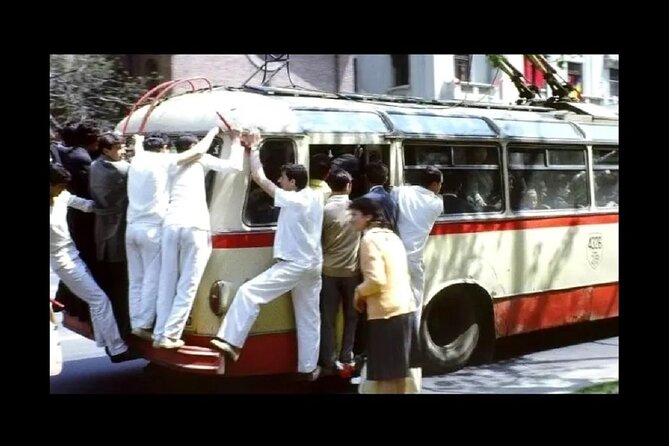
The tour is designed like a chronological walk, moving from the era of massive state projects toward the events that ended the system. Even if you know the broad headlines already, the route helps you match names to places—and places to consequences.
You start at Bulevardul Unirii 5 and end at Revolution Square. In between, you hit a mix of monumental architecture, renovated or repurposed cultural landmarks, and squares tied to public life and public punishment.
Value for $24: Free-Entry Stops and a Local Guide
The price is low enough that you don’t have to decide between a “history tour” and something else. What makes it feel like a bargain is that each major stop includes free admission for the tour portion, plus you’re paying for a real guide rather than just a route on your phone.
The tour also uses a mobile ticket, and it runs with a maximum of 25 people. That matters when you’re moving through busy city spaces and want the group to stay together without feeling rushed.
Starting at Bulevardul Unirii 5: Build Your Bucharest Map Early
Meeting at Bulevardul Unirii 5 is a smart way to start, because it places you near a central spine of the city. You begin with the kind of landmarks that communism favored: big axes, big plans, and big visibility.
From the first steps, you’ll understand the tour’s core idea: this system wasn’t just ideology—it was also construction. It changed what got preserved, what got demolished, and what got turned into official symbols.
Palace of the Parliament: The Monument That Says Everything
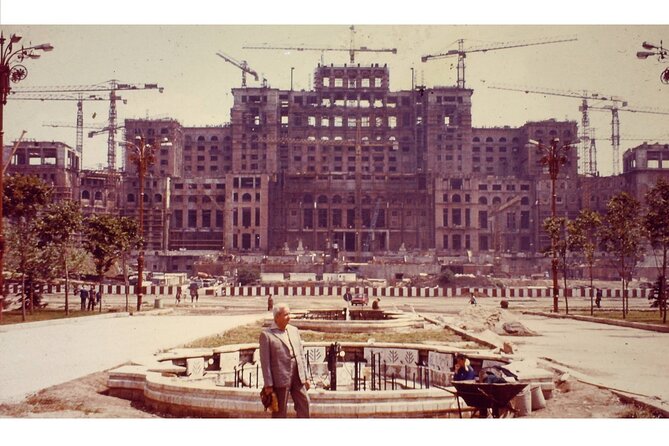
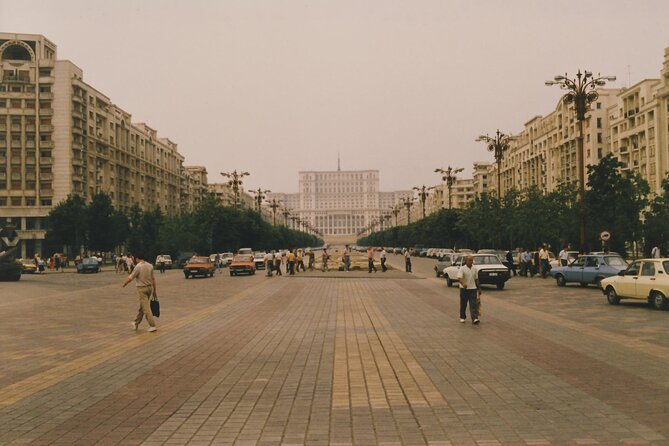
You begin in front of the Palace of the Parliament, described as the second biggest administrative building in the world. It’s part of the last megalomaniac communist project, and the tour treats it like more than a photo spot.
The key takeaway here is scale and intention. When a regime builds at this level, it’s trying to make power feel permanent. Even if you don’t tour inside, you still learn how this kind of project fits the communist need for control, permanence, and public messaging.
Good to know: the stop is about 20 minutes, so you’ll get enough time to look closely and listen without feeling stuck at a single location for ages.
On foot through the city, more routes

Manastirea Antim and Socialist Victory Boulevard: When Progress Threatened an Old Church
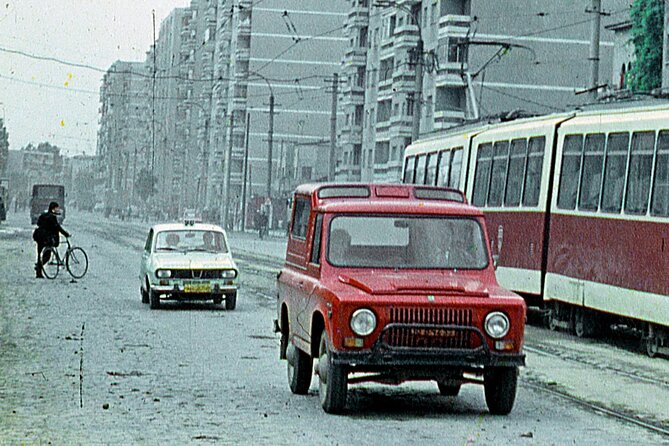
Next is Manastirea Antim, set in the older part of the city. The story matters: it was almost demolished to make space for the new Socialist Victory Boulevard.
That contrast is what makes this stop meaningful. You’re not just seeing an old building—you’re seeing a decision point. This is how regimes often work: they don’t only erase people, they also reshape history by reshaping the city’s physical fabric.
Potential drawback: this stop is shorter (around 15 minutes), so if you want deep time for photos, arrive with your priorities in mind.
Palatul Patriarhiei: Paris-Inspired Style and a Political Double Meaning
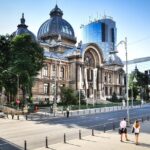
At Palatul Patriarhiei, you’ll learn a layered story. It’s inspired by the Garnier Opera in Paris, and it’s tied to both the start of democracy in Romania and the start of the communist movement.
That kind of link can be confusing if you only think of styles as style. The tour’s value is that it frames architecture as a political language. A building can borrow beauty from elsewhere, but it can also carry meaning inside Romanian history—sometimes at different times, under different regimes.
You’ll spend about 20 minutes here, which is enough time to absorb the overview and connect the symbolism back to earlier stops.
Piata Unirii and the 1980s Socialist Boulevard: Dancing Fountains as a Public Statement
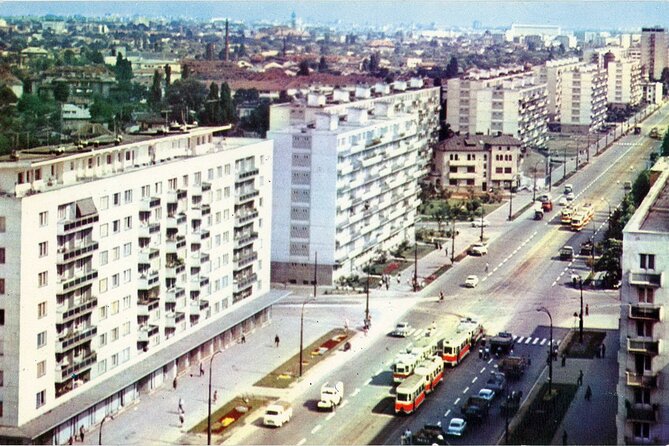
Piata Unirii (connected to the 1980s Socialist Victory boulevard) is where the tour gets more visually playful—without losing the serious context. The landmark here is the Dancing Fountains, and the contrast with the earlier stops is deliberate.
This is where you see how communism tried to shape public life as well as politics. Big public spaces, planned entertainment, and engineered views can feel like everyday joy—until you remember they were designed to be visible proof of the system’s competence.
The stop lasts about 20 minutes. You’ll have time to look around and listen to how public spectacle functions politically.
Old Town: The Symbol of the Old Regime—and What Communism Did to It

Then you move to Old Town, described as a symbol of the old regime. During the communist era, the area became abandoned.
This is one of the more sobering parts of the walk. When the tour talks about abandonment, it points to a common pattern: regimes often lose interest in places that don’t fit their identity, or they allow them to decay until a new story can replace the old one.
Even with a short visit (about 15 minutes), you should leave with a clearer sense of how control can work through neglect as well as force.
University’s Square: Romania’s Bloody Revolution and Where People Were Shot
University’s Square is heavy. The tour explains that Romania was the only country from the communist bloc that ended in a bloody revolution, and that most victims were shot in this square.
The practical value of this stop isn’t just learning the facts. It’s understanding the geography of rupture—where collective action becomes concentrated and where violence leaves a permanent mark on public space.
You’ll have around 15 minutes here. If you prefer light walking breaks between intense scenes, plan to pace yourself and take a few quiet moments during the stop.
Palatul Regal / Royal Palace: From Winter Residence to Palace of the Republic
At Palatul Regal (now the National Art Museum), you get another clear example of reuse. It once functioned as the winter residence of Romania’s Royal family, but during the first years of communism it became the Palace of the Republic and a protocol building.
This is one of my favorite kinds of history lessons: the tour shows how regimes fight for legitimacy by taking over the objects people already associate with authority. Instead of building everything new, the system also repackaged what already looked official and impressive.
The visit here is about 15 minutes, which is enough for the key points: royal power gets turned into state power, and the building stays important even as the meaning changes.
Ateneul Roman and the 5 Lei Bill: Culture as Everyday Currency
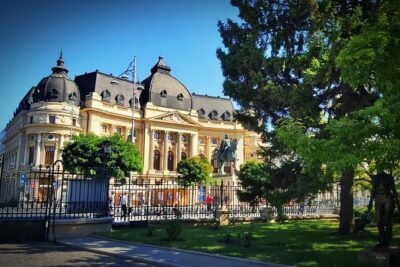
Ateneul Roman is one of Bucharest’s most representative buildings, and you’ll hear that it’s printed on the 5 lei bill. The stop is short (about 5 minutes), but the tour uses it well.
The point is simple and smart: cultural symbols don’t only live in grand halls. They show up in your everyday money, repeating themselves through daily life. That’s how a nation keeps shaping identity long after the speeches end.
If you like photography, you’ll want to take a quick look and then keep moving—this part is fast by design.
Revolution Square: Ceausescu’s Last Speech at the Central Committee
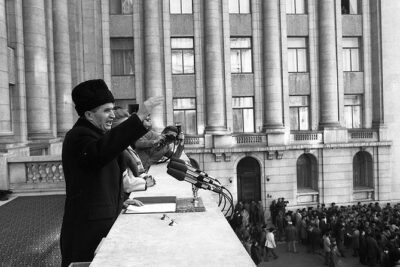
You finish at Piata Revolukiei (Revolution Square), where the main building was the Central Committee of the Communist Party. The tour explains that Nicolae Ceausescu held his last speech in front of the Romanian people here.
This stop gives the walk a hard ending. You started with the visual language of power and state building, and you end at the moment when that power collapses in public. Even if you already know the outcome, ending at Revolution Square helps you understand why this part of Bucharest feels like a hinge point in the story.
You’ll spend about 25 minutes here, which is a generous amount for a finale. It gives you time to look around and let the connections land.
Pace, Group Size, and What to Wear
The tour runs about 2 hours 30 minutes and is designed to stay moving between central stops. With a maximum of 25 people, it should feel like a real walking group rather than a long line of strangers.
Since food and drinks aren’t included, plan to drink water before you start or bring a bottle. Also, wear comfortable shoes. Even when the distances aren’t huge, Bucharest’s streets can add up over 2.5 hours.
If your priority is slow museum-style time, this won’t replace that. If your priority is to understand what you’re seeing while walking city blocks, it’s a great format.
Who Should Book This Communism Tour (and Who Might Skip It)
This walk is best for you if you want historical context that stays practical. You’ll like it if you enjoy connecting architecture, squares, and political events into one readable map.
It also works well across ages. One group described it as enjoyable across three generations, which makes sense: the stops are visually strong, and the guide’s storytelling can keep the tone accessible even when details get grim.
You might want to consider another option if you strongly prefer tours in a level of English you feel fully fluent in from the start. The tour is offered in English, and one person noted difficulty following even with translation support. If that sounds like you, plan to do a little reading before you go, so you recognize names and timeline moments as the guide explains them.
Should You Book This Tour? My Honest Take
If you’re curious about Romania’s communist era but want something more grounded than a book chapter, I think you should book it. For $24, you get a focused route, a local guide, and multiple stops tied to real public spaces—plus free entry to what you’re seeing during the tour.
The biggest reason I’d recommend it is the sequencing. The tour helps you understand the logic of the regime through the city’s physical choices, then brings you to the end in a place where politics became unavoidable.
FAQ
FAQ
How long is the Bucharest communism walking tour?
It lasts about 2 hours 30 minutes.
What does the tour cost?
The price is $24.00 per person.
Where do you meet, and where does the tour end?
You meet at Bulevardul Unirii 5, București 040101, Romania, and the tour ends at Revolution Square (Piața Revoluției), Bucharest.
Is the tour in English?
Yes, English is one of the offered languages.
Are admission tickets included for the stops?
Yes. The listed stops show admission tickets as free as part of the experience.
Can I cancel if my plans change?
Yes. You can cancel up to 24 hours in advance for a full refund.
More Tour Reviews in Bucharest
- Bucharest: Dracula’s Castle, Peles Castle, & Brasov Old Town
★ 4.5 · 17,858 reviews - Bucharest: Dracula Castle, Peles Castle & Brasov Old Town
★ 4.6 · 10,891 reviews - Bucharest: Dracula’s Castle, Peleș Castle & Brașov Day Trip
★ 4.4 · 6,100 reviews - Bucharest: Palace of Parliament Tickets and Guide
★ 4.3 · 3,182 reviews - Bucharest: Day Trip to Dracula Castle, Peles Castle & Brașov
★ 4.4 · 3,049 reviews - Bucharest to Dracula Castle, Peles Castle and Brasov Guided Tour
★ 4.5 · 2,933 reviews
Bucharest on Foot, Continued
- Bucharest: City Highlights Guided Walking Tour
★ 4.9 · 1,482 reviews - Bucharest: Communism and History Guided City Walking Tour
★ 4.9 · 918 reviews - Bucharest Highlights Walking Tour
★ 5.0 · 469 reviews - Bucharest: Hidden Markets Walking Tour with Tastings
★ 4.9 · 329 reviews - Bucharest: Ghost Stories & Romanian Mythology Walking Tour
★ 4.9 · 287 reviews - Bucharest: Guided Walking Tour with Romanian Snack
★ 4.9 · 228 reviews
The Communist Years, Up Close
- Bucharest: Communism and History Guided City Walking Tour
★ 4.9 · 918 reviews - The Real tour of Communism
★ 5.0 · 666 reviews - Life under Communism
★ 5.0 · 358 reviews - 3-Hour Guided Tour of Communist Bucharest
★ 4.9 · 303 reviews - Bucharest: Parliament, Ceausescu House & Village Museum Tour
★ 5.0 · 208 reviews - Bucharest Essential Tour: Old Town, Calea Victoriei & Communism
★ 5.0 · 142 reviews
Just In: The Latest Bucharest Reviews



Communism & Ceaușescu Tours, compared.
 ★ 4.9Communism and History Guided City Walking TourFrom $31918 reviews
 ★ 5.0The Real tour of CommunismFrom $32666 reviews
 ★ 5.0Life under CommunismFrom $42358 reviews
 ★ 4.93-Hour Guided Tour of Communist BucharestFrom $29303 reviews
 ★ 5.0Parliament, Ceausescu House & Village Museum TourFrom $1208 reviews
 ★ 5.0Bucharest Essential Tour: Old Town, Calea Victoriei & CommunismFrom $24142 reviews
 ★ 5.0Communism in Bucharest – Landmarks, Museum & Communist AppetizersFrom $48111 reviews
 ★ 4.9Palace of Parliament, Ceausescu House & Village MuseumFrom $186 reviews
Browse the lists this tour appears in