
REVIEW · COMMUNISM & CEAUșESCU TOURS
Bucharest: Contrasts of Communism – Small Group Walking Tour
Bucharest makes its communist story feel close and human. The tour pairs big, undeniable symbols like Ceausescu’s balcony in Revolution Square with real street-level context, so you see how power worked and how people lived with it. I especially like the way the guide connects each stop to what you can still notice in the city today, without turning it into a lecture.
My other favorite part is the mix of walking plus public transport to reach the Eroii Revolutiei memorial area and other less-frequented corners. One drawback: it is a lot of walking, so you’ll want good shoes and a steady pace, and it is not a fit if you have mobility limits.
In This Review
- Key highlights worth showing up for
- A small-group Bucharest walk through communism’s contrasts
- Meeting at Boteca13 and how the route keeps moving
- Revolution Square: Ceausescu’s balcony and the theater of power
- University Square stop: setting the city’s communist-era frame
- Metro to Eroii Revolutiei: using transit to change your perspective
- Memorial Cemetery of the Heroes of 1989: where the revolution story lands
- Carol I Park and the Mausoleum: a monument with gravity
- Tram ride and the off-the-beaten-path monument detour
- Outside views of Bucharest’s Civic Center and the Palace of Parliament
- Finishing on Unirii Boulevard: tying new Bucharest to old memories
- What you learn about daily life under communism
- Price and logistics: is $29 good value for 3 hours?
- Who this tour is best for
- Should you book Contrasts of Communism?
- FAQ
- How long is the Bucharest: Contrasts of Communism small group walking tour?
- How much does the tour cost?
- Where do I meet the guide?
- What languages is the tour offered in?
- Is the tour a small group?
- Does the tour include public transportation?
- Is the tour suitable for kids or people with mobility issues?
Key highlights worth showing up for
- Revolution Square balcony moment for a direct look at the cult of personality around Ceausescu
- Heroes of 1989 memorial cemetery to connect the revolution story with a physical place
- Mausoleum of communist leadership and nearby commemorative sites that change the mood fast
- Metro + tram routing so you experience Bucharest like locals, not just from the sidewalk
- Outside-only views of major civic monuments, including the Palace of Parliament exterior
- Small group (max 8) and an English-speaking guide who answers questions
The communist decades, walked and explained
- The Real tour of Communism★ 5.0 · 666 reviews
- Life under Communism★ 5.0 · 358 reviews
- 3-Hour Guided Tour of Communist Bucharest★ 4.9 · 303 reviews
- Bucharest: Parliament, Ceausescu House & Village Museum Tour★ 5.0 · 208 reviews
A small-group Bucharest walk through communism’s contrasts
This is a 3-hour, small-group walking tour in Bucharest focused on the rise of the Romanian communist party and the way Nicolae Ceausescu built an almost theatrical image of himself. The price is $29 per person, which is honestly reasonable for what you get: a certified local guide, several themed stops, and tickets for metro and tram segments.
What makes it different from a straight “monuments tour” is the route design. You don’t just linger around the loudest, most obvious sites. You also move through the city using public transit, which changes how the stories land. It turns the message from history-only into lived geography: the past is not sealed behind fences. It runs through the streets you’ll walk and the routes you’ll take today.
The tone aims to be balanced, not shock-only. You’ll hear about propaganda, the economy, daily life, the role of religion, and the fear tied to the secret police—then you’ll contrast that with what Bucharest looks like under the “new civic” framing around Unirii Boulevard and the Parliament area.
Meeting at Boteca13 and how the route keeps moving
You meet outside Boteca13 on Street Boteanu 3, on a smaller side street just around the corner from Revolution Square. The start location is handy if you’re already sightseeing in the center, and it also helps you get oriented quickly.
The pacing is built around short guided segments with walking between them, plus brief public transport rides. Expect a rhythm like this: guided stops around 30 minutes at major points, then 15 minutes of metro or tram movement to the next area. That matters because the tour avoids the “stand in one place, hear the story, repeat” trap. Instead, you keep your senses engaged while the guide threads the bigger narrative through the city.
One practical note: this tour involves a fair amount of walking. Comfortable shoes are not optional. I’d treat it like a real sightseeing walk, not a casual stroll.
Revolution Square: Ceausescu’s balcony and the theater of power
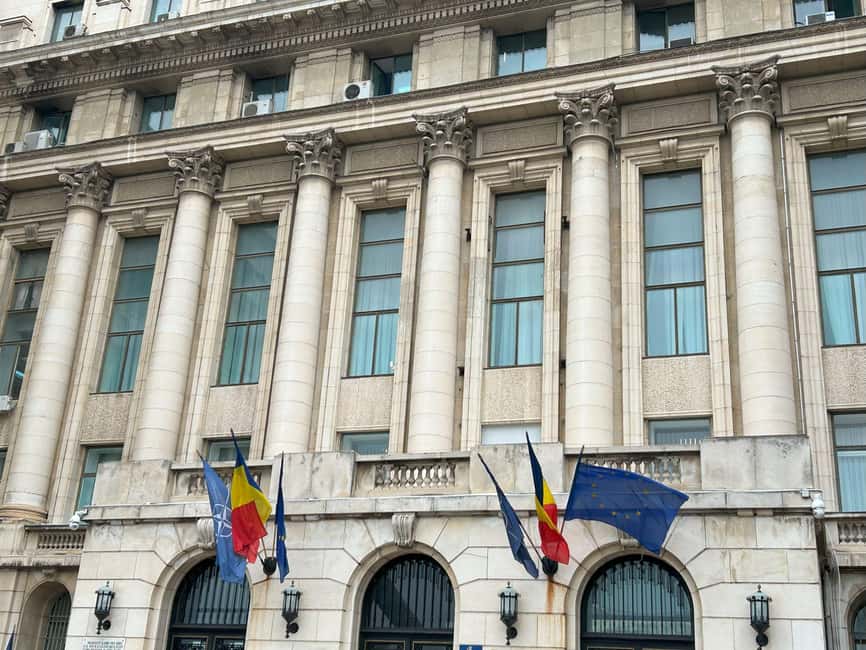
Revolution Square is where you start the story in its most literal form. You’ll stand in front of the balcony associated with Nicolae Ceausescu, the iconic stage where applause and image mattered so much. The guide uses this spot to explain how power wasn’t just administrative. It was performed.
This is the first “contrast” you’ll feel: the square looks like a modern civic space, but the meanings attached to it were forged through propaganda and fear. Standing there, you get why the tour emphasizes the cult of personality rather than just the political dates. Even if you know Romania’s 1989 revolution from headlines, the setting helps you understand the emotional mechanism—how a ruler’s public persona could become the center of the universe.
If you like learning through spatial context—where to look, what to notice, and why certain places matter—you’ll probably enjoy this stop the most.
University Square stop: setting the city’s communist-era frame
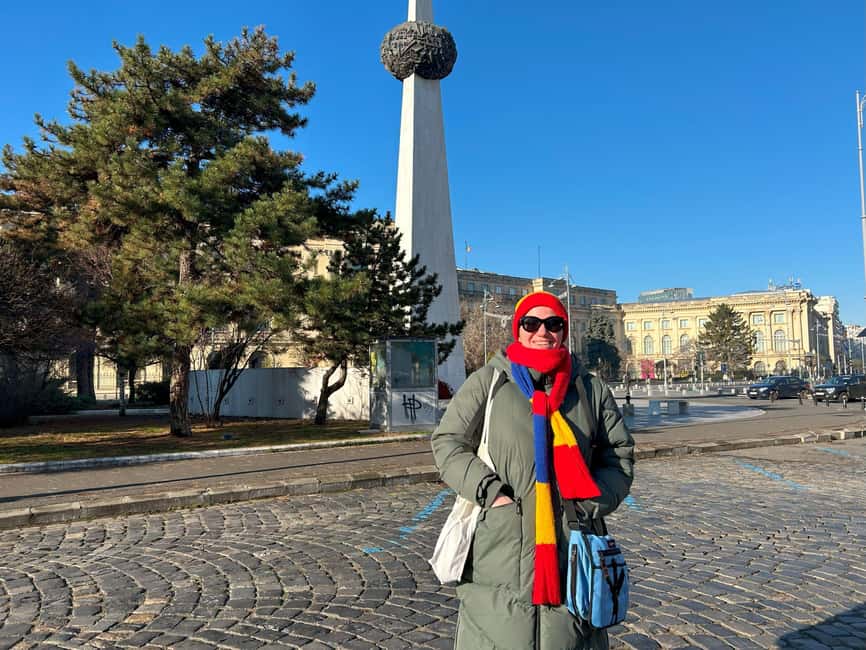
After Revolution Square, the tour continues to University Square for another guided 30-minute segment. This is where the guide helps connect what you saw in the first square to the broader city layout.
The value here is the framing. You start to see how the communist party’s rise to power and its messaging were not limited to one building or one speech. The guide ties together the narrative threads you’ll hear later—propaganda, fear, economics, and the relationship with religion—so they stop feeling like separate facts and start feeling like a system.
One reason this section works in a small-group format is that you can ask questions as you go. The guide is set up to answer, and that makes the story stick.
On foot through the city, more routes



Metro to Eroii Revolutiei: using transit to change your perspective
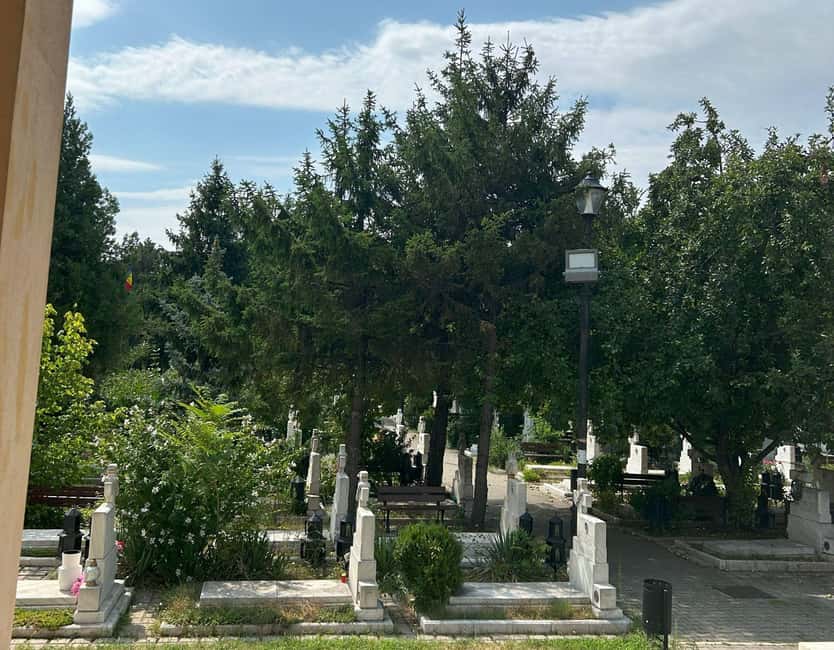
Then comes the practical magic: a short ride on subway/metro before you reach the Eroii Revolutiei area. This isn’t filler. It’s part of how the tour teaches you to read Bucharest.
Taking the metro does two things. First, it makes the distances between sites feel real. Second, it lets you experience the modern city as a working place, not just a backdrop. You’ll be able to compare the “official monument geography” with ordinary movement through the city.
You’ll also likely notice how the mood shifts as you get closer to the revolutionary memorial spaces. Even without guessing any extra details, the change in theme is clear: from the symbolism of rule to the commemoration of those connected to 1989.
Memorial Cemetery of the Heroes of 1989: where the revolution story lands
At Eroii Revolutiei, you’ll get a guided visit to the Memorial Cemetery of the Heroes of 1989. This is the tour’s emotional pivot point. The story moves from the image of Ceausescu and the machinery of communist control to the violent anti-communist revolution of 1989 and what followed.
What I like about this stop is that it gives the narrative a place to rest. Communism can sound like a big, abstract system when you only read about it. Here, it’s tied to a commemorative setting that turns the themes—fear, propaganda, the dramatic downfall—into something you can see in physical form.
The guide also connects the revolution’s climax to the idea that Ceausescu craved applause and that his image-based leadership contributed to his overthrow. Even if you’re already familiar with the broad outline, hearing it in the context of this memorial space changes how you understand the stakes.
Carol I Park and the Mausoleum: a monument with gravity
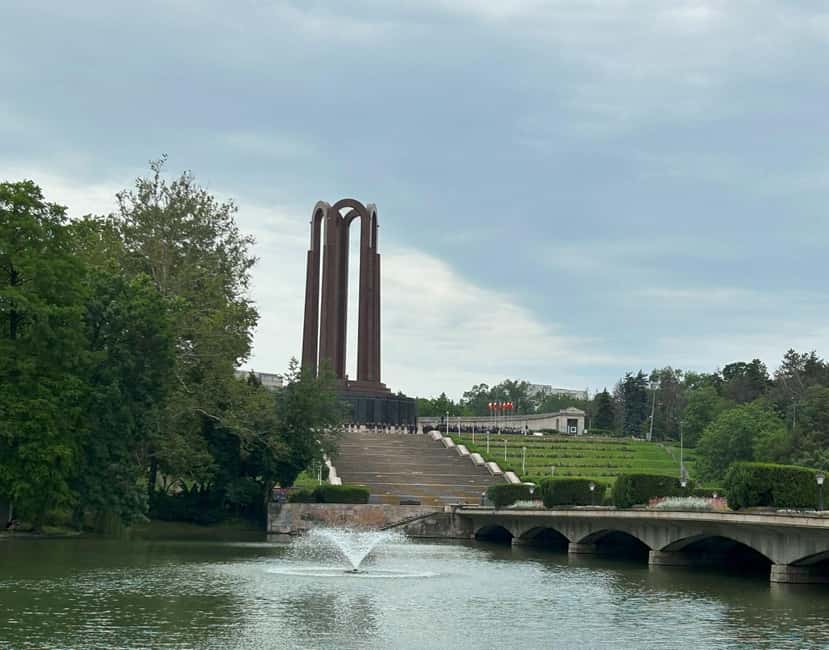
Next you’ll move into Carol I Park for another guided 30-minute segment. This area is where you’ll see the huge mausoleum of the communist leadership. The tour uses the scale of the structure to explain what the regime was trying to communicate.
A mausoleum is never neutral. It’s an attempt to claim time. It’s the government saying, This is how history should remember us. In a tour like this, that’s exactly why the mausoleum matters: it’s a physical expression of the leadership’s worldview and its willingness to reshape public space.
You may also get a sense of how the city’s meaning changes depending on where you stand. The guide keeps your attention on contrasts—power versus loss, official commemoration versus public grief, and the way buildings can hold onto politics long after events happen.
Tram ride and the off-the-beaten-path monument detour
After Carol I Park, you’ll take a short tram ride. In a lot of tours, tram segments are treated like a way to burn time. Here, the ride supports the idea of “don’t just stay where the postcard crowd goes.”
During this part, you’ll reach a unique, lesser-known monument connected to the leaders of the communist party—described as forgotten in the tour approach. That word matters. It signals that some political spaces fade from everyday attention, even when they remain in the city.
I like this detour because it changes the kind of learning you do. You’re not only seeing what’s famous; you’re seeing what’s easier to miss. And when you compare the main revolution story sites with an overlooked monument, you understand another truth: public memory can be curated, but not forever controlled.
Outside views of Bucharest’s Civic Center and the Palace of Parliament
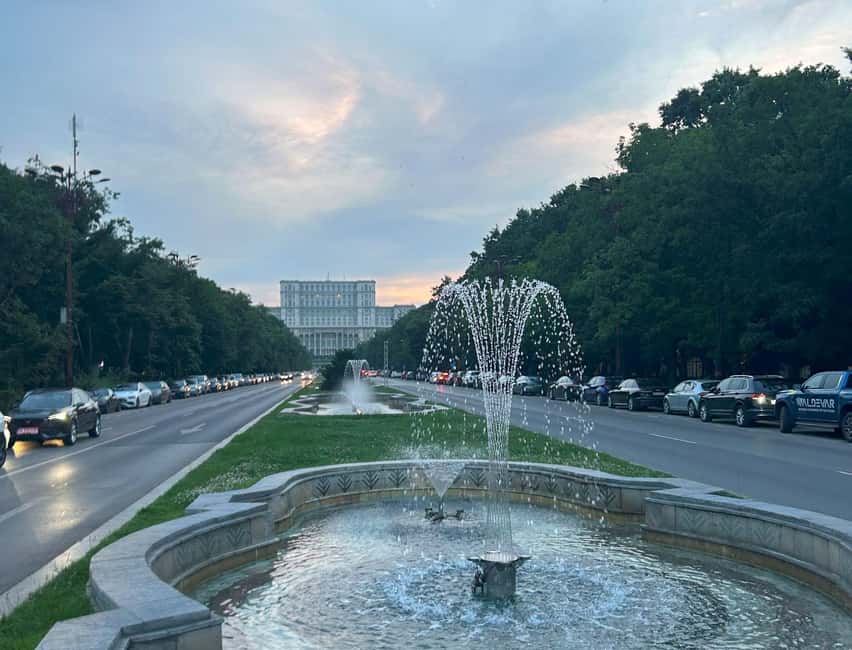
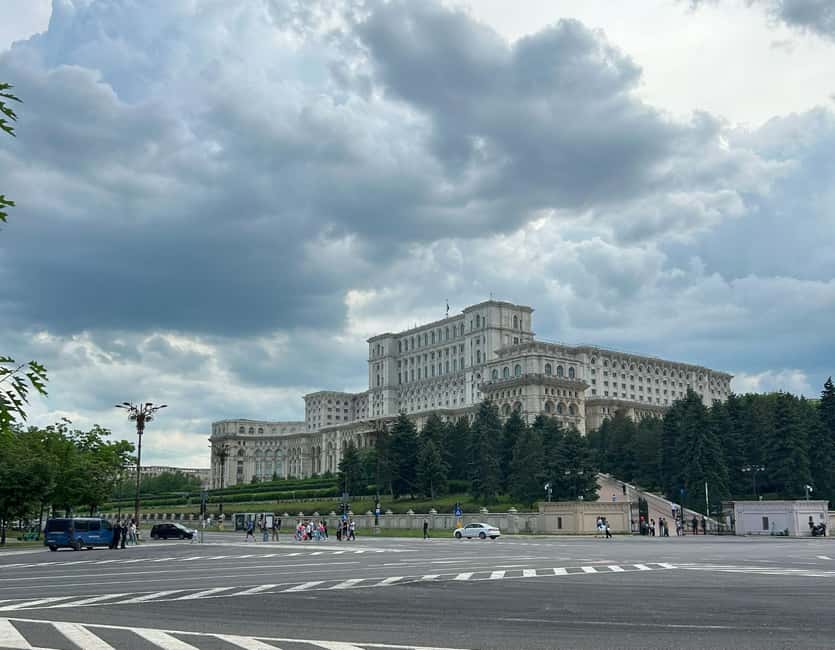
As the tour returns toward the city center, you’ll explore the new Civic Center and then see the exterior of the Palace of Parliament with guided context. This stop is important because it brings the story into the present shape of the city.
The guide focuses on two sides of the Parliament-area achievements: the architectural accomplishments, and the sacrifices made for the local community, including demolitions during the 1980s. That pairing is what prevents this section from becoming pure admiration or pure condemnation. You get the logic that large civic projects can be about national identity while also causing real losses on the ground.
If you care about how cities grow, this part is a must. It’s one thing to hear about communist control; it’s another to stand near an enormous civic statement and understand that even later-looking structures carry the weight of earlier disruption.
Finishing on Unirii Boulevard: tying new Bucharest to old memories
You’ll finish near Bulevardul Unirii nr. 23, close to Parliament and the old town area. Ending here is smart because it leaves you in a spot where you can keep walking on your own afterward.
The tour’s final effect is a “loop” feeling. You started at Revolution Square, then moved outward through memorial and communist leadership spaces, and now you end in the civic core again. It makes Bucharest feel like one story told in chapters across the same streets.
If you want to turn the experience into a full day, this is a good landing point. You can pair it with old-town wandering while the themes—propaganda, fear, public image, commemoration, and city reshaping—are still fresh.
What you learn about daily life under communism
This tour is built around themes, not just landmarks. You’ll get an overview of how the Romanian communist party rose to power and how Ceausescu’s personality cult worked in practice. But the guide also targets the stuff that makes history real: everyday life, the economy, propaganda, religion, and fear tied to the secret police.
I like that the guide doesn’t treat these as separate trivia. Hearing them through the geography of the city helps you connect the dots. Propaganda isn’t only slogans; it’s how public spaces signal what you should believe. Fear isn’t only a concept; it’s a way daily life changes when people think they’re being watched.
And if you’ve ever wondered what all of this means for modern Bucharest, you’ll appreciate the way the guide uses local insight to connect past and present. That’s part of what makes the storytelling feel like walking with a friend who happens to be a historian.
Price and logistics: is $29 good value for 3 hours?
For $29 over 3 hours, you’re basically paying for three things: a certified local guide, multiple guided stops at major sites, and tickets to use public transportation (metro and tram) as part of the route.
In practical terms, that’s good value because the transit isn’t optional on this itinerary. The tour is designed to bring you to places by local routes, and that adds time, context, and effort compared with a purely walking-only plan. It also helps keep the pacing realistic. You spend less time trapped in transit confusion and more time with the guide explaining what you’re seeing.
The small group size (limited to 8 participants) also matters. It makes it easier to ask questions without feeling like you’re competing for attention at every stop. Based on the guide’s style, that interactive Q&A energy is a big part of why people rate this highly.
Who this tour is best for
This is a strong choice if you want structured communist-era context without spending your day reading panels. You’ll enjoy it most if you like clear storytelling, asking questions, and learning through the city’s actual layout.
It also fits well if you prefer “walk plus transit” sightseeing. You get to keep moving and see more areas than you would in a straight center-only route.
It’s not a match if you have mobility impairments or if you’re traveling with kids under 18. The itinerary simply involves too much walking.
Should you book Contrasts of Communism?
Book it if you want a guided answer to a simple question: how did a communist system shape daily life, public space, and the way Bucharest remembers 1989? The tour’s power comes from its contrasts—Ceausescu’s balcony and the mausoleum, revolution memorial spaces and civic monuments, propaganda themes and the city’s present form.
Skip it if you only want postcard highlights or if you’re hoping for an indoor-focused program. This one is about exterior views and on-the-ground context, with walking and transit doing much of the work.
If you’re visiting Bucharest for the first time and you like history you can see, this tour gives you a fast, focused way to understand the city’s hardest chapters—and why they still show up in the streets.
FAQ
How long is the Bucharest: Contrasts of Communism small group walking tour?
It lasts about 3 hours.
How much does the tour cost?
The price is $29 per person.
Where do I meet the guide?
Meet your guide outside the coffee shop Boteca13 on Street Boteanu 3, on a small street around the corner from Revolution Square.
What languages is the tour offered in?
The tour is conducted in English.
Is the tour a small group?
Yes, the group is limited to 8 participants.
Does the tour include public transportation?
Yes. The itinerary mixes walking with subway/metro and tram rides, with public transportation tickets included.
Is the tour suitable for kids or people with mobility issues?
No. It is not suitable for people with mobility impairments and it is not suitable for children under 18.
More Tour Reviews in Bucharest
- Bucharest: Dracula’s Castle, Peles Castle, & Brasov Old Town
★ 4.5 · 17,858 reviews - Bucharest: Dracula Castle, Peles Castle & Brasov Old Town
★ 4.6 · 10,891 reviews - Bucharest: Dracula’s Castle, Peleș Castle & Brașov Day Trip
★ 4.4 · 6,100 reviews - Bucharest: Palace of Parliament Tickets and Guide
★ 4.3 · 3,182 reviews - Bucharest: Day Trip to Dracula Castle, Peles Castle & Brașov
★ 4.4 · 3,049 reviews - Bucharest to Dracula Castle, Peles Castle and Brasov Guided Tour
★ 4.5 · 2,933 reviews
Bucharest on Foot, Continued
- Bucharest: City Highlights Guided Walking Tour
★ 4.9 · 1,482 reviews - Bucharest: Communism and History Guided City Walking Tour
★ 4.9 · 918 reviews - Bucharest Highlights Walking Tour
★ 5.0 · 469 reviews - Bucharest: Hidden Markets Walking Tour with Tastings
★ 4.9 · 329 reviews - Bucharest: Ghost Stories & Romanian Mythology Walking Tour
★ 4.9 · 287 reviews - Bucharest: Guided Walking Tour with Romanian Snack
★ 4.9 · 228 reviews
The Communist Years, Up Close
- Bucharest: Communism and History Guided City Walking Tour
★ 4.9 · 918 reviews - The Real tour of Communism
★ 5.0 · 666 reviews - Life under Communism
★ 5.0 · 358 reviews - 3-Hour Guided Tour of Communist Bucharest
★ 4.9 · 303 reviews - Bucharest: Parliament, Ceausescu House & Village Museum Tour
★ 5.0 · 208 reviews - Bucharest Essential Tour: Old Town, Calea Victoriei & Communism
★ 5.0 · 142 reviews
Just In: The Latest Bucharest Reviews



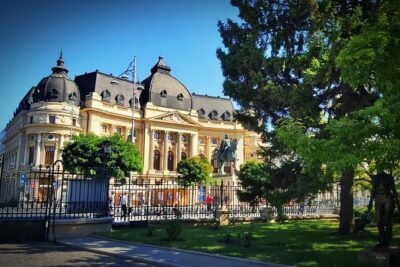
Communism & Ceaușescu Tours, compared.
 ★ 4.9Communism and History Guided City Walking TourFrom $31918 reviews
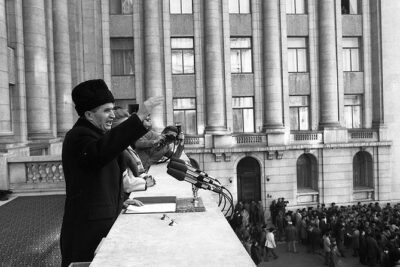 ★ 5.0The Real tour of CommunismFrom $32666 reviews
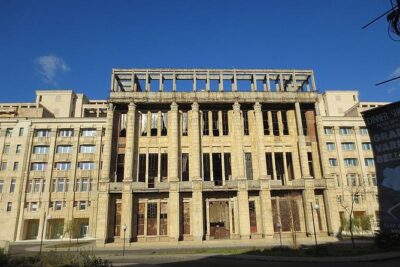 ★ 5.0Life under CommunismFrom $42358 reviews
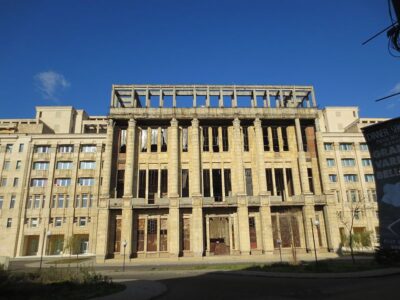 ★ 4.93-Hour Guided Tour of Communist BucharestFrom $29303 reviews
 ★ 5.0Parliament, Ceausescu House & Village Museum TourFrom $1208 reviews
 ★ 5.0Bucharest Essential Tour: Old Town, Calea Victoriei & CommunismFrom $24142 reviews
 ★ 5.0Communism in Bucharest – Landmarks, Museum & Communist AppetizersFrom $48111 reviews
 ★ 4.9Palace of Parliament, Ceausescu House & Village MuseumFrom $186 reviews
Browse the lists this tour appears in