
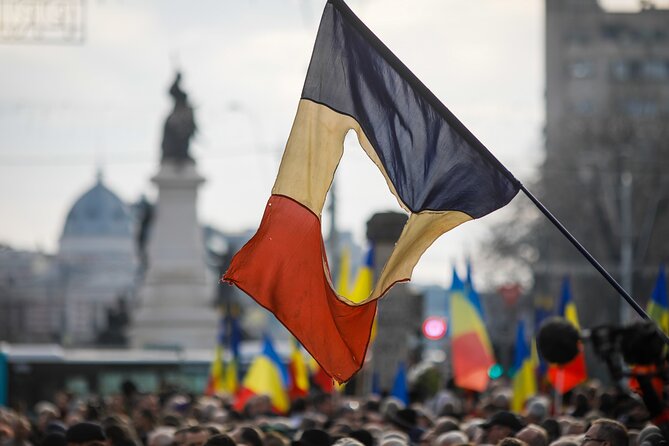
REVIEW · COMMUNISM & CEAUșESCU TOURS
Life in Communism
Communism still shapes Bucharest’s streets. This walk helps you read the city like a timeline, from state power to neighborhood change, using real landmarks and a clear story about nationalization, the Secret Police, and demolitions. I love the 15-stop approach because you get context at each turn, not random photos. I also like the small-group pace, which makes it easier to ask questions and keep up when the topic turns heavy.
One heads-up: it’s a 3-hour walking tour on public streets, and while there’s a mid-tour break (good for warming up in colder weather), you still need moderate fitness and comfy shoes.
If you’re lucky, your guide could be someone like Daniela, Augustin, Andreea/Andrea, or John—based on past guides’ styles—because the common theme is practical, friendly explanations. You’ll start at the Patriarchal Cathedral and end right back where you began, which makes it easy to plug this into your day. The main drawback to consider is that drinks during the break aren’t included, so if you want something beyond the included communist-style snacks, plan on bringing cash.
In This Review
- Key things you’ll like on this communist-era walk
- Reading Bucharest like a timeline of power
- Small group pacing and an English guide you can actually talk to
- Start at the Patriarchal Cathedral, end right there
- Palace of Parliament: where scale becomes a political message
- Calea Victoriei: architecture and atmosphere on a major avenue
- Piața Revoluției: when public space becomes history in the making
- The rest of the ~15 stops: nationalization, demolitions, and the Secret Police
- Communism-style snacks and the mid-tour break
- Price and value: $31.24 for 3 hours in a city that rewards context
- Logistics that matter on a walking tour (and what to bring)
- Who should book this tour (and who might not love it)
- Should you book Life in Communism in Bucharest?
- FAQ
- How long is the Life in Communism tour in Bucharest?
- What’s the maximum group size?
- What languages is the tour offered in?
- What’s included in the price?
- Where does the tour start?
- Can I cancel for a full refund?
Key things you’ll like on this communist-era walk
- About 15 objectives tied to the communist timeline so each stop has a job
- Maximum 15 travelers for better back-and-forth with your English-speaking guide
- A mid-tour break plus included communist-type snacks to keep energy up
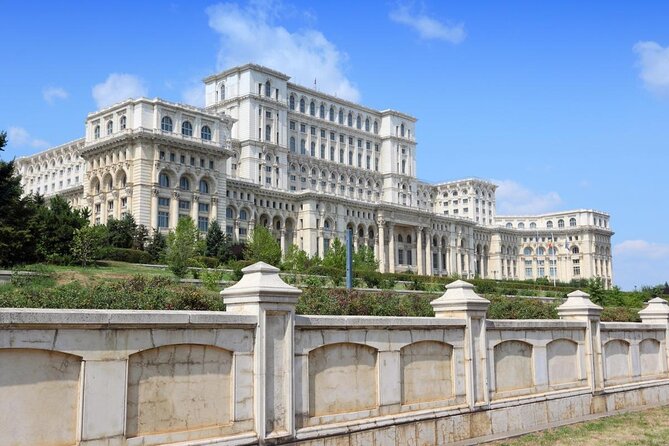
- Three major landmark anchors (Palace of Parliament, Calea Victoriei, Piața Revoluției) that frame the story
- Mobile ticket and public-transport access that keep logistics simple
The communist decades, walked and explained
- The Real tour of Communism★ 5.0 · 666 reviews
- Life under Communism★ 5.0 · 358 reviews
- 3-Hour Guided Tour of Communist Bucharest★ 4.9 · 303 reviews
- Bucharest: Parliament, Ceausescu House & Village Museum Tour★ 5.0 · 208 reviews
Reading Bucharest like a timeline of power
This tour is built for the moment you land in Bucharest and think, Okay, what am I actually looking at? The answer here is: communist-era decisions. You’ll walk through how the regime changed architecture, affected daily life, and shaped what you see today—sometimes in obvious ways, sometimes in quieter street-level traces.
The focus isn’t just buildings. You get the links between policies and the built environment: nationalization, the reach of the Secret Police, and large-scale demolitions. That framing matters because it turns “old-looking” architecture into something you can understand fast. You come away with a sharper sense of why certain places feel the way they do.
Small group pacing and an English guide you can actually talk to
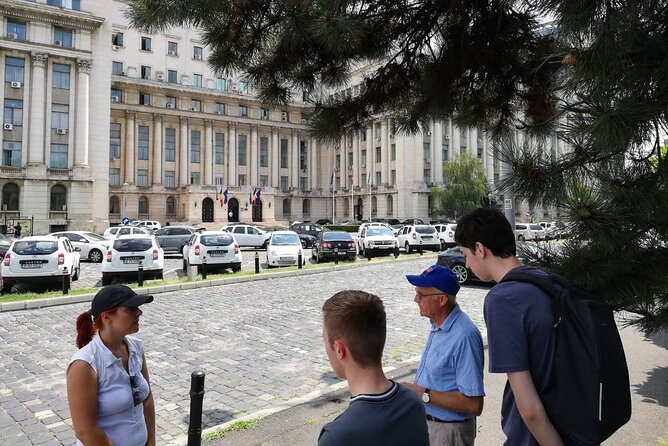
One of the best features is the maximum of 15 travelers. In a city where many tours feel like a train station stampede, this size keeps the flow human. It also makes the explanation style easier to follow when the guide slows down to connect the story to what’s in front of you.
The tour is offered in English, and multiple guides have been praised for clear delivery and easy-to-follow English and voice. If you like to ask questions mid-walk—about how people adapted, or why a specific building carries symbolism—this format is a better match than a big bus tour.
Start at the Patriarchal Cathedral, end right there
You meet at the Patriarchal Cathedral on Aleea Dealul Mitropoliei 25, București, Romania. Then the tour loops back to the same meeting point at the end. That “return to start” layout sounds basic, but it’s practical. It helps you avoid the classic problem of being dropped far from where you planned dinner or a metro stop.
Since it’s near public transportation, you can also treat it as a smart orientation block. Do this earlier in your trip if you want the rest of the city to make more sense as you roam.
Palace of Parliament: where scale becomes a political message
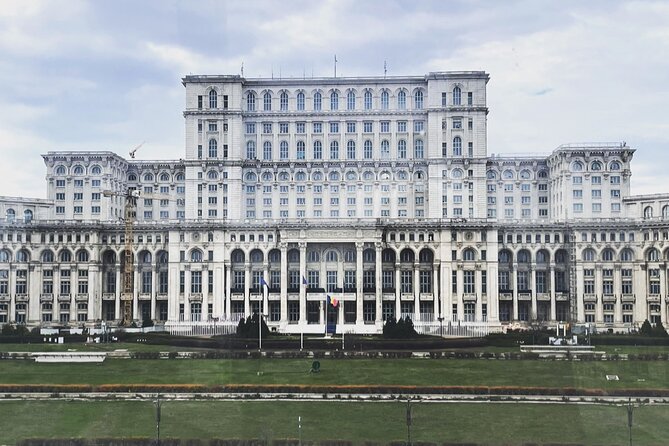
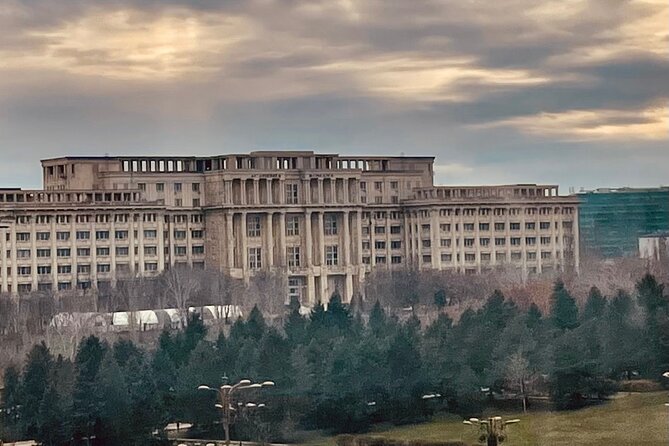
The walk’s first major anchor is the Palace of Parliament. Even if you only see it from the outside, it’s hard to miss what it represents. In the communist era, state power wasn’t meant to feel hidden. It was meant to be seen—big, imposing, and impossible to ignore.
Expect the guide to connect the building’s presence to the system behind it. That’s the value of starting here: you set the tone for the rest of the walk. From there, every later stop feels less random, because you’ve already learned what to look for when the city is acting as a message board.
Practical note: with landmark exteriors, you’ll likely spend time observing and listening rather than touring inside. Dress for street conditions and bring layers if the day is cool.

Calea Victoriei: architecture and atmosphere on a major avenue

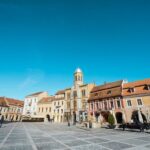
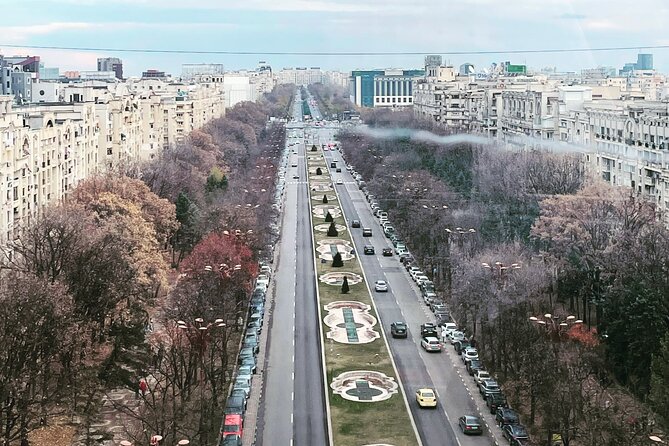
Next up is Calea Victoriei. This isn’t just a pretty stretch to pass through. It’s one of those places where the city’s design reflects official priorities—how space gets used, who it serves, and how the regime shaped the feel of “public” life.
On this stop, you’ll get a sense of the contrast between what a grand avenue looks like on the outside and what the regime was doing underneath the surface. The explanations help you link street layout and building styles to policy-level change.
If you’re the type who likes to notice details—corners, facades, the rhythm of streets—this is a good stop to slow down. The guide’s job here is to give you the keys, so you’re not staring at architecture wondering what it means.
Piața Revoluției: when public space becomes history in the making
The tour includes Piața Revoluției. In this part of the walk, the story shifts from “how communism built the city” to how change showed up in the public sphere. It’s a chance to understand how major shifts in the regime timeline can land in the places people gather and move through.
Even without going deep into every event detail, you’ll get the through-line: communism wasn’t only about the government. It was about control, surveillance, and restructuring life—often leaving visible traces in how cities function.
This is also a good stop for photos, but keep your eyes on the guide’s cues. The point isn’t just to capture a square. It’s to understand why it belongs in the communist-era timeline.
The rest of the ~15 stops: nationalization, demolitions, and the Secret Police
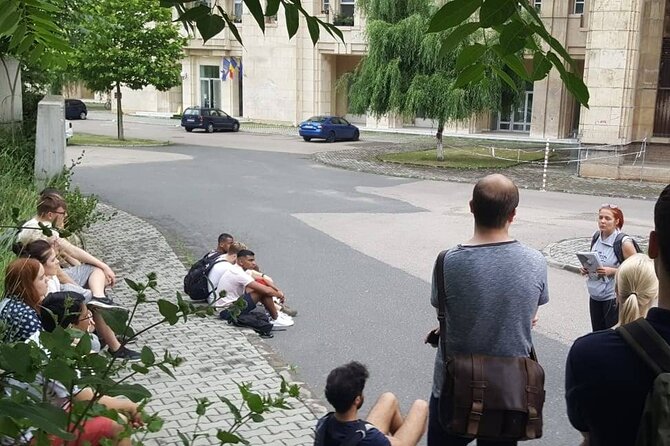
Besides the three highlighted landmarks above, you’ll hit roughly 15 objectives total. The key is that each stop marks a specific moment or change across the communist regime timeline. So the tour becomes a chain of cause-and-effect stories rather than a simple sightseeing route.
Here’s what this part tends to teach best:
- How nationalization reshaped ownership and everyday routines
- How the Secret Police changed the emotional climate of public life
- How demolitions didn’t just remove buildings; they erased neighborhoods and altered community memory
- How architecture and streets can reflect ideology, even decades later
You can think of the walk as a guided way to map ideas onto space. That makes it easier to recognize patterns later when you explore on your own.
Communism-style snacks and the mid-tour break
The tour includes communist-type snacks, which sounds like a fun detail until you realize it’s also useful. It keeps you from getting wiped out halfway through.
There’s also a short break in the middle. Drinks during that break are self supported, ideally with cash. If you’re the kind of person who likes a tea or something warm during breaks, don’t count on it being included—bring a little money just in case.
One small tip: wear something you can adjust quickly. The tour runs about 3 hours, and weather can swing in Bucharest. Layers make the break actually comfortable.
Price and value: $31.24 for 3 hours in a city that rewards context
At $31.24 per person for about 3 hours, this tour lands in the “worth it if you care about meaning” category. You’re not just paying for movement through the city. You’re paying for a guide who can connect communist-era policies to what you see right now.
What helps the value:
- Small group size (max 15) rather than a crowded walk
- English language delivery
- Included snacks
- Mobile ticket for easier entry on the day
- Group discounts, which can lower your per-person cost if you’re traveling with others
Also, it’s booked fairly in advance on average (about 22 days). That’s a decent signal that slots go quickly when people want a structured orientation early in their visit.
Logistics that matter on a walking tour (and what to bring)
This is a walking tour with moderate physical fitness required. That doesn’t mean anything extreme, but it does mean you should wear shoes you can trust.
A few practical points:
- It’s near public transportation, so it’s easier to start and rejoin your own plans afterward.
- It allows service animals.
- It runs about 3 hours, so plan for street time and listening time.
If you want the most out of it, bring curiosity and a willingness to sit with difficult themes. This is a history-and-effects tour, not a carefree stroll.
Who should book this tour (and who might not love it)
I think this tour is a strong fit if:
- You’re a first-time visitor and want city orientation rooted in history
- You enjoy walking tours where each stop gets explained clearly
- You want to understand why Bucharest looks the way it does today, not just what it is called
You might skip it if:
- You prefer light sightseeing with minimal discussion of surveillance and repression
- You don’t like walking for around three hours, even with a break
Should you book Life in Communism in Bucharest?
Yes, if you want your Bucharest experience to start with real context. For the price, the small group, the English explanations, and the way the walk ties landmarks to communist policies make this a high-value way to get oriented before you explore more freely.
If your schedule allows, book ahead. And on the day, bring comfortable shoes, a layer for the weather, and a little cash for drinks during the break. You’ll finish the walk with a much better sense of what the city is still showing you—long after the regime ended.
FAQ
How long is the Life in Communism tour in Bucharest?
The tour lasts about 3 hours.
What’s the maximum group size?
The tour has a maximum of 15 travelers.
What languages is the tour offered in?
The tour is offered in English.
What’s included in the price?
The price includes a mobile ticket, group discounts, and communist-type snacks. Alcoholic beverages are not included.
Where does the tour start?
It starts at the Patriarchal Cathedral, Aleea Dealul Mitropoliei 25, București, Romania, and ends back at the same meeting point.
Can I cancel for a full refund?
Yes. You can cancel up to 24 hours in advance for a full refund. If you cancel less than 24 hours before the start time, the amount paid isn’t refunded.
More Tour Reviews in Bucharest
- Bucharest: Dracula’s Castle, Peles Castle, & Brasov Old Town
★ 4.5 · 17,858 reviews - Bucharest: Dracula Castle, Peles Castle & Brasov Old Town
★ 4.6 · 10,891 reviews - Bucharest: Dracula’s Castle, Peleș Castle & Brașov Day Trip
★ 4.4 · 6,100 reviews - Bucharest: Palace of Parliament Tickets and Guide
★ 4.3 · 3,182 reviews - Bucharest: Day Trip to Dracula Castle, Peles Castle & Brașov
★ 4.4 · 3,049 reviews - Bucharest to Dracula Castle, Peles Castle and Brasov Guided Tour
★ 4.5 · 2,933 reviews
The Communist Years, Up Close
- Bucharest: Communism and History Guided City Walking Tour
★ 4.9 · 918 reviews - The Real tour of Communism
★ 5.0 · 666 reviews - Life under Communism
★ 5.0 · 358 reviews - 3-Hour Guided Tour of Communist Bucharest
★ 4.9 · 303 reviews - Bucharest: Parliament, Ceausescu House & Village Museum Tour
★ 5.0 · 208 reviews - Bucharest Essential Tour: Old Town, Calea Victoriei & Communism
★ 5.0 · 142 reviews
Just In: The Latest Bucharest Reviews



Communism & Ceaușescu Tours, compared.
 ★ 4.9Communism and History Guided City Walking TourFrom $31918 reviews
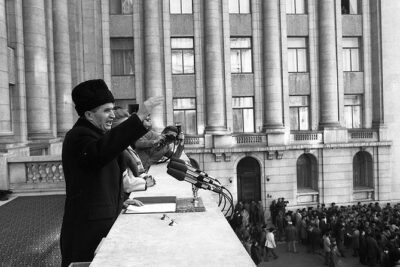 ★ 5.0The Real tour of CommunismFrom $32666 reviews
 ★ 5.0Life under CommunismFrom $42358 reviews
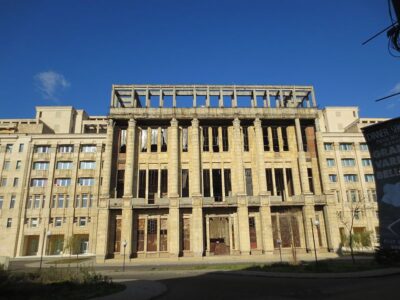 ★ 4.93-Hour Guided Tour of Communist BucharestFrom $29303 reviews
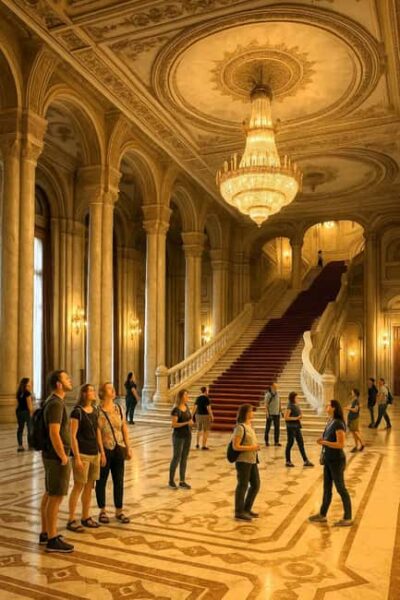 ★ 5.0Parliament, Ceausescu House & Village Museum TourFrom $1208 reviews
 ★ 5.0Bucharest Essential Tour: Old Town, Calea Victoriei & CommunismFrom $24142 reviews
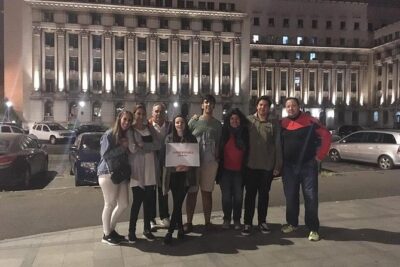 ★ 5.0Communism in Bucharest – Landmarks, Museum & Communist AppetizersFrom $48111 reviews
 ★ 4.9Palace of Parliament, Ceausescu House & Village MuseumFrom $186 reviews
Browse the lists this tour appears in