
REVIEW · COMMUNISM & CEAUșESCU TOURS
Exploring a Former Communist Prison
Communist walls still echo in Bucharest. This tour connects Revolution Square, the communist neighborhood of Ferentari, and an exclusive visit to Fort 13 Jilava, now a memorial inside Bucharest’s largest prison. You also get a car ride through key parts of the city and context on how the communist era left a deep scar.
I especially like the way the day moves from ideas to place—starting at Piața Revoluției and then shifting to the bedroom-dorm reality of the last 50 years of Romanian social history in the Bronx of Bucharest. I also like the practical touch that you’re not left hungry: snacks (including covrig) plus coffee/tea and a beer or equivalent are built in, with water in the vehicle.
One drawback to weigh: the prison visit has strict rules—mobile phones aren’t allowed inside, and photos are only permitted with a camera.
In This Review
- Key points you’ll care about
- Communist Romania, Seen in Real Places
- The Small-Group Rhythm and the 9:30 Start
- Stop 1: Piața Revoluției and the City’s 500-Year Shape
- Stop 2: Palace of Parliament for a Fast Photo Circle
- Stop 3: Ferentari and an Active Prison Fortress Reality Check
- Stop 4: Carol Park Mausoleum and a Traditional Communist Meal
- Stop 5: Jilava Fort 13—Rules Inside and How to Prepare
- Food, Drinks, and Value at $173.47
- Practical Tips for a Smooth, Respectful Day
- Who Should Book This Tour (and Who Might Skip It)
- Should You Book Fort 13 Jilava and the Bucharest Communism Route?
- FAQ
- How long is the tour?
- Where does the tour start?
- What time does the tour begin?
- How big is the group?
- Is Fort 13 Jilava admission included?
- Are mobile phones allowed inside the prison?
- Can I take photos at Fort 13?
- What food and drinks are included?
- Is the Palace of Parliament included?
- What should I do if the weather is bad?
Key points you’ll care about
- Fort 13 Jilava access inside an active prison memorial, with clear rules for phones and photos
- Small group size (max 8), which makes it easier to ask questions as the story gets heavy
- Drive through Ferentari for a reality check away from the usual tourist path
- Food included: covrig street snack, local bites, water, coffee/tea, and a beer or equivalent
- A timed, no-rush day: about 6 hours total with distinct stops for photos, meals, and the prison visit
The communist decades, walked and explained
- The Real tour of Communism★ 5.0 · 666 reviews
- Life under Communism★ 5.0 · 358 reviews
- 3-Hour Guided Tour of Communist Bucharest★ 4.9 · 303 reviews
- Bucharest: Parliament, Ceausescu House & Village Museum Tour★ 5.0 · 208 reviews
Communist Romania, Seen in Real Places
Bucharest can feel like a city of layers. This experience brings those layers together in a way that’s not just visual—it’s emotional and practical. You start in the center at Piața Revoluției, then go out into neighborhoods shaped by communist life, and finally you end at Fort 13 Jilava, a former military fort turned detention and execution camp.
What makes this worth your time is how it’s paced. You get a car overview of key history and urban development first, then you hit the places where the communist story becomes tangible: dormitory-like living spaces in the neighborhood and the prison fort itself. It’s the kind of route that helps you connect the dots instead of treating communism like an abstract chapter in a book.
Because the content is serious, you should expect the day to be more reflective than playful. The upside is that you also get breaks and included food, so you can stay steady and present.
The Small-Group Rhythm and the 9:30 Start
This runs for about 6 hours and keeps group size tight—up to 8 people. That matters when you’re dealing with difficult history, because you tend to get more back-and-forth rather than a rushed script. It also makes it easier for the host to manage the prison rules later in the day.
You start at 9:30 am at Memorial of Rebirth, Piața Revoluției. You’ll spend roughly:
- 1 hour at Piața Revoluției
- 20 minutes at the Palace of Parliament exterior
- 1 hour at Ferentari/Second Hand Ferentari
- 30 minutes at Carol Park
- 2 hours at Fort 13 Jilava
That structure helps you plan mentally too: it’s not one long block of travel punctuated by a quick stop. Each phase has a purpose.
Stop 1: Piața Revoluției and the City’s 500-Year Shape
You begin at the Memorial of Rebirth in Piața Revoluției. From there, the day starts with a bigger frame: Bucharest’s development over the past 500 years and the way the city’s military fortification system came into existence. Then the story narrows toward the essentials and aftermath of a regime that left a deep scar.
This first stop works best if you like context. Even if you’ve read about communism before, you’ll likely appreciate how the guide ties politics to urban form—where authority was located, how systems controlled movement, and how later generations still live with those shapes.
There’s also something grounding about starting where the revolution symbolism is loud. The pace here is designed to get your bearings fast, before the day turns darker.
Stop 2: Palace of Parliament for a Fast Photo Circle
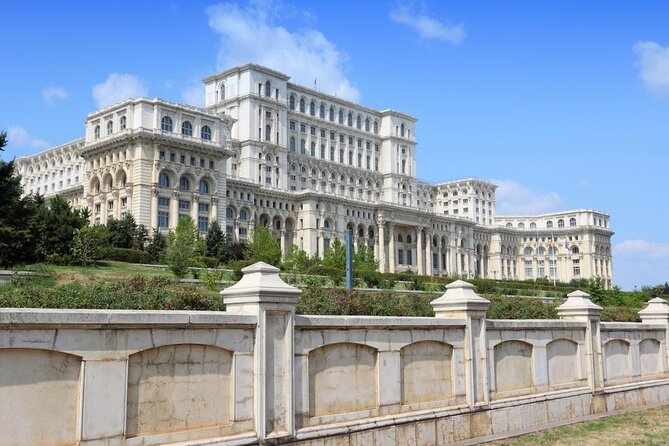
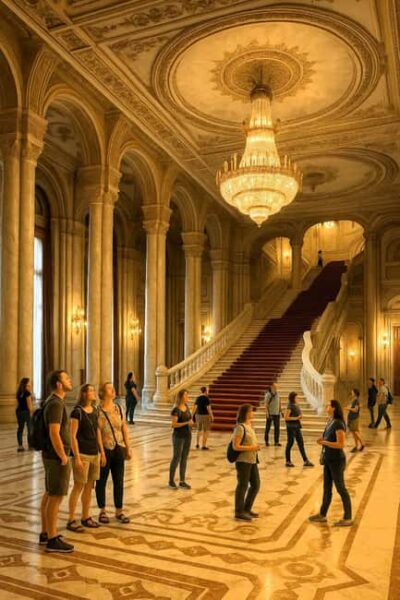
The Palace of Parliament stop is short—about 20 minutes—and admission isn’t included. The point isn’t to tour every room. It’s to circle the building and learn about its darker stories and what it means for the local community.
This is one of those moments where you’ll likely get more out of listening than staring at architecture. The building is presented as one of the biggest administrative buildings in the world, but the tour’s angle is social and political: how monumental construction can reflect power, and how that echo affects the city long after the era changes.
If you’re hoping for a long interior visit, this is not that stop. It’s exterior-focused, tight on time, and aimed at meaning rather than sightseeing checklists.

Stop 3: Ferentari and an Active Prison Fortress Reality Check
Next comes the ride through the Bronx of Bucharest—an out-of-the-tourist-path reality check even today. You’ll see communist-era neighborhood life described through what made everyday housing so defining, including communist bedroom dormitories that shaped the last 50 years of Romanian social history.
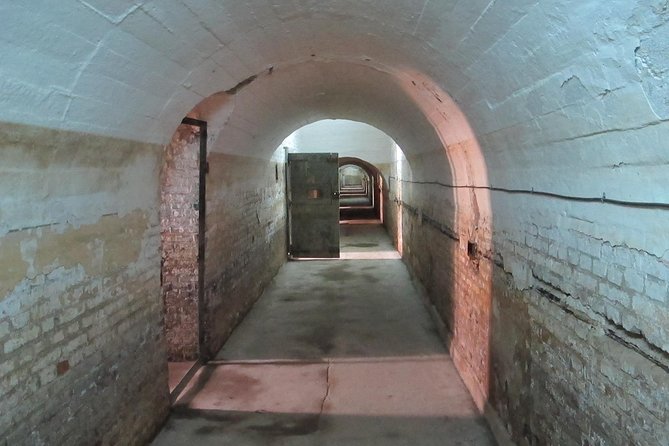
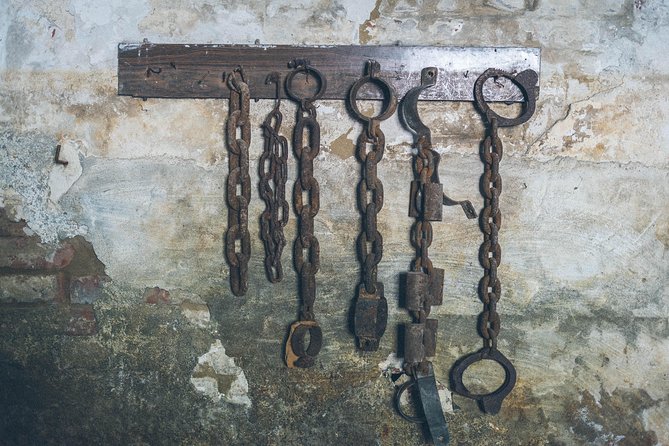
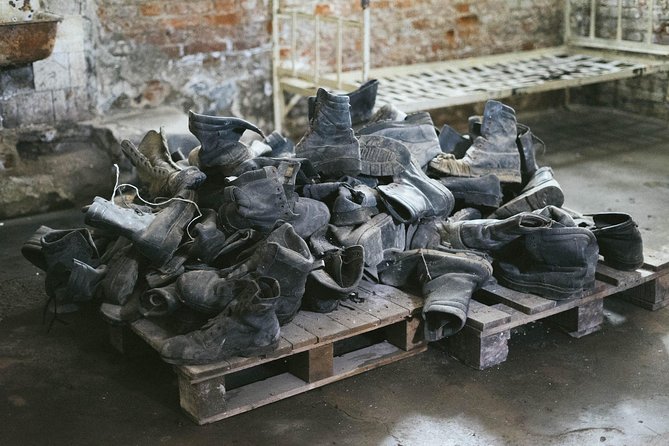
Then you land at Second Hand Ferentari, where you explore an old military fort inside an active prison. This is where the story turns from neighborhood life into punishment and survival. The fort was used as an extermination camp for people who stood against the regime.
Even with breaks in the schedule, this part is heavy. The value is that it’s not only a lecture in a classroom voice. You’re looking at physical spaces that were repurposed—military architecture reused for detention. That contrast tends to hit harder than dates on a timeline.
Stop 4: Carol Park Mausoleum and a Traditional Communist Meal
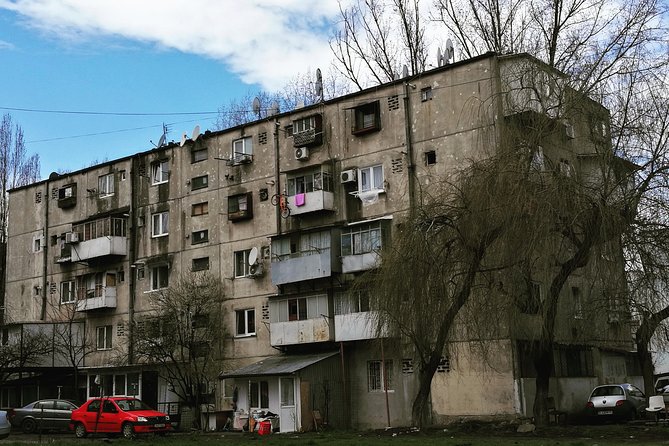
Carol Park gives you a breather, but not a reset. Here you’ll admire the mausoleum of communist leaders located in one of Bucharest’s emblematic parks. It’s a reminder that the communist story wasn’t only prisons and streets—it also became memorialized in public space.
Then you’ll enjoy a full traditional communist meal. This is included, and it’s a smart way to keep the day realistic. A lot of history tours forget that people have bodies and schedules. Here, you’re fed, so you can handle the prison visit without feeling like you’re dragging yourself through it.
If you’re curious about how everyday life worked under communism, the meal adds a layer. Just remember: the menu is part of the concept, not a foodie detour.
Stop 5: Jilava Fort 13—Rules Inside and How to Prepare
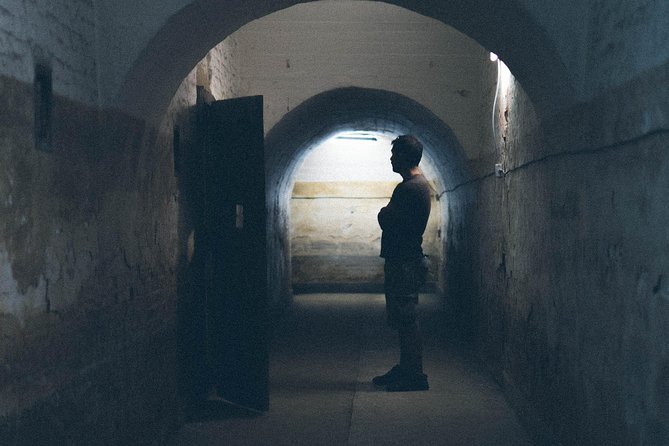
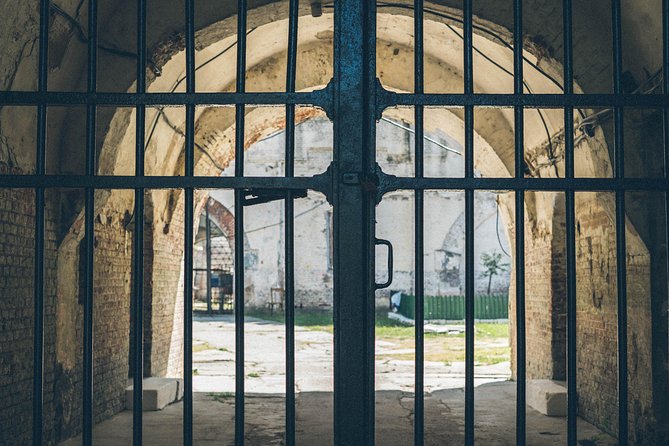
The climax is Jilava Fort 13, a former military fort transformed into a communist detention and execution camp. Visiting it as a memorial inside Bucharest’s largest prison is the moment where the tour earns its reputation as bold and unforgettable.
Two rules you need to plan for:
- Mobile phones aren’t allowed inside the prison.
- Photos are allowed only with a camera.
So before you get there, make sure you actually have a camera (not just a phone). If you rely on your phone for everything—camera, maps, notes—this will force a different kind of attention. It can also be a relief: fewer distractions.
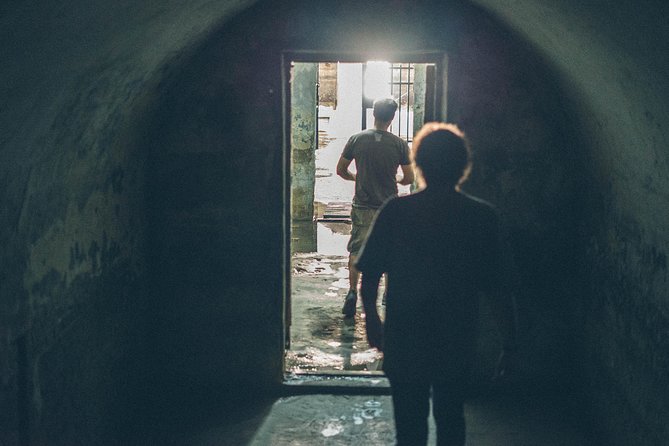
You’ll spend about 2 hours at Fort 13. That time matters. It’s long enough for the space to sink in and for the guide to connect what you’re seeing to what you’re learning about the regime’s control systems.
Emotionally, this is the section where I think you should go in with an open mind and a slower pace. Don’t treat it like a haunted attraction. The point is understanding how systems turned places into instruments of power.
Food, Drinks, and Value at $173.47
At $173.47 per person, the pricing isn’t the “cheap and cheerful” end of the market. But when you look at what’s included, it starts to make sense for the kind of access you’re getting.
Included in the price:
- Snacks, including covrig plus local traditional bites
- Bottled water (500 ml)
- 1 beer (400 ml) or an equivalent option
- Coffee and/or tea
- Air-conditioned vehicle
- Admission included for Second Hand Ferentari and Jilava Fort 13
- Admission free for Piața Revoluției and Carol Park
Not included:
- Additional food and drinks
- Souvenirs and personal shopping
Also, the group stays small (max 8). That’s another value lever. A bigger tour bus can be cost-efficient, but it often reduces interaction when the content matters. Here, the vehicle time is part of the package—driving through multiple parts of Bucharest, not just getting you to one sight.
If you know you’ll want a guide who can explain what you’re seeing at Revolution Square and then carry that explanation all the way to the former prison, this price is easier to justify. If you only care about a single museum visit, then it might feel like more day than you need.
Practical Tips for a Smooth, Respectful Day
This is the kind of tour where planning beats improvising.
- Bring a camera if you want photos inside Fort 13. Phones won’t work there.
- Wear comfortable clothes for a 6-hour schedule with driving between stops.
- Expect the day to include serious subject matter. Build in the mindset to pause and listen.
- Use the included snacks strategically. Covrig and local bites are there so you don’t run on empty during the heavier sections.
- Keep an eye on the weather. The experience requires good weather, and if conditions are poor you’ll be offered a different date or a full refund.
Starting near public transportation also helps. If you prefer not to rely on taxis all day, you should be able to get to the meeting point without much drama.
Who Should Book This Tour (and Who Might Skip It)
This experience fits best if you:
- Want Bucharest communism history tied to real buildings and real locations
- Like small-group guiding and Q-and-A energy
- Are comfortable with a serious, reflective visit to a former detention and execution site
It may not be ideal if you:
- Only want light sightseeing and photos
- Need phone-based access for everything (since Fort 13 has strict phone rules)
- Prefer a short tour focused only on one or two stops
If you’re the type who enjoys understanding how cities work—how power shapes space—this is a strong choice.
Should You Book Fort 13 Jilava and the Bucharest Communism Route?
I’d book it if your goal is to understand communism in Bucharest through places, not just pages. The combination of Revolution Square context, a neighborhood reality check in Ferentari, and exclusive access to Jilava Fort 13 makes the day feel connected. Add the included snacks, beer/coffee/tea, and air-conditioned transport, and you get a full day that doesn’t ignore practical needs.
If you’re unsure, consider this simple question: do you want a guided story that takes you from the big public symbols down to the prison spaces where the system operated? If yes, this is the kind of tour you’ll remember.
FAQ
How long is the tour?
It runs for approximately 6 hours.
Where does the tour start?
It starts at Memorial of Rebirth, Piața Revoluției, București 030167, Romania.
What time does the tour begin?
The start time is 9:30 am.
How big is the group?
The maximum group size is 8 travelers.
Is Fort 13 Jilava admission included?
Yes. Admission for Jilava Fort 13 is included.
Are mobile phones allowed inside the prison?
No. Mobile phones are not allowed inside the prison.
Can I take photos at Fort 13?
Photos are allowed only with a camera.
What food and drinks are included?
Snacks (including covrig and local bites), bottled water (500 ml), coffee and/or tea, and 1 beer (400 ml) or an equivalent option are included.
Is the Palace of Parliament included?
There is a quick stop to circle the building, and admission is not included.
What should I do if the weather is bad?
The experience requires good weather. If it’s canceled due to poor weather, you’ll be offered a different date or a full refund.
More Tour Reviews in Bucharest
- Bucharest: Dracula’s Castle, Peles Castle, & Brasov Old Town
★ 4.5 · 17,858 reviews - Bucharest: Dracula Castle, Peles Castle & Brasov Old Town
★ 4.6 · 10,891 reviews - Bucharest: Dracula’s Castle, Peleș Castle & Brașov Day Trip
★ 4.4 · 6,100 reviews - Bucharest: Palace of Parliament Tickets and Guide
★ 4.3 · 3,182 reviews - Bucharest: Day Trip to Dracula Castle, Peles Castle & Brașov
★ 4.4 · 3,049 reviews - Bucharest to Dracula Castle, Peles Castle and Brasov Guided Tour
★ 4.5 · 2,933 reviews
The Communist Years, Up Close
- Bucharest: Communism and History Guided City Walking Tour
★ 4.9 · 918 reviews - The Real tour of Communism
★ 5.0 · 666 reviews - Life under Communism
★ 5.0 · 358 reviews - 3-Hour Guided Tour of Communist Bucharest
★ 4.9 · 303 reviews - Bucharest: Parliament, Ceausescu House & Village Museum Tour
★ 5.0 · 208 reviews - Bucharest Essential Tour: Old Town, Calea Victoriei & Communism
★ 5.0 · 142 reviews
Just In: The Latest Bucharest Reviews



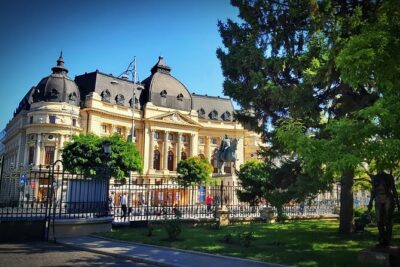
Communism & Ceaușescu Tours, compared.
 ★ 4.9Communism and History Guided City Walking TourFrom $31918 reviews
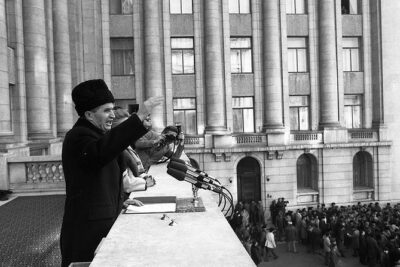 ★ 5.0The Real tour of CommunismFrom $32666 reviews
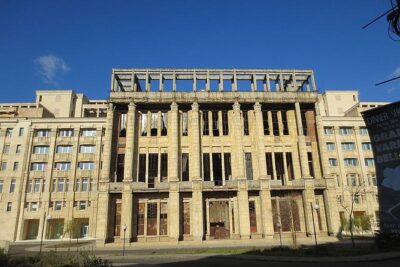 ★ 5.0Life under CommunismFrom $42358 reviews
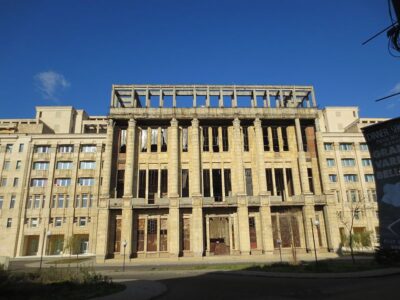 ★ 4.93-Hour Guided Tour of Communist BucharestFrom $29303 reviews
 ★ 5.0Parliament, Ceausescu House & Village Museum TourFrom $1208 reviews
 ★ 5.0Bucharest Essential Tour: Old Town, Calea Victoriei & CommunismFrom $24142 reviews
 ★ 5.0Communism in Bucharest – Landmarks, Museum & Communist AppetizersFrom $48111 reviews
 ★ 4.9Palace of Parliament, Ceausescu House & Village MuseumFrom $186 reviews
Browse the lists this tour appears in