
REVIEW · COMMUNISM & CEAUșESCU TOURS
Bucharest: Communism, Revolution & City Highlights Tour
Bucharest rewrites your idea of history in a few blocks. This private walk uses sharp contrasts to explain how Romania’s communist era rose fast, hardened, and then collapsed—right where you can still feel the city’s shift in power. Revolution Square anchors the story, and the architecture keeps it honest.
I especially like the way this tour mixes big political moments with small, street-level details, so it doesn’t feel like memorizing dates. I also like the logistics: free hotel pickup and a slow pace with photo stops, so the 4 hours feel manageable. The main tradeoff is that it’s a walking tour focused on exteriors and street scenes—you won’t go inside major government buildings like the Palace of Parliament.
In This Review
- Key Things You’ll Notice on This Bucharest Communism & Revolution Tour
- Bucharest’s Two Cities in One Walk
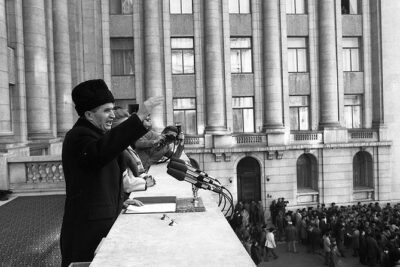
- Revolution Square and Ceaușescu’s Final Speech: Where the Script Flipped
- Belle Époque Landmarks With Political Echoes: Athenaeum and the Royal Palace
- University Square, Surveillance, and Student Unrest
- Old Town Break and Guided Walk: Restored Streets, Real Consequences
- Victory Avenue and the In-Between City
- Communist Civic Center to the Palace of Parliament Exterior
- A quick note on seeing inside Parliament
- How the Route Works: Pickup, Walking Pace, and Where It Ends
- Price and Value: Is $90 Worth It?
- Who This Tour Fits Best (and Who Should Skip It)
- Should You Book This Bucharest Communism and Revolution Walking Tour?
Key Things You’ll Notice on This Bucharest Communism & Revolution Tour
- A licensed English-speaking guide who can answer questions as you walk.
- Revolution Square in focus, including Ceaușescu’s final speech site.
- Two Bucharests side by side: restored Old Town and the former Communist Civic Center area.
- Photo-heavy route with short stops at major landmarks (and time to reset your legs).
- Palace of Parliament from the outside, with context for why it became a social scar.
- Less walking than you’d expect for a 4-hour tour: under 2 miles (3 km) total, slow-paced.
The communist decades, walked and explained
- The Real tour of Communism★ 5.0 · 666 reviews
- Life under Communism★ 5.0 · 358 reviews
- 3-Hour Guided Tour of Communist Bucharest★ 4.9 · 303 reviews
- Bucharest: Parliament, Ceausescu House & Village Museum Tour★ 5.0 · 208 reviews
Bucharest’s Two Cities in One Walk
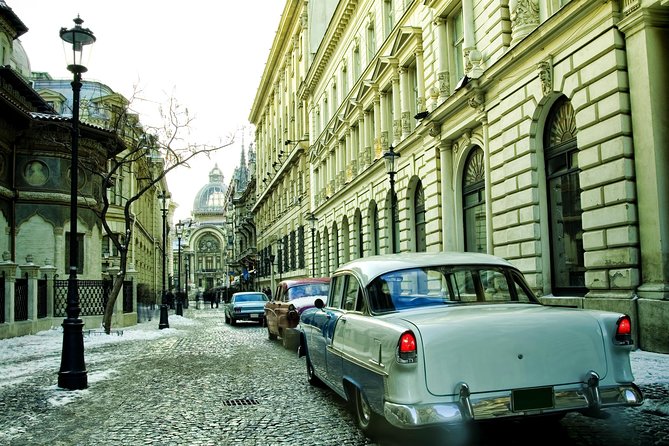
This tour works because Bucharest is almost cheating. You can look one direction and see 19th-century elegance, then turn a corner and get a blunt dose of communist-era planning. That visual contrast is not background decoration—it’s part of the lesson.
You’ll also notice the tour’s tone: serious, but not heavy in a way that shuts you down. It’s built around clear story beats—how Romania got reshaped after WWII and Stalin’s influence, how Ceaușescu’s control tightened over decades, and how the 1989 revolution changed everything.
And since it’s private, you’re not stuck with a rigid group rhythm. Your guide can adapt the walking pace and keep the pace comfortable for questions, photos, and breaks.
Revolution Square and Ceaușescu’s Final Speech: Where the Script Flipped
Your story starts near Revolution Square, where Romania’s 1989 revolution turned into a turning point for history. This is the kind of place where you don’t need dramatics. You’re simply standing in the environment where Nicolae Ceaușescu delivered his final speech, and the meaning lands quickly.
What I like here is that the guide ties the moment to the larger arc. It’s not just what happened on the day, it’s why people were already pushed to the edge. The communist system is explained through real-life pressure points—propaganda, control, and the effects of austerity that left ordinary people squeezed.
A practical note: this area is best experienced slowly. Give yourself a minute to take in the square before you move on, so you’re not just collecting photos.
Belle Époque Landmarks With Political Echoes: Athenaeum and the Royal Palace
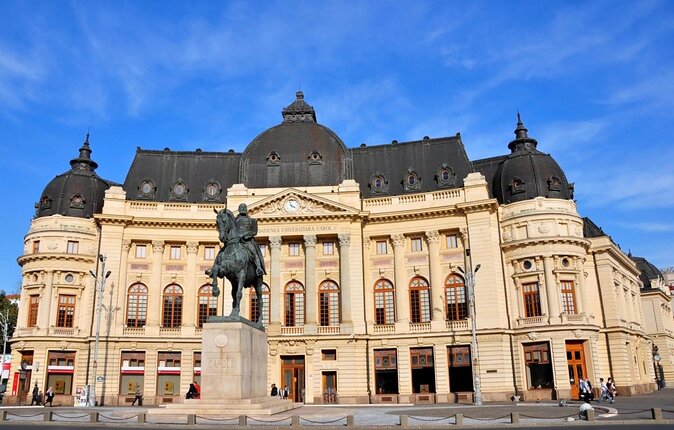
Before you get fully into the revolution and communist-planning story, the route threads through iconic Bucharest landmarks. You’ll have a photo stop at the Romanian Athenaeum, a symbol of the city’s earlier grandeur, and you’ll also see the Royal Palace of Bucharest from the outside.
These stops matter because they set the baseline. Bucharest once styled itself like a European capital with confidence. When communism later reshaped the city, it didn’t just change politics—it changed what the built environment was allowed to say about the country.
The tour also includes the Memorial of Rebirth, which helps connect the idea of national change to the physical city. Even if you don’t know every detail, you’ll come away understanding that the revolution wasn’t only a political event. It was also a break from a different way of shaping public space.
University Square, Surveillance, and Student Unrest
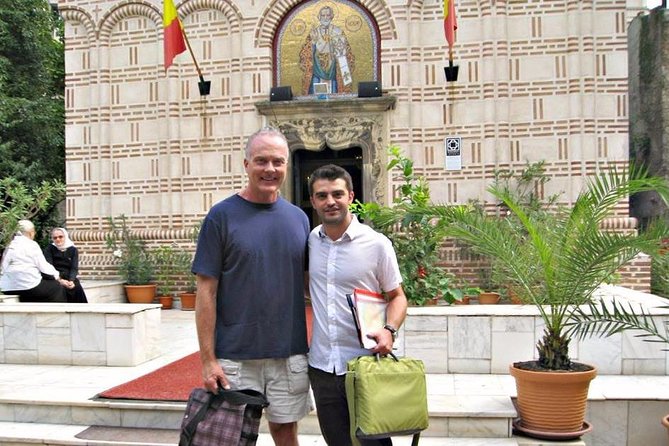
Next comes University Square, and this is where the tour turns more human. You’ll hear about student uprisings and Cold War pressure, but the real takeaway is the sense of living under constant surveillance.
That’s important because communism in Romania wasn’t only about public speeches and grand buildings. It was also about how people behaved day to day—how fear and monitoring can shape conversation, work, and ambition.
If you like history that explains how systems touch daily life, this is one of the strongest stretches. You’re not just watching a sequence of events. You’re learning the logic that kept the system running.
The big Bucharest sights in one sweep

Old Town Break and Guided Walk: Restored Streets, Real Consequences
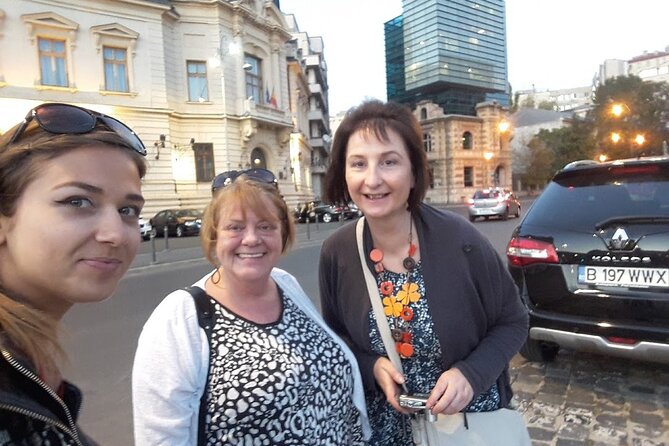
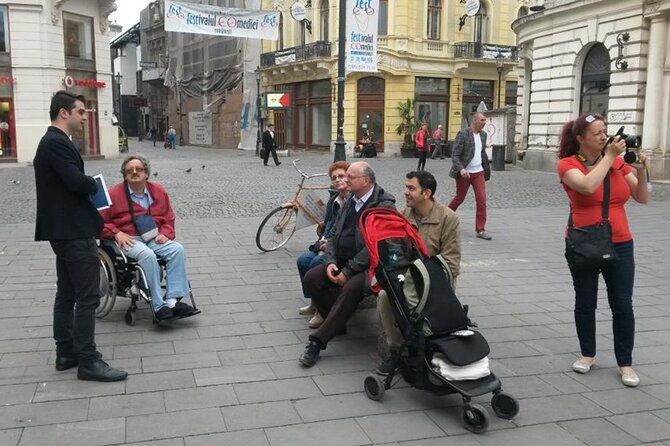
Then you reach Old Town, and you get a break plus a longer guided walk. You’ll have a short reset time, and then you’ll spend about 75 minutes walking with your guide through cobblestone streets and restored mansions.
This is where the tour makes a smart switch: it keeps the architecture in view, but focuses on what communist rule did to people. You’ll hear how Ceaușescu began with reforms that challenged the Soviet Union’s expectations, then shifted into tighter control, austerity, and propaganda.
The stories aren’t abstract. The guide covers details like food rationing and how human rights abuses fueled the anger that eventually crystallized into the 1989 revolution. Walking Old Town while hearing that contrast is unsettling in the right way. It shows you why restoration matters, but also why it can’t erase the cost.
Victory Avenue and the In-Between City
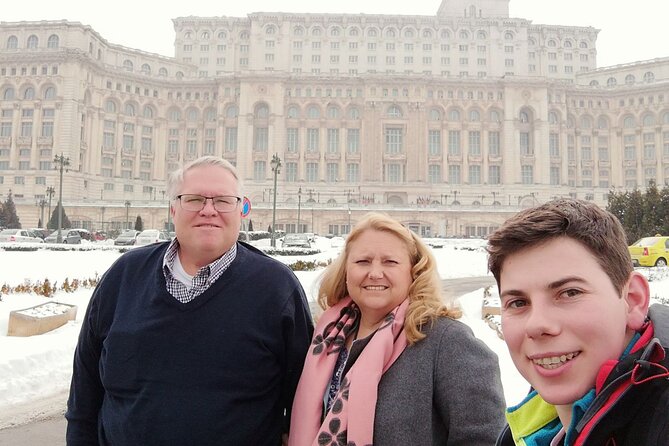
Along the way, you’ll also move through the broad “in-between” zones of Bucharest—places that hold layers at the same time. Victory Avenue is part of this concept in the route, once tied to aristocratic Bucharest, now lined with embassies and elegant palaces, but also marked by communist-era buildings.
That mix is part of why Bucharest feels different from other former Iron Curtain capitals. You’re not being shown a museum of history. You’re seeing how history is still present, mixed into the city’s daily skyline.
If you’re the type who likes “how it feels now” on top of what happened then, this is a good segment. It gives you a first-pass map of where things are and how the city is organized.
Communist Civic Center to the Palace of Parliament Exterior

The final big shift is heading into the former Communist Civic Center area—often described as grand, cold, and more intriguing to visitors than locals. You’ll get the sense immediately: this is space built for power, not comfort.
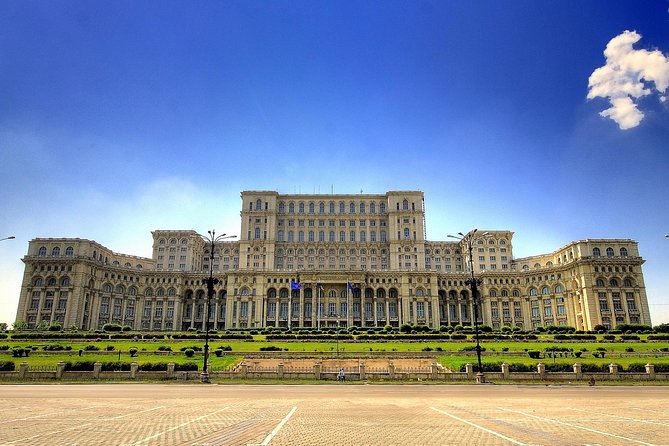
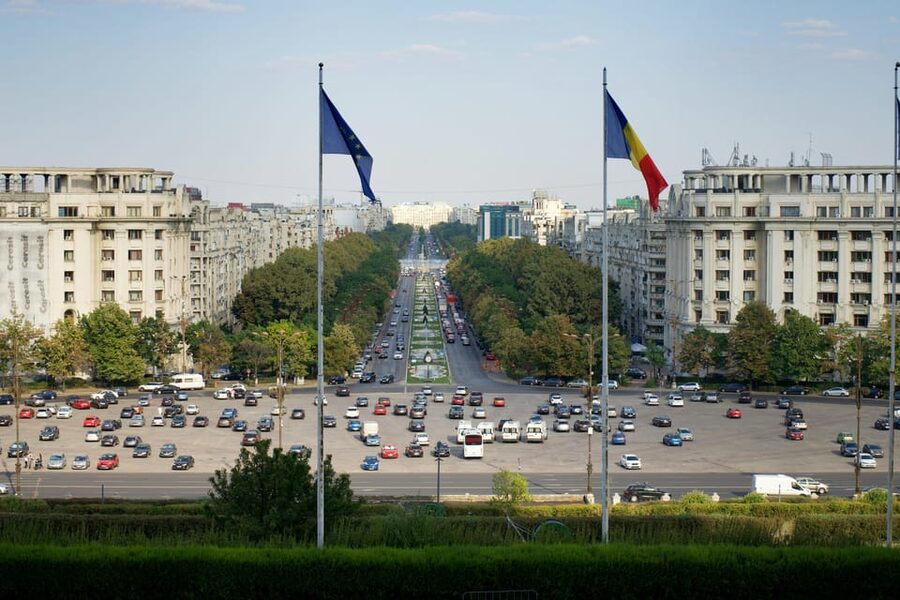
And then you’ll reach the headline sight: the Palace of Parliament, famously the world’s heaviest building. You’ll only see the exterior, but you’ll still understand the scale. The lesson here isn’t just architectural weight. It’s what the construction cost.
Your guide explains the displacement and neighborhood erasure tied to Ceaușescu’s vision—about 40,000 residents displaced and whole neighborhoods erased to make room for the socialist-utopia plan. From the outside, you can’t measure that number emotionally, but the context gives the building a moral weight.
You’ll also notice the tour design here: no waiting in queues to go inside government spaces. Instead, you get the story plus the exterior view, which is often the most time-efficient way to see the place without losing your momentum.
A quick note on seeing inside Parliament
This experience does not include entering Parliament or other public/government interiors. If you want to go inside the Palace of Parliament, access is described as limited and tied to phone reservation one day prior (availability can be constrained, and it may close due to conferences). Your guide can help if you want to pursue that.
How the Route Works: Pickup, Walking Pace, and Where It Ends
This is set up as a smooth first-day orientation. Your guide handles free hotel pickup, waiting in the hotel lobby near reception, or downstairs in front of the building if there’s no lobby.
The walking itself is manageable: the total distance is under 2 miles (3 km). It’s slow-paced, with multiple photo stops and time to rest. There’s a short Old Town break, and the guided Old Town segment is the longest continuous stretch at roughly 75 minutes.
The tour ends in the city center area, at the Palace of the Deposits and Consignments—a location that’s convenient for continuing on your own in Old Town, where many hotels, restaurants, and shops are concentrated.
Price and Value: Is $90 Worth It?
At $90 per person for a 4-hour private walking tour, the value isn’t just the sights—it’s the way the guide stitches them into a coherent story.
You’re paying for:
- a licensed English-speaking guide (and a private format, meaning you can ask questions),
- focused time at major sites tied directly to the communist and revolution timeline,
- a route that balances landmark views with street-level context,
- and practical pacing with short distances so you can keep enjoying the city after the tour.
If your priority is “see everything in Bucharest” on day one, $90 might feel steep because this tour doesn’t try to cram in every museum or interior. But if your priority is understanding the city’s hardest chapter and why it still shapes Bucharest’s streets and skyline, the price-to-purpose ratio holds up well.
Who This Tour Fits Best (and Who Should Skip It)
This is a strong match if you:
- want context for communism, Ceaușescu’s rule, and the 1989 revolution,
- like walking tours where you hear stories tied to real places,
- enjoy architecture contrasts—Belle Époque elegance next to Soviet-style communist design,
- and want a guide who can answer questions as you go.
It might not be the right fit if you mainly want interior access to government buildings and museums. The tour is intentionally designed around exteriors and street scenes. You’ll see the big names, but you won’t go inside most institutions.
Also, plan your expectations for the Palace of Parliament: you’ll admire it from the outside here. If interior access matters to you, you’ll need a separate reservation approach, which the guide can help with.
Should You Book This Bucharest Communism and Revolution Walking Tour?
If you’re heading to Bucharest for the first time, I think this tour is a smart starting move. You’ll get a clear timeline—rise, hardening, collapse—set against the city’s physical contrasts, and you’ll come away with a mental map of where the big ideas live in the streets.
Book it when:
- you want a guided orientation to the communist story without museum fatigue,
- you like a slower, question-friendly pace,
- and you’re okay with exteriors being the main event.
Skip it when:
- you want lots of inside-the-building access in the same 4 hours,
- or you’d rather spend your time purely on architecture without the political and human consequences.
Bottom line: for $90, you’re buying meaning, not just sightseeing—and in Bucharest, that’s often the difference between seeing a city and understanding it.
More Tour Reviews in Bucharest
- Bucharest: Dracula’s Castle, Peles Castle, & Brasov Old Town
★ 4.5 · 17,858 reviews - Bucharest: Dracula Castle, Peles Castle & Brasov Old Town
★ 4.6 · 10,891 reviews - Bucharest: Dracula’s Castle, Peleș Castle & Brașov Day Trip
★ 4.4 · 6,100 reviews - Bucharest: Palace of Parliament Tickets and Guide
★ 4.3 · 3,182 reviews - Bucharest: Day Trip to Dracula Castle, Peles Castle & Brașov
★ 4.4 · 3,049 reviews - Bucharest to Dracula Castle, Peles Castle and Brasov Guided Tour
★ 4.5 · 2,933 reviews
All of Bucharest in a Day
- Bucharest: City Highlights Guided Walking Tour
★ 4.9 · 1,482 reviews - Bucharest: Communism and History Guided City Walking Tour
★ 4.9 · 918 reviews - Bucharest Highlights Walking Tour
★ 5.0 · 469 reviews - Bucharest: 2-Hour City Highlights Bike Tour
★ 4.8 · 269 reviews - Best of Bucharest | Private Walking Tour
★ 5.0 · 199 reviews - Bucharest Tuk Tuk city tour
★ 5.0 · 188 reviews
The Communist Years, Up Close
- Bucharest: Communism and History Guided City Walking Tour
★ 4.9 · 918 reviews - The Real tour of Communism
★ 5.0 · 666 reviews - Life under Communism
★ 5.0 · 358 reviews - 3-Hour Guided Tour of Communist Bucharest
★ 4.9 · 303 reviews - Bucharest: Parliament, Ceausescu House & Village Museum Tour
★ 5.0 · 208 reviews - Bucharest Essential Tour: Old Town, Calea Victoriei & Communism
★ 5.0 · 142 reviews
Just In: The Latest Bucharest Reviews



Communism & Ceaușescu Tours, compared.
 ★ 4.9Communism and History Guided City Walking TourFrom $31918 reviews
 ★ 5.0The Real tour of CommunismFrom $32666 reviews
 ★ 5.0Life under CommunismFrom $42358 reviews
 ★ 4.93-Hour Guided Tour of Communist BucharestFrom $29303 reviews
 ★ 5.0Parliament, Ceausescu House & Village Museum TourFrom $1208 reviews
 ★ 5.0Bucharest Essential Tour: Old Town, Calea Victoriei & CommunismFrom $24142 reviews
 ★ 5.0Communism in Bucharest – Landmarks, Museum & Communist AppetizersFrom $48111 reviews
 ★ 4.9Palace of Parliament, Ceausescu House & Village MuseumFrom $186 reviews
Browse the lists this tour appears in