
Romania unfolds fast on this guided circuit. You start in Bucharest, then wind your way across the Carpathians to see royal palaces, Dracula-linked legends, and Orthodox painted monasteries in Bucovina, with overnight stays in B&B-style inns along the way. It is a private-group style trip (only your group participates), and your guide-driver handles the driving and planning so you can just enjoy the scenery and stops.
I especially love the day-by-day focus on the painted churches of Bucovina, where the murals are the main event. I also like the balance between myth and real places, from Peles Castle and Bran’s hilltop silhouette to Sighisoara’s medieval streets that are still alive with daily life.
One thing to consider: you cover a lot of ground by car, and entrance tickets are generally not included. If you dislike long drives, or you prefer to know your total costs up front, you’ll want to plan for extra ticket spending and car-time comfort.
In This Review
- Key highlights at a glance
- First day in Bucharest: Palace of Parliament and quick orientation
- Sinaia and Peles Castle: where detail takes over
- Bran Castle: Dracula vibes, plus a reality-check on the story
- Brașov and Tâmpa Mountain: old town charm without the stress
- Agapia Monastery and nuns’ workshops: the quieter side of Bucovina
- Bucovina’s painted churches: Voroneț, Moldovița, Sucevița
- Voroneț: the Last Judgment that’s hard to forget
- Moldovița: fortified walls and fresco drama
- Sucevița: the Virtue Staircase, angels vs. chaos
- Red Lake and the Bicaz Gorge route: Transylvania through the road window
- Sighisoara: the medieval fortress town and Vlad Tepes birthplace
- Biertan Fortified Church: UNESCO walls and a story about reconciliation
- Sibiu walking day: stairs, Liar’s Bridge, museums, and cathedrals
- Curtea de Argeș and the return to Bucharest
- Value check: what you pay for, and what you’ll still plan yourself
- Who this tour suits best (and who should think twice)
- Should you book this Romania circuit?
- FAQ
- What cities does the tour start in, and what time does it begin?
- How long is the tour, and what is the route?
- What is included in the price?
- Are meals included?
- Are entrance tickets included?
- How much notice is needed for a full refund if I cancel?
Key highlights at a glance
- UNESCO pair: Sighisoara Medieval Town and the Biertan Fortified Church
- Bucovina painted monasteries: Voronet, Moldovita, Sucevita, plus stops like Agapia
- Dracula touchpoints: Bran Castle plus the Vlad Tepes birthplace in Sighisoara
- Royal elegance in Sinaia: Peles Castle with detailed woodwork and Wagner references
- Transylvanian views: Cable car up Tâmpa Mountain near Brașov and the Red Lake area by Bicaz Gorge
Deeper into Brasov and Saxon Transylvania
- Bucharest: Dracula’s Castle, Peles Castle, & Brasov Old Town★ 4.5 · 17,858 reviews
- Bucharest: Dracula Castle, Peles Castle & Brasov Old Town★ 4.6 · 10,891 reviews
- Bucharest: Dracula’s Castle, Peleș Castle & Brașov Day Trip★ 4.4 · 6,100 reviews
- Bucharest: Day Trip to Dracula Castle, Peles Castle & Brașov★ 4.4 · 3,049 reviews
First day in Bucharest: Palace of Parliament and quick orientation
Most people arrive on their own schedule, and this tour starts with a meet-and-greet at Bucharest-Henri Coanda Airport. If your flight timing allows, you get a short orientation around major Bucharest sights before the trip really starts moving north.
The headline stop on Day 1 is the Palace of Parliament, and it is exactly the kind of place you want a guide for. It is not just about seeing it; it is about having context for why such a huge monument matters in Romania’s modern story. Plan on at least a solid chunk of time—around 3 hours is built in—with the important note that admission is not included.
Practical tip: if you are landing late or early, don’t assume you’ll have time for extra plans that day. This tour is built to get you oriented and then transition into the longer driving days.
Sinaia and Peles Castle: where detail takes over
After crossing the Southern Carpathians, the tour heads to Sinaia, a mountain town with royal history. You’ll pass through the area’s link to the royal family and the development of Sinaia as a settlement, with Sinaia Monastery dating to 1695 as one of the early anchors of the story.
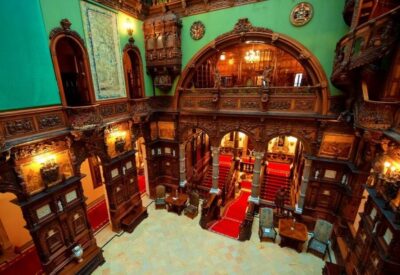
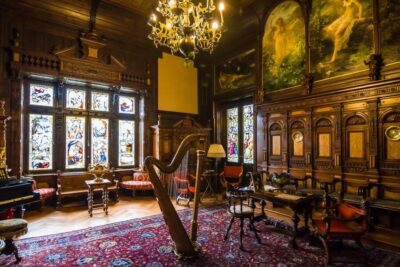
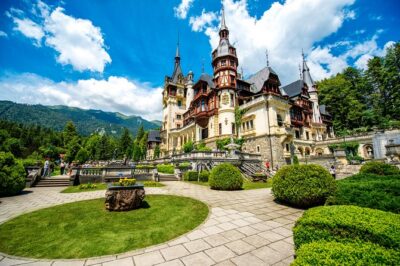
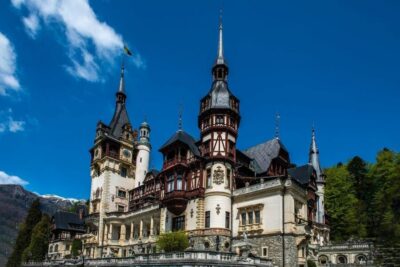
Then comes Peles Castle, often the star for architecture lovers. This is one of the best-preserved royal palaces in Eastern Europe, with ornaments both outside and inside. The castle is especially rewarding if you notice hands-on craftsmanship: elaborate wood sculptures, plus paintings that reference scenes from works by composer Richard Wagner.
The castle stop is about 2 hours, and admission tickets are not included. If you like visiting palaces slowly, 2 hours can feel a bit tight, but it is still a good block of time to see the major rooms and get the feel for why this place became famous.
Bran Castle: Dracula vibes, plus a reality-check on the story
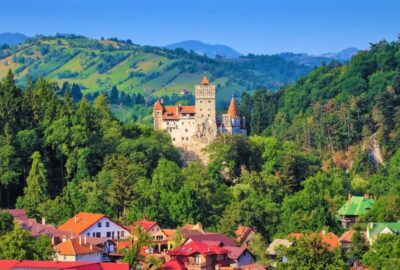
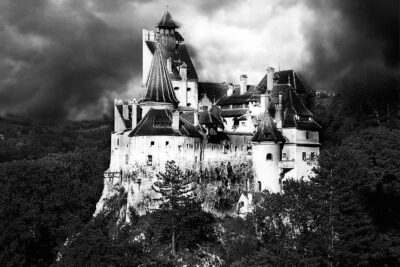
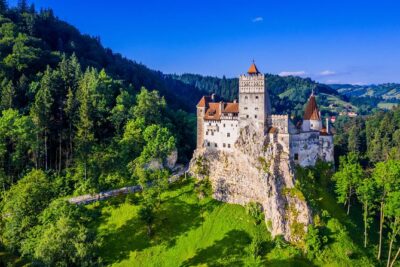
From Sinaia, you’ll reach Bran Village and visit Bran Castle, the one often tied to Dracula in popular legend. The castle’s position on a hill is what fuels the myth: it looks dramatic from a distance, and that visual is a big part of why so many stories grew around it.
The stop is about 2 hours, and again, admission is not included. Here is how I’d frame it for your expectations: even if you are not a hardcore horror fan, the castle still works as a view-and-walls experience. If you are more interested in Romania’s medieval towns and monasteries, consider Bran as a fun detour that adds flavor to the wider Transylvania theme.
Practical tip: bring cashless payment options if the site requires it, and plan your timing so you are not rushed when you reach the hilltop viewpoints.
Brașov and Tâmpa Mountain: old town charm without the stress
You continue into Transylvania’s central region with Brașov, a city surrounded by the Southern Carpathians. Brașov’s old town is described as very well preserved, and the easiest way to “get your bearings fast” is by starting with the cable car up Tâmpa Mountain (995 m).
That cable car adds a quick break from walking, and it also gives you context. From above, you can see how the town sits in the mountains, which makes the next day-and-a-half of Transylvania travel feel more connected rather than random driving.
The city block is about 2 hours, with admission free for the cable-car component per the way it is presented here. That is a nice value touch compared with many tours that quietly make everything ticketed.
Worth a look before you lock in this Bucharest tour:
Agapia Monastery and nuns’ workshops: the quieter side of Bucovina
Before heading toward Gura-Humorului, you stop at Agapia Monastery, one of Romania’s larger nunneries. This is not framed as a quick photo stop; it is a place to see what monastery life looks like through the work happening inside.
The tour notes that more than 300 nuns work together in workshops, including making painted icons and handmade carpets. That means you are not only seeing architecture or art on walls—you are seeing the process behind the art.
The stop is about 1 hour and is listed as admission free. Even if you don’t know Orthodox iconography, it helps to watch people at work. It makes the later painted church murals feel less like “decor” and more like a living tradition.
Bucovina’s painted churches: Voroneț, Moldovița, Sucevița
Days 4 is where the tour leans hard into what many people come to Romania for: painted monasteries that feel both religious and visually dramatic.
Voroneț: the Last Judgment that’s hard to forget
Your first stop is Voroneț Monastery, built in 1488. The murals are described as a blend of Byzantine, Gothic, and local elements, with the western wall featuring scenes like the Last Judgment. The tour highlights that the Last Judgment scene is unique in the whole world, which is the kind of claim you only appreciate when you stand in front of it and realize the painting is designed for impact.
You’ll spend about 2 hours here, and admission is not included. This is a good place to slow down. If you rush, you miss the story the murals are trying to tell.
Moldovița: fortified walls and fresco drama
Next is Moldovița Monastery, built in 1532. It sits inside a fortified quadrangular enclosure with towers, gates, and lawns, so the site has both “church” and “defense” energy at the same time.
The tour emphasizes the central painted church and restored frescoes from 1537. It also points to the southern exterior wall, depicting the Siege of Constantinople in AD 626, with the besiegers shown in Turkish dress. Whether you focus on the historical angle or the artistic choice, the message is clear: the painting is built to hold attention and guide interpretation.
This stop is about 1 hour with admission not included.
Sucevița: the Virtue Staircase, angels vs. chaos
The third monastery stop is Sucevița Monastery, where the key visual is the “Virtue Staircase.” The contrast is laid out as angel’s order versus devil’s chaos—big ideas rendered as a mural scene.
You’ll have about 1 hour here, with admission not included. If you feel your brain is getting saturated with images by this point, that’s normal. One helpful approach is to pick one mural detail per church and remember it, rather than trying to catalog everything.
Practical tip for the whole monastery day: wear shoes you can trust. Even if the walking isn’t extreme, these sites reward small pauses where you look back and forth between walls, gates, and fresco placement.
Red Lake and the Bicaz Gorge route: Transylvania through the road window
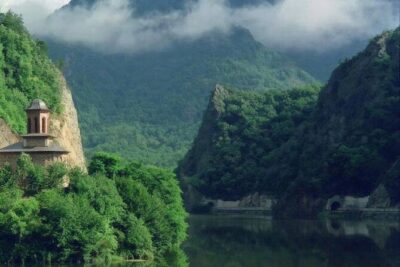
On Day 5, the itinerary shifts from monasteries to mountain scenery. The tour takes you across the Eastern Carpathians through Bicaz Gorge, and you reach Red Lake.
This stop is listed as about 1 hour and is admission free in the way it is presented. The description connects the area to Bram Stoker’s Dracula, and it also points out that the region is inhabited mostly by the Hungarian Szekler community. Even when you are not studying the ethnic history, this kind of stop helps you feel that Transylvania is bigger than a few famous castles.
If you care about travel rhythm, this is a nice transition: you get a different kind of “site.” It is not an indoor museum or a church courtyard. It is a landscape stop where you get to breathe and reset.
Practical tip: if you get motion-sensitive, plan for car-time after this. Your day continues into Sighisoara.
Sighisoara: the medieval fortress town and Vlad Tepes birthplace
Sighisoara is where the trip feels most like stepping into the Middle Ages without special effects. You arrive in the evening and spend Day 5 with time at the Sighisoara Medieval Town, a UNESCO-listed site and noted as the only still inhabited medieval fortress in Europe.
Then the next morning starts with an old-town exploration on cobbled streets, burgher houses, and ornate churches. You’ll visit major landmarks like the Clock Tower, the Church on the Hill, and Dracula’s house, identified here as Vlad Tepes’s birthplace in 1431.
On paper, it is listed as about 2 hours for the core exploration, with admission not included for these stops. In real life, cobblestones and steep little lanes can make time feel different, so pace yourself. If you want photos, go slow at the first viewpoints and save your speed for the final straight sections.
Why it matters: this is not just “Dracula tourism.” Sighisoara works as a human-scale town. You can sense that people live here, and that changes how you interpret the architecture.
Biertan Fortified Church: UNESCO walls and a story about reconciliation
After Sighisoara’s morning, the tour heads to Biertan Fortified Church, another UNESCO World Heritage Site. This one is tied to early German settlement in Transylvania, and the defining feature is the fortification: three rows of defenses around the church.
The fortified church was built by German peasants and served as the residence of the Transylvanian Archbishop for nearly 300 years. That long timeline is important because it turns the place from a postcard into a real administrative center that shaped daily life.
The tour also includes a detail that you’ll only understand on-site: a room in the citadel used for reconciliation for couples about to divorce, with the full story explained on spot. Whether you find the story funny or a little sad, it is the kind of human detail that makes the whole site feel more real.
You’ll spend about 1 hour here, with admission not included.
Sibiu walking day: stairs, Liar’s Bridge, museums, and cathedrals
Sibiu is introduced as the chief city of the Transylvanian Saxons, and the walk is built to show how guild life shaped the town. You’ll see old surrounding defense walls and towers tied to different guilds, which gives you a useful way to understand the town’s layout.
Later in the tour (Day 6 into Day 7, depending how you frame it), you’ll connect that walking theme to specific landmarks:
- The Brukenthal Museum, assembled by baron Brukenthal at the end of the 18th century
- The Evangelical Cathedral, with its shape completed in 1520 and a fresco on the north wall of the choir dating from 1445
- The Passage of Stairs linking the Upper town to the Lower town
- Liar’s Bridge from 1859
- The Byzantine-style Orthodox Cathedral, described as a replica of St. Sophia in Constantinople
This part of the itinerary is admission not included for the stops mentioned, with about 2 hours listed for some of the landmark time. If you are museum-focused, you might want to pick what matters most and not try to do everything at full speed.
My best advice: let Sibiu be a slower day. The city rewards lingering. Also, after long drives and earlier church-heavy days, walking Sibiu can feel like a welcome reset rather than another checklist.
Curtea de Argeș and the return to Bucharest
Near the end of the trip, you visit Curtea de Argeș, described as the first capital of Wallachia with an old Princely Court and the monastery. The tour highlights that three of the four Romanian kings of the Hohenzollern dynasty are buried there.
Then it is back on the road to Bucharest to finish the tour. Admission is not included for this stop as presented, and it is a shorter block in the schedule, about 1 hour.
This final day is a useful wrap-up because it gives you a slice of Wallachia rather than keeping the entire trip focused on Transylvania alone. Even a short stop helps you understand that Romania’s story is bigger than one region.
Value check: what you pay for, and what you’ll still plan yourself
At $1,708.12 per person for about 7 days, you’re not paying for a shoestring DIY tour. You’re paying for transport, planning, and lodging handled for you.
Here is the value that’s clearly built into the price:
- 6 nights of accommodation on a B&B basis
- A driver/guide
- Air-conditioned car/minivan/minibus transport, plus fuel and parking fees
- A private-group setup where only your group participates
- A mobile ticket and group discounts (when applicable)
What you still need to budget for:
- Food and drinks are not included unless specified
- Admission tickets are generally not included, with a few spots marked as admission free in the schedule
So the best way to think about the cost is: you’re paying to remove transportation headaches and reduce decision fatigue. That is real value in Romania, where road trips can be long and switching between towns can be more work than you expect.
One note I take from the feedback on this tour: the route involves long drives, so build in comfort. Plan your snacks, take the restroom breaks your body needs, and pack a layer for car AC changes. It is not a dealbreaker, but it is something you should expect.
Who this tour suits best (and who should think twice)
This fits best if you:
- Want a guided route through Transylvania + Bucovina without building your own schedule
- Like churches with visible stories, especially the painted murals
- Want at least two UNESCO stops without having to coordinate tickets and timing yourself
- Prefer B&B-style overnight stays over large hotels
It may feel less ideal if you:
- Hate car-time and would rather stay put in one area
- Are expecting entrance fees to be fully included
- Need lots of free time to wander entirely on your own
Good news: the trip indicates service animals are allowed, and most travelers can participate.
Should you book this Romania circuit?
If you want the best of Romania in one organized loop—UNESCO in Sighisoara and Biertan, iconic Peles Castle, and the painted monasteries of Bucovina—this tour makes a lot of sense. You are paying for logistics and a guide who can keep the story clear in very good English, plus a full set of major stops without you playing map app all day.
I’d book it if you are comfortable with long drives and you can handle entrance tickets being mostly on you. If you want a more relaxed pace with fewer transit hours, you might prefer a shorter region-focused trip.
In short: book this for structure, stories, and a strong run of unforgettable sites—then plan ahead for car-time comfort and site admissions.
FAQ
What cities does the tour start in, and what time does it begin?
The tour starts in Bucharest, Romania, with a start time of 8:00 am.
How long is the tour, and what is the route?
It is a 7-day tour (approx.) that begins and ends in Bucharest, traveling through Sinaia, Brașov, Bucovina, Transylvania towns like Sighisoara and Sibiu, and finishing after a stop at Curtea de Argeș.
What is included in the price?
Included are 6 nights of accommodation on a B&B basis, a driver/guide, transport by air-conditioned car/minivan/minibus, and fuel and parking fees. A mobile ticket is also provided.
Are meals included?
Food and drinks are not included unless specified.
Are entrance tickets included?
Most admission tickets are not included. Some stops are specifically listed as admission free in the schedule, but you should plan on paying for many sites yourself.
How much notice is needed for a full refund if I cancel?
You can cancel up to 6 days in advance of the experience for a full refund, meaning you must cancel at least 6 full days before the experience’s start time.
More 7-Day Experiences in Bucharest
- 4×4 Driving Experience at Flying Altitudes – 7 Days
★ 5.0 · 13 reviews - 7-Day Private Tour of Transylvania from Bucharest
★ 5.0 · 13 reviews - Transylvanian week
★ 5.0 · 7 reviews - Amazing Romania – Seven day private tour from Bucharest
★ 5.0 · 7 reviews - 7 days Private Romania Grand Tour from Bucharest
★ 5.0 · 6 reviews - 7 Days Private Guided Tour in Romania from Bucharest
★ 5.0 · 4 reviews
More Tour Reviews in Bucharest
- Bucharest: Dracula’s Castle, Peles Castle, & Brasov Old Town
★ 4.5 · 17,858 reviews - Bucharest: Dracula Castle, Peles Castle & Brasov Old Town
★ 4.6 · 10,891 reviews - Bucharest: Dracula’s Castle, Peleș Castle & Brașov Day Trip
★ 4.4 · 6,100 reviews - Bucharest: Palace of Parliament Tickets and Guide
★ 4.3 · 3,182 reviews - Bucharest: Day Trip to Dracula Castle, Peles Castle & Brașov
★ 4.4 · 3,049 reviews - Bucharest to Dracula Castle, Peles Castle and Brasov Guided Tour
★ 4.5 · 2,933 reviews
Brasov and Saxon Transylvania
- Bucharest: Dracula’s Castle, Peles Castle, & Brasov Old Town
★ 4.5 · 17,858 reviews - Bucharest: Dracula Castle, Peles Castle & Brasov Old Town
★ 4.6 · 10,891 reviews - Bucharest: Dracula’s Castle, Peleș Castle & Brașov Day Trip
★ 4.4 · 6,100 reviews - Bucharest: Day Trip to Dracula Castle, Peles Castle & Brașov
★ 4.4 · 3,049 reviews - Bucharest to Dracula Castle, Peles Castle and Brasov Guided Tour
★ 4.5 · 2,933 reviews - Dracula’s Castle, Peles Castle and Brasov Day Trip from Bucharest
★ 4.5 · 1,804 reviews
Just In: The Latest Bucharest Reviews

Brașov & Transylvania, compared.
 ★ 4.5Dracula’s Castle, Peles Castle, & Brasov Old TownFrom $4017,858 reviews
 ★ 4.6Dracula Castle, Peles Castle & Brasov Old TownFrom $4010,891 reviews
 ★ 4.4Dracula’s Castle, Peleș Castle & Brașov Day TripFrom $366,100 reviews
 ★ 4.4Day Trip to Dracula Castle, Peles Castle & BrașovFrom $453,049 reviews
 ★ 4.5Bucharest to Dracula Castle, Peles Castle and Brasov Guided TourFrom $332,933 reviews
 ★ 4.5Dracula’s Castle, Peles Castle and Brasov Day Trip from BucharestFrom $331,804 reviews
 ★ 4.5Transylvania and Dracula Castle Full Day Tour from BucharestFrom $351,589 reviews
 ★ 4.5From Bucharest: Brasov Peles & Dracula’s Castle Day TourFrom $651,244 reviews
Browse the lists this tour appears in