
REVIEW · BUCHAREST FOOD TOURS
Private Tour – Food, Culture, History & Traditions
Bucharest is best tasted on foot. This private 4-5 hour tour strings together trading-street legends, monarch-era architecture, and the drama of 1989, with a guide who helps the city make sense fast. You’ll cover about 6 km on foot, with free entry at the listed stops, all while staying in the center of town.
What I like most is the two-course Romanian lunch, built around starters like cheeses and charcuterie before your main course. I also like the way the route mixes famous landmarks with the smaller details that usually get skipped, like the old passages and street-level stories that connect food to place. Even better, it’s in English and designed for a small group, with audio devices when needed.
One thing to consider: the route is walking-heavy, and in busy areas a softer voice can be tough to catch without the audio devices turned up. If you’re sensitive to background noise, it helps to sit/stand close when you can.
In This Review
- Key things I’d plan around
- A private food-and-history walk that stays practical
- Old Town trading streets and the story behind mici
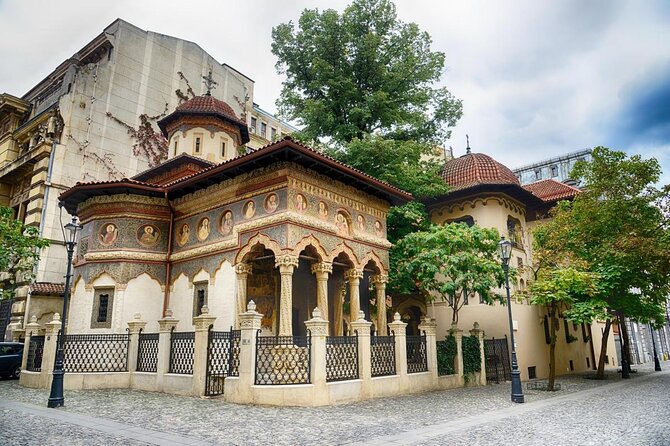
- Stavropoleos Monastery: Romanian Renaissance calm in the middle of the city
- Palaces and banks: CEC and the power of architecture
- Macca Villacrosse Passage: where the city hides its prettiest angles
- Pasajul Victoriei and Pasajul Englez: stories from behind the façade
- Calea Victoriei: the heart of Bucharest through the 19th century
- Piata Revolutiei: standing near the story of 1989
- Ateneul Roman: when a building becomes a landmark for the whole city
- Royal Palace to the National Art Museum: power meets art
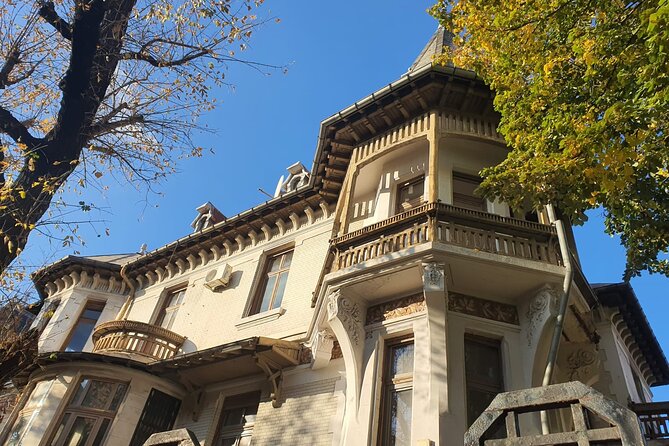
- Bulevardul Dacia: neo-Romanian villas and the look of national style
- Colegiul Național Școala Centrală: the girls school and its eerie stories
- Cartierul Armenesc and Grădina Icoanei: local neighborhoods with mystery
- Lunch that feels like Romania: two courses plus a starter platter
- Price and logistics: what you’re really paying for at $114.14
- Who should book this private food, culture, history and traditions tour
- Should you book this private Bucharest tour?
- FAQ
- How long is the private tour?
- Is this tour private or shared?
- What’s included in the meal?
- Are drinks included with lunch?
- What language is the tour offered in?
- How much walking is involved?
- Where do we meet and where does it end?
Key things I’d plan around
- A private group means the pace can match your energy, not a generic conveyor belt.
- Lunch is real food: two courses plus a Romanian starter platter, not just a quick bite.
- Free admission at each stop keeps the day simple and predictable.
- Bucharest by street level: passages, boulevards, monasteries, and bank palaces in one loop.
- History you can point at: Ceausescu’s last speech area shows up in the walk, not in a lecture.
- About 6 km of walking over 4-5 hours, so comfortable shoes matter.
Still hungry? More markets, mici and mtitei
- Street Food’n’Culture Tour★ 5.0 · 209 reviews
- Wine Tasting in Bucharest★ 5.0 · 183 reviews
- Discover Bucharest: Private Highlights and Traditional Food Tour★ 5.0 · 86 reviews
- Bucharest: Romanian Wine Tasting Experience at Corks★ 4.6 · 84 reviews
A private food-and-history walk that stays practical
This is one of those Bucharest tours where you end up understanding the city more than you expected. You’re not just stopping for photos. You’re walking through layers: Ottoman-era echoes in the Old Town vibe, a wave of late-19th-century architecture, and then the very public story of Romania under communism and after the revolution.
The format is straightforward: meet in central Bucharest, walk a roughly 6 km route, and end near Universității Square. It’s offered in English, and it’s a private tour, so it’s built for your group only. If your group grows beyond four, they provide audio devices so you can hear clearly and keep a comfortable distance.
If you’re the type who likes to connect the dots—why a dish is tied to a neighborhood, why a palace is where it is, why certain streets feel like different time periods—you’ll enjoy this.
Old Town trading streets and the story behind mici
The day starts in Bucharest’s Old Town, where the streets were once busy with trading goods. That matters because it explains the food connection: this is the part of town that shaped everyday life, not just official monuments.
You also get the background behind one of Bucharest’s most famous snacks: mici. The tour frames it as something invented here, with the Old Town’s trade-and-tavern culture as the reason the food became iconic. Even if you think you already know Romanian food, this is the kind of context that makes it feel personal.
Practical note: this first stop is short—about 30 minutes—so treat it as your orientation point. You’ll get the names, the vibe, and a sense of direction for what comes next.
Stavropoleos Monastery: Romanian Renaissance calm in the middle of the city
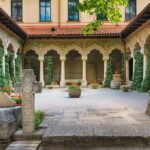
Next is Stavropoleos Monastery, an 18th-century Romanian Renaissance stop. Monasteries in big capitals can feel like a detour. Here, it works because it’s tucked into the broader flow of the Old Town. You get a break from street bustle without losing the sense of local history.
The timing is very tight—around 3 minutes for the stop itself—but monasteries are about more than minutes. In that short window, you’re looking for the contrast: a calm interior world right next to the city’s loud transitions.
Palaces and banks: CEC and the power of architecture
You’ll then pass Palatul CEC, a late-19th-century eclectic building. “Eclectic” sounds vague, but on the street it’s clear: this is where Bucharest shows off its ambitions through design, using style as a signal.
Right after that, the walk continues into another example of the city’s financial-and-architectural personality: the area around BNR Palace and what the tour describes as the old Marmorsch Blank Bank, now turned into a hotel. Even if you’re not a museum person, bank palaces can be fascinating because they often explain how a city wanted to be seen—serious, modern, and established.
These stops are each brief, but the value is in the connective theme: Bucharest’s story isn’t only told through palaces and churches. It’s also told through the buildings that handled commerce and money.
Only your group, at your own speed

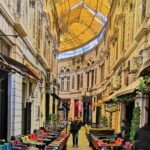
Macca Villacrosse Passage: where the city hides its prettiest angles
One of my favorite parts of this style of walking tour is the moment you slip into a passage. The route includes Macca Villacrosse Passage, described as the most beautiful passage of Bucharest.
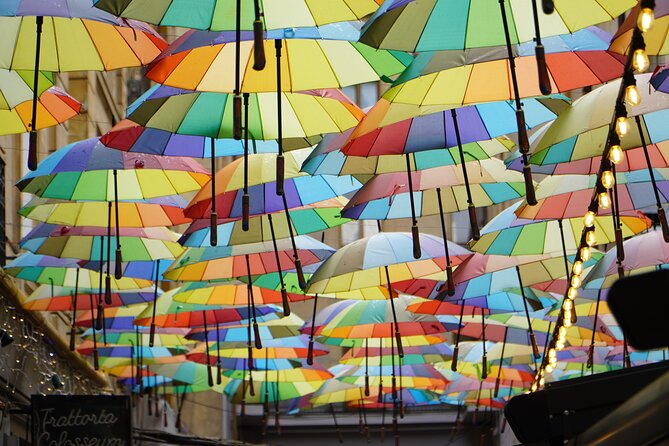
Passages are basically city secrets: covered walkways that feel sheltered and slow, even when you’re surrounded by traffic outside. They’re perfect for history because they show the city’s practical side—space made for movement, commerce, and everyday life—while still being decorative.
Expect around 5 minutes here. Use it for a slow look and a couple of angles for photos, because the best passage moments are the ones you notice by eye, not the ones you rush past.
Pasajul Victoriei and Pasajul Englez: stories from behind the façade
Then comes Pasajul Victoriei, paired with the tour’s mention of Pasajul Englez, described as a former brothel located on the main avenue with a convenient back entrance. The guide’s job here is to connect architecture to social reality: who used these spaces, how the building worked for its purpose, and why the city still carries those stories in its geometry.
If you’d rather avoid heavy topics, this is still presented as historical framing rather than graphic detail. The key takeaway is how Bucharest kept layers of life side by side—respectable façades with very different functions behind them.
Again, it’s a short stop (about 5 minutes), but it tends to land because it’s specific and visual. You’ll see why the passages were useful and how a single entrance could mean a very different experience for different people.
Calea Victoriei: the heart of Bucharest through the 19th century
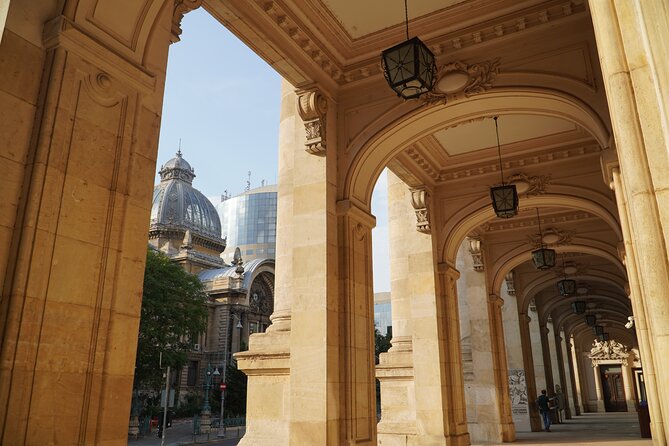
Now you move onto Calea Victoriei, described as the heart of Bucharest since the 19th century. This section is about 30 minutes, so you get enough time to feel the rhythm of the avenue and understand why it became a stage for status and change.
This is where the tour becomes less about one building and more about the city’s pattern: grand streets, big institutions, and architecture that signals who belonged where. If you enjoy “reading” cities by their streets, this part is a highlight.
You’ll also start noticing how the tour links eras. It’s not random. It’s aiming to help you see Bucharest as a sequence of moods, not a single monument.
Piata Revolutiei: standing near the story of 1989

Next is Piata Revolutiei, where the communist leader Ceausescu held his last speech at the beginning of the bloody 89 revolution. This is a moment of weight in an otherwise architecture-heavy route.
You don’t need a full history lecture to grasp the significance, because the point of the stop is geographic. When you’re standing near a place tied to modern upheaval, the city feels less like a postcard and more like real time.
The stop is about 10 minutes. Use it to absorb the scale and think about how quickly a city’s “normal” can change.
Ateneul Roman: when a building becomes a landmark for the whole city
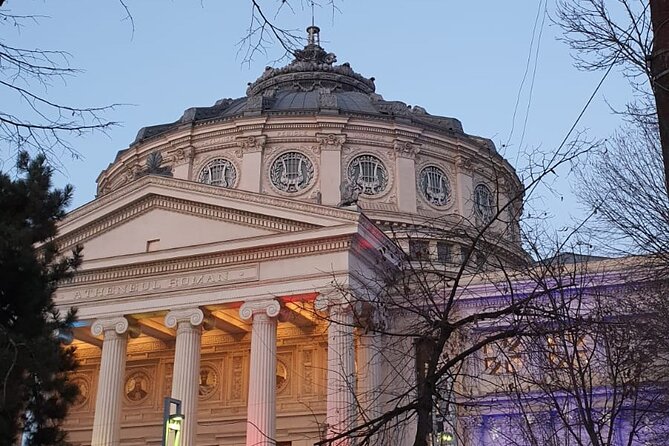
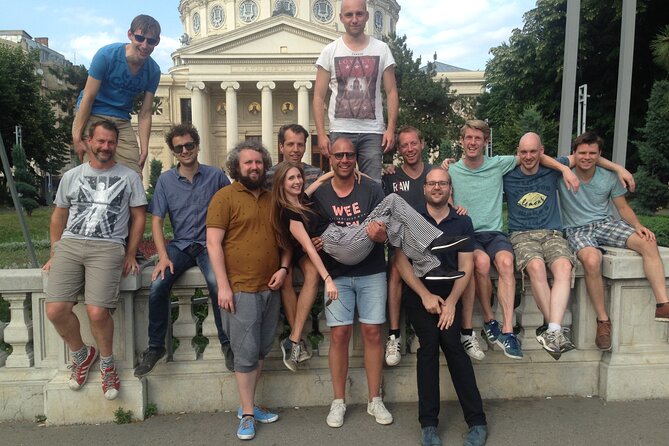
Then you reach Ateneul Roman, described as one of Bucharest’s most beautiful buildings. It’s a quick stop (about 5 minutes), but it’s chosen for a reason: this is a structure that many people know by reputation, yet they haven’t seen close-up until they visit.
If you love classical architecture, you’ll appreciate the exterior even with limited time. If you don’t, this still works because the building is tied to Bucharest’s identity as a cultural city.
Royal Palace to the National Art Museum: power meets art
The walk continues to Palatul Regal / Royal Palace, which now houses the national art museum. This stop is short (around 3 minutes), but it’s one of the most satisfying transitions: political power now reframed as public art.
You don’t have to go inside to get something from this stop. Even a quick look helps you see how the city’s official past can be repurposed into something easier for visitors to access.
Bulevardul Dacia: neo-Romanian villas and the look of national style
A more residential feel starts with Bulevardul Dacia, where the tour points out magnificent villas, examples of neo-Romanian architectural style. This is a smart inclusion because it breaks the heavy “palace and avenue” loop.
You’ll get about 20 minutes here, which is enough time to notice details rather than just wave at a façade. Neo-Romanian style is often about mixing national identity with borrowed influences, and you start seeing how Bucharest tried to define itself visually.
Colegiul Național Școala Centrală: the girls school and its eerie stories
You then pass Colegiul Național Școala Centrală, described as a 19th-century boarding school for girls, surrounded by stories. The stop is short (about 5 minutes), but the tour’s angle is memorable: you’re learning how institutions and local folklore can cling to buildings long after their original use feels outdated.
If you enjoy the softer side of city history—legends, personality, what locals say—this is the kind of stop that adds flavor without turning into fantasy.
Cartierul Armenesc and Grădina Icoanei: local neighborhoods with mystery
The route shifts into neighborhood mode with Cartierul Armenesc (the Armenian neighborhood), where you explore history and hidden gems. This stop is about 30 minutes, giving it time to feel like an actual stroll rather than a photo sprint.
Then you finish with Grădina Icoanei, where witches were believed to cast spells in the not-so-distant past. It’s described as a 10-minute stop, but it’s a fun final note because it’s weird in a human way. Cities keep their myths for a reason: they help explain fear, survival, and social memory.
If your travel style likes facts, but you also want a little story energy to lighten the load, this ending works.
Lunch that feels like Romania: two courses plus a starter platter
Lunch is one of the main reasons this tour earns such strong marks. You get a full meal (lunch or dinner depending on timing), built as 2 courses, plus a platter of Romanian starters. The starters can include cheeses and charcuterie, along with other Romanian bites.
This structure matters because you’re not guessing what to order. The tour does the planning, and you get a sequence: snacky starter platter first, then a main course. That also makes the day feel complete: a morning of architecture and street stories ends with something you can actually taste.
Drinks are the only clear exception. Alcoholic beverages are not included, and soda/pop isn’t included either. Coffee may show up depending on how your guide structures breaks, but the guaranteed, ticketed part is the meal itself.
If you’re worried about the day becoming all walking and no payoff, this is the built-in payoff.
Price and logistics: what you’re really paying for at $114.14
At $114.14 per person for about 4 to 5 hours, you’re buying three things at once.
First, you’re buying a tight walking route that covers major Bucharest themes without requiring you to plan transit between neighborhoods. The route is about 6 km, so you’re not taking a bus hop every 10 minutes.
Second, you’re buying the guide’s job of turning buildings into meaning. That shows in the way the day moves from trading streets and food origins to palaces and passages, then lands on revolution history and culture.
Third, you’re buying lunch that’s more than a snack. A two-course Romanian meal plus starters is a meaningful part of the value, especially in a half-day format.
Added perks that keep things comfortable: it’s a mobile ticket, admission is free at the listed stops, and you can use audio devices if the group is larger than four. Also, it’s near public transportation, so if you’re coming from elsewhere you won’t have to solve Bucharest on your own.
The main tradeoff is the walking time. You’ll want good shoes and a realistic pace.
Who should book this private food, culture, history and traditions tour
This tour fits best if you:
- want a first-day or early-day overview of Bucharest that you can build on later
- like architecture as a story tool, not just as background decoration
- care about food context, especially Romanian staples tied to specific neighborhoods
- prefer a private setting where the guide can adjust pacing and keep things comfortable for your group
It’s also a nice fit for families, since the guide is used to making the day workable for different ages and energy levels. If you’re traveling with kids, you’ll still want a bit of patience during short stops, but the structure keeps things moving.
If you hate walking or you only want museum interiors, you might find this less satisfying. This is a street-history tour first, with sights outside and a meal at the center.
Should you book this private Bucharest tour?
I’d book it if you want a half-day that combines food, architecture, and modern history in a way that’s easy to follow. The route is designed to give you variety: Old Town to monasteries, bank palaces to passages, grand avenues to revolution ground, and then a neighborhood close that feels local.
Skip it only if you know your group struggles with extended walking, or if you need long indoor time with quiet interpretation. Otherwise, this is the kind of tour that makes Bucharest feel understandable on day one, and it ends with a meal you can actually enjoy without guessing.
FAQ
How long is the private tour?
It runs about 4 to 5 hours.
Is this tour private or shared?
It’s a private tour. Only your group participates.
What’s included in the meal?
Lunch (or dinner) is a full meal with 2 courses, plus a platter with Romanian starters such as cheeses and charcuterie.
Are drinks included with lunch?
Alcoholic beverages are not included, and soda/pop is also not included.
What language is the tour offered in?
The tour is offered in English.
How much walking is involved?
The route is approximately 6 km, and it requires a minimum level of physical fitness.
Where do we meet and where does it end?
Meet at Bulevardul Ion C. Brătianu 36, 030167 București, Romania, and the tour ends near Universității Square on Bulevardul Regina Elisabeta, București 030167, Romania.
More Tour Reviews in Bucharest
- Bucharest: Dracula’s Castle, Peles Castle, & Brasov Old Town
★ 4.5 · 17,858 reviews - Bucharest: Dracula Castle, Peles Castle & Brasov Old Town
★ 4.6 · 10,891 reviews - Bucharest: Dracula’s Castle, Peleș Castle & Brașov Day Trip
★ 4.4 · 6,100 reviews - Bucharest: Palace of Parliament Tickets and Guide
★ 4.3 · 3,182 reviews - Bucharest: Day Trip to Dracula Castle, Peles Castle & Brașov
★ 4.4 · 3,049 reviews - Bucharest to Dracula Castle, Peles Castle and Brasov Guided Tour
★ 4.5 · 2,933 reviews
Just the Party You Came With: More Private Days
- Castles of Transylvania: Private Day Trip from Bucharest
★ 4.5 · 248 reviews - Dracula’s Castle, Peles Castle and Brasov – Private Day Trip from Bucharest
★ 5.0 · 211 reviews - Best of Bucharest | Private Walking Tour
★ 5.0 · 199 reviews - Bucharest Panoramic Sightseeing – Private City Tour
★ 5.0 · 128 reviews - THERME “Take It Easy” Pack: Full Spa Access + Private Transfers
★ 4.0 · 117 reviews - 4h Bucharest Private Tour (2h by Car and 2h Walking in Old Town)
★ 5.0 · 90 reviews
Eat Bucharest: More Food Walks
- Taste Bucharest: A Food Lover’s Tour of Markets & Neighbourhoods
★ 5.0 · 689 reviews - Street Food’n’Culture Tour
★ 5.0 · 209 reviews - Wine Tasting in Bucharest
★ 5.0 · 183 reviews - Discover Bucharest: Private Highlights and Traditional Food Tour
★ 5.0 · 86 reviews - Bucharest: Romanian Wine Tasting Experience at Corks
★ 4.6 · 84 reviews - Bucharest Beer and Culture Tour with a Local
★ 5.0 · 47 reviews
Just In: The Latest Bucharest Reviews



Bucharest Food Tours, compared.
 ★ 5.0Taste Bucharest: A Food Lover’s Tour of Markets & NeighbourhoodsFrom $102689 reviews
 ★ 5.0Street Food’n’Culture TourFrom $153209 reviews
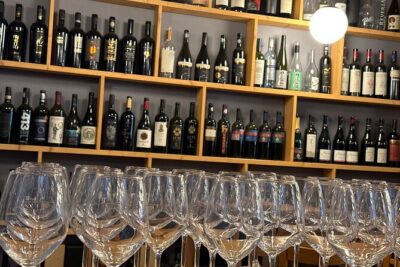 ★ 5.0Wine Tasting in BucharestFrom $59183 reviews
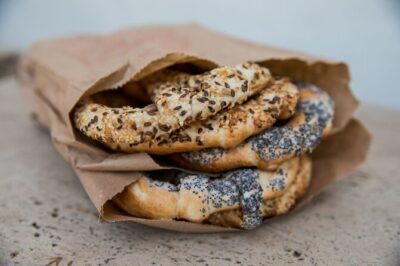 ★ 5.0Discover Bucharest: Private Highlights and Traditional Food TourFrom $14386 reviews
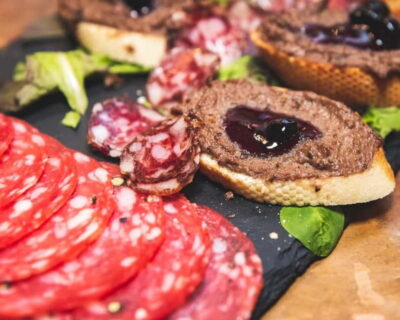 ★ 4.6Romanian Wine Tasting Experience at CorksFrom $3484 reviews
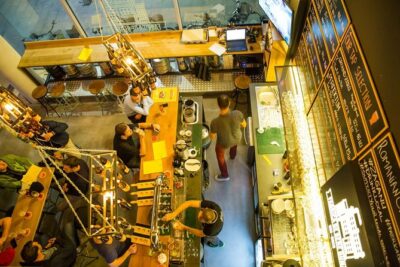 ★ 5.0Bucharest Beer and Culture Tour with a LocalFrom $11847 reviews
 ★ 5.0Private Wine Tasting ExperienceFrom $6444 reviews
 ★ 5.0Private Bucharest: History & Food with Traditional MealFrom $14034 reviews
Browse the lists this tour appears in