
REVIEW · BUCHAREST WALKING TOURS
Bucharest Walking Tour with a Native Italian Speaking Guide
Bucharest has a sense of humor, on foot. This small-group Italian-led walking tour mixes standout architecture with funny, human stories that explain how the city got from past to present. I like that you move quickly between major areas without feeling rushed, and you get a guide who brings both clarity and personality, often with names like Filippo DiCataldo or Giuseppe Spadaro coming up in guest feedback. One consideration: it runs about 2 hours 30 minutes, mostly on streets, so you’ll want comfortable shoes and decent weather.
I also love the stop selection: you start at a central monastery with frescoes, pass through older princely-court ruins, and then hit Revolution Square and Constitution Square. It’s an easy way to get your bearings fast and understand why Bucharest looks the way it does. The main drawback is scope: you’ll see a lot of exteriors and street-level moments, not a museum-by-museum marathon.
In This Review
- Key highlights to know before you go
- Starting at Strada Stavropoleos: the route that sets the tone
- Stavropoleos Monastery: Brâncoveanu style and fresco details
- Curtea Veche area: Saint Anthony, princely ruins, and Manuc’s Inn
- Lipscani: the street that still feels like the center
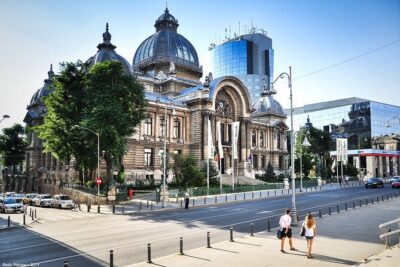
- BNR Palace: Belle Époque style by way of money and power
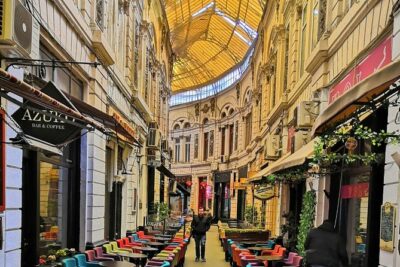
- Macca Villacrosse Passage: a street-level break with a winter-to-summer solution
- Calea Victoriei and Umbrella Street: the elegant boulevard moment
- Revolution Square: 1989 context without the textbook feel
- Constitution Square and Parliament: seeing scale in person
- Price and value: why $36.76 can make sense
- Logistics that matter: timing, weather, and how the walk feels
- Who should book this tour (and who might skip it)
- Should you book it?
- FAQ
- What time does the tour start?
- Where do I meet the guide?
- Do I need to speak Italian to join?
- How big is the group?
- Are any entrance fees required at the stops?
- Is a mobile ticket used?
- Does the tour run in bad weather?
Key highlights to know before you go
- Native Italian guide (and often big local experience): guests repeatedly mention guides like Filippo DiCataldo and Giuseppe Spadaro bringing history to life with humor.
- Small group size (max 15): easier questions, less crowding, and a more conversational pace.
- A tight 2.5-hour route: built for a first visit, with short stops that still cover big themes.
- Free entry marked at multiple stops: several locations are listed as admission ticket free.
- Ends at Constitution Square: a dramatic finish that sets you up for what to do next nearby.
On foot through the city, more routes
- Bucharest: City Highlights Guided Walking Tour★ 4.9 · 1,482 reviews
- Bucharest: Communism and History Guided City Walking Tour★ 4.9 · 918 reviews
- Bucharest Highlights Walking Tour★ 5.0 · 469 reviews
- Bucharest: Hidden Markets Walking Tour with Tastings★ 4.9 · 329 reviews
Starting at Strada Stavropoleos: the route that sets the tone

You meet at Strada Stavropoleos 5 in central Bucharest. Starting here matters because it places you right in the older core of town, where you can actually feel the city’s long timeline before you get to squares and big boulevards.
The pacing is also smart. You’re not stuck waiting around for long explanations—each stop is given enough time to see what you came for, then move on while the story stays fresh.
Because the group is capped at 15, you’ll usually have room to ask questions or get a second look without the guide shouting into a wall of people. In a city like Bucharest, that difference is real.
Stavropoleos Monastery: Brâncoveanu style and fresco details
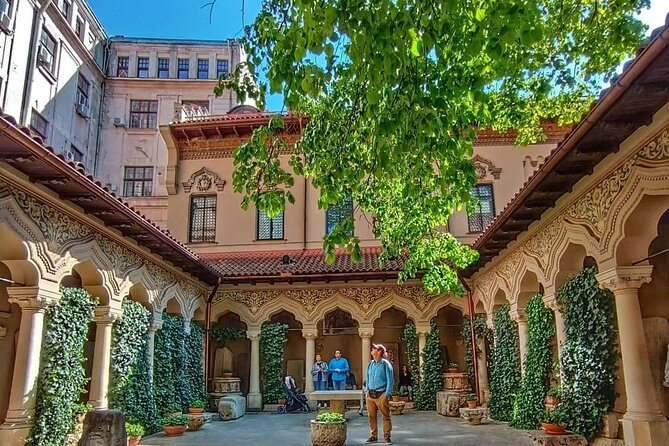
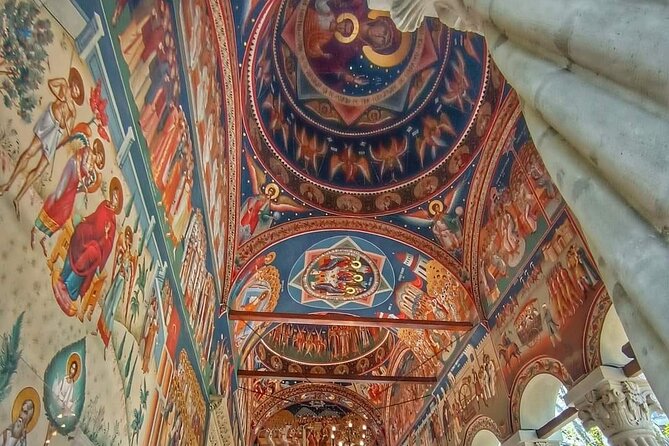
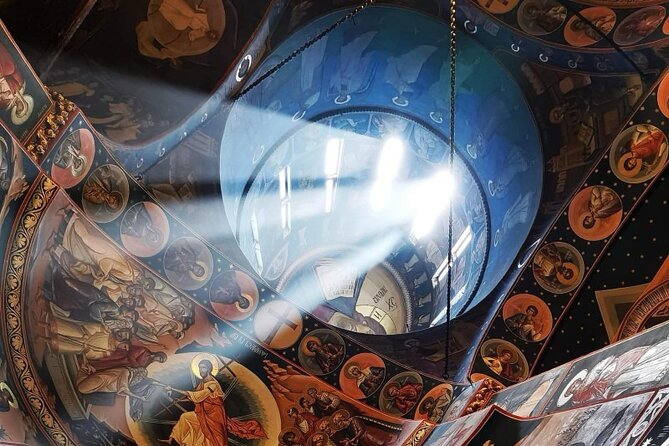
Your first stop is Stavropoleos Orthodox Monastery, in the very center of town. This is Romanian architecture in the Brâncoveanu style, and the highlight is the church’s frescoed interior surfaces—where religious art works like a visual timeline.
You also get a simple win here: you’re immediately seeing why Bucharest doesn’t just look “European modern.” It has deep layers, and the monastery is the kind of place that makes those layers obvious.
The stop is scheduled for about 20 minutes, and it’s marked as admission ticket free. That’s a rare kind of value at a first stop, especially when you’re trying to balance “see a lot” with “don’t overpay for basics.”
Curtea Veche area: Saint Anthony, princely ruins, and Manuc’s Inn
Next you head to a small historic square tied to Curtea Veche—and the stop name points you to Biserica Sfantul Anton. This area is among the oldest parts of Bucharest, and the guide uses it to connect churches, power, and daily life.
What you’re looking at isn’t just one building. The point is the cluster: you’ll admire important nearby landmarks such as the church of Saint Anthony, the ruins of the princely court, and Manuc’s Inn, noted as one of the last caravanserais in Eastern Europe.
This is also where a good Italian guide earns their pay. You’re not just hearing dates. You’re getting the logic of the place—how older Bucharest functioned, and why people built what they built where they built it.
It’s another ~20-minute stop, and it’s listed as admission ticket free. Even if you only get part of the fresco or courtyard vibe, the area is memorable as a “how the city once worked” lesson.
Lipscani: the street that still feels like the center
Then comes Lipscani, the street that’s often described as the city’s beating heart. Even if you visit in daylight, the street’s energy is the real story here. This is where older city blocks meet nightlife culture, and where a city that has survived changing systems keeps reinventing itself.
Your time here is shorter—about 10 minutes—so treat it like a fast photo-and-feel stop. Walk it slowly once. Don’t just rush to the next square. Lipscani rewards that small extra effort.
Also, your guide’s job here is interpretation. You’ll hear why this street matters, not just that it exists. That difference turns it from a street you walked into a street you understood.

BNR Palace: Belle Époque style by way of money and power
Your route moves toward BNR Palace, associated with the Romanian National Bank. Even without going inside for anything specific, the value is in the exterior: a sense of scale and architectural ambition in a central location.
The tour frames it as part of Bucharest’s Belle Époque charm—surrounded by buildings that look more “grand” than many visitors expect in a city they still mentally label as purely post-communist.
The stop is about 10 minutes with admission ticket free listed. That means you’re not forced to pay extra or sacrifice the rest of the walk just to see something historic.
This is one of the quieter segments, but it’s useful. After monasteries and old ruins, BNR Palace is a reminder that cities don’t only change through wars and revolutions. They also change through institutions, trade, and how money organizes space.
Macca Villacrosse Passage: a street-level break with a winter-to-summer solution
Next is Macca Villacrosse Passage (Villacrosse Gallery). This is where the tour gives you a pause from open streets.
The appeal here is practical and atmospheric. It’s described as a magical, varied-use space that now hosts elegant bars—useful on a hot summer day or a harsh winter day when you don’t want to stay outside for the whole walk.
The stop is around 10 minutes, so don’t expect a long sit-down. Think of it as a quick “change of scene” moment that also gives you options: if you want, you can grab a drink and keep your energy up for the next more intense political-history stops.
In a 2.5-hour tour, these short transitions matter. They keep you fresh enough to actually listen.
Calea Victoriei and Umbrella Street: the elegant boulevard moment
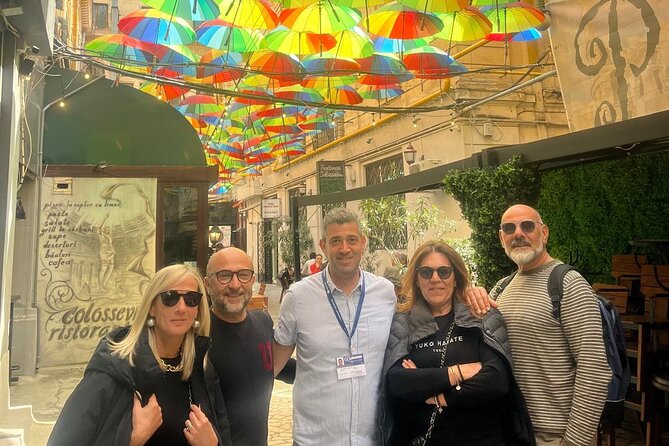
After the passage, you head to Calea Victoriei, described as Bucharest’s most elegant avenue. This is where the city’s style shifts toward high-fashion storefronts and refined bistros, and where older buildings create a more polished streetscape.
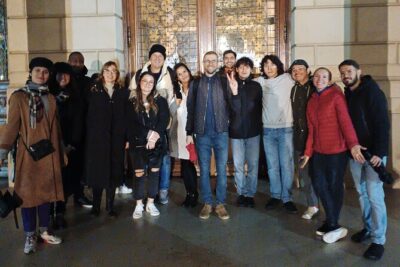
You also stop for the famous umbrella street group photo. It’s the kind of quirky photo stop that doesn’t need a long explanation—but it does make the walk feel fun, not just educational.
This segment is about 20 minutes. That extra time over the earlier street stops tells you the tour wants you to actually absorb the vibe, not just stand for a quick snapshot.
The guide’s background storytelling helps here too. A boulevard is more than architecture; it’s how a city markets itself. If you pay attention, you’ll start seeing the design choices as part of the story of modernization.
Revolution Square: 1989 context without the textbook feel
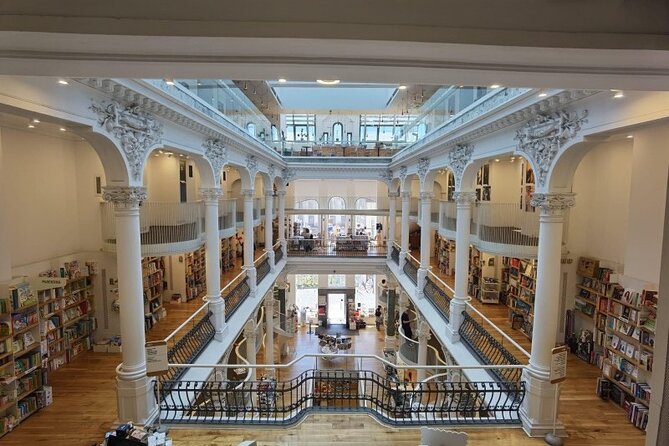
Then you hit the emotional center: Piata Revolukiei, also called Revolution Square. The tour frames it as the symbol of the end of the dictatorial regime of Ceausescu, and the surrounding landmarks help you understand why this place is still talked about.
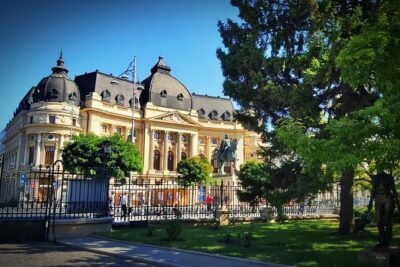
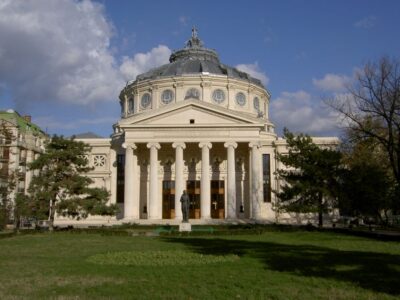
You’re positioned around major structures such as the Romanian Athenaeum, the Royal Palace, and the National Library. Even if you know little going in, these buildings give the moment weight.
What makes this stop work is the guided reconstruction. You’ll get the last events leading to the bloody revolution of 1989, told in a way meant to connect cause and consequence rather than list names and dates.
The scheduled time is about 20 minutes. That’s a good length for this topic: long enough to feel meaning, short enough that you don’t leave overwhelmed.
Constitution Square and Parliament: seeing scale in person
Your tour ends at Piaka Constitukiei (Constitution Square) and specifically focuses on the Parliament building. This is presented as the largest administrative building in Europe and also described as extremely heavy—details meant to make you feel the scale, not just read it.
Here, the value is in the outside view and the framing. The guide explains the historical context in which the structure was built, so you understand it as more than a photo opportunity.
The stop is about 20 minutes, which works well as a finish because you’ll likely want to keep exploring nearby right after. If you’re planning dinner or a short walk after the tour, ending here gives you a strong anchor.
Price and value: why $36.76 can make sense
At $36.76 per person for roughly 2.5 hours, you’re paying mainly for the guide experience. The included part is the native Italian speaking guide (mobile ticket included as a format), and several stops are marked as admission ticket free.
So the value equation is simple:
- You get guided context that helps you understand what you’re seeing.
- You avoid spending time figuring it out on your own.
- You see a “first Bucharest” path across monasteries, old town, elegant boulevards, and major political sites.
Is it a bargain compared to paying for a single museum ticket? In many cases, yes, because you’re covering multiple major stops for the same general time block. Is it the cheapest thing in town? No. But it’s not meant to be. It’s meant to help you get more out of your limited hours in Bucharest.
If your goal is to walk in with curiosity and walk out with a clearer sense of why Bucharest looks and feels the way it does, this price is easier to justify.
Logistics that matter: timing, weather, and how the walk feels
The start time is 10:00 am, and the tour runs around 2 hours 30 minutes. In practice, that means you should plan for a solid morning outing, with enough time after to either grab lunch or take a bus/metro to your next stop.
The experience requires good weather. That’s not a small detail in Bucharest, because open streets are part of the fun and part of the context. If rain is likely, consider waiting for a clearer day.
It’s also a walking tour, and each site gets short time blocks. You’ll enjoy it most if you’re the type who likes quick orientation and then deeper exploration later on your own.
On the positive side, the tour format is designed for most people to participate, and service animals are allowed. The meeting point is near public transportation, which makes it easier to sync with your day.
Who should book this tour (and who might skip it)
You should book if:
- You want a first-time Bucharest overview that still feels grounded in real places.
- You like when a guide uses funny anecdotes alongside serious context.
- You want an Italian-speaking explanation without needing to translate everything yourself.
You might consider skipping if:
- You want long inside visits and deep museum-style time at each site.
- Your trip is tightly scheduled to the minute and you can’t handle weather-related changes or a set walking route.
This tour fits best for couples, solo travelers, and small groups who want structure and storytelling without turning Bucharest into a checklist.
Should you book it?
If you’re spending limited time in Bucharest, I think this tour is a strong choice. It covers the city’s main “why” in a short span: spiritual old center, old-world trade and power, then the big 20th-century political story, ending with the Parliament scale that defines the skyline.
The repeated emphasis on guides like Filippo DiCataldo and Giuseppe Spadaro—with their humor, organization, and clear explanations—suggests you’ll get more than a route. You’ll get meaning, and it’ll help you explore the rest of the city with better eyes.
Book it when you want orientation and a memorable arc, not when you want slow, museum-heavy wandering.
FAQ
What time does the tour start?
The tour starts at 10:00 am. The total duration is about 2 hours 30 minutes.
Where do I meet the guide?
You meet at Strada Stavropoleos 5, București 030167, Romania (nearby public transportation). The tour ends at Piața Constituției, București, Romania.
Do I need to speak Italian to join?
No. The tour is led by a native Italian speaking guide, so you’ll get the explanations in Italian.
How big is the group?
The tour has a maximum of 15 travelers, which keeps the experience more personal and easier to follow.
Are any entrance fees required at the stops?
The stops are marked as admission ticket free in the tour details, but the tour only explicitly includes the guide. If you plan to enter specific places, it’s smart to confirm on the day which areas are accessible.
Is a mobile ticket used?
Yes. The tour uses a mobile ticket.
Does the tour run in bad weather?
The experience requires good weather. If it’s canceled due to poor weather, you’ll be offered a different date or a full refund.
More Tour Reviews in Bucharest
- Bucharest: Dracula’s Castle, Peles Castle, & Brasov Old Town
★ 4.5 · 17,858 reviews - Bucharest: Dracula Castle, Peles Castle & Brasov Old Town
★ 4.6 · 10,891 reviews - Bucharest: Dracula’s Castle, Peleș Castle & Brașov Day Trip
★ 4.4 · 6,100 reviews - Bucharest: Palace of Parliament Tickets and Guide
★ 4.3 · 3,182 reviews - Bucharest: Day Trip to Dracula Castle, Peles Castle & Brașov
★ 4.4 · 3,049 reviews - Bucharest to Dracula Castle, Peles Castle and Brasov Guided Tour
★ 4.5 · 2,933 reviews
Bucharest on Foot, Continued
- Bucharest: City Highlights Guided Walking Tour
★ 4.9 · 1,482 reviews - Bucharest: Communism and History Guided City Walking Tour
★ 4.9 · 918 reviews - Bucharest Highlights Walking Tour
★ 5.0 · 469 reviews - Bucharest: Hidden Markets Walking Tour with Tastings
★ 4.9 · 329 reviews - Bucharest: Ghost Stories & Romanian Mythology Walking Tour
★ 4.9 · 287 reviews - Bucharest: Guided Walking Tour with Romanian Snack
★ 4.9 · 228 reviews
Just In: The Latest Bucharest Reviews


Bucharest Walking Tours, compared.
 ★ 4.9City Highlights Guided Walking TourFrom $211,482 reviews
 ★ 4.9Communism and History Guided City Walking TourFrom $31918 reviews
 ★ 5.0Bucharest Highlights Walking TourFrom $21469 reviews
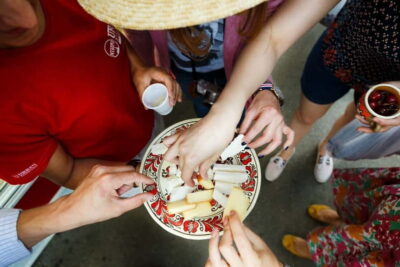 ★ 4.9Hidden Markets Walking Tour with TastingsFrom $100329 reviews
 ★ 4.9Ghost Stories & Romanian Mythology Walking TourFrom $35287 reviews
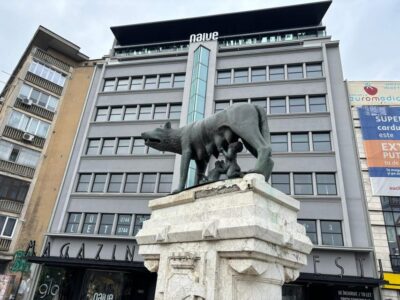 ★ 4.9Guided Walking Tour with Romanian SnackFrom $45228 reviews
 ★ 5.0Best of Bucharest | Private Walking TourFrom $314199 reviews
 ★ 5.0Walking Tour- Delightful Bucharest (Highlights, Stories, Sights)From $22145 reviews
Browse the lists this tour appears in