
REVIEW · BUCHAREST WALKING TOURS
Bucharest: private and exclusive Italian walking tour
Bucharest makes sense fast. This private, exclusive Italian walking tour turns confusing streets into clear stories, and it’s led by a certified guide like Filippo Dicataldo, who explains with real precision. I also liked the flexible pace, because the route adapts to what you want to linger on and what you’re ready to move past.
There is one practical catch to consider: it’s built for walking and it lists limits for some travelers with mobility and hearing needs, so check your comfort level before you go.
In This Review
- Key things to know before you book
- Why this Bucharest tour works (even if you think you know the basics)
- Meeting point at Caru’ cu bere: start where the stories begin
- Lipscani Street and Old Town: nightlife energy plus hidden corners
- Stravopoleos Monastery: the calm pause in the middle of the city
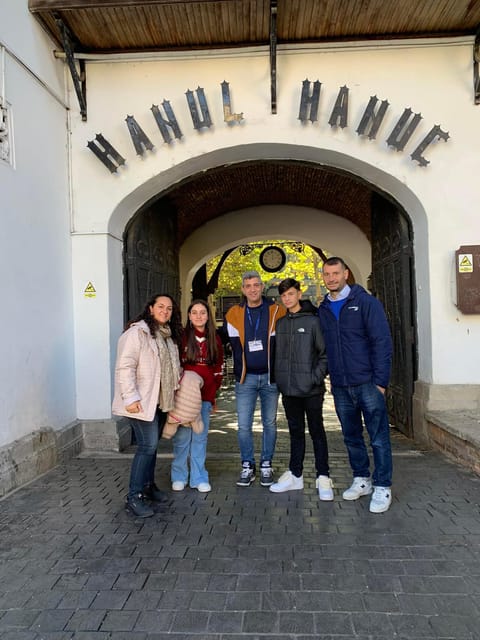
- Manuc’s Inn: a historic stop that feels made for wandering
- Old Town street time: quick orientation you can use later
- A classic photo stop: Cărturești Carusel and The Umbrellas Street
- Cărturești Carusel: a visually memorable moment
- The Umbrellas Street: fun on the surface, meaning underneath
- National Bank of Romania and Pasajul Villacrosse: Bucharest’s in-between spaces
- The National Bank of Romania: authority in stone
- Pasajul Villacrosse: the “wait, what is this?” passage
- Calea Victoriei: elegant boulevard walking with meaning in the details
- Revolution Square and the Romanian Athenaeum: where the city remembers
- Revolution Square: the buildings that frame the story
- Romanian Athenaeum: a cultural landmark with weight
- Time, pace, and what you’re actually paying for
- Who this tour is for (and who should think twice)
- Should you book this private Italian walking tour?
- FAQ
- How long is the Bucharest private Italian walking tour?
- Where do we meet the guide?
- What language is the tour in?
- Is this tour private?
- How much does it cost?
- What stops are included in the itinerary?
- Do I need to buy tickets or pay extra for sights?
- Is the tour wheelchair accessible?
- Can I cancel for a refund?
- What should I bring and what’s not allowed?
Key things to know before you book

- Italian-only experience with a certified guide who gives you the context behind each stop
- Private and exclusive means you can move at your pace instead of being rushed with a big group
- Old Town + nightlife street history along Lipscani Street, plus quieter corners you might miss
- Calea Victoriei architecture and boulevards without needing to decode the buildings yourself
- Revolution Square focus on December 1989 and the buildings that frame the story
- Comfort-first route timing designed for about 2.5 hours on foot with short guided visits and photo stops
On foot through the city, more routes
- Bucharest: City Highlights Guided Walking Tour★ 4.9 · 1,482 reviews
- Bucharest: Communism and History Guided City Walking Tour★ 4.9 · 918 reviews
- Bucharest Highlights Walking Tour★ 5.0 · 469 reviews
- Bucharest: Hidden Markets Walking Tour with Tastings★ 4.9 · 329 reviews
Why this Bucharest tour works (even if you think you know the basics)
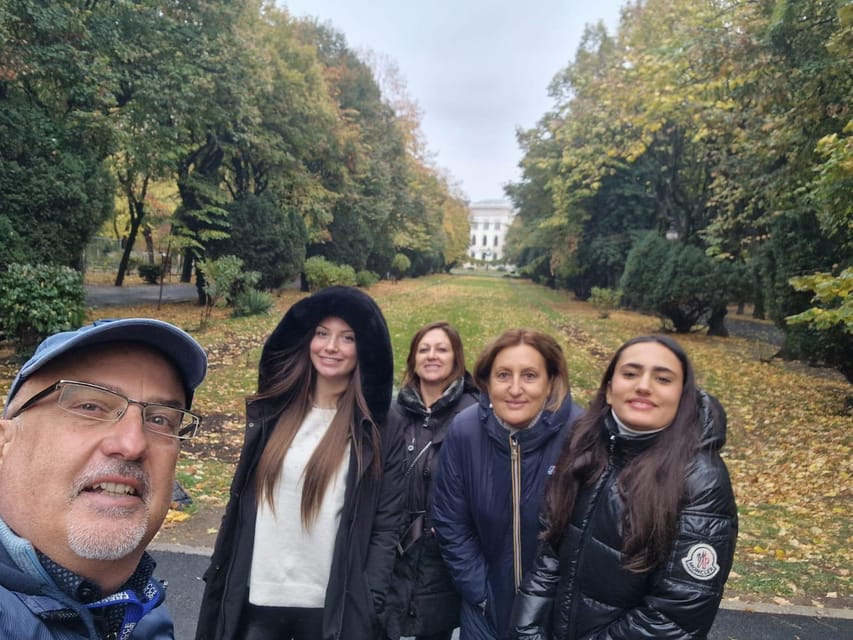
Bucharest has a split personality. You’ll see grand, confident boulevards one minute, then suddenly hit a monastery courtyard or a passageway that feels like it was tucked away on purpose. What makes this tour so useful is that it doesn’t treat the city like a checklist. It connects the architecture to the people who lived through the changes.
I like that the guide doesn’t just name places. They explain why a street looks the way it does, what a building used to mean, and what to notice as you walk. You end up with a mental map that sticks, and you learn how to read details at street level.
And because it’s private, you can ask the Italian questions you actually care about. Want more about the Romanias of the past? Fine. Want more street-level culture and anecdote? That fits too.
Meeting point at Caru’ cu bere: start where the stories begin
You meet at Caru’ cu bere on Stavropoleos Street 5. It’s a smart choice. This area is busy, easy to find, and it puts you right where the Old Town energy starts.
A guide with a professional identification card waits out front. Then you’re off on foot, with a steady rhythm of short guided stops rather than one long lecture. That matters in a city like Bucharest, where details can disappear fast if you’re walking without context.
Lipscani Street and Old Town: nightlife energy plus hidden corners
Your tour spends time in the Old Town, including the famous Lipscani Street area. Yes, Lipscani is well known for nightlife. But the tour approach is more interesting than that. It helps you see it as a layered neighborhood, not just a party strip.
You also get to step into places that are easy to overlook when you’re wandering alone.
Stravopoleos Monastery: the calm pause in the middle of the city
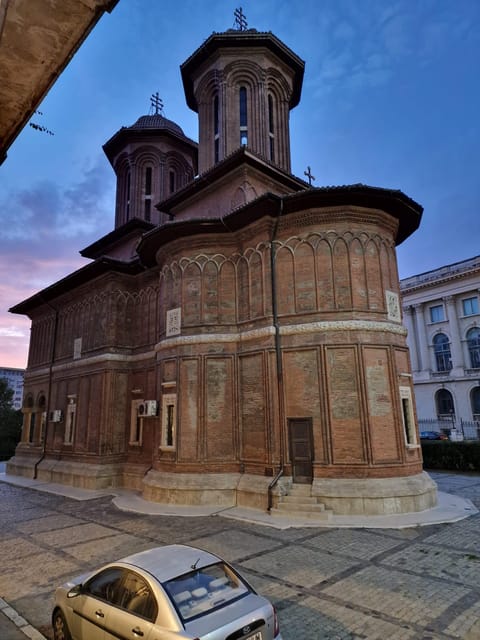
You visit the Stavropoleos Monastery early in the walk. This kind of stop is valuable because it changes the pace. One moment you’re surrounded by the noise of the city. The next you’re in a quieter setting where the details matter, and the guide can point out what you’d likely miss on your own.
A monastery visit also sets up the broader theme of Bucharest: tradition next to reinvention. It’s a good “how to look at the city” lesson.
Only your group, at your own speed




Manuc’s Inn: a historic stop that feels made for wandering
Next comes Manuc’s Inn. Even if you don’t know its story ahead of time, it’s the type of place where you can feel history in the structure. The guided visit is short, but it gives you the kind of background that helps you interpret the building instead of just walking past it.
This is one of those stops where a guide can turn architecture into a human story: who used these spaces, how the neighborhood functioned, and what changed over time.
Old Town street time: quick orientation you can use later
You also have a guided stretch that works like orientation. You get enough time to connect multiple sights without losing the flow. It’s perfect if you’re in Bucharest for a short visit and you want your bearings fast.
A classic photo stop: Cărturești Carusel and The Umbrellas Street
Two of the stops are intentionally lighter—photo stops and short pauses that help you break up the walking.
Cărturești Carusel: a visually memorable moment
You’ll stop at Cărturești Carusel for photos. Even if you don’t go inside anywhere, it’s the kind of place that gives you a visual bookmark for the day. Think of it as the moment you’ll remember later when you’re sorting your pictures at home.
The Umbrellas Street: fun on the surface, meaning underneath
Then you’ll visit The Umbrellas Street for another photo stop. The best part of these stops on a tour like this is what comes from the guide’s framing. Even “simple” sights get connected back to the city’s identity, so you’re not just collecting photos—you’re understanding why the place exists.
National Bank of Romania and Pasajul Villacrosse: Bucharest’s in-between spaces
After Old Town, the walk shifts toward more institutional and architectural landmarks.
The National Bank of Romania: authority in stone
You get a guided look at the National Bank of Romania. It’s not a casual stop. Buildings like this shape how a city presents itself—especially after political and economic shifts. With a guide, you learn what to look for in the facade and how such landmarks fit into Bucharest’s long story.
Pasajul Villacrosse: the “wait, what is this?” passage
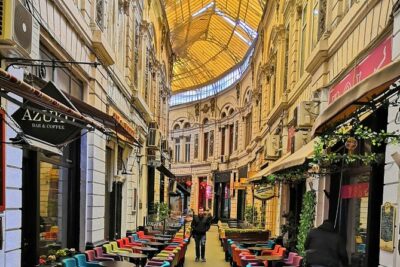
You also stop at Pasajul Villacrosse. Passageways like this are a big part of Bucharest’s character. They’re the connective tissue between streets, and they can feel surprisingly atmospheric if you take a second to slow down.
This is exactly the kind of place where being on your own can lead to missing the point. A guide helps you notice what makes a passage special and how it functioned in the past.
Calea Victoriei: elegant boulevard walking with meaning in the details
Next you walk along Calea Victoriei, often described as one of the most beautiful and elegant boulevards in Bucharest. The tour gives you guided time plus walking time, so it’s not just “look left, look right.”
You’ll move past historic buildings and areas with a more upscale vibe, and the guide points out what to notice as you go. This stretch is a good lesson in visual literacy: how political eras and cultural ambitions leave marks on architecture.
If you like city walks that teach you how to read a place, this part will click.
Revolution Square and the Romanian Athenaeum: where the city remembers
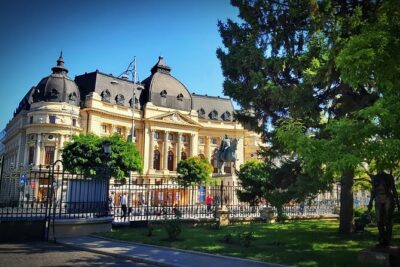
The emotional center of the itinerary is Revolution Square. You get guided time here focused on the end of Ceausescu’s dictatorial regime in December 1989. The square matters because it’s not just an open space. It’s framed by prominent buildings that represent different layers of Romania’s history.
Revolution Square: the buildings that frame the story
As you stand in and around the square, the guide helps you connect what you see to the historical narrative. That’s the real value—having someone translate the visual cues into meaning without turning it into a dry textbook.
Romanian Athenaeum: a cultural landmark with weight
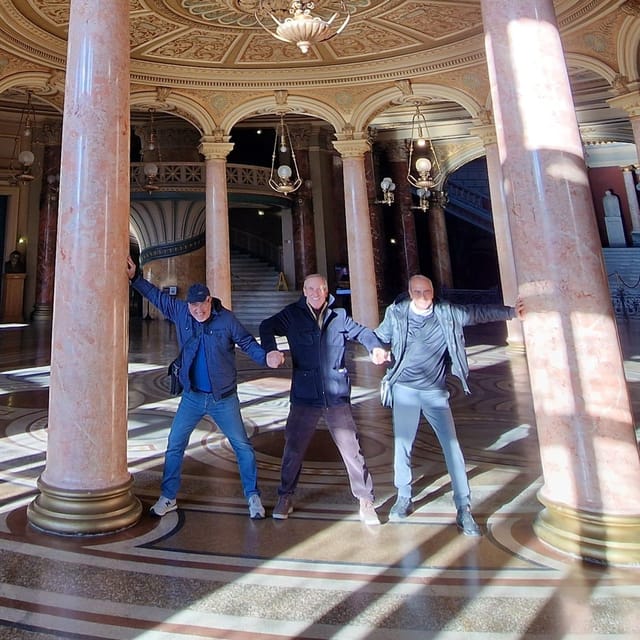
Then you visit the Romanian Athenaeum with guided time. It’s one of those sights where the building itself carries the conversation. With a guide, you’ll know where to look and why the place is significant in a way that’s hard to pick up from a quick glance.
This is also where the tour’s tone helps. After walking boulevards and passageways, you’re ready for something that feels “big” and reflective.
Time, pace, and what you’re actually paying for
The tour runs about 2.5 hours. That’s a practical length for an Italian guide-led walk: enough time to cover key areas, short enough that you don’t feel fried by the end.
The price is $53 per person, and the biggest value is that it’s private and exclusive. For a budget-minded traveler, this can be a smarter deal than you’d expect if you compare it to buying multiple entry tickets or trying to “figure it out” with self-guided wandering. You’re paying for interpretation: someone who can help you see what matters and keep your questions moving.
One more thing: the guide’s style can make a difference. The feedback you’ll see about Filippo and Giuseppe focuses on passion, clear explanations, and the ability to adapt if conditions change—like if it’s rainy. That matters in Bucharest, where weather can shift.
Who this tour is for (and who should think twice)
This is ideal if you:
- want an Italian-language guide (and you like having it all explained clearly)
- enjoy walking but don’t want to do the research homework
- care about architecture and want the story behind the corners
- prefer a private setup so you can set your pace
Think twice or confirm details first if:
- you have mobility constraints. The info says it’s wheelchair accessible, but it also lists it as not suitable for people with mobility impairments. That’s something to clarify with the operator directly.
- you’re hearing-impaired. It lists that as not suitable, so plan accordingly.
Should you book this private Italian walking tour?
I’d book it if you want Bucharest to feel understandable, not random. The itinerary covers major zones—Old Town, Calea Victoriei, Revolution Square, and the Romanian Athenaeum—plus the in-between stops that make the city feel real.
The tour’s best advantage is the guide: a certified Italian professional who connects architecture to history with a human tone. If you value that kind of explanation, $53 for 2.5 hours in a private format is solid value.
If you’re unsure about walking comfort or accessibility fit, message ahead and ask how the route will work for your needs. Then go—wear comfy shoes, take your time, and let the city’s layers make sense.
FAQ
How long is the Bucharest private Italian walking tour?
It lasts about 2.5 hours.
Where do we meet the guide?
You meet in front of Caru’ cu bere at Stavropoleos Street 5, Bucharest.
What language is the tour in?
The tour is in Italian.
Is this tour private?
Yes. It’s described as a private group and private, exclusive tour.
How much does it cost?
The price is listed as $53 per person.
What stops are included in the itinerary?
The itinerary includes Old Town (including Lipscani Street), Stravopoleos Monastery, Manuc’s Inn, the New Saint George Church, Cărturești Carusel, the National Bank of Romania, Pasajul Villacrosse, Calea Victoriei, The Umbrellas Street, Revolution Square, and the Romanian Athenaeum.
Do I need to buy tickets or pay extra for sights?
The tour includes the guided visits, but food and beverages and personal expenses are not included.
Is the tour wheelchair accessible?
It is listed as wheelchair accessible, but it also says it is not suitable for people with mobility impairments. It’s worth confirming before booking.
Can I cancel for a refund?
Yes. Free cancellation is offered up to 24 hours in advance for a full refund.
What should I bring and what’s not allowed?
Wear comfortable shoes. Alcohol and drugs are not allowed, and explosive substances are also not allowed.
More Tour Reviews in Bucharest
- Bucharest: Dracula’s Castle, Peles Castle, & Brasov Old Town
★ 4.5 · 17,858 reviews - Bucharest: Dracula Castle, Peles Castle & Brasov Old Town
★ 4.6 · 10,891 reviews - Bucharest: Dracula’s Castle, Peleș Castle & Brașov Day Trip
★ 4.4 · 6,100 reviews - Bucharest: Palace of Parliament Tickets and Guide
★ 4.3 · 3,182 reviews - Bucharest: Day Trip to Dracula Castle, Peles Castle & Brașov
★ 4.4 · 3,049 reviews - Bucharest to Dracula Castle, Peles Castle and Brasov Guided Tour
★ 4.5 · 2,933 reviews
Just the Party You Came With: More Private Days
- Castles of Transylvania: Private Day Trip from Bucharest
★ 4.5 · 248 reviews - Dracula’s Castle, Peles Castle and Brasov – Private Day Trip from Bucharest
★ 5.0 · 211 reviews - Best of Bucharest | Private Walking Tour
★ 5.0 · 199 reviews - Bucharest Panoramic Sightseeing – Private City Tour
★ 5.0 · 128 reviews - THERME “Take It Easy” Pack: Full Spa Access + Private Transfers
★ 4.0 · 117 reviews - 4h Bucharest Private Tour (2h by Car and 2h Walking in Old Town)
★ 5.0 · 90 reviews
Bucharest on Foot, Continued
- Bucharest: City Highlights Guided Walking Tour
★ 4.9 · 1,482 reviews - Bucharest: Communism and History Guided City Walking Tour
★ 4.9 · 918 reviews - Bucharest Highlights Walking Tour
★ 5.0 · 469 reviews - Bucharest: Hidden Markets Walking Tour with Tastings
★ 4.9 · 329 reviews - Bucharest: Ghost Stories & Romanian Mythology Walking Tour
★ 4.9 · 287 reviews - Bucharest: Guided Walking Tour with Romanian Snack
★ 4.9 · 228 reviews
Just In: The Latest Bucharest Reviews



Bucharest Walking Tours, compared.
 ★ 4.9City Highlights Guided Walking TourFrom $211,482 reviews
 ★ 4.9Communism and History Guided City Walking TourFrom $31918 reviews
 ★ 5.0Bucharest Highlights Walking TourFrom $21469 reviews
 ★ 4.9Hidden Markets Walking Tour with TastingsFrom $100329 reviews
 ★ 4.9Ghost Stories & Romanian Mythology Walking TourFrom $35287 reviews
 ★ 4.9Guided Walking Tour with Romanian SnackFrom $45228 reviews
 ★ 5.0Best of Bucharest | Private Walking TourFrom $314199 reviews
 ★ 5.0Walking Tour- Delightful Bucharest (Highlights, Stories, Sights)From $22145 reviews
Browse the lists this tour appears in