
REVIEW · BUCHAREST MUSEUMS
Bucharest: National Museum of Art of Romania Guided Tour
A museum tour can turn into a blur, unless someone has a plan. This one gives you a clear, human timeline of Romanian art in Bucharest’s National Museum of Art, with a small group and an expert guide who explains what you’re actually looking at.
What I like most is the way the tour walks you from the academic polish of Teodor Aman and the light-filled mood of Nicolae Grigorescu, to work that feels rawer and more personal. Then it lands on Constantin Brâncuși in sculpture, where the guide helps you notice the choices that made him revolutionary.
One thing to think about: the museum is wheelchair accessible, but it is not fully accessible for every person with mobility impairments, so you may want to gauge your route needs before you go.
In This Review
- Key points you’ll care about
- The National Museum of Art: why the building matters
- Meeting point and how the tour actually runs
- Your first stop: Teodor Aman and the charm of academic painting
- Nicolae Grigorescu: when light starts to do the storytelling
- Ștefan Luchian: expressive painting with a human edge
- Constantin Brâncuși: modernist sculpture you can understand in 90 minutes
- What the guide does for you (and why it feels worth it)
- Price and value: is $43 a fair deal?
- Practical tips: shoes, photos, and museum rules that matter
- Wheelchair access and mobility reality check
- Who this tour is best for (and who should pick something else)
- Should you book this Bucharest museum tour?
- FAQ
- Where is the meeting point for this guided tour?
- How long is the National Museum of Art of Romania guided tour?
- How much does the tour cost?
- Is the guide available in English?
- What’s included in the ticket price?
- Is flash photography allowed?
- Can I bring food or drinks into the museum?
- Is the tour wheelchair accessible?
- Is this tour suitable for children?
Key points you’ll care about
- Small group (up to 10) keeps questions easy and the pace comfortable
- Former Royal Palace setting adds extra grandeur around the art
- A guided artist timeline covers major names, from the 1800s onward
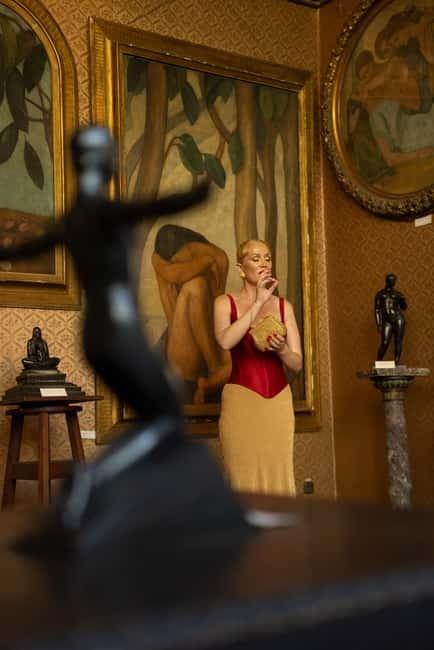
- Up-close Brâncuși sculptures make modernism feel concrete, not abstract
- No flash photography and no food or drinks means a calmer gallery experience
- English and Romanian guide options help you follow the story clearly
More Bucharest halls, out of the weather
- Bucharest: Parliament, Ceausescu House & Village Museum Tour★ 5.0 · 208 reviews
- Communism in Bucharest – Landmarks, Museum & Communist Appetizers★ 5.0 · 111 reviews
- Bucharest: Entry ticket at the Museum of Communism★ 4.6 · 57 reviews
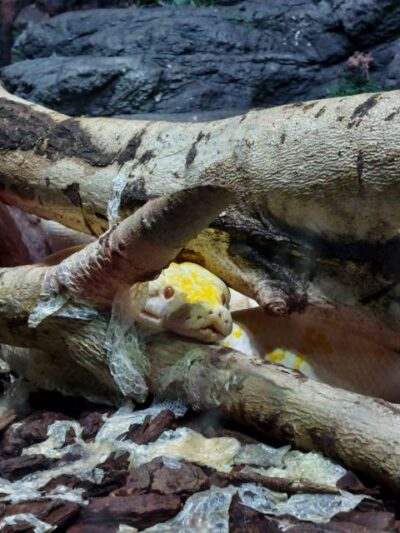
- Bucharest: Reptiland Bucharest Entry Ticket★ 4.6 · 56 reviews
The National Museum of Art: why the building matters
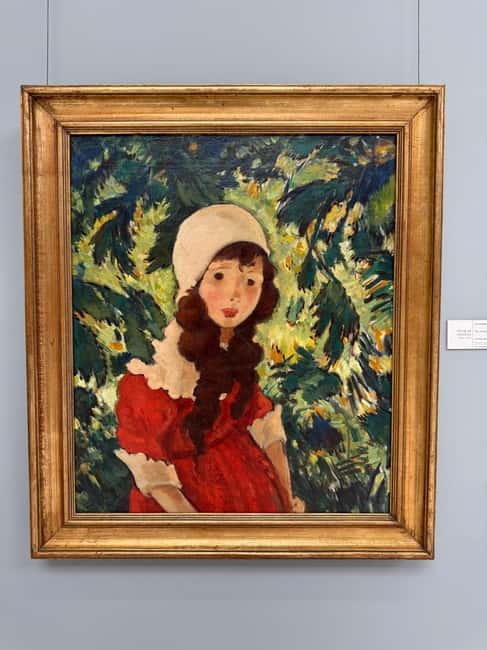
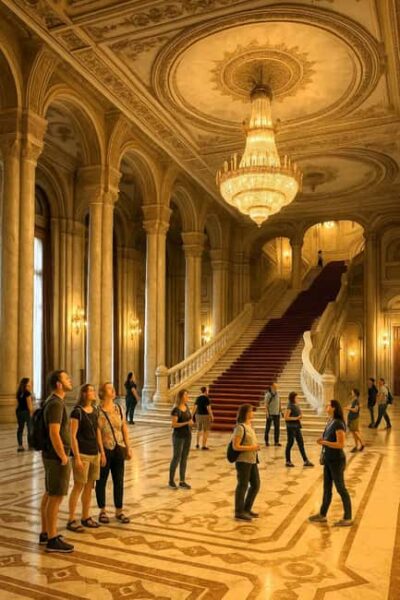
You’re not just walking through rooms with paintings. You’re in the former Royal Palace, which changes how the whole visit feels. The setting gives the art extra weight, especially when the tour starts with academic works and historical subjects that were designed to impress.
Even if you only know a couple Romanian artists, the guide’s structure helps you build connections fast. You move through styles and themes, not just dates and names. That makes the museum feel less like homework and more like a story you can follow.
And the museum’s permanent National Art Gallery exhibitions give you a solid backbone for the tour. This isn’t a quick peek at rotating displays. It’s focused on major works that the guide can explain in context.
Meeting point and how the tour actually runs
You meet at the Romanian Modern Art Gallery entrance. Stand outside and face the building, then the entrance is on the right-hand side. This matters because there are a lot of entrances around that museum area, and you’ll save time by using the right one.
The tour starts promptly, so plan to arrive about 10 minutes early. With a small group capped at 10 participants, the operator runs on time. If you show up late, you’ll likely lose part of the introduction.
The guided portion is listed as 1 to 1.5 hours. That’s a good length for a museum story: long enough to get meaning from multiple artists, short enough that you won’t feel stuck in one wing all afternoon.
Language-wise, the live guide is available in Romanian and English. If you’re traveling with someone who understands one of those, you can pick based on comfort rather than guessing how much you’ll catch.
Your first stop: Teodor Aman and the charm of academic painting
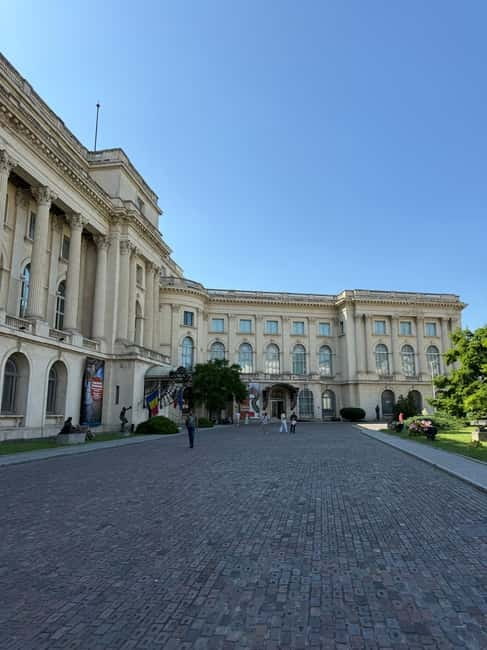
The tour highlights the elegant academic paintings of Teodor Aman. If you’ve ever wondered why some 19th-century art looks so formal and composed, this is where you’ll get answers without getting lost in jargon.
In academic painting, the details are doing work. The figures, the surfaces, the composition, even the way the subjects are framed all push toward clarity and authority. The guide’s job here is to point out what those choices are saying—who the art was made to appeal to, and how it fits into Romania’s cultural life.
Aman is also a useful starting point because academic art tends to be easier to recognize when you enter a gallery cold. Once you see how the style communicates, the later shifts to other techniques make more sense.
I like this part because it gives you a foundation. You stop treating each artwork like a standalone object and start seeing how Romanian art evolves in response to changing ideas about society, identity, and aesthetics.
Nicolae Grigorescu: when light starts to do the storytelling
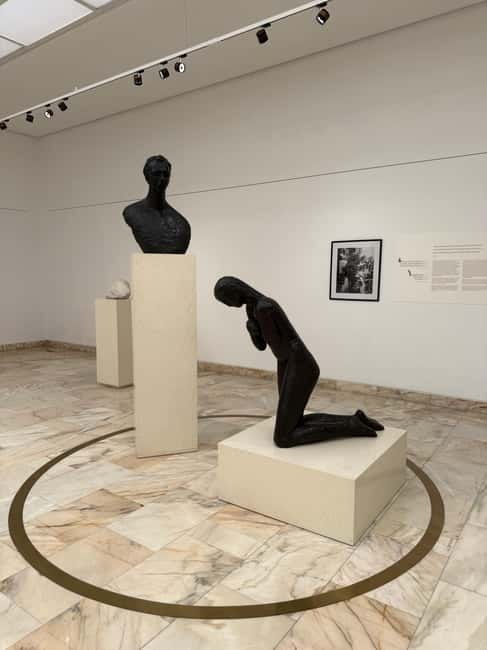
Next comes Nicolae Grigorescu, with the tour emphasizing the Impressionist spirit in his work—light, atmosphere, and that sense of scenes captured as they change.
This is a great switch. Going from academic polish to more natural light is like changing from a posed photograph to a moment you could almost walk back into. The guide helps you notice how brushwork and tonal choices shape mood, not just surface beauty.
If you’re the kind of person who thinks, I like art but I don’t know art words, Grigorescu is your friend. Light-based painting gives you something visual to hold onto, even if you’re not a trained critic.
This part of the tour is also valuable for understanding why Romanian art doesn’t move in a straight line. Styles overlap. Artists absorb influences. The result is a progression you can actually see, not a timeline you only memorize.

Ștefan Luchian: expressive painting with a human edge
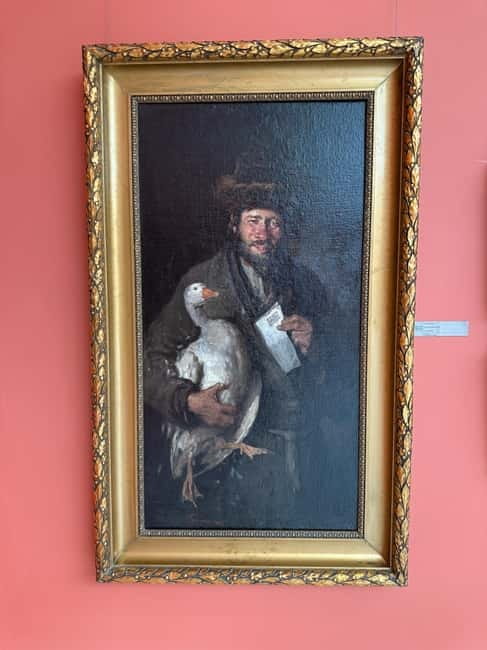
Then the tour shifts again to Ștefan Luchian, focusing on deeply expressive painting. This is where the emotion starts to feel less staged.
Luchian’s work is presented as more deeply expressive, and the guide’s anecdotes help you connect the feeling in the paint to the artist’s inspirations and the context behind the images. That kind of explanation matters, because expressive art can be intimidating if you only know how to judge by realism.
Instead of asking you to decode a mystery, the guide gives you the key: look for how the brushwork carries meaning, how the painting’s energy lands in the viewer, and how expression can be a form of storytelling.
I also appreciate that the tour doesn’t treat this as a dramatic left turn. It positions Luchian as part of a larger evolution. You start to see that Romanian art is responding to more than technique—it’s responding to how people experienced life.
Constantin Brâncuși: modernist sculpture you can understand in 90 minutes
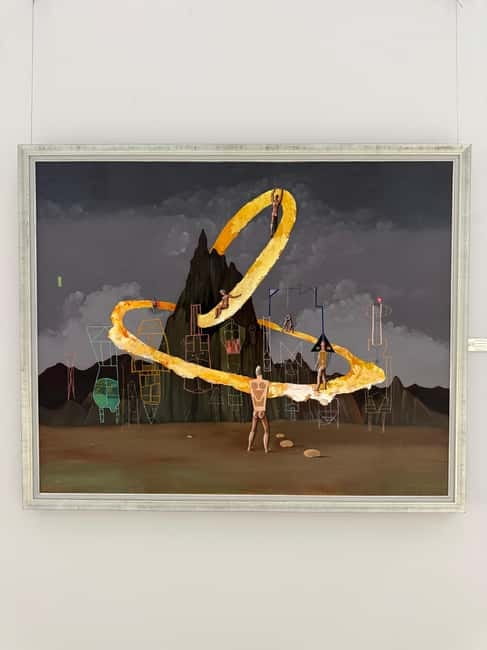
The headline moment is Constantin Brâncuși. The tour calls him one of the most influential sculptors of the 20th century, with modernist forms that were minimalist and abstract—but also revolutionary.
Here’s the helpful truth: Brâncuși can feel confusing if you approach him like a traditional statue. The guide helps you reframe what sculpture is doing. Instead of chasing realism, you’re looking at form, proportion, and reduction—how simplicity can create new meaning.
This is one of the tour’s best values because it’s easy to underestimate sculpture in a museum. A self-guided glance can turn into, I see a shape, and then I move on. A guided explanation keeps you at the work long enough to notice the design logic. You learn why these shapes mattered, not just that they’re famous.
Also, because the group is small, you’re more likely to be able to see the works clearly as the guide speaks. That’s a practical point. In busy galleries, you don’t want your viewing to depend on luck.
What the guide does for you (and why it feels worth it)
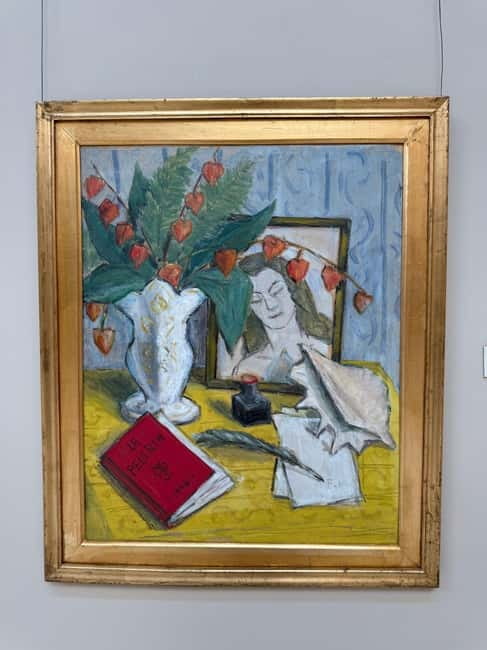
Across the tour, the expert guide shares anecdotes about each artist and their inspirations. That sounds like a vague promise, but in practice it changes the way you remember the works afterward.
Without context, paintings become visuals only. With context, they become evidence—evidence of changing tastes, political and social moods, and artistic decisions. You don’t just see Brâncuși; you understand why artists later followed his logic.
The guide’s teaching style also shows up in the way the tour is structured. The museum has a lot to offer, so an unplanned walk can turn into random viewing. This tour gives you a set route through major artists, so you finish with a coherent sense of Romanian art’s evolution from the 1800s onward.
From the guide experience, I’d call the tour best for people who want clarity. If you like to stand in front of an artwork and think, but you don’t want to guess, this format fits.
Price and value: is $43 a fair deal?
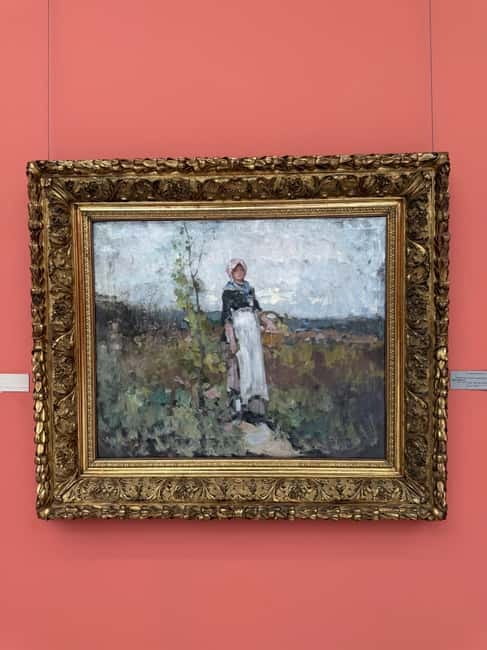
At $43 per person for 1 to 1.5 hours, you’re paying for three things: admission to the National Museum of Art of Romania, access to permanent National Art Gallery exhibitions, and a live expert guide.
For Bucharest, the value is in the guide. Admission alone gets you in, but you still have to do the explaining yourself. For a focused museum like this, the difference between self-guided and guided is often one big question: what am I looking at, and why should I care?
Because the group is capped at 10 participants, the guide isn’t racing to everyone at once. That helps you actually get answers while you’re in front of the works.
One practical limitation: it’s not a full-day museum immersion. If you want to wander slowly through everything, you might prefer self-guided time. But if you have a short window and want meaning, the price-to-time ratio is strong.
Practical tips: shoes, photos, and museum rules that matter
The tour asks for comfortable shoes. That’s not just a generic request. Museum floors and gallery pacing add up in an hour-plus, especially if the group pauses often.
Bring a camera, since photography is allowed, but flash photography isn’t allowed. Plan to photograph without flash and keep your camera habits low-key so you don’t slow the group down.
Food and drinks are not allowed during the tour. So if you’re doing this as part of a longer day in Bucharest, plan to eat before or after.
Wheelchair access and mobility reality check
The tour is listed as wheelchair accessible, which is great. Still, the important caveat is that the museum is not fully accessible for wheelchair users or people with mobility impairments.
So what should you do? If you or your party uses a wheelchair or needs step-free routes, it’s smart to think ahead about how long you can stay in galleries and whether you’ll be able to follow the guide’s route comfortably. The tour length is short enough that you might manage it, but the “not fully accessible” note is worth respecting.
Who this tour is best for (and who should pick something else)
This works especially well if you:
- want a guided overview of Romanian art from the 1800s onward
- like seeing major artists tied to style shifts, not just names
- prefer a small group setting where you can hear the guide and ask questions
- have limited time in Bucharest and want maximum clarity per hour
It’s also a good match if Brâncuși interests you but you want help making sense of his modernist reduction.
It may be less ideal if you:
- travel with children under 12 (the tour is not suitable for them)
- want to spend the whole day exploring every corner of the museum without a structured route
Should you book this Bucharest museum tour?
I’d book it if you want a smart, time-efficient introduction to Romanian art and you like having an expert turn artworks into something you can understand. The small group size, the artist-by-artist storytelling, and the jump from Aman and Grigorescu to Luchian and Brâncuși make the museum feel like one connected experience instead of disconnected rooms.
If you’re the type who only enjoys museums when you can linger independently for hours, you might still do that after this tour. But as a first museum stop or a focused art lesson in 1 to 1.5 hours, this is a strong choice.
One last tip: wear the comfiest shoes you own. You’ll thank yourself halfway through, when the guide is halfway through the story and your feet are trying to file a complaint.
FAQ
Where is the meeting point for this guided tour?
You meet at the Romanian Modern Art Gallery entrance. Facing the building, it is on the right-hand side.
How long is the National Museum of Art of Romania guided tour?
The tour lasts 1 to 1.5 hours.
How much does the tour cost?
The price is $43 per person.
Is the guide available in English?
Yes. The live tour guide is available in English (and also Romanian).
What’s included in the ticket price?
The price includes an expert guide, admission to the National Museum of Art of Romania, and access to permanent National Art Gallery exhibitions.
Is flash photography allowed?
No. Flash photography is not allowed, but photography is allowed without flash.
Can I bring food or drinks into the museum?
No. Food and drinks are not allowed.
Is the tour wheelchair accessible?
The tour is wheelchair accessible, but the museum is not fully accessible for wheelchair users or people with mobility impairments.
Is this tour suitable for children?
No, it is not suitable for children under 12 years.
More Tour Reviews in Bucharest
- Bucharest: Dracula’s Castle, Peles Castle, & Brasov Old Town
★ 4.5 · 17,858 reviews - Bucharest: Dracula Castle, Peles Castle & Brasov Old Town
★ 4.6 · 10,891 reviews - Bucharest: Dracula’s Castle, Peleș Castle & Brașov Day Trip
★ 4.4 · 6,100 reviews - Bucharest: Palace of Parliament Tickets and Guide
★ 4.3 · 3,182 reviews - Bucharest: Day Trip to Dracula Castle, Peles Castle & Brașov
★ 4.4 · 3,049 reviews - Bucharest to Dracula Castle, Peles Castle and Brasov Guided Tour
★ 4.5 · 2,933 reviews
Bucharest Indoors: More Museums
- Bucharest: Museum of Senses Entry Ticket
★ 4.3 · 627 reviews - Bucharest: Parliament, Ceausescu House & Village Museum Tour
★ 5.0 · 208 reviews - Communism in Bucharest – Landmarks, Museum & Communist Appetizers
★ 5.0 · 111 reviews - Bucharest: Entry ticket at the Museum of Communism
★ 4.6 · 57 reviews - Bucharest: Reptiland Bucharest Entry Ticket
★ 4.6 · 56 reviews - Bucharest: Museum of Communism Ticket with Communist Coffee
★ 4.6 · 52 reviews
Just In: The Latest Bucharest Reviews


Bucharest Museums, compared.
 ★ 4.3Museum of Senses Entry TicketFrom $13627 reviews
 ★ 5.0Parliament, Ceausescu House & Village Museum TourFrom $1208 reviews
 ★ 5.0Communism in Bucharest – Landmarks, Museum & Communist AppetizersFrom $48111 reviews
 ★ 4.9Palace of Parliament, Ceausescu House & Village MuseumFrom $186 reviews
 ★ 4.6Entry ticket at the Museum of CommunismFrom $957 reviews
 ★ 4.6Reptiland Bucharest Entry TicketFrom $1256 reviews
 ★ 4.6Museum of Communism Ticket with Communist CoffeeFrom $1052 reviews
 ★ 4.9Dinner+Tour at Museum of Communism after closingFrom $5546 reviews
Browse the lists this tour appears in