
REVIEW · BUCHAREST CITY TOURS
Full day Bucharest Sightseeing Tour
Communism-era Bucharest hits different. This full-day loop connects the story of Nicolae Ceausescu to the streets where the system cracked in 1989. I especially like the well-organized route that strings together big sights without feeling rushed, and I also like how the guide keeps the political context human and clear.
You’ll see major “wow” architecture too, including the 2nd largest administrative building in the world. The one thing to watch: some entrances are optional and depend on time slots and group size, so Cotroceni Palace may not be guaranteed if small-group access isn’t available.
This is a 7-hour private group tour with pickup anywhere in Bucharest, plus transport by car/van/bus and an English-speaking guide. If you have mobility impairments, it’s not suitable, and the tour doesn’t allow pets. Bring your passport or ID card, since you’ll need it for entry where required.
In This Review
- Key things to know before you go
- A Bucharest day built around 1989, not just postcards
- The logistics that make the day feel easy
- Free Press Square and the Arch of Triumph: Bucharest’s staged grandeur
- Victoriei Square and Calea Victoriei: where architecture tells on itself
- Cotroceni Palace: optional, time-sensitive, and not always guaranteed
- Revolution Square: the 1989 moment you can stand inside
- The Palace of Parliament: scale, symbolism, and why the visit matters
- Union Square, University Square, and Romana Square: connecting modern Bucharest back to the story
- Village Museum: seeing the Golden era through everyday life
- The optional lunch stop: plan for a gap
- Price and value: what $152 buys you in real terms
- Who should book this Bucharest full-day tour
- Should you book it?
- FAQ
- How long is the Full day Bucharest Sightseeing Tour?
- What’s included in the price?
- Are entrance tickets included?
- Does the tour include pickup?
- What do I need to bring?
- Is this tour private and in English?
Key things to know before you go
- Ceausescu’s story, tied to real places so history doesn’t stay abstract
- Revolution Square (1989) as the turning-point stop
- The scale of the Parliament Palace is part of the lesson, not just the photo
- Optional palace and museum entrances can shape how long you spend inside
- Cotroceni Palace depends on small-group access
- Private-group pace with pickup from your Bucharest address
The big Bucharest sights in one sweep
- Bucharest: City Highlights Guided Walking Tour★ 4.9 · 1,482 reviews
- Bucharest: Communism and History Guided City Walking Tour★ 4.9 · 918 reviews
- Bucharest Highlights Walking Tour★ 5.0 · 469 reviews
- Bucharest: 2-Hour City Highlights Bike Tour★ 4.8 · 269 reviews
A Bucharest day built around 1989, not just postcards
If you care about how countries change, this route is built for you. You don’t just look at buildings—you get the thread that links dictatorship, public spectacle, and the end of communism right where it happened.
I like that the tour’s focus is practical. You’ll cover a tight set of central stops in one day, with enough time at the most meaningful locations to understand why they matter.
The tone is serious, but not dry. The guide’s English explanations are meant to help you read the city like a timeline.
The logistics that make the day feel easy
You get pickup from any hotel or address in Bucharest. That sounds like a small detail, but it changes the whole experience—no “find the meeting point” stress, and you start with less friction.
Transport is included via car/van/bus, and the itinerary adjusts based on where your hotel is. Since this is a private group, the pacing tends to feel smoother than fixed group bus tours.
The tour runs about 7 hours, and the planned stops include optional entrance windows. For example, the Parliament Palace and Cotroceni Palace are open from 10:00 AM to 3:00 PM, and the Village Museum is open until 4:00 PM. If you’re booking this for a day when you’re sensitive to tight timing, plan to arrive with a calm mindset.
Free Press Square and the Arch of Triumph: Bucharest’s staged grandeur
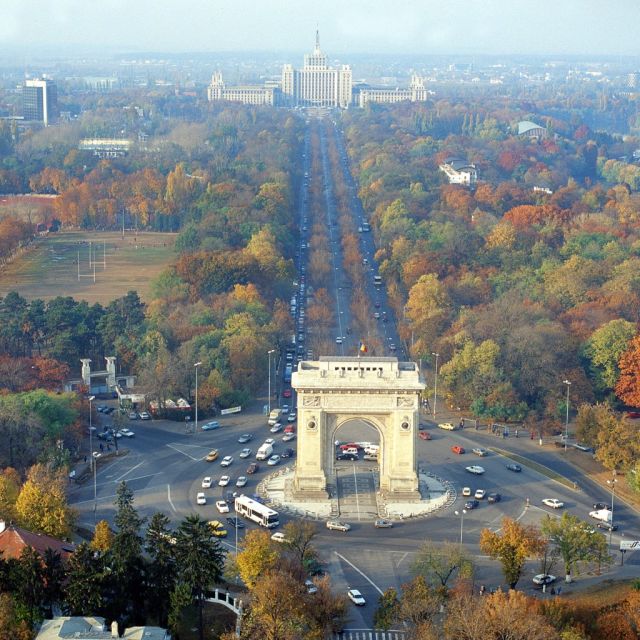
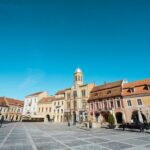
The day often begins at Piata Presei Libere (Free Press Square), then moves toward Arcul de Triumf (the Arch of Triumph). These are the kinds of places where you can see how states like to shape public space.
The guide’s job here is to help you connect the visual language—monuments, symmetry, and big “axis” views—to power. Even if you’re not a history person, you’ll probably feel the intent behind these sites.
This is also a good warm-up for the rest of the day. You’ll start getting used to the city’s scale before you hit the biggest spectacle stop.
Victoriei Square and Calea Victoriei: where architecture tells on itself
Next come Piata Victoriei and Calea Victoriei. This stretch is the kind of Bucharest corridor where the streets themselves feel like commentary—wide roads, prominent buildings, and a formal rhythm.
I find this portion useful because it bridges eras. You’re moving from landmark set pieces into areas that help you understand why certain power centers became centers.
If your legs are decent, this section gives you a sense of how to orient yourself for independent exploration later. If you’re less mobile, you’ll still be fine as long as you follow the guide’s walking pace, since it’s not designed as a long hike.
Cotroceni Palace: optional, time-sensitive, and not always guaranteed
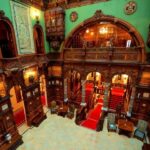
Cotroceni Palace (Muzeul Cotroceni) is an optional interior stop. The time window is 10:00 AM to 3:00 PM, and the key detail is the group-size rule: Cotroceni Palace can only be visited in small groups. If the day doesn’t have a small group slot available, the visit can’t be guaranteed.
So think of Cotroceni as a bonus if access works out. When it does, it adds variety because it’s not only about the downfall of a system or the massive Parliament statement. It’s a different angle on leadership and place.
This is one of the spots where you’ll benefit most from an attentive guide. Even when you only get a limited inside window, you’ll likely come away with clearer context than you’d get from the building alone.
Revolution Square: the 1989 moment you can stand inside
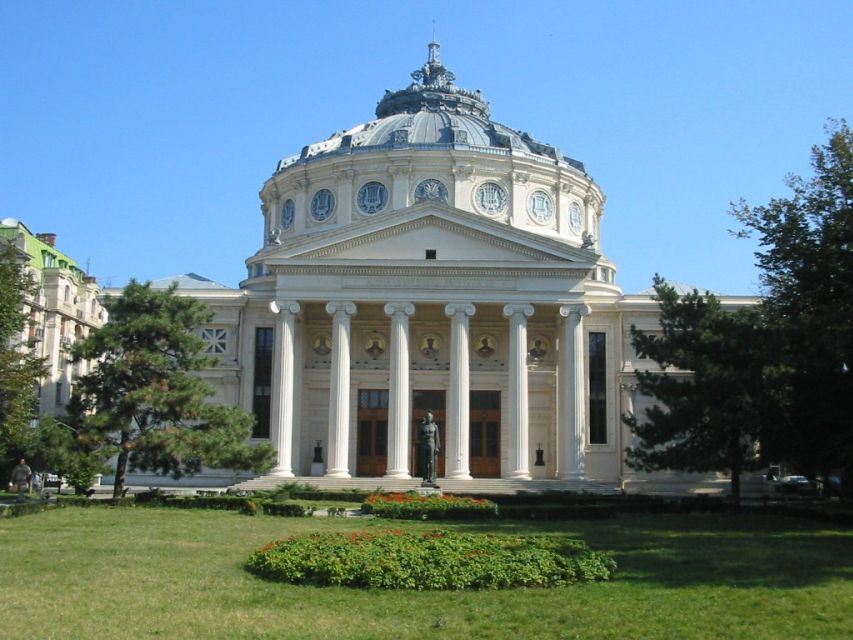
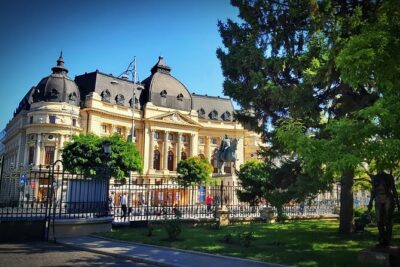
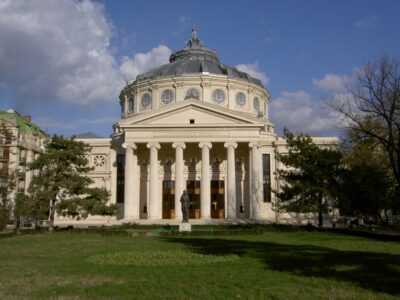
Then you reach Revolution Square, with the Romanian Atheneum and Revolution’s Memorial nearby. This is the heart of the tour’s emotional weight—because the story isn’t theoretical here.
What makes this stop powerful is how it anchors your earlier understanding. You’ve already heard about the Ceausescu era and the way the regime managed public life. Now you’re in the space tied to the system’s collapse.
Take your time here. Even if you’ve read about the revolution before, standing in the area helps you grasp the city’s layout: where people moved, where attention focused, and how urban space becomes political space.
The Palace of Parliament: scale, symbolism, and why the visit matters
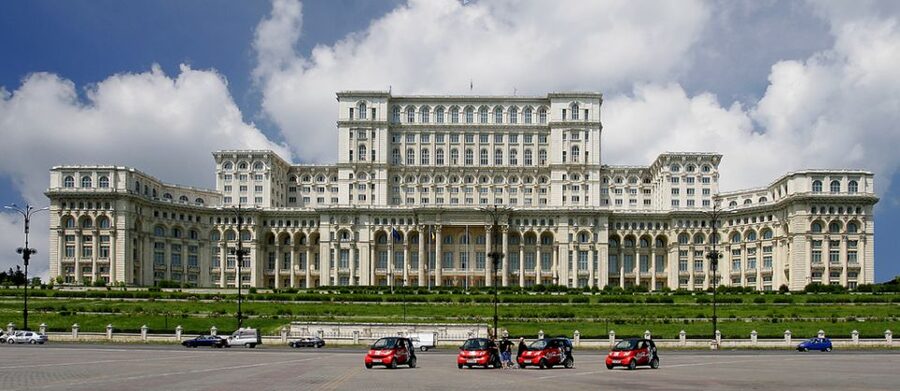
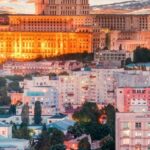
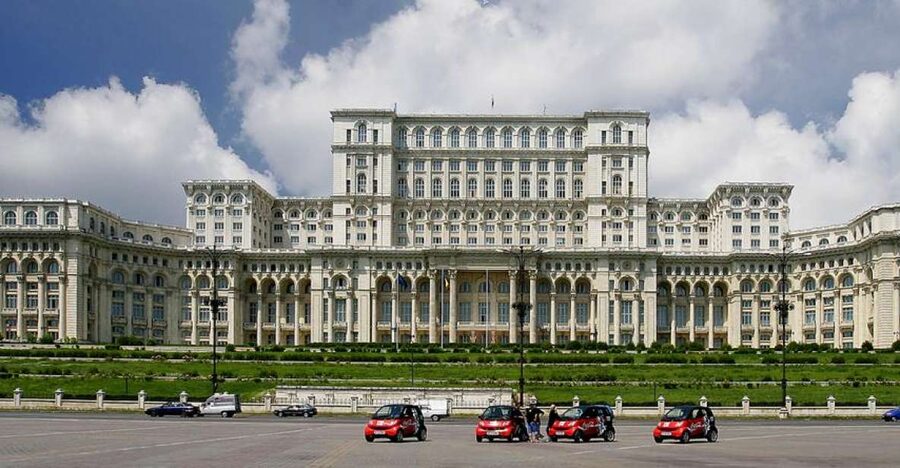
The Palace of Parliament is the star, and for good reason. It’s described as the 2nd largest administrative building in the world, and the guide will frame that number in human terms—what massive projects signal, how power gets built into stone, and what the building represents in the post-communist story.
Important detail: entrance to the Palace of Parliament is optional and depends on timing (open 10:00 AM–3:00 PM). If you’re traveling on a weekend, there’s also a group rule: weekend visits are available only for groups of 10 or more. For smaller groups, the Palace of Parliament may be replaced with an alternative attraction or a guided walking tour of the Old Town.
That means your experience may change depending on the day of the week and your group size. The good news is that even when the plan shifts, the goal stays the same: connect the political story to place.
If you care about architecture, this is where you’ll likely stop taking photos and start looking. The building’s sheer presence is part of the lesson.
Union Square, University Square, and Romana Square: connecting modern Bucharest back to the story
After the big centerpiece, the route continues through central Bucharest with stops at Piata Unirii (Union Square), Piata Universitatii (University Square), and Piata Romana (Romana Square). Then you circle back toward Victoriei Square and Charles de Gaulle Square (Piata Charles de Gaulle) before the Village Museum.
These squares matter because they show you how Bucharest reorganizes itself after a turning point. The guide’s commentary helps you see how public life continues even when political systems change.
I like this section because it’s less about a single dramatic event and more about reading the city’s flow. You’ll likely start thinking, If I came back for two or three extra hours tomorrow, where would I walk first?
Village Museum: seeing the Golden era through everyday life
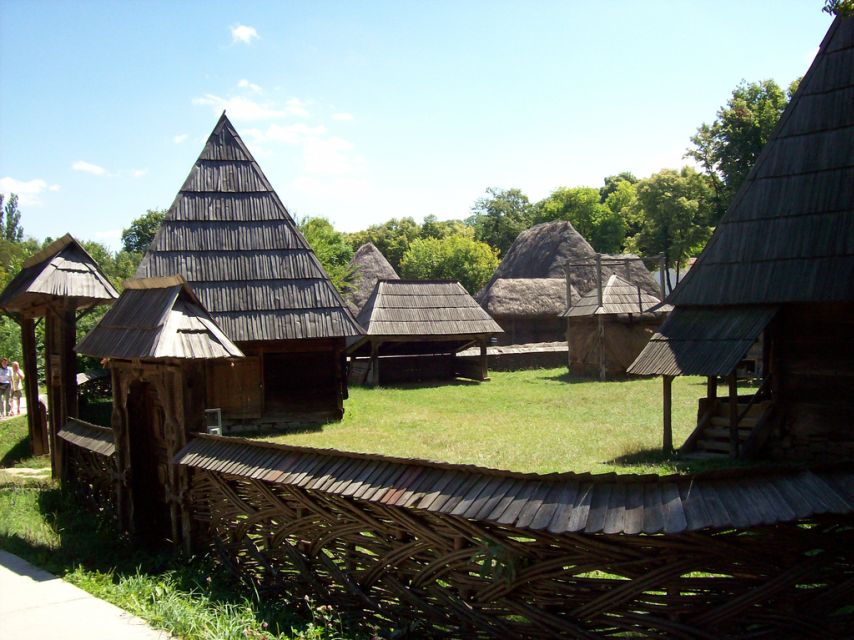
The Village Museum (Muzeul Satului) is an optional stop with hours until 4:00 PM. This part of the day gives you a change of pace. Instead of focusing only on dictatorship and revolution, it lets you shift toward how people lived—so the story includes daily life, not only political headlines.
It’s also an easy way to catch “the Golden era” theme mentioned for the tour. The guide uses this stop to highlight accomplishments in a way that feels grounded, not abstract. You’ll likely appreciate that contrast after the intensity of Revolution Square and the Palace of Parliament.
If you’re the kind of person who likes museums that feel like walking through a topic, this is the stop that can feel most relaxing. Still, it’s not “just a stroll,” since the guide’s explanations help you make sense of what you’re looking at.
The optional lunch stop: plan for a gap
There’s a lunch stop on the road, listed as optional and not included. You’ll want to use this time well—either grab something simple nearby or choose a place where you can sit and reset your brain before the final sightseeing block.
Because entrances depend on time windows, don’t treat lunch as a long wander. Stick close to the group schedule so you don’t end up stressed about entry times.
Price and value: what $152 buys you in real terms
At $152 per person for a 7-hour private tour, you’re paying mainly for three things: transport, an English-speaking guide, and a route designed to cover key sites efficiently.
Entrance tickets are not included. That means your total cost can rise if you choose both palace interiors and the museum, but you’re not forced into paying for every entry. You get flexibility to match your interest level.
From a value standpoint, the big advantage is guidance. History-heavy locations like Revolution Square and the Palace of Parliament can feel overwhelming if you read everything on your own. A guide helps you connect the dots so you leave with understanding, not only photos.
This is also one of those tours where organization really matters. The strong reviews emphasize good planning and a friendly, competent guide, and you’ll feel that in how smoothly the day runs.
Who should book this Bucharest full-day tour
Book this if you want a single-day route that links major political eras to real Bucharest locations. It’s also a good match if you like clear storytelling and you prefer being driven between stops instead of self-navigating in a tight schedule.
It’s less ideal if you want long, independent time at each site. This is a structured itinerary, and the day is built to hit multiple key squares and landmarks.
It’s also not suitable for people with mobility impairments, so plan accordingly.
Should you book it?
I’d book this if you want Bucharest to make sense fast—especially the Ceausescu era and the 1989 revolution story anchored in place. The blend of landmark architecture plus Revolution Square and the Village Museum gives you both the political and human sides of the city.
If you’re sensitive to entrance uncertainty, note the key caveats: Cotroceni Palace is small-group only and may not be guaranteed, and the Palace of Parliament has weekend group-size rules. If your travel dates are flexible, that helps.
If you’re okay with optional entrances and you like guided context, this is a strong way to spend a day in Bucharest with high value per hour.
FAQ
How long is the Full day Bucharest Sightseeing Tour?
It lasts 7 hours.
What’s included in the price?
Transport (car/van/bus) and an English-speaking guide are included.
Are entrance tickets included?
No. Entrance tickets are not included. Palace and museum entry is optional, and entry depends on access and opening hours.
Does the tour include pickup?
Yes. Pickup is included with free pick-up from any hotel/address in Bucharest.
What do I need to bring?
Bring your passport or ID card.
Is this tour private and in English?
Yes, it’s a private group tour and the guide speaks English.
More Tour Reviews in Bucharest
- Bucharest: Dracula’s Castle, Peles Castle, & Brasov Old Town
★ 4.5 · 17,858 reviews - Bucharest: Dracula Castle, Peles Castle & Brasov Old Town
★ 4.6 · 10,891 reviews - Bucharest: Dracula’s Castle, Peleș Castle & Brașov Day Trip
★ 4.4 · 6,100 reviews - Bucharest: Palace of Parliament Tickets and Guide
★ 4.3 · 3,182 reviews - Bucharest: Day Trip to Dracula Castle, Peles Castle & Brașov
★ 4.4 · 3,049 reviews - Bucharest to Dracula Castle, Peles Castle and Brasov Guided Tour
★ 4.5 · 2,933 reviews
All of Bucharest in a Day
- Bucharest: City Highlights Guided Walking Tour
★ 4.9 · 1,482 reviews - Bucharest: Communism and History Guided City Walking Tour
★ 4.9 · 918 reviews - Bucharest Highlights Walking Tour
★ 5.0 · 469 reviews - Bucharest: 2-Hour City Highlights Bike Tour
★ 4.8 · 269 reviews - Best of Bucharest | Private Walking Tour
★ 5.0 · 199 reviews - Bucharest Tuk Tuk city tour
★ 5.0 · 188 reviews
Just In: The Latest Bucharest Reviews


Bucharest City Tours, compared.
 ★ 4.9City Highlights Guided Walking TourFrom $211,482 reviews
 ★ 4.9Communism and History Guided City Walking TourFrom $31918 reviews
 ★ 5.0Bucharest Highlights Walking TourFrom $21469 reviews
 ★ 4.82-Hour City Highlights Bike TourFrom $33269 reviews
 ★ 5.0Best of Bucharest | Private Walking TourFrom $314199 reviews
 ★ 5.0Bucharest Tuk Tuk city tourFrom $54188 reviews
★ 4.9Bucharest Tuk Tuk City TourFrom $58167 reviews
 ★ 4.7Small Group History, Art & Secrets TourFrom $22152 reviews
Browse the lists this tour appears in