
REVIEW · BRAșOV & TRANSYLVANIA
Bucovina Painted Monasteries & Transylvania Tour: 4-Day Private
Painted churches, then Saxon streets. This private 4-day drive from Bucharest mixes famous Bucovina fresco monasteries with Transylvania’s medieval towns, so every day feels like a new chapter. You get a one-on-one guide, comfortable transport, and a plan that keeps the long distances manageable.
What I like most is how much attention you get on the ground. With a private guide, you’re not just looking at paintings; you’re getting the why behind them. I also like the way the tour is structured around major monuments with entrance included for key stops, so you spend less time figuring out logistics and more time actually seeing.
One thing to consider: some inside-visit fees may be paid on the spot (plan a small budget). Also, you’ll be on the move most days, with several hours outdoors and in churches, so bring good walking shoes and a moderate pace.
In This Review
- Key Things to Know Before You Go
- Price and Logistics: What This 4-Day Private Tour Really Costs
- Day 1 from Bucharest: Agapia and Văratec Nunneries
- Agapia Monastery (about 1 hour)
- Văratec Monastery (about 1 hour)
- Day 2 in Bukovina: Sucevita, Moldovița, and Voroneț
- Sucevita Monastery (about 2 hours)
- Moldovița Monastery (about 2 hours)
- Voroneț Monastery (about 2 hours)
- Day 3 in Transylvania: Sighișoara, Viscri, and Brașov
- Sighișoara Historic Center (about 2 hours)
- Viscri Fortified Church (about 1 hour)
- Brașov Historical Center (about 2 hours)
- Day 4: Black Church and Peles Castle Near Sinaia
- Black Church (about 1 hour)
- Peles Castle (about 1 hour)
- Hotels, Meals, and Daily Comfort: What’s Included vs. What You Choose
- What You’ll Learn From Painted Monasteries (Beyond the Photos)
- Practical Tips: Dress, Photos, and Money for Inside Visits
- Wear modest clothing for monastery grounds
- Photos may have limits
- Bring small cash for on-the-spot fees
- Who This Tour Fits Best (And Who Might Want Something Else)
- Should You Book This Bucovina Painted Monasteries and Transylvania Tour?
- FAQ
- FAQ
- How long is the tour and when does it start?
- Where do I get picked up and dropped off?
- Is this a private tour?
- What language is the tour offered in?
- Are entrance fees included?
- What’s included in the price besides the guide?
- Do I need a specific dress code for the monasteries?
Key Things to Know Before You Go
- Private guide time: one-on-one attention lets you ask questions and slow down where you care most
- Bucovina fresco focus: you’ll visit multiple painted monasteries, not just one quick stop
- UNESCO sites included: Sighișoara’s old citadel and the Viscri fortified church
- Comfort-first driving: hotel pickup/drop-off plus comfortable private transport
- Dress and photos matter: plan modest clothing for monastery grounds, and expect photo rules
- Expect some fees on the spot: inside-visit entrance costs may not be fully covered
Deeper into Brasov and Saxon Transylvania
- Bucharest: Dracula’s Castle, Peles Castle, & Brasov Old Town★ 4.5 · 17,858 reviews
- Bucharest: Dracula Castle, Peles Castle & Brasov Old Town★ 4.6 · 10,891 reviews
- Bucharest: Dracula’s Castle, Peleș Castle & Brașov Day Trip★ 4.4 · 6,100 reviews
- Bucharest: Day Trip to Dracula Castle, Peles Castle & Brașov★ 4.4 · 3,049 reviews
Price and Logistics: What This 4-Day Private Tour Really Costs
This tour is priced at $1,356.43 per person for about 4 days, with the big value pieces already baked in. You’re getting 3 nights in three-star hotels, plus breakfast for 3 mornings, and you’re not dealing with trains or rentals. That matters in Romania, where distances can eat hours if you travel on your own.
You also get hotel pickup and drop-off in Bucharest, and the whole trip runs via comfortable private transport. In practice, that means you can treat the route as sightseeing, not a daily puzzle of timetables, parking, and finding entrances.
About entrances: the tour highlights included entrance fees, but the tour also notes that inside-visit entrance fees may be purchased on the spot, with a suggested budget of about EUR 25–30 per person. So I’d plan for a bit of cash or card-ready flexibility for monastery and church interiors, even if some tickets are handled for you.
Finally, it’s offered in English and runs on a private basis, meaning it’s only your group. If you’re traveling with a partner or a small group of friends, that private structure can feel like the best kind of value.
Day 1 from Bucharest: Agapia and Văratec Nunneries
Day 1 is your opening act: two major Romanian Orthodox nun monasteries where the art is important, but the lived spiritual setting is the real backdrop.
Agapia Monastery (about 1 hour)
Agapia is a nunnerly about 9 km west of Târgu Neamț, in the commune of Agapia (Neamț County). It was built between 1641 and 1643 by Romanian hetman Gavriil Coci. Over the centuries, the church was restored and modified, and the standout detail for many visitors is that the church was painted by Nicolae Grigorescu between 1858 and 1861.
You’ll spend about an hour here, and that’s usually enough time to do two things well: (1) follow the fresco storylines and (2) absorb the atmosphere of a large, active monastic community. One reason Agapia hits is its scale—300–400 nuns, making it one of the largest nun monasteries in Romania.
What to watch for: focus on how the fresco program connects to the church’s later repainting. Grigorescu’s work gives it a different feeling than the earlier medieval wall painting traditions you’ll see later in the week.
Văratec Monastery (about 1 hour)
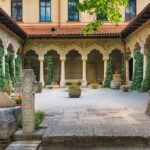
Then you move to Văratec, the largest nun monastery in Romania, with more than 400 nuns living here. Like Agapia, it’s the kind of place where you’re not just touring objects. You’re stepping into ongoing religious life.
You’ll have about an hour. That’s a good length because it lets you look carefully at the paintings without feeling rushed.
Tip: keep your pace steady. Monasteries reward calm looking, and private guiding means you can ask for explanations without the whole group slowing down behind you.
Only your group, at your own speed
Day 2 in Bukovina: Sucevita, Moldovița, and Voroneț
This is the heart of the tour: three painted monasteries that many people come to Romania specifically for. The key is that you’re seeing them as a group, so you can spot differences in style and intent instead of treating each church like a one-off photo stop.
Sucevita Monastery (about 2 hours)
Sucevita stands out because the church architecture includes Byzantine and Gothic elements, plus features typical to painted churches in northern Moldavia. What really makes it special is that both interior and exterior walls are covered with mural paintings.
The paintings depict biblical episodes from the Old and New Testament. Two hours here feels right, because you’ll likely spend part of the time simply reading the fresco layout and part of the time talking through what the scenes are doing.
Why it matters for you: this is the day when the tour turns from sightseeing into something more meaningful. When you compare the murals across multiple monasteries, the art starts acting like a history lesson.
Moldovița Monastery (about 2 hours)
Next is Moldovița, built in 1532 by Petru Rareș, who was Stephen III of Moldavia’s illegitimate son. The monastery was founded as a protective barrier against Ottoman conquerors from the east—so it’s not just decorative. It’s also tied to defense and political pressure.
The tour time is about two hours. Expect to see painted walls and get context on why this religious architecture was built where it was.
Voroneț Monastery (about 2 hours)
Voroneț is famous for one reason above all: the intense shade of blue known in Romania as Voroneț blue. It’s often called the Sistine Chapel of the East, and the frescoes are known for how well they’re preserved.
The monastery was constructed by Stephen the Great in 1488 over a period of 3 months and 3 weeks, commemorating the victory at the Battle of Vaslui. That “why it exists” detail helps you see the paintings as more than decoration. It’s a monument tied to a moment.
Two hours lets you do more than snap photos. You can actually connect the fresco themes to the church’s story.
Photo and etiquette reality check: one past guest noted that photos of the outside required a small payment (10 Lei) and that inside photos weren’t allowed there. Rules can vary, but it’s smart to be prepared.
Day 3 in Transylvania: Sighișoara, Viscri, and Brașov
By day three, you shift from wall paintings to towns—because Romania’s medieval layers show up in streets, fortifications, and local pride.
Sighișoara Historic Center (about 2 hours)
Sighișoara is a medieval citadel with a well-preserved walled old town, and it’s UNESCO-listed. You’ll spend about two hours here, which is enough time to walk the main lanes, spot the fortification character, and still have time to stop when something catches your eye.
This stop works well after Bucovina because it changes the rhythm. Frescoes are about close looking. Sighișoara is about movement and atmosphere.
Viscri Fortified Church (about 1 hour)
Then you head to Viscri for the fortified church, another UNESCO World Heritage Site. This is Saxon medieval architecture in a very concentrated form, and it’s a quick but satisfying visit—about an hour.
If you’re curious about the German-Saxon chapter of Transylvania, this is one of the easiest ways to get oriented without turning it into a research project.
Brașov Historical Center (about 2 hours)
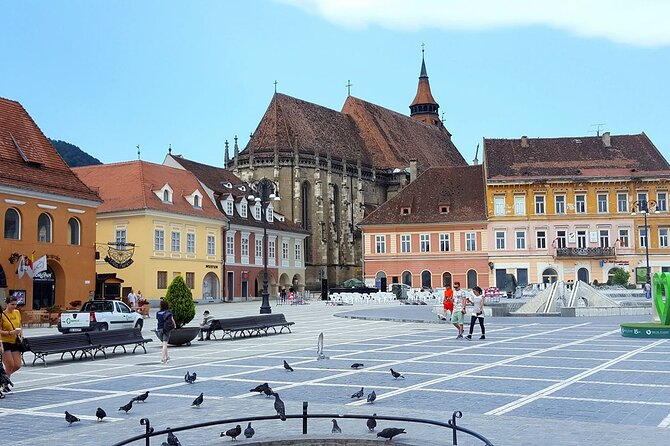
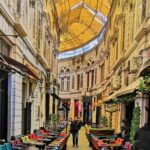
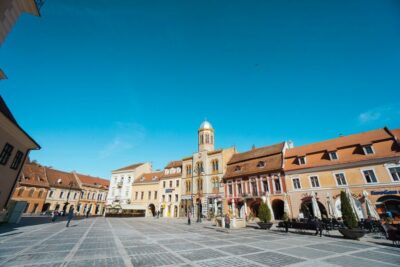
Brașov is your bigger town break—about two hours in the historical center. It was once the regional capital of the Transylvanian Saxons of the Burzenland administrative area, and it became a major trade hub linking East and West. One fun detail: it’s listed as the birthplace of Romania’s national anthem.
Brașov can feel like more than a stop on the way to something else. Even in a short visit, you’ll see how trade roads shape towns and how local identity shows up in buildings and place names.
Day 4: Black Church and Peles Castle Near Sinaia
Day 4 is about contrast: Gothic religious architecture in Brașov, then a royal residence in the Carpathian region.
Black Church (about 1 hour)
The Black Church is a major Gothic monument and one of Romania’s most important Lutheran places of worship. It was built by the German community of the city, and it’s described as the main Gothic-style monument in the country and the largest Lutheran place of worship in the region.
You’ll have about an hour. That’s enough to appreciate scale and architecture, and to understand it as a marker of the German communities that helped shape Transylvania’s cultural landscape.
Peles Castle (about 1 hour)
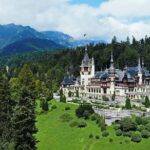
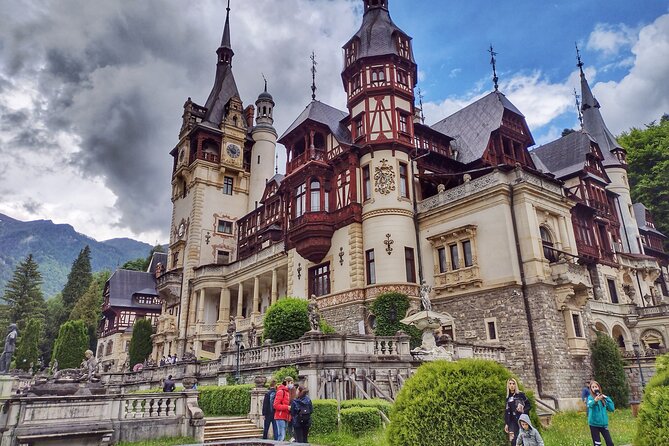
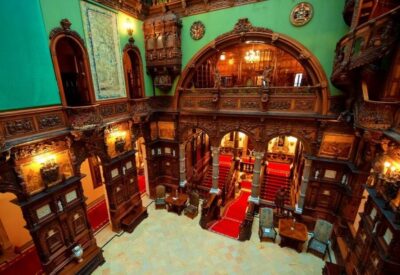
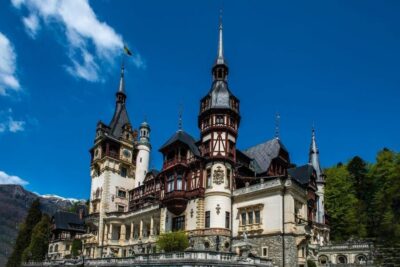
Then you head to Peles Castle, the summer royal residence near Sinaia. It’s a Neo-Renaissance castle in the Carpathian Mountains, built between 1873 and 1914 and inaugurated in 1883 for King Carol I.
You’ll spend about an hour. One reason Peles works on this tour is pacing. After days of churches and fresco walls, the castle gives you a different kind of artistry—symmetry, detail, and the drama of a royal retreat in the mountains.
Practical tip: expect that the day can feel full even with shorter stop times. Comfortable private transport is doing real work on this itinerary.
Hotels, Meals, and Daily Comfort: What’s Included vs. What You Choose
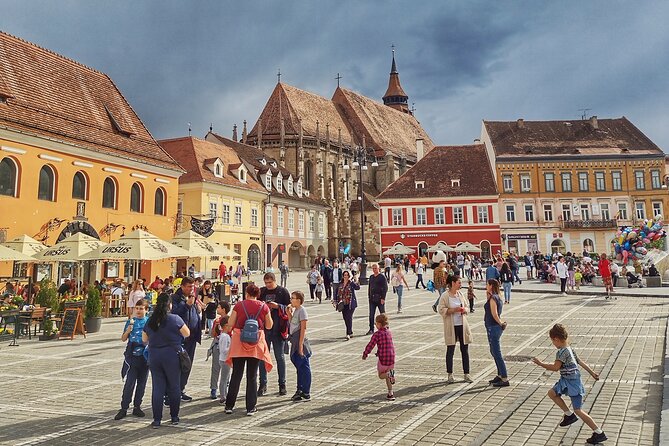
You get 3 nights in three-star hotels, plus breakfast (3 times). Outside of breakfast, meals are not included. That doesn’t mean you’re on your own. In a private tour setting, your guide can point you toward practical options you can manage without hunting for reviews all day.
In past experiences with this company, guests have mentioned both comfortable rooms and restaurant meals that were good value. You should still budget for lunches and dinners yourself, since nothing beyond breakfast is listed as included.
Also note the tour includes moderate physical fitness as a requirement. Nothing about the plan suggests extreme hikes, but you will walk through historic areas and spend time in churches, so plan for steady walking rather than sprinting.
What You’ll Learn From Painted Monasteries (Beyond the Photos)
If you love art, this week will satisfy you. If you don’t think you care about art, it still can work. Why? Because the paintings are tied to theology, political life, and community identity.
A strong theme across these monasteries is that the guide can help you see differences in mural programs and painting approaches across eras. One past guest specifically highlighted how their guide explained distinctions between older 15th-century monastery design traditions and later repainting/restoration, pointing out how artists and artisans left different signatures in the work.
That kind of commentary changes the experience. Suddenly you’re not just seeing blue walls. You’re comparing styles, timelines, and restoration choices that have shaped what you see today.
Practical Tips: Dress, Photos, and Money for Inside Visits
Here’s how to make your days smoother.
Wear modest clothing for monastery grounds
At these Orthodox sites, plan for modest dress. One visitor reported needing trousers or a long skirt to access monastery grounds, while a covered head was not asked for during their visit. Still, rules can differ by location and day, so pack a light scarf just in case.
Photos may have limits
At least one painted-monastery stop came with clear photo limits: a small fee for photos of the outside and no inside photography allowed there. Before you start shooting, slow down and check. If photos are restricted, you’ll lose less time adjusting and arguing with signage.
Bring small cash for on-the-spot fees
Because inside-visit entrance tickets may be purchased on the spot (suggested around EUR 25–30 per person), it’s smart to travel with a mix of card and some money in case a counter is cash-only. Even if you pay by card elsewhere, these small fees can be easier with some local currency on hand.
Who This Tour Fits Best (And Who Might Want Something Else)
This tour is a great fit if you want a private, structured route that connects two big themes: Bukovina’s painted monasteries and Transylvania’s medieval towns.
You’ll especially like it if:
- you care about religious art and want context, not just pictures
- you prefer comfortable driving and guided stops over self-planning
- you want UNESCO highlights without stitching together five different day trips
You might look at other options if:
- you hate long driving days, even when done in comfort
- you want fully included everything (meals beyond breakfast and some inside fees may cost extra)
- you’re only interested in one or two monuments and not the broader regional story
Should You Book This Bucovina Painted Monasteries and Transylvania Tour?
If you’re going to Romania and you want your time to feel efficient and meaningful, this is an easy yes to consider. The biggest strength is the combination: multiple painted monasteries on Day 1–2, then a shift into Saxon and medieval town life in Sighișoara, Viscri, Brașov, and finally the Gothic and royal contrast of Black Church and Peles Castle.
Just go in with the right expectations. Budget a little for inside-visit entrance fees, pack modest clothing for monastery grounds, and plan for a busy schedule. If you like guided explanations and a calm pace inside these churches, you’ll get a lot more out of the paintings than you would on a quick, independent stop.
FAQ
FAQ
How long is the tour and when does it start?
It runs for about 4 days, with the start time listed as 9:00 am in Bucharest.
Where do I get picked up and dropped off?
Hotel pickup and drop-off are included in Bucharest. Pickup can be arranged anywhere in Bucharest.
Is this a private tour?
Yes. It’s a private tour/activity, and only your group participates.
What language is the tour offered in?
The tour is offered in English.
Are entrance fees included?
The tour notes included entrance fees, but it also indicates that entrance fees for inside visits may need to be purchased on the spot, with an advised budget of about EUR 25–30 per person.
What’s included in the price besides the guide?
The tour includes 3 nights in three-star hotels, breakfast for 3 mornings, hotel pickup and drop-off in Bucharest, private tour service, and comfortable private transport.
Do I need a specific dress code for the monasteries?
One past visitor reported needing trousers or a long skirt to access the monastery grounds, and that a covered head was not asked for in their case. Rules can vary, so it’s smart to dress modestly.
More Tour Reviews in Bucharest
- Bucharest: Dracula’s Castle, Peles Castle, & Brasov Old Town
★ 4.5 · 17,858 reviews - Bucharest: Dracula Castle, Peles Castle & Brasov Old Town
★ 4.6 · 10,891 reviews - Bucharest: Dracula’s Castle, Peleș Castle & Brașov Day Trip
★ 4.4 · 6,100 reviews - Bucharest: Palace of Parliament Tickets and Guide
★ 4.3 · 3,182 reviews - Bucharest: Day Trip to Dracula Castle, Peles Castle & Brașov
★ 4.4 · 3,049 reviews - Bucharest to Dracula Castle, Peles Castle and Brasov Guided Tour
★ 4.5 · 2,933 reviews
Just the Party You Came With: More Private Days
- Castles of Transylvania: Private Day Trip from Bucharest
★ 4.5 · 248 reviews - Dracula’s Castle, Peles Castle and Brasov – Private Day Trip from Bucharest
★ 5.0 · 211 reviews - Best of Bucharest | Private Walking Tour
★ 5.0 · 199 reviews - Bucharest Panoramic Sightseeing – Private City Tour
★ 5.0 · 128 reviews - THERME “Take It Easy” Pack: Full Spa Access + Private Transfers
★ 4.0 · 117 reviews - 4h Bucharest Private Tour (2h by Car and 2h Walking in Old Town)
★ 5.0 · 90 reviews
Brasov and Saxon Transylvania
- Bucharest: Dracula’s Castle, Peles Castle, & Brasov Old Town
★ 4.5 · 17,858 reviews - Bucharest: Dracula Castle, Peles Castle & Brasov Old Town
★ 4.6 · 10,891 reviews - Bucharest: Dracula’s Castle, Peleș Castle & Brașov Day Trip
★ 4.4 · 6,100 reviews - Bucharest: Day Trip to Dracula Castle, Peles Castle & Brașov
★ 4.4 · 3,049 reviews - Bucharest to Dracula Castle, Peles Castle and Brasov Guided Tour
★ 4.5 · 2,933 reviews - Dracula’s Castle, Peles Castle and Brasov Day Trip from Bucharest
★ 4.5 · 1,804 reviews
Just In: The Latest Bucharest Reviews

Brașov & Transylvania, compared.
 ★ 4.5Dracula’s Castle, Peles Castle, & Brasov Old TownFrom $4017,858 reviews
 ★ 4.6Dracula Castle, Peles Castle & Brasov Old TownFrom $4010,891 reviews
 ★ 4.4Dracula’s Castle, Peleș Castle & Brașov Day TripFrom $366,100 reviews
 ★ 4.4Day Trip to Dracula Castle, Peles Castle & BrașovFrom $453,049 reviews
 ★ 4.5Bucharest to Dracula Castle, Peles Castle and Brasov Guided TourFrom $332,933 reviews
 ★ 4.5Dracula’s Castle, Peles Castle and Brasov Day Trip from BucharestFrom $331,804 reviews
 ★ 4.5Transylvania and Dracula Castle Full Day Tour from BucharestFrom $351,589 reviews
 ★ 4.5From Bucharest: Brasov Peles & Dracula’s Castle Day TourFrom $651,244 reviews
Browse the lists this tour appears in