
REVIEW · BUCHAREST CITY TOURS
Bucharest City Tour 2 hours – by Car with a Private Guide
Bucharest can feel like a puzzle at first. This 2-hour private driving tour helps you piece it together fast, with an English-speaking guide/driver steering the story and the route.
I especially like the personal attention that comes with a private car, and the way guide Nicolas uses humor to make heavy history easier to follow.
I also like that the tour is built for practical visitors: taxes, parking, road tolls, and gas are included, so there are fewer surprise moments mid-trip. The one thing to consider is that it’s only about two hours—so you’ll see major highlights, but you won’t get long, slow time inside every site.
In This Review
- Key things to know before you go
- A 2-hour private drive that gets your bearings fast
- People’s House (Palace of Parliament) and why the building hits hard
- National Village Museum: traditional Romanian houses in one visit
- Ceaușescu Mansion and the story of the 1989 Revolution
- The Triumphal Arch: 27 meters and photo-friendly exhibits
- Romanian Athenaeum plus the grand center: culture, fashion, and institutions
- Price and what you’re really getting for $123.91
- Who this Bucharest city tour fits best
- Should you book this tour?
- FAQ
- How long is the Bucharest city tour?
- Is pickup included?
- Is the tour private?
- What language is the guide?
- What’s included in the price?
- What’s not included?
Key things to know before you go
- Private car, private guide/driver so your pace stays yours
- People’s House / Palace of Parliament stop focused on what totalitarian power did to Romania
- National Village Museum shows traditional Romanian life in one place, including wooden church and mill symbols
- Ceaușescu-era locations like Ceaușescu Mansion and the Senate Palace tied to the 1989 Revolution
- Triumphal Arch exhibits plus a standout height (27 m) and photo-friendly views
- Romanian Athenaeum and nearby grand buildings around the city center
The big Bucharest sights in one sweep
- Bucharest: City Highlights Guided Walking Tour★ 4.9 · 1,482 reviews
- Bucharest: Communism and History Guided City Walking Tour★ 4.9 · 918 reviews
- Bucharest Highlights Walking Tour★ 5.0 · 469 reviews
- Bucharest: 2-Hour City Highlights Bike Tour★ 4.8 · 269 reviews
A 2-hour private drive that gets your bearings fast
If you’re short on time, Bucharest can still be a lot to process. This tour is designed like a fast orientation lap: you get in the car, you move between big landmarks, and you leave with a clearer idea of how different eras shaped the city.
The biggest practical win is the private setup. You’re not sharing your day with a moving sea of strangers. That matters when you want questions answered, or when the group needs a bathroom break without turning it into a logistical problem.
Also, you’re not stuck with a rigid script. The experience is set up with flexibility to adjust the day’s route even after it starts, which is handy if you’re pacing yourself for photos or want a little extra time at a stop that grabs your attention.
One more point: it’s a licensed English-speaking guide/driver the whole way, so you’re not “handed off” at each site. That makes the history feel connected instead of like a checklist.
People’s House (Palace of Parliament) and why the building hits hard
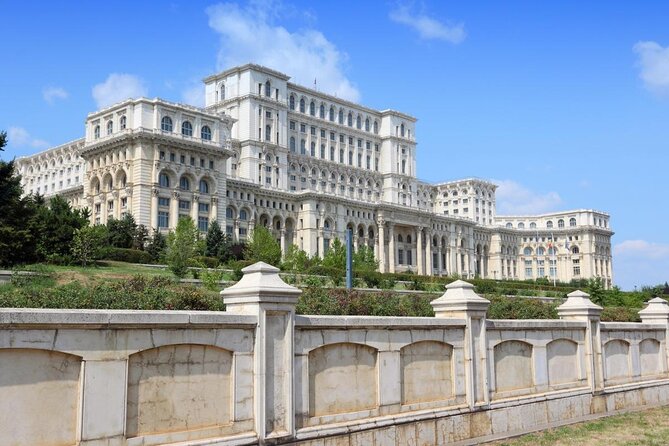
This is the stop that changes your perspective quickly. You’ll visit Palace of Parliament, also known as People’s House, and you’ll get the message that a totalitarian regime can be damaging in ways that linger after the leaders are gone.
The tour frames the experience with a sense of scale: you’ll see the second-largest administrative building on the planet after the Pentagon. Even if you’re not into architecture, that fact alone gives you something concrete to react to. The stories tied to it help you understand the building not just as a monument, but as an emotional symbol—what happens when power turns into display.
What I like about this approach is that it doesn’t treat the site like a simple photo backdrop. You’re guided to notice the contradiction: grand opulence paired with the idea that oppression creates pointless damage.
National Village Museum: traditional Romanian houses in one visit
Then the tour pivots—smartly—into everyday life. At the National Village Museum, you’ll see a focused collection of traditional Romanian houses and symbols, all in one place. Instead of scattering across the country, the idea here is concentration: you can learn a lot without losing an entire day to travel between regions.
This is where the tour’s “values” angle shows up. You’ll learn what Romanian village life meant in terms of simple, modest living in harmony with surroundings. The museum is presented as an example of sustainable thinking long before it became a trendy phrase.
Expect to see traditional homes built with different materials—wood and adobe, stone, and more—along with cultural symbols such as the mill and a wooden church. You don’t need an art degree to get something out of this stop. You just need time to look closely and let the guide’s explanations connect the physical details to the bigger idea: how culture and community helped people stay united “for thousands of years,” without needing to invade others.
If you care about Romania beyond headlines, this museum stop is the one that tends to feel most human.
Ceaușescu Mansion and the story of the 1989 Revolution
Next comes the timeline you’ve probably heard of, but maybe not with clear, on-the-ground anchors. The tour includes Ceaușescu Mansion, described as the private residence of Nicolae and Elena Ceaușescu and their children (Nicu, Zoia, and Valentin) from 1965 to 1989.
It’s hard to look at a residence used for that long a period without thinking about what it means for ordinary people outside those walls. The tour makes that contrast part of the experience—how a dictator’s private world connects to state security controversies and offshore-account claims tied to the era’s fall.
After that, you’ll move to the Senate Palace, presented as the building that used to house the Central Committee of the Romanian Communist Party and as the place where the Revolution of December 1989 started, leading to Ceausescu being removed from power.
This part works best when you let the guide connect events to the space. The building types matter: committee headquarters and key residences don’t just hold history. They shape it—by concentrating control in places that later become symbols.
Only your group, at your own speed

The Triumphal Arch: 27 meters and photo-friendly exhibits
From heavy political history, you get a more outward, public monument—though it still carries meaning. The Triumphal Arch in Bucharest is presented as similar to the Arc de Triomphe in Paris, with an important detail to keep in mind: it measures 27 m in height.
That number helps you visualize the scale quickly. It’s about 16 times the height of an average person, which is the kind of way a guide can make a monument feel real instead of abstract.
Aside from the structure and the symbolic theme of the fight for freedom, the tour mentions that with luck you may be able to see four exhibits:
- The Great War for the Unification of Romania (photography and film)
- The Heraldry of the Great Boyar Families (bronze effigies, photographs)
- The Arch of Triumph in Pictures (photographs, scale models)
- The Great Union of 1918
If you enjoy museums but hate committing an entire day, this is a nice middle ground. Even if exhibits aren’t available when you arrive, the stop still gives you a sense of where Bucharest places its national pride.
Romanian Athenaeum plus the grand center: culture, fashion, and institutions
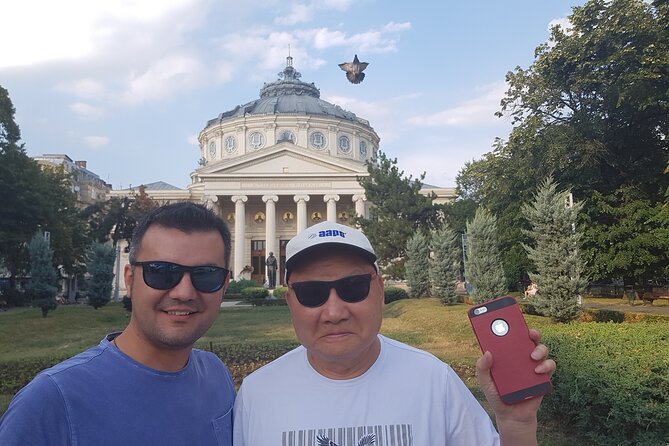
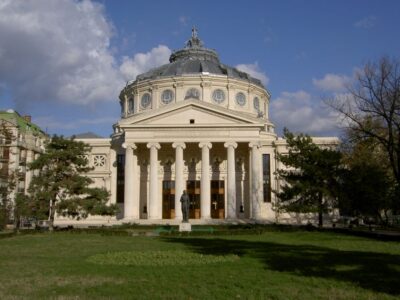
The tour then lands at the Romanian Athenaeum, often treated as a symbol of Romanian culture and frequently associated with Bucharest too. The special detail here is that it’s part of the European Heritage list, which the tour uses to explain why it draws so many visitors.
This stop is less about one single “lesson” and more about letting you feel the city’s cultural center. After the Athenaeum, you’ll spend time around an area full of major buildings—where you can connect names to architecture as you look around.
Key highlights mentioned for this center-area walk/drive include:
- The Royal Palace
- The Senate Palace / Central Committee links tied to Ceausescu fleeing during the Revolution
- The National History Museum (formerly the Post Palace)
- The Lady’s Church
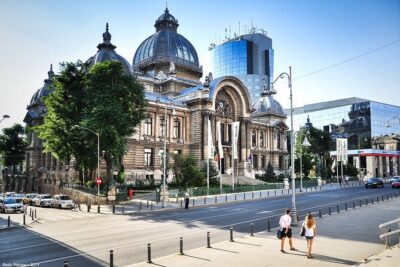
- The CEC Palace (CEC headquarters)
- The Palace of the National Military Circle
- Cantacuzino Palace
- Hotels, restaurants, cafes, museums, casinos
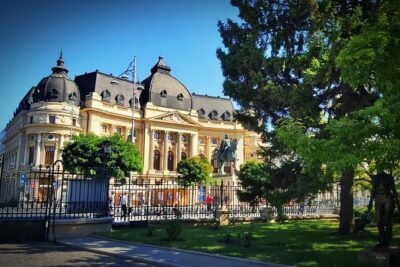
- The Central University Library
This section is ideal if you like the “city as a living archive” approach. You’re not only learning facts. You’re also seeing the variety: churches next to institutions, historic-looking facades beside modern business places.
A quick reality check: this is still only a two-hour tour. So you’ll get a strong overview, not a slow, deep visit to every single interior.
Price and what you’re really getting for $123.91
At $123.91 per person for about two hours, the value comes from how the day is set up rather than from shopping for a bargain.
Here’s what you’re paying for, in plain terms:
- A private car just for your group
- A licensed English-speaking guide/driver
- Taxes, parking, road tolls, and gas included
That inclusion matters. In many cities, those costs quietly stack up. Here, they’re baked in, so you can focus on the experience instead of keeping a running spreadsheet in your head.
This tour also makes sense if you’re traveling with family. Private tours tend to feel expensive until you realize that for two or more people, you’re often paying for the convenience of one guided vehicle plus interpretation—without having to split into different directions.
Who this Bucharest city tour fits best
This is a strong choice when:
- You’re a first-time visitor or want a quick understanding of major eras
- Your time is tight and you need a high-impact route in about two hours
- You want history explained in a way that feels human, not robotic
- You’d rather ask questions than read a wall label on your own
And it helps if you like your guide a bit entertaining. In the experience’s feedback, Nicolas stands out for being funny and engaging, keeping the group interested with stories that connect major sites to daily life under communism. That kind of delivery can turn a heavy topic into something you actually remember.
There’s also a practical perk from Nicolas’s style: he can point you toward a snack stop. In one group experience, there was even a stop for a favored treat—an eclair shop—if timing worked.
If you’re building a longer trip plan, that same guide is mentioned as helping later with an airport transfer in the same week, which is useful if you like one point of contact handling multiple logistics.
Should you book this tour?
I’d book it if you want a single 2-hour hit of Bucharest’s big stories—communism and Revolution-era landmarks, plus major cultural center stops—without spending your day coordinating transit or decoding directions.
I’d think twice if you’re the type who needs long museum hours. This tour is built for clarity and coverage, not for taking your time through every interior. But if your goal is to understand the city fast, get photos you’ll actually care about, and leave with names and context in your head, this one works.
FAQ
How long is the Bucharest city tour?
The tour lasts about 2 hours.
Is pickup included?
Yes, pickup is offered. You just need to let the provider know your pickup time and address.
Is the tour private?
Yes. It’s a private tour/activity, with only your group participating.
What language is the guide?
The guide/driver is licensed and English-speaking.
What’s included in the price?
The private car, an English-speaking guide/driver throughout, all car expenses (gasoline, parking, road tolls), taxes, and flexibility to adjust the itinerary.
What’s not included?
Food and drinks are not included.
More Tour Reviews in Bucharest
- Bucharest: Dracula’s Castle, Peles Castle, & Brasov Old Town
★ 4.5 · 17,858 reviews - Bucharest: Dracula Castle, Peles Castle & Brasov Old Town
★ 4.6 · 10,891 reviews - Bucharest: Dracula’s Castle, Peleș Castle & Brașov Day Trip
★ 4.4 · 6,100 reviews - Bucharest: Palace of Parliament Tickets and Guide
★ 4.3 · 3,182 reviews - Bucharest: Day Trip to Dracula Castle, Peles Castle & Brașov
★ 4.4 · 3,049 reviews - Bucharest to Dracula Castle, Peles Castle and Brasov Guided Tour
★ 4.5 · 2,933 reviews
Just the Party You Came With: More Private Days
- Castles of Transylvania: Private Day Trip from Bucharest
★ 4.5 · 248 reviews - Dracula’s Castle, Peles Castle and Brasov – Private Day Trip from Bucharest
★ 5.0 · 211 reviews - Best of Bucharest | Private Walking Tour
★ 5.0 · 199 reviews - Bucharest Panoramic Sightseeing – Private City Tour
★ 5.0 · 128 reviews - THERME “Take It Easy” Pack: Full Spa Access + Private Transfers
★ 4.0 · 117 reviews - 4h Bucharest Private Tour (2h by Car and 2h Walking in Old Town)
★ 5.0 · 90 reviews
All of Bucharest in a Day
- Bucharest: City Highlights Guided Walking Tour
★ 4.9 · 1,482 reviews - Bucharest: Communism and History Guided City Walking Tour
★ 4.9 · 918 reviews - Bucharest Highlights Walking Tour
★ 5.0 · 469 reviews - Bucharest: 2-Hour City Highlights Bike Tour
★ 4.8 · 269 reviews - Best of Bucharest | Private Walking Tour
★ 5.0 · 199 reviews - Bucharest Tuk Tuk city tour
★ 5.0 · 188 reviews
Just In: The Latest Bucharest Reviews



Bucharest City Tours, compared.
 ★ 4.9City Highlights Guided Walking TourFrom $211,482 reviews
 ★ 4.9Communism and History Guided City Walking TourFrom $31918 reviews
 ★ 5.0Bucharest Highlights Walking TourFrom $21469 reviews
 ★ 4.82-Hour City Highlights Bike TourFrom $33269 reviews
 ★ 5.0Best of Bucharest | Private Walking TourFrom $314199 reviews
 ★ 5.0Bucharest Tuk Tuk city tourFrom $54188 reviews
★ 4.9Bucharest Tuk Tuk City TourFrom $58167 reviews
★ 5.0Bucharest Tuk Tuk city tourFrom $54188 reviews
★ 4.9Bucharest Tuk Tuk City TourFrom $58167 reviews
 ★ 4.7Small Group History, Art & Secrets TourFrom $22152 reviews
Browse the lists this tour appears in