
REVIEW · DRACULA & BRAN CASTLE DAY TRIPS
4-Day Transylvania and Dracula Tour from Bucharest
Dracula starts with a square, not a castle. This 4-day circuit from Bucharest strings together the places that make Transylvania feel real fast: medieval cities, famous castles, and the spooky-good Vlad legends. You’ll spend time in Sibiu and Brasov, not just drive past them.
I like the small-group setup (max 15 travelers) because the van-to-van logistics stay easy, while the day still feels like a tour and not a bus parade. I also like the guide quality—names that came up in feedback include George and Liviu, with praise for being flexible, funny, and good at making history understandable.
One thing to plan for: entrance fees are not included, so your total cost will depend on which castles and churches you choose to pay for. Add to that the reality of long stretches of road between towns in Romania, and you’ll get the best experience if you’re okay with travel time.
Key highlights I’d target on this tour
- Up to 15 people keeps the pace manageable and the guide easier to work with
- Stops include Sibiu, Sighisoara, Brasov, Alba Iulia, Bran, Peles, and Snagov
- You get 3 nights of accommodation plus 3 breakfasts, so mornings start with less fuss
- A strong focus on Dracula-linked sites plus major Transylvanian history stops
- Hotel pickup and drop-off keeps the first and last day simple
- Entrance fees are extra, so budget for castle time
In This Review
- Why This Dracula Route Feels Like More Than a Theme Park Drive
- Price and What You Actually Get for $1,023.50
- Day 1: Sibiu’s Piata Mare Magic and Cozia Monastery on the Olt Valley
- Day 2: Castelul Corvinilor’s Gothic Drama and Alba Iulia’s Romania Milestone
- Day 3: UNESCO Sighisoara’s Clocks and Stairs, Then Brasov’s Black Church
- Day 4: Bran Castle, Peles Castle, and Snagov Monastery by Lake Snagov
- Pacing, Comfort, and How to Pack for Four Days of Famous Stops
- Group Size, Guides, and Why the Right Person Changes Everything
- Who Should Book This Transylvania and Dracula Tour (and Who Should Rethink It)
- Should You Book This Tour From Bucharest?
- FAQ
- What’s included in the tour price?
- Are entrance fees included for the castles and churches?
- What time does pickup happen in Bucharest, and where do I start?
- How big is the group?
- If I want a single room, is there an extra cost?
- Can I get a refund if I cancel?
Why This Dracula Route Feels Like More Than a Theme Park Drive
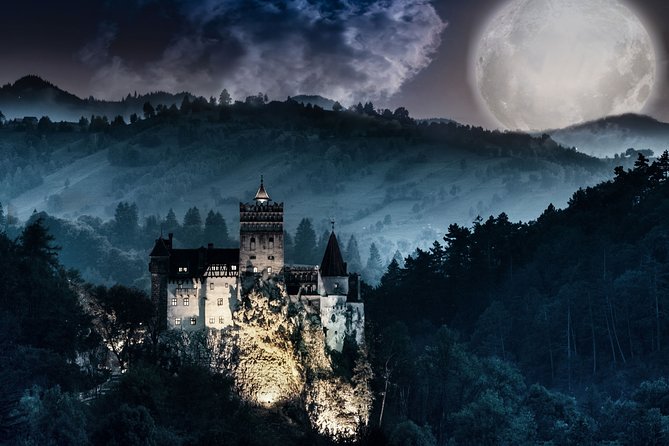
Transylvania has a way of turning history into atmosphere, and this tour is built to give you both. You start with medieval city life in Sibiu and Sighisoara, then move into the big “Dracula pages” in Bran, before finishing with Peles Castle and the Snagov Monastery by Lake Snagov.
What works well here is the mix. Yes, you’ll hit the headline sights, but you’ll also spend time where the region’s culture actually shows up—fortified walls, religious architecture, and everyday town layouts that have survived for centuries. That’s the difference between seeing castles and understanding why the stories stuck around.
The best part is how the route mirrors the geography: Saxon towns and fortified centers first, then the famous royal and border landmarks, then back toward Bucharest for the lake monastery stop.
More runs out to Bran and Dracula country
- Bucharest: Dracula’s Castle, Peles Castle, & Brasov Old Town★ 4.5 · 17,858 reviews
- Bucharest: Dracula Castle, Peles Castle & Brasov Old Town★ 4.6 · 10,891 reviews
- Bucharest: Dracula’s Castle, Peleș Castle & Brașov Day Trip★ 4.4 · 6,100 reviews
- Bucharest: Day Trip to Dracula Castle, Peles Castle & Brașov★ 4.4 · 3,049 reviews
Price and What You Actually Get for $1,023.50
At $1,023.50 per person, this isn’t a budget day trip. But you’re paying for structure. The tour includes 3 nights accommodation, air-conditioned transport, and daily breakfast for 3 days.
You’re also paying for the “between-sights” work: getting you from Bucharest area out into Transylvania and back, keeping the schedule tight enough to cover multiple major locations in only 4 days, and handling the coordination with a small group size (maximum 15 travelers). Based on feedback, the operator’s team includes people like George (and other guides such as Liviu) who reportedly kept things smooth and offered options when interests changed.
Here’s the trade-off: entrance fees are not included, and tips for the guide are not included. Also, there’s a single room supplement of 70 euro, paid locally with cash. So when you compare value, look at the full picture: paid-in basics (transport + lodging + breakfast) versus add-on costs (site tickets, meals, tips, optional local guides).
Day 1: Sibiu’s Piata Mare Magic and Cozia Monastery on the Olt Valley
Day 1 sets the mood by landing you in Sibiu, one of Transylvania’s best-preserved medieval cities. You’ll visit Big Square (Piata Mare), the kind of place where the buildings almost feel like they’re still “doing their job.” Sibiu is described as a long-running meeting point for different communities—Romanians and Saxons living peacefully for centuries—visible through the religious monuments. You’ll also get the “why people love this city” stuff: the three squares (Big Square, Small Square, and Huet Square), tower views, bastions, museums, and the famous houses that give Sibiu its character.
You’ll also see a major gothic evangelical church in Transylvania and get a sense of why Sibiu won European Capital of Culture in 2007. Even if you’re not a museum person, the vibe is outdoor-friendly. You can feel the old town’s rhythm without needing to rush.
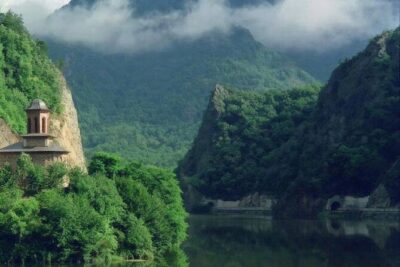
Then you shift gears to religion and art with Cozia Monastery in the Olt Valley. This is a 14th-century Wallachian monument, founded by a prince named Mirco Il and restored in the 17th century by a Cantacuzino. The façade decorations are described as Armenian-style, and the interior features frescoes—exactly the kind of detail that makes a monastery stop more than a photo stop.
Time-wise, it’s not a long visit, but it’s a good anchor for Day 1: city atmosphere first, then an instant dose of older-than-everything calm.
Practical tip: bring shoes you don’t mind getting a little gritty. Older city centers and monastery approaches usually involve uneven ground.
Day 2: Castelul Corvinilor’s Gothic Drama and Alba Iulia’s Romania Milestone
Day 2 swings toward fortress-scale beauty with Castelul Corvinilor, also known as the Castle of the Corvini. It’s a Gothic-style castle with serious movie-screen cred—people specifically point out that it’s been used for historical films thanks to its look. You’ll spend about an hour here, which means: don’t plan for every corner, plan for the best views and the most iconic rooms.
After the castle, the tour moves to Alba Iulia, a city that matters in Romanian national history. The key date here is December 1, 1918, when the event tied to the creation of Great Romania took place. The tour includes time at the citadel area, with its walls and museums.
If you like history that feels political and geographic at the same time, Alba Iulia does that job. Fortifications make the meaning visible. And when you compare it to earlier stops like Sibiu and later stops like Brasov, you start to see how power moved across Transylvania over time.
Watch your pace: after a castle stop, citadels can still involve walking around open areas and stairs. Keep water handy. It’s a good day for a slower lunch.
Day 3: UNESCO Sighisoara’s Clocks and Stairs, Then Brasov’s Black Church
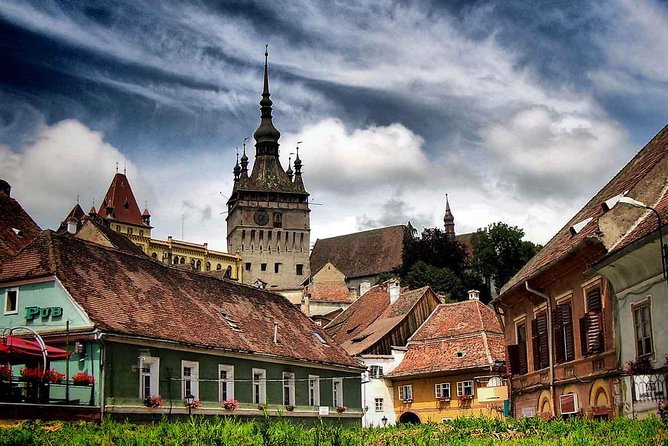
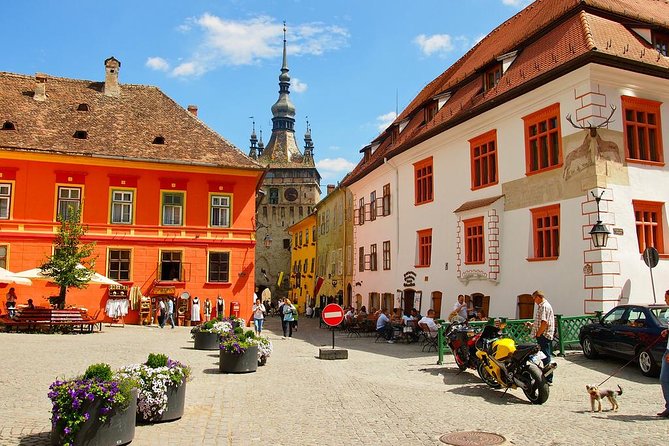
Day 3 is the “two-city day,” and it’s a good one. You start in Sighisoara, specifically the historic center (UNESCO). This old citadel is known for being the best preserved in Europe and still inhabited. You’ll see the famous Clock Tower, plus the church on the hill.
The hill church is reached by a wooden staircase called the Schoolchildren’s Ladder—a detail that sounds like set dressing until you realize it’s one of those local design choices that makes a town feel lived-in, not museum-dried. You’ll also see a statue of Petofi Sandor, which reflects the historical importance of the Magyar community here, along with a Catholic church reserved for the Hungarian community, and the Shoemakers’ Tower.
Lunch is flexible. There’s an option to eat at a house associated with Vlad the Impaler’s birth, but it’s own expense, so you can choose what fits your appetite and budget.
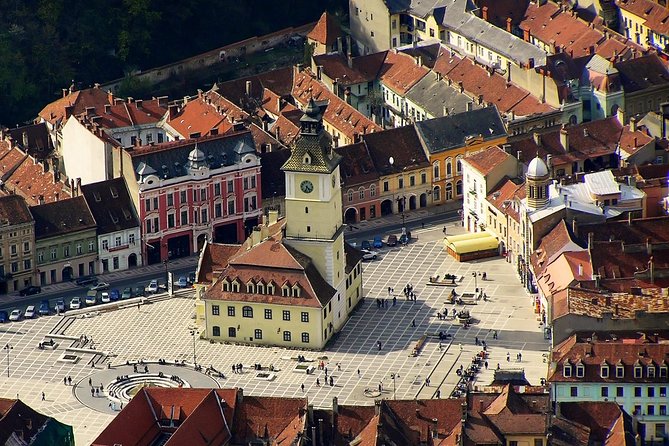
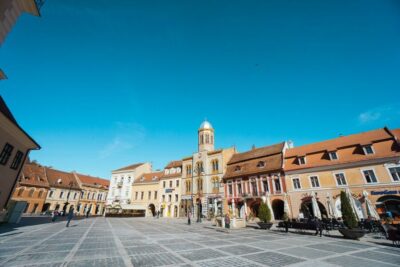
Then it’s on to Brasov, where you get a classic Transylvanian mix of medieval Germanic architecture and major church scale. The tour focuses on the historical center and the Schei district, including entrances from medieval times through the Catherine’s Gate and the Schei Gate.
The headliner is the Black Church, described as the largest evangelical Gothic church in Eastern Europe, with a tall bell tower and a very large interior space. The church also houses a notable 19th-century mechanical organ of Romania, which is the kind of fact that makes this stop feel more specific than just Gothic sightseeing.
You’ll also move through areas like Council Square (with a museum) and the pedestrian Avenue of the Republic. Brasov is the kind of city where you’ll want time to wander after the planned stop. Even if you don’t get extra time, you’ll still feel the shift from citadel streets to a busier central pedestrian spine.
Practical tip: if you’re sensitive to walking volume, pace yourself between the Black Church area and the gates. You’re doing more than one neighborhood.
Deeper into Brasov and Saxon Transylvania
Day 4: Bran Castle, Peles Castle, and Snagov Monastery by Lake Snagov
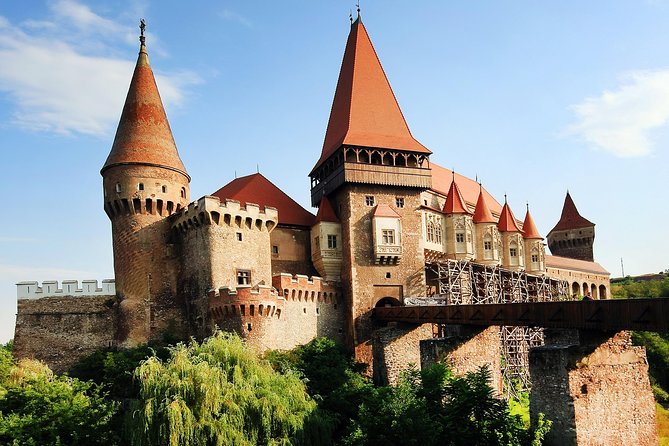
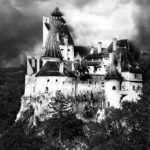
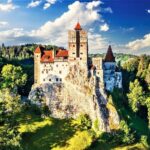
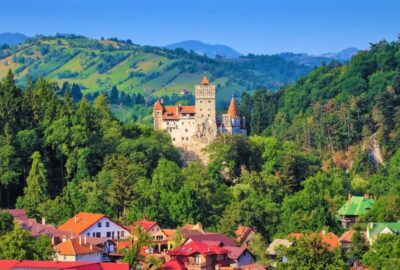
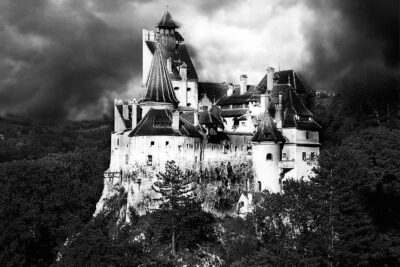
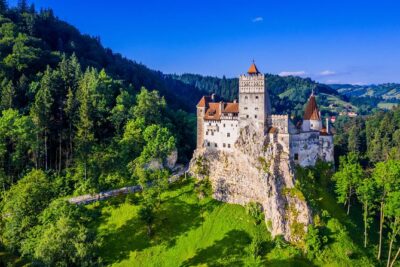
Day 4 is where Dracula fans go full focus. You start with Bran Castle, often marketed as Dracula’s Castle, and it’s not far from Brasov—about 25 kilometers away. The tour frames Bran’s fame through Bram Stoker’s Dracula legend (1897) and Francis Ford Coppola’s film influence, while also giving you the real building history.
This is more interesting than the usual spooky story because the castle had a strategic border role. Documents are said to date back to 1377, and over time it sat between regions under different powers: the rule of King Sigismund of Luxemburg, then Mircea cel Batran and Vlad Tepes, and later under the jurisdiction of Brasov. In 1912, it was donated by Brasov’s municipality to the Romanian royal family to become a residence.
Bran can be busy and touristy, but the structure and the history help it feel grounded. If you go in expecting only a Dracula set, you might miss the borderland story that explains why this place mattered.
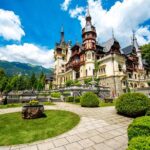
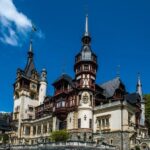
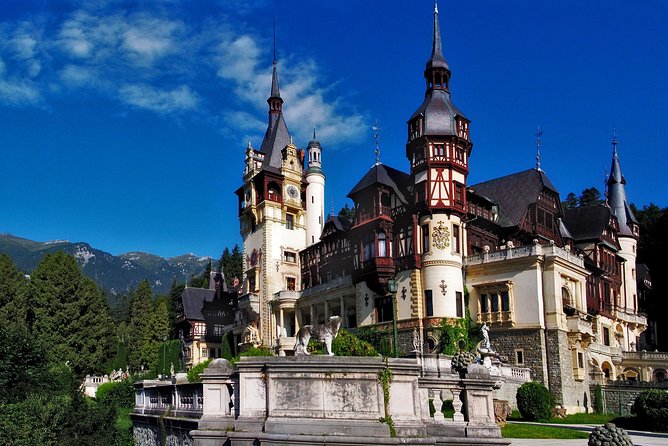
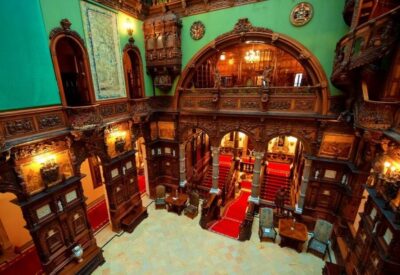
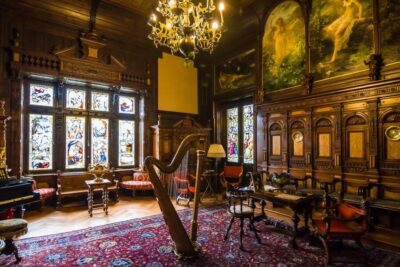
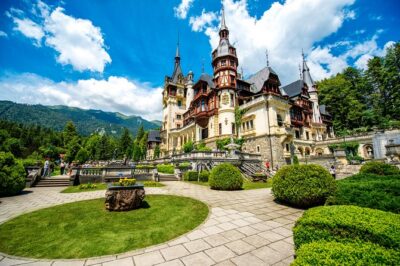
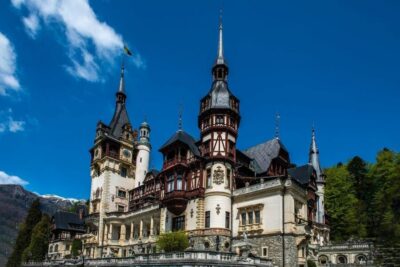
Next is Peles Castle, which changes the mood fast. This one is the summer residence of the first king of Romania, King Charles I of Hohenzollern, and it’s famous for being designed by a Czech architect. It’s also noted as being modern for its time, built between the 19th and 20th centuries, with rooms in different styles rather than one uniform design language. The tour specifically calls out the Florentine room with an Italian Renaissance atmosphere.
Finally, you finish near Bucharest at Snagov Monastery on Lake Snagov. The monastery is on a small island, and the tour includes the legend connection: it’s said to be where Dracula was buried in 1476. Even if you’re cautious about legends, it’s still a striking setting—water, sky, and a small island monastery that feels removed from traffic and noise.
You end with the practical win: you return to Bucharest for hotel drop-off.
Pacing, Comfort, and How to Pack for Four Days of Famous Stops
This tour is designed as a “cover the big stuff” itinerary, but it also keeps an easy pace according to feedback, with guides offering options and extra time where it makes sense. Still, you should expect some long driving stretches. Transylvania sites are spread out, and that road time is part of the trade for seeing several major towns in only 4 days.
Your body will care more than your mind on this one. Bring comfortable walking shoes (recommended by the operator) because you’ll mix city strolling, church areas, and castle grounds. In older cities, walking surfaces can be uneven and stairs pop up even when the route looks flat on a map.
Also plan your expectations around meals. Breakfast is included for 3 days, but lunches and dinners aren’t spelled out here as included, so you’ll want a flexible budget. Positive feedback mentioned the guide picking good local restaurants, which is a smart way to avoid tourist traps when you’re far from home.
Group Size, Guides, and Why the Right Person Changes Everything
With a maximum group size of 15, you’re more likely to get a “small group feel” instead of a crowd. That matters for Dracula-themed travel because the best moments often come from the guide’s storytelling—connecting the architecture and the legends without turning everything into a trivia quiz.
Specific guide names popped up in feedback: George was praised for adjusting the tour to interests, helping a guest with a disability through issues as they came up, and generally running days that felt safe and stress-free. Liviu was also mentioned as funny, flexible, and good at sharing information tied to the route.
There’s one nuance in the tour description that you should keep in mind: the operator notes that no tour guide will be following this tour, while also offering local guides at extra cost. In practice, that can mean you might have a main guide during the trip, with local guides or self-guided time at some sights depending on the schedule. Before you go, it’s worth asking the operator what kind of guiding you’ll have at each major site.
Who Should Book This Transylvania and Dracula Tour (and Who Should Rethink It)
Book this if you want a focused introduction to Transylvania with both Dracula landmarks and major historic towns. I think it’s a strong fit for:
- First-time Romania visitors who want a smooth start-to-finish plan
- People who care about history beyond the headline Dracula fantasy
- Travelers who like a small group and a confident driver through long distances
Consider something else if you’re the type who hates long car days or you’re trying to keep costs extremely low. Entrance fees not being included means the total can climb fast if you want to go inside many places.
If you have mobility concerns, don’t assume it’s impossible. One piece of feedback described the guide working through challenges with a disabled guest. Still, you should ask the operator ahead of time how the route handles stairs and castle terrain.
Should You Book This Tour From Bucharest?
I’d book it if you want the practical win: transport + lodging + breakfast + guided structure across the core Transylvania hits. For the money, the value is in how much is bundled—3 nights of accommodation and the effort of linking towns that would otherwise take real planning.
You should still go in with two clear expectations: pay extra for entrance fees, and accept that you’ll spend real time on the road between sites. If that sounds fair, you’ll get a rewarding blend—Sibiu’s medieval soul, Sighisoara’s preserved citadel feel, Brasov’s church scale, Bran’s legend-and-border story, Peles’ royal elegance, and Snagov’s island monastery atmosphere.
If you’re Dracula-only, you might feel the itinerary is broader than your main interest. If you’re Dracula-curious and want the region behind the myth, this tour is a solid match.
FAQ
What’s included in the tour price?
The price includes 3 nights accommodation, air-conditioned transport, and 3 breakfasts.
Are entrance fees included for the castles and churches?
No. Entrance fees are not included, and you should plan extra money for tickets at the stops where entry applies.
What time does pickup happen in Bucharest, and where do I start?
The tour lists start time 8:30 am, with pickup from your hotel at 9:00 am. You’ll also be dropped back at your hotel at the end.
How big is the group?
The tour has a maximum of 15 travelers.
If I want a single room, is there an extra cost?
Yes. There’s a single room supplement of 70 euro, and it’s paid locally with cash.
Can I get a refund if I cancel?
No. The experience is non-refundable and cannot be changed for any reason.
More Tour Reviews in Bucharest
- Bucharest: Dracula’s Castle, Peles Castle, & Brasov Old Town
★ 4.5 · 17,858 reviews - Bucharest: Dracula Castle, Peles Castle & Brasov Old Town
★ 4.6 · 10,891 reviews - Bucharest: Dracula’s Castle, Peleș Castle & Brașov Day Trip
★ 4.4 · 6,100 reviews - Bucharest: Palace of Parliament Tickets and Guide
★ 4.3 · 3,182 reviews - Bucharest: Day Trip to Dracula Castle, Peles Castle & Brașov
★ 4.4 · 3,049 reviews - Bucharest to Dracula Castle, Peles Castle and Brasov Guided Tour
★ 4.5 · 2,933 reviews
Brasov and Saxon Transylvania
- Bucharest: Dracula’s Castle, Peles Castle, & Brasov Old Town
★ 4.5 · 17,858 reviews - Bucharest: Dracula Castle, Peles Castle & Brasov Old Town
★ 4.6 · 10,891 reviews - Bucharest: Dracula’s Castle, Peleș Castle & Brașov Day Trip
★ 4.4 · 6,100 reviews - Bucharest: Day Trip to Dracula Castle, Peles Castle & Brașov
★ 4.4 · 3,049 reviews - Bucharest to Dracula Castle, Peles Castle and Brasov Guided Tour
★ 4.5 · 2,933 reviews - Dracula’s Castle, Peles Castle and Brasov Day Trip from Bucharest
★ 4.5 · 1,804 reviews
Bran and the Dracula Trail
- Bucharest: Dracula’s Castle, Peles Castle, & Brasov Old Town
★ 4.5 · 17,858 reviews - Bucharest: Dracula Castle, Peles Castle & Brasov Old Town
★ 4.6 · 10,891 reviews - Bucharest: Dracula’s Castle, Peleș Castle & Brașov Day Trip
★ 4.4 · 6,100 reviews - Bucharest: Day Trip to Dracula Castle, Peles Castle & Brașov
★ 4.4 · 3,049 reviews - Bucharest to Dracula Castle, Peles Castle and Brasov Guided Tour
★ 4.5 · 2,933 reviews - Dracula’s Castle, Peles Castle and Brasov Day Trip from Bucharest
★ 4.5 · 1,804 reviews
Just In: The Latest Bucharest Reviews

Dracula & Bran Castle Day Trips, compared.
 ★ 4.5Dracula’s Castle, Peles Castle, & Brasov Old TownFrom $4017,858 reviews
 ★ 4.6Dracula Castle, Peles Castle & Brasov Old TownFrom $4010,891 reviews
 ★ 4.4Dracula’s Castle, Peleș Castle & Brașov Day TripFrom $366,100 reviews
 ★ 4.4Day Trip to Dracula Castle, Peles Castle & BrașovFrom $453,049 reviews
 ★ 4.5Bucharest to Dracula Castle, Peles Castle and Brasov Guided TourFrom $332,933 reviews
 ★ 4.5Dracula’s Castle, Peles Castle and Brasov Day Trip from BucharestFrom $331,804 reviews
 ★ 4.5Transylvania and Dracula Castle Full Day Tour from BucharestFrom $351,589 reviews
 ★ 4.5From Bucharest: Brasov Peles & Dracula’s Castle Day TourFrom $651,244 reviews
Browse the lists this tour appears in