REVIEW · BUCHAREST
Troubled – Notorious Neighborhood – area known for social issues
Bucharest’s real face is outside the old town. This 3.5-hour private tour takes you through Ferentari and Rahova, then out to Sinești, the Roma village, with a guide focused on daily life and local codes, not tourist shortcuts.
I love the hands-on feel: you get time in markets and streets, including sections you do on foot. I also like the clear on-the-ground etiquette—how to dress, how to behave, and how to handle cameras with respect.
The main drawback to plan for is that you’re visiting socially troubled neighborhoods, so you have to keep expectations low and behavior calm.
In This Review
- Key things you should notice before you go
- What this tour really delivers in Bucharest
- Price and value: is $130.83 per person worth it?
- Pickup, timing, and how the 3.5 hours move
- Stop 1: Ferentari and what “the dark side” looks like up close
- Stop 2: Rahova, the penitentiary area, and the street-level market feel
- Stop 3: Sinești and the Roma village of palaces
- The guides make the difference: what to expect from a Sebastian, Bogdan, Catalin, Valerică, or Matthew-style tour
- Safety and respect: the rules you should follow from the start
- What you’ll learn (and why it’s more than sightseeing)
- Who this tour is best for
- Should you book it? My honest take
- FAQ
- How long is the Bucharest neighborhood tour?
- Is this a private tour?
- What language is the tour offered in?
- Is pickup included?
- Where does the tour take you?
- Can I cancel for free?
Key things you should notice before you go
- You’ll go beyond the center: Ferentari, Rahova, and Sinești in one 3.5-hour route
- Market time on foot: flower market and local market stops are part of the flow
- Guides set the tone: humor helps, but rules come first
- Safety-by-attitude: you’re coached on what’s appropriate and what isn’t
- Dress with care: simple clothing, no jewelry, no expensive items
- A mix of vehicle and walking: lots of ground covered without rushing you
Still deciding? Line this one up against a few Bucharest favourites first.
- Bucharest: Dracula’s Castle, Peles Castle, & Brasov Old Town★ 4.5 · 17,858 reviews
- Bucharest: Dracula Castle, Peles Castle & Brasov Old Town★ 4.6 · 10,891 reviews
- Bucharest: Dracula’s Castle, Peleș Castle & Brașov Day Trip★ 4.4 · 6,100 reviews
- Bucharest: Palace of Parliament Tickets and Guide★ 4.3 · 3,182 reviews
What this tour really delivers in Bucharest
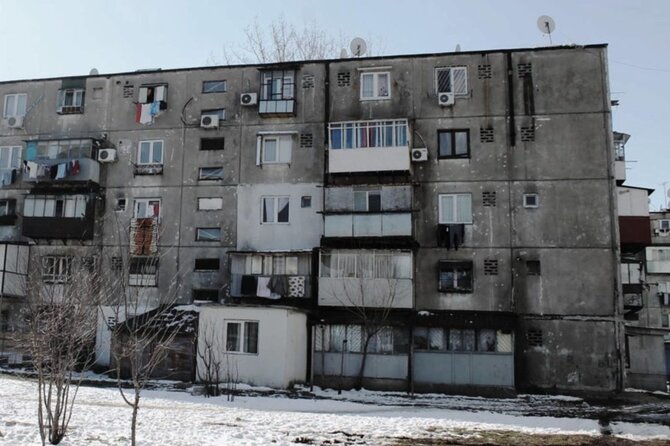
If your Bucharest plan is only boulevards and museums, you’ll miss a big part of how the city actually works. This tour is designed for people who want to see daily life at street level—especially the parts most visitors never walk into, and the parts that show both hardship and contrast within the Roma community.
The guide doesn’t just recite facts. You get practical context for the streets, the local rhythm, and the social rules that affect how people respond when outsiders arrive. That’s why the experience often feels more human than a standard sightseeing loop.
You also get structure. The schedule is tight enough to stay manageable, but it still leaves room for moments that feel real—like market browsing and watching how errands happen. It’s a short time commitment, but it’s not a superficial one.
Price and value: is $130.83 per person worth it?
At $130.83 per person for about 3 hours 30 minutes, this isn’t a bargain-basement excursion. But it can feel like good value if you care about two things: time and access.
You’re paying for:
- Private format (only your group goes), which usually means less waiting and more control of the pace
- A guided route into areas you’d likely skip on your own, where etiquette matters and a local guide is the difference between awkward and respectful
- Pickup offered, plus a route that mixes vehicle travel with walkable segments
There’s no pretending this tour is comfortable in the way a palace visit is comfortable. Still, for the specific goal of seeing Bucharest beyond the postcards, the price makes sense.
Pickup, timing, and how the 3.5 hours move
The tour lasts around 3 hours 30 minutes, and confirmation comes at the time of booking. It’s offered in English, with a mobile ticket. It also notes near public transportation, which can help if your pickup drops you close to a transit stop.
A key detail that affects your comfort: a large part is done by vehicle, with sections on foot. That keeps you from walking too long in challenging streets, while still letting you experience the street scene rather than just looking out the window.
Plan to arrive ready to follow guidance. This isn’t one of those tours where you can drift off, film freely, and treat it like a street photo walk. The guide sets the expectations from the beginning.
Stop 1: Ferentari and what “the dark side” looks like up close
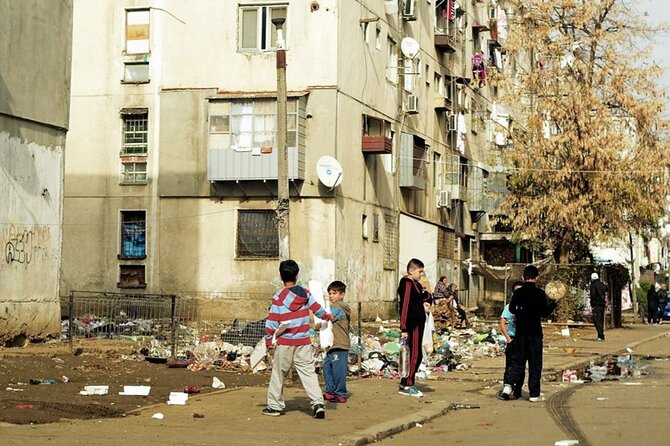
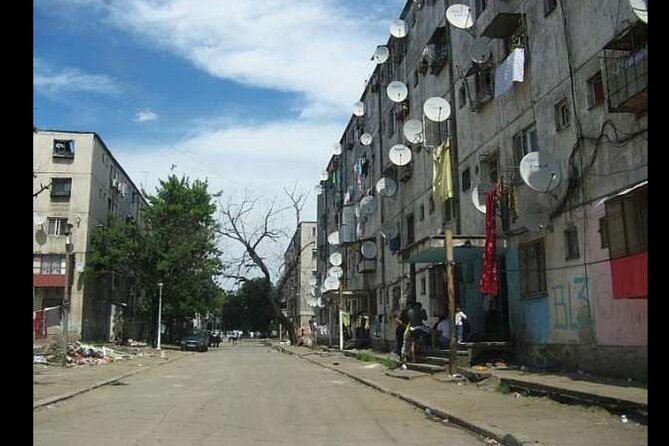
Ferentari is the starting point, and it comes with a reputation for low living standards and social problems. The tour frames it plainly: this is a place many outsiders never see, and it can be emotionally heavy if you’re not prepared.
So what do you actually do there?
- You move through streets where life happens in real time.
- You get a guided explanation of what you’re seeing, without turning people into scenery.
- You’re given direction on behavior—especially around cameras and clothing.
One reason this stop hits so hard for many people is that it’s not only about hardship. It’s about visibility. You learn to look at a neighborhood with the right questions: How does daily routine work? What does the built environment suggest? What signals show whether something is for you to watch or not?
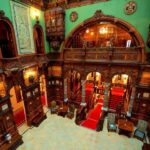

Stop 2: Rahova, the penitentiary area, and the street-level market feel
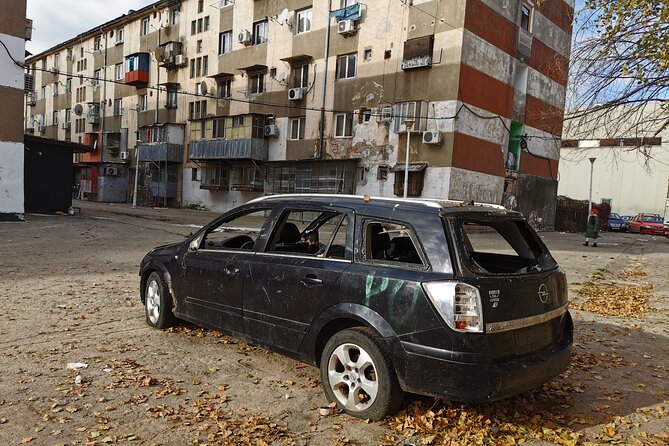
Rahova is the next neighborhood, and it’s presented as an area where many Roma families live, plus it has the presence of a feared penitentiary in the area. That matters because it changes the mood of the streets and the kind of care you need.
Rahova is also where the tour can feel the most grounded. One of the most practical parts is the market time. You may spend time walking through local commerce—people buying groceries, moving through stalls, and handling small errands that add up to everyday life. A flower market stop is specifically mentioned, along with a local market.
This is where the guide’s personality becomes useful. Some guides, like Sebastian, Bogdan, Catalin, or Matthew, are described as bringing humor while still keeping firm boundaries. That balance helps: you can be human and curious, without acting like you own the scene.
Also, you’ll likely pass by specific streets tied to the tour route, including places listed like Aleea Livezilor, Strada Pucheni 1, and Strada Amurgului 4 as part of the day’s movement. You’ll also visit Rahova Penitentiary (Strada Adrian 4) as a landmark point in the route.
Stop 3: Sinești and the Roma village of palaces
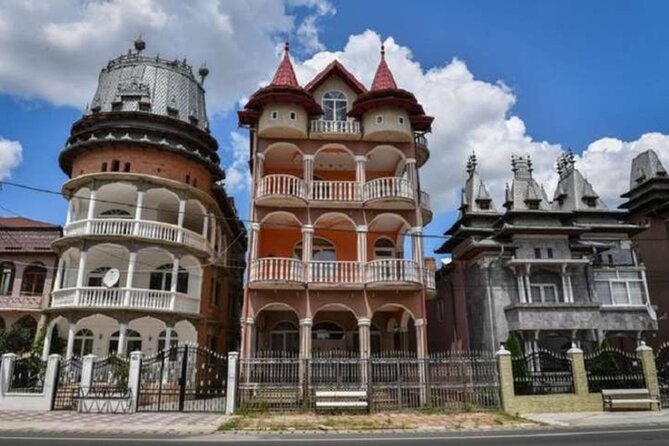
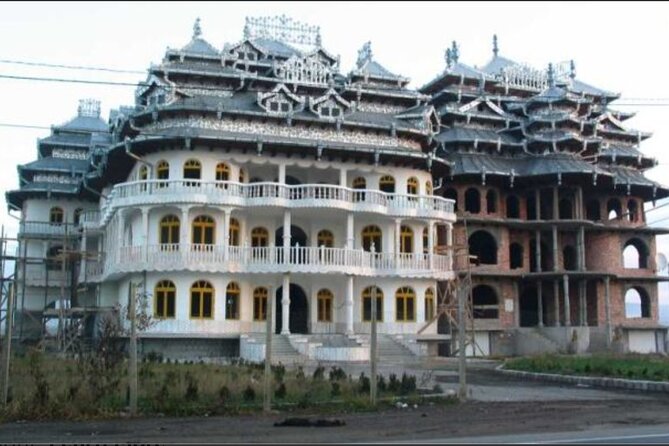
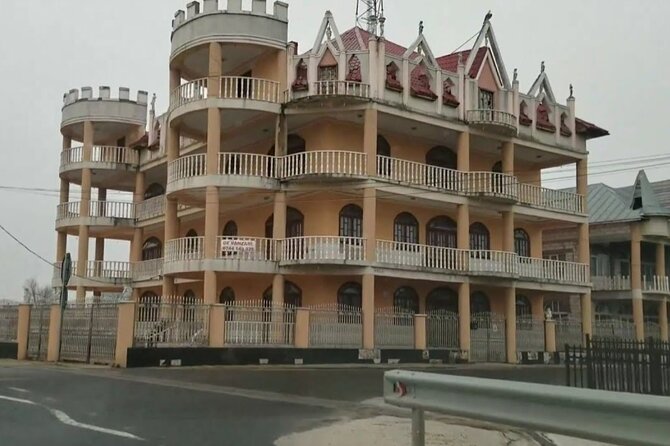
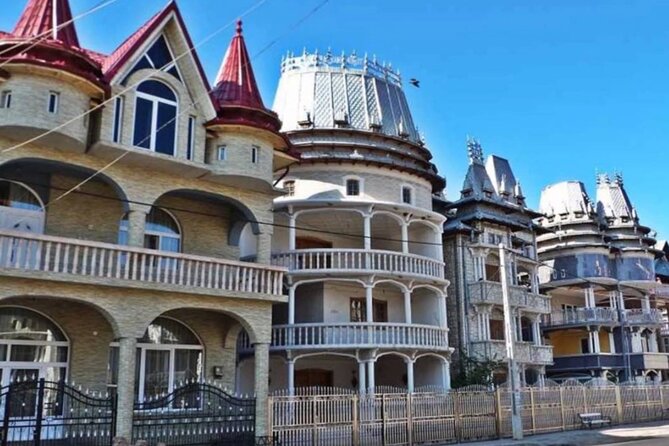
Then the tour shifts to Sinești, a village known in this context for Roma houses often described as palace-like. It’s a different angle than the city neighborhoods. Instead of focusing only on hardship, this stop highlights contrast—how different kinds of wealth and living styles can show up in the same broader community story.
You’re guided to the village area, including Strada Principală Nr. 353A, Sintești. The time here is still controlled and respectful. Think of it as a guided walk-through and discussion where you learn what to notice and what not to assume.
In a tour like this, Sinești can be the most surprising stop. Not because it’s a theme park—more because the contrast forces you to stop using one-word labels for people or places. The guide will frame what you’re seeing so you can connect it back to the wider story of how communities live, adapt, and survive.
The guides make the difference: what to expect from a Sebastian, Bogdan, Catalin, Valerică, or Matthew-style tour
A big part of why this experience earns very high ratings is the way the guide handles sensitive territory. The tours are described as safe because the guide keeps you grounded: what you can do, what you shouldn’t do, and how to show respect in the moment.
You might meet guides such as:
- Sebastian
- Bogdan
- Catalin
- Valerică
- Matthew
Across different runs, the common thread is guidance that feels like it’s meant for real humans, not just tourists. Guides explain a code of conduct, and they remind you to be alert and sensitive to the environment. Some tours even describe a brief conversation when conditions and comfort allow—which is the kind of moment you can only get if your guide is careful and respectful.
If you want a tour that treats people like people, not like a spectacle, this is where you’ll feel it.
Safety and respect: the rules you should follow from the start
This is the part that matters most, and it’s not vague. The tour specifically asks you to:
- Dress simply
- Skip jewelry
- Avoid expensive items
That’s not about fear. It’s about respect and reducing attention. In neighborhoods with social challenges, your appearance can affect how people perceive you.
The tour also emphasizes what you should do behavior-wise:
- Be careful with photography and videos.
- Don’t treat the area like a free-for-all photo walk.
- Follow the guide’s instructions on what’s possible and what isn’t.
If you do those basics, the experience can feel safe and well-managed. If you ignore them, things can get uncomfortable fast—not because everyone is hostile, but because you’re not following the social rhythm you’re stepping into.
What you’ll learn (and why it’s more than sightseeing)
You’re not here for trivia. You’re here for understanding—practical understanding.
You’ll hear explanations about Roma life and routines, including references to their struggles and codes of conduct. The tour also points out levels of existence within the community, so you see that one reality doesn’t explain everything.
And because the day includes a mix of walking and vehicle travel, it gives you a better sense of spatial reality. It’s easier to understand distances, street texture, and how the neighborhood feels when you experience it in motion, not just in pictures.
There’s also a strong emphasis on conversation and listening. A guide who encourages dialogue changes the experience from staring to understanding.
Who this tour is best for
This fits best if you:
- Want Bucharest beyond the tourist core
- Prefer guided access over solo exploration
- Are comfortable following rules in sensitive neighborhoods
- Like seeing markets and everyday errands, not only landmarks
It’s less ideal if you want a relaxed, purely scenic walk with constant view photos and minimal emotional weight. This tour is honest about a troubled side of the city.
It also works for many people because it notes that most visitors can participate and that you’re aided by vehicle segments. Still, you should expect some walking.
Should you book it? My honest take
Book it if you’re the type of traveler who wants a real sense of place and you’re willing to act with respect: simple clothing, quiet curiosity, and careful camera behavior.
Skip it if you’re seeking comfort-only sightseeing or if your travel style is to wander off and take photos without guidance. This tour isn’t built for that.
If you do book, go in with the right mindset: not rescue fantasies, not voyeurism—just thoughtful attention. Follow your guide’s lead, and the payoff is a Bucharest you won’t get from the center alone.
FAQ
How long is the Bucharest neighborhood tour?
It runs for about 3 hours 30 minutes.
Is this a private tour?
Yes. It’s private, so only your group participates.
What language is the tour offered in?
The tour is offered in English.
Is pickup included?
Pickup is offered.
Where does the tour take you?
You visit Ferentari, Rahova (including the Rahova Penitentiary area on Strada Adrian 4), and Sinești (including Strada Principală Nr. 353A). The route also includes several Bucharest street points listed for the day.
Can I cancel for free?
Yes. Free cancellation is available if you cancel up to 24 hours in advance for a full refund.
More Tour Reviews in Bucharest
- Bucharest: Dracula’s Castle, Peles Castle, & Brasov Old Town
★ 4.5 · 17,858 reviews - Bucharest: Dracula Castle, Peles Castle & Brasov Old Town
★ 4.6 · 10,891 reviews - Bucharest: Dracula’s Castle, Peleș Castle & Brașov Day Trip
★ 4.4 · 6,100 reviews - Bucharest: Palace of Parliament Tickets and Guide
★ 4.3 · 3,182 reviews - Bucharest: Day Trip to Dracula Castle, Peles Castle & Brașov
★ 4.4 · 3,049 reviews - Bucharest to Dracula Castle, Peles Castle and Brasov Guided Tour
★ 4.5 · 2,933 reviews