REVIEW · BUCHAREST
The Real Story of Gypsies – Slavery in Romania
Bucharest has a hard side. This 3-hour walking tour connects major city sights to the Roma story, including slavery, persecution, and how identity changed over time. You’ll move from the edge of a past slave market to major memorials, and then finish with real-life craft tradition.
What I like most is the mix of big landmarks with very human explanations, so you’re not just staring at architecture. I also appreciated how the guide speaks clear English and takes time to answer questions, which matters a lot when the topic is heavy; one guide named Mihai stood out for exactly that kind of patience. A final plus: you end at Mesteshukar ButiQ, a small shop where Roma artisans make copper items, so the history has a living, practical ending.
One drawback to plan for: the themes are serious. You’ll visit sites tied to slavery and persecution, including remembrance of Roma victims connected to the Holocaust, so it may feel emotionally intense if you came only for sightseeing or light photo stops.
In This Review
- Key things to know before you go
- Why This Bucharest Walk Focuses on Roma Slavery
- Meeting at Teatrul Ion Creangă and the 10:00 Start
- Platoul Piata Amzei: The Site That Starts the Whole Story
- Palatul Stirbei to Ateneul Roman: Power, People, and Public Image
- Cismigiu Park: Myths, Truths, and a Softer Pace
- Holocaust Memorial and Iuliu Maniu Statue: Remembering What Must Not Be Forgotten
- Mesteshukar ButiQ: Copper Craft as a Living Ending
- Price and Value: What $30.04 Buys You
- Who Should Book This Tour (and Who Might Skip It)
- Should You Book The Real Story of Gypsies – Slavery in Romania?
- FAQ
- How long is the tour?
- What does it cost?
- Where do I meet and where does it end?
- What time does the tour start?
- Is the tour in English?
- How large is the group?
- Are there tickets or admission fees for the stops?
- Is the tour near public transportation?
- Is it suitable for most people?
Key things to know before you go
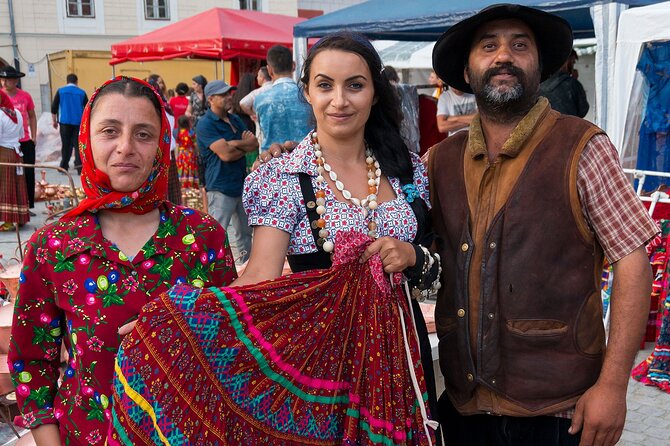
- Small group size (max 15) keeps the conversation focused and helps when questions come up.
- Free entry at every stop means you can concentrate on meaning, not ticket lines.
- A slow, built-in pace: about 1h 20m is walking time inside a ~3-hour experience.
- Roma history in Bucharest landmarks, from a former slave market site to major memorials.
- A craft stop at Mesteshukar ButiQ (MBQ) gives you something tangible: copper work by Roma artisans.
- Clear English guidance makes the story easier to follow, especially for first-timers.
Still deciding? Line this one up against a few Bucharest favourites first.
- Bucharest: Dracula’s Castle, Peles Castle, & Brasov Old Town★ 4.5 · 17,858 reviews
- Bucharest: Dracula Castle, Peles Castle & Brasov Old Town★ 4.6 · 10,891 reviews
- Bucharest: Dracula’s Castle, Peleș Castle & Brașov Day Trip★ 4.4 · 6,100 reviews
- Bucharest: Palace of Parliament Tickets and Guide★ 4.3 · 3,182 reviews
Why This Bucharest Walk Focuses on Roma Slavery
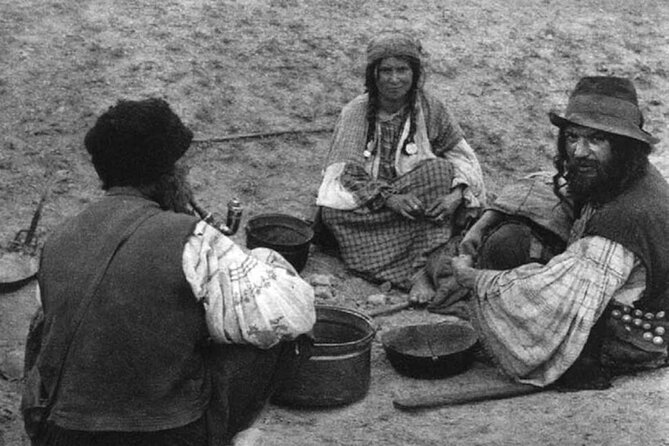
This tour centers on a part of history that many visitors never hear about in a normal walking loop. In Bucharest, you’ll connect the Roma story to specific places in the city—starting with a site connected to an old slaves market. That location alone sets the tone: the goal isn’t shock for its own sake, but understanding.
The strongest value here is context. You’re taught not only what happened, but how it echoes in identity and memory over time. One moment you’re learning about the trade in human lives; the next, you’re seeing how public spaces and public art shape perceptions.
Expect emotional weight. The tour includes remembrance of Holocaust victims in Romania, including Roma lives lost to persecution and genocide. If you know in advance you get overwhelmed easily, bring a slower mindset—pause when you need to, and don’t force yourself to keep the same intensity the whole time.
Meeting at Teatrul Ion Creangă and the 10:00 Start
You meet at Teatrul „Ion Creangă” – Sala Mare, on Strada Piața Amzei 13. The start time is 10:00 am, and the tour runs for about 3 hours.
Logistically, it’s simple in a practical way: it’s near public transportation, and the schedule is built with breathing room. The itinerary lists the rest of the time for walking—about 1 hour and 20 minutes—so you’re not doing a marathon in the heat or cold. With a maximum group size of 15, you also avoid that constant back-and-forth that can happen on large tours.
You should also plan mentally. This isn’t a rush-through “checklist” tour. The city stops are paired with discussion, so come ready to listen—and bring questions.
Platoul Piata Amzei: The Site That Starts the Whole Story
The tour begins at Platoul Piata Amzei. You start learning here at Romana Square, in a place tied to a former slaves market. Even without a long building to tour, the location does a lot of work: it grounds the discussion in real ground, not abstract reading.
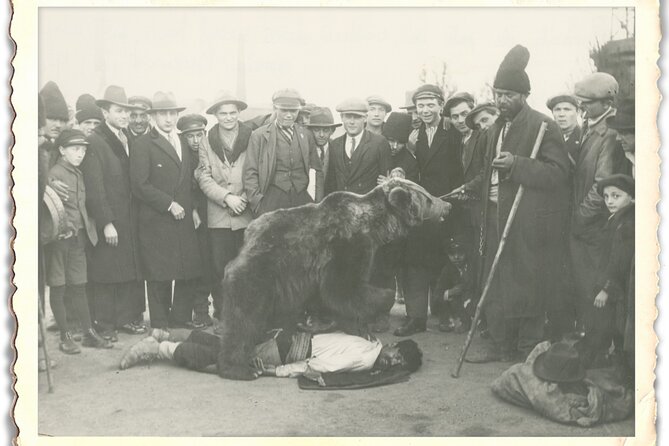
You’ll hear historical context about the trade in human lives and how it still affects Roma identity. The point is to understand that this wasn’t something distant. It shaped lives, families, and how society treated Roma communities.
A small practical note: because this stop is about history tied to slavery, you may want to stand still and take in the explanation before you start snapping photos. Let the guide finish the framing. Otherwise, you’ll end up with pictures that don’t carry the meaning you came for.
Palatul Stirbei to Ateneul Roman: Power, People, and Public Image
Next comes Palatul Stirbei, a palace built in 1835. You’ll learn that the palace and its owner were involved in an important moment in Roma history in Romania. This stop works because it shows how influence and privilege can intersect with human rights abuses—something you can’t always catch from street level unless someone points it out.
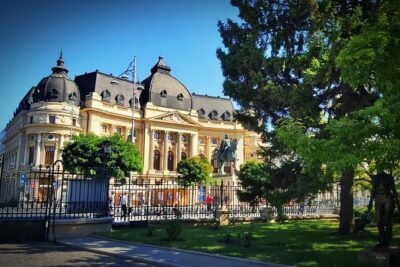
Then the tour shifts to the Ateneul Roman (the Romanian Athenaeum), one of Bucharest’s most recognizable symbols of national pride and cultural heritage. Here, the discussion focuses on the role of the arts in shaping perceptions of the Roma community throughout history.
This pairing is smart. Palatul Stirbei pushes you to think about power, ownership, and consequences. Ateneul Roman pushes you to think about culture—how art and public institutions can either challenge stereotypes or reinforce them. Put together, the two stops help you see the story as more than one tragic page. It’s a pattern.
If you’re the kind of traveler who loves architecture, this section still delivers, but you’ll get more out of it if you keep asking why a place matters—not just what it looks like.

Cismigiu Park: Myths, Truths, and a Softer Pace
After the heavier landmarks, you get a more relaxed setting at Cismigiu Park, Bucharest’s oldest and largest garden. You’ll walk a bit through greenery while learning more truths and myths about the Roma community’s history.
This is where the tour shows balance. The city can feel all stones and severity, but the park adds a human pace—so your brain can absorb what you heard earlier. It also gives the guide room to compare public stories and real experiences, which is often the heart of how myths spread.
The drawback here is simple: if you expected a park that’s also a long sightseeing break, the time is limited. You’re there for context, not to picnic for an hour. Wear comfortable shoes anyway, because even a short walk adds up across the whole 3-hour experience.
Holocaust Memorial and Iuliu Maniu Statue: Remembering What Must Not Be Forgotten
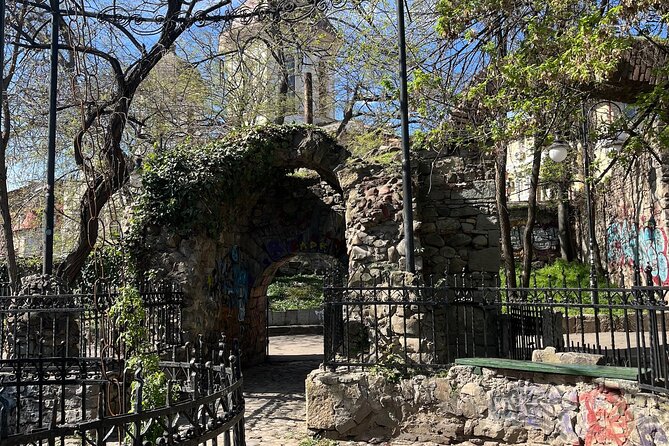
Mid-tour, things turn clearly somber with a visit to the Holocaust Memorial. This stop commemorates victims in Romania, including thousands of Roma lives lost through persecution and genocide. It’s not a quick photo moment. The memorial is part of the learning—an anchor that forces you to connect broader history to a specific community that suffered extreme loss.
Then you move to the Iuliu Maniu Statue. This stop highlights another moment in Roma history, when Roma were still very much called Gypsies. That phrasing matters because names carry power. The tour uses the statue to reflect on language and how society labeled Roma communities over time.
This section is one of the most valuable parts of the tour because it links multiple eras of harm with a changing social lens. You leave with a stronger sense of continuity: persecution wasn’t random or isolated, and the labels used in public life helped shape how people were treated.
Mesteshukar ButiQ: Copper Craft as a Living Ending
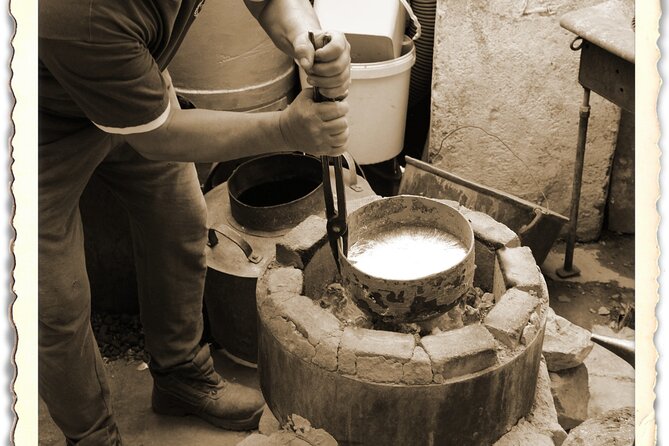
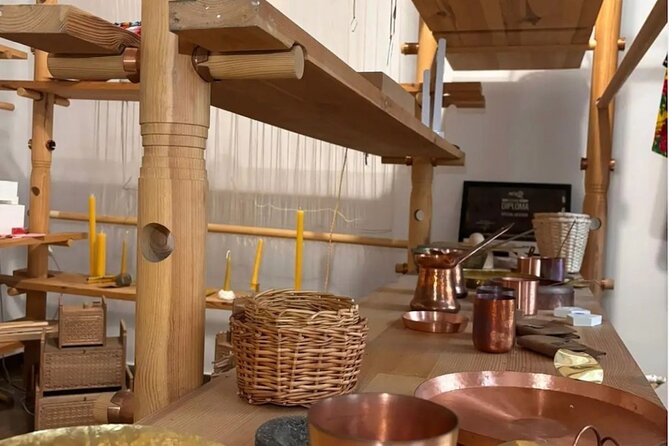
The tour closes at Mesteshukar ButiQ (MBQ), a small shop with products made by Roma craftsmen. The focus is on copper work, and you’ll get a chance to witness that craft tradition firsthand.
I love this ending because it avoids the common problem of history tours that stop at tragedy. Here you see what survival and culture look like now: practical skill, design, and a trade passed down through generations. You can also buy if you want a meaningful souvenir that isn’t mass-produced.
A practical tip: this shop is part of the experience, so expect it to be more about conversation and demonstration than a quick stop. If you’re shopping, have a careful eye on what you’re buying and how it’s made, since the whole point is craftsmanship, not just branding.
Price and Value: What $30.04 Buys You
At $30.04 per person, this tour is priced for real discussion, not just a walking route. The best value piece is that admission at the stops is free, so your money goes straight to guide time and the story you’re paying for.
You also get a manageable duration. About 3 hours total, with only about 1 hour and 20 minutes walking, is a good balance for most people who can handle city streets. The group cap of 15 is another value point because it supports questions and a slower pace when needed.
The only time the price feels less “worth it” is if you strongly prefer entertainment over learning—because this tour is meant to teach, not dazzle. If you want to understand how Roma history connects to places in Bucharest, you’ll likely feel the cost is fair.
Who Should Book This Tour (and Who Might Skip It)
Book this if you want a meaningful, city-based history experience that uses Bucharest landmarks to explain Roma slavery, persecution, and identity changes over time. It’s also a strong pick if you like a guide who will answer questions clearly in English—Mihai is one example of that kind of helpful approach.
It’s especially worth it if you’re the type of traveler who doesn’t just want to see the obvious sights. You’ll get less of the standard postcard route and more of the story behind the sidewalks.
Skip it if you know you’re uncomfortable with heavy topics and memorial settings. This isn’t optional once you arrive at the Holocaust Memorial and the slavery-related location. You’ll still be guided with respect, but the subject matter is inherently serious.
Should You Book The Real Story of Gypsies – Slavery in Romania?
Yes, I’d book it if you’re visiting Bucharest for more than photos and you want to understand Roma history with specific local stops. The small group size, free entries at every stop, and the way the tour moves from slavery-related context to memorial remembrance, then ends with Roma copper craft, create a full arc that feels thoughtful rather than one-note.
If you’re sensitive to difficult history, plan your day around it. Take it early, so you have time to process after. And go in with one simple expectation: you’re learning. That mindset will help you get the most out of every stop.
FAQ
How long is the tour?
The tour lasts about 3 hours.
What does it cost?
The price is $30.04 per person.
Where do I meet and where does it end?
You meet at Teatrul „Ion Creangă” – Sala Mare, Strada Piața Amzei 13, 030167 București, Romania. The tour ends at Mesteshukar ButiQ [MBQ], Bulevardul Mihail Kogălniceanu 12, București 030167.
What time does the tour start?
The start time is 10:00 am.
Is the tour in English?
Yes, it is offered in English.
How large is the group?
The maximum group size is 15 travelers.
Are there tickets or admission fees for the stops?
The stops listed in the tour have admission ticket marked as free, and you’ll receive a mobile ticket.
Is the tour near public transportation?
Yes, it is near public transportation.
Is it suitable for most people?
Most travelers can participate.
More Tour Reviews in Bucharest
- Bucharest: Dracula’s Castle, Peles Castle, & Brasov Old Town
★ 4.5 · 17,858 reviews - Bucharest: Dracula Castle, Peles Castle & Brasov Old Town
★ 4.6 · 10,891 reviews - Bucharest: Dracula’s Castle, Peleș Castle & Brașov Day Trip
★ 4.4 · 6,100 reviews - Bucharest: Palace of Parliament Tickets and Guide
★ 4.3 · 3,182 reviews - Bucharest: Day Trip to Dracula Castle, Peles Castle & Brașov
★ 4.4 · 3,049 reviews - Bucharest to Dracula Castle, Peles Castle and Brasov Guided Tour
★ 4.5 · 2,933 reviews