REVIEW · BUCHAREST
Slavery in Romania Myths and Truths About Gypsies
Three hours, one hard subject, and real sites.
This Bucharest walking tour uses famous buildings and public spaces to tackle myths and truths about Roma history, including what happened during World War II. You’ll move through places tied to Romanian culture, politics, and education, then end at Mesteshukar ButiQ (MBQ), a shop known for hand-crafted pieces by Roma makers. Roma history here is treated as something to understand in context, not as a distant topic.
I like the route because it connects ideas to specific addresses: the Romanian Athenaeum, Cismigiu Park, and the Holocaust Memorial are all major city anchors. I also like the practical format: a professional English-speaking guide keeps things moving for about three hours, with the time between stops used for walking.
One possible drawback: it’s a compact walk with a moderate physical fitness requirement, so expect steady strolling and standing during short stops—bring comfy shoes and don’t count on sitting for long.
In This Review
- Key highlights you should know before you go
- A Bucharest walking tour that tackles myths and Roma history with specific stops
- Teatrul „Ion Creangă” start to Romanian Athenaeum: art first, then the story
- Iuliu Maniu statue: politics, modern Romania, and Roma-linked context
- Palatul Stirbei: stepping into the 19th century
- Cismigiu Parc walk: a relaxed park route with real teaching moments
- Gheorghe Lazăr National College: education as a key theme
- Holocaust Memorial: remembering Roma victims during World War II
- Piața Mihail Kogălniceanu: a named writer linked to early accounts about Roma
- Mesteshukar ButiQ (MBQ): crafts, culture, and a meaningful end point
- What comes with the tour: guide, snacks, and the walk-time buffer
- Price and value: what $127.37 is really buying
- Who this Bucharest Roma history tour suits best
- A quick planning checklist for your day
- Should you book this walking tour?
- FAQ
- How long is the tour?
- What is the price per person?
- Where does the tour start and end?
- What time does the tour begin?
- What language is the tour offered in?
- What’s included in the tour price?
- Is coffee or tea included?
- Are admissions included for the stops?
- What group size should I expect?
- Is free cancellation available?
Key highlights you should know before you go
- A story-led route through major Bucharest landmarks tied to Roma history and broader Romanian context
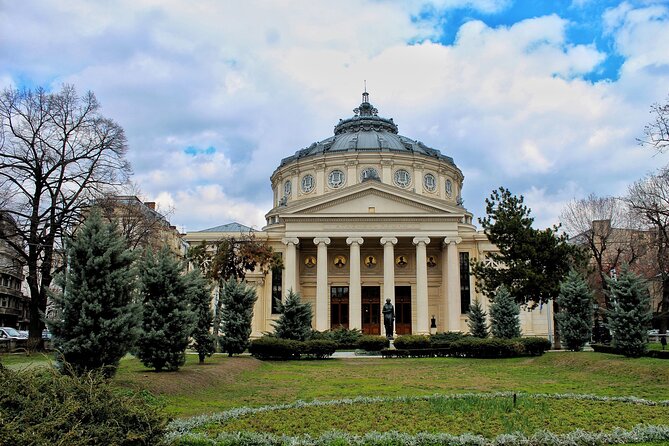
- Romanian Athenaeum as a cultural starting point, with the National Romanian Philharmonic inside
- Cismigiu Park stops that include a viewpoint moment and the area’s notable school near the park entrance
- Holocaust Memorial dedicated to Roma victims, with the tour framing it as The Forgotten Holocaust
- Piața Mihail Kogălniceanu as a key stop because Kogălniceanu is described as writing the first about Romanian Gypsies
- Mesteshukar ButiQ (MBQ) shop visit, featuring hand-crafted items made by Roma craftsmen
Still deciding? Line this one up against a few Bucharest favourites first.
- Bucharest: Dracula’s Castle, Peles Castle, & Brasov Old Town★ 4.5 · 17,858 reviews
- Bucharest: Dracula Castle, Peles Castle & Brasov Old Town★ 4.6 · 10,891 reviews
- Bucharest: Dracula’s Castle, Peleș Castle & Brașov Day Trip★ 4.4 · 6,100 reviews
- Bucharest: Palace of Parliament Tickets and Guide★ 4.3 · 3,182 reviews
A Bucharest walking tour that tackles myths and Roma history with specific stops
If you want a Bucharest tour that doesn’t float above the street, this one uses the city as your textbook. The theme is slavery myths and truths about Roma, and it’s handled through named people, real addresses, and visible landmarks you can point to after the walk.
I also like that the tour’s structure keeps the learning readable. You get short segments—around 10 to 30 minutes—so you’re not stuck in one lecture for three hours. You’re out in the city, moving between stops, with the guide tying each place back to the story you’re learning.
One note: some parts are emotionally heavy. The Holocaust Memorial stop is built around the Roma experience during World War II and is framed as a “forgotten” part of that tragedy in Romania. If you’re sensitive to memorial sites, it helps to mentally prepare for that tone before you meet at Teatrul „Ion Creangă”.
Teatrul „Ion Creangă” start to Romanian Athenaeum: art first, then the story
The tour starts at Teatrul „Ion Creangă” (Sala Mare) on Strada Piața Amzei 13, Buchurești, and you begin at 10:00 am. From there, you head to the Romanian Athenaeum, and it’s a smart opening.
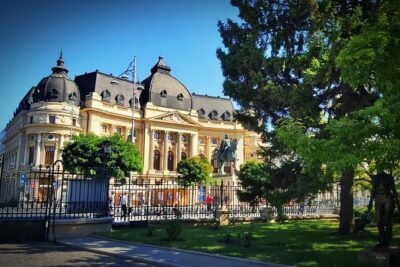
Stop 1 is The Romanian Athenaeum, described as Romania’s House of Art and home to the National Romanian Philarmonic. Even if you only see the building from the outside during your brief stop, it sets an important mood: this tour isn’t only about suffering. It’s also about how Romanian public life, arts, and institutions connect to the wider stories the guide will explain.
The practical bonus: the tour notes admission ticket free for the time at the Athenaeum. That means you’re not scrambling with extra entry fees while you’re trying to follow a careful narrative.
Iuliu Maniu statue: politics, modern Romania, and Roma-linked context
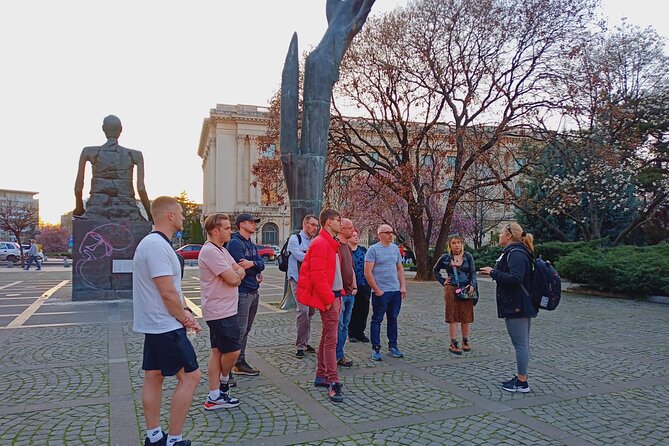
Next you meet the Iuliu Maniu Statue. The guide uses this stop to place Iuliu Maniu in the political life of Romania, with a connection not only to Roma-related storylines but also to the development of modern Romania.
This is the kind of stop that helps you zoom out. Instead of treating Roma history as something isolated, the tour places it alongside Romanian political development. It also gives you a name you can carry forward when you’re researching after your walk.
Expect a short, focused stop—about 20 minutes—with a lot of explanation packed into that time. If you tend to like quick but dense facts, this works well. If you prefer very long museum pacing, you may find the pacing brisk.
Palatul Stirbei: stepping into the 19th century
Stop 3 is Palatul Stirbei, a short ride (mostly on foot overall) into the 19th century. The tour frames it as the house of Barbu Stirbey, described as an important person in the story you’re hearing.
This stop is useful because it puts you in a time period. Big-picture tours often skip that detail. Here, the guide uses the building to anchor the narrative to when Romanian society looked very different than it does today.
Again, admission is noted as ticket free for the time on site. That helps the tour stay focused on what the guide is explaining rather than spending your attention on logistics.

Cismigiu Parc walk: a relaxed park route with real teaching moments
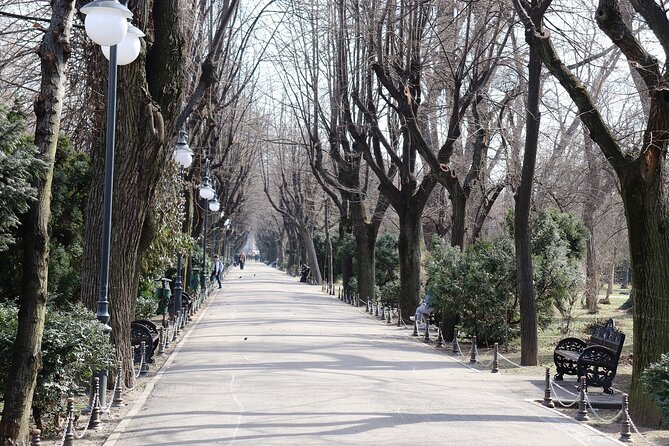
Then the tour shifts gears to one of Bucharest’s classic stroll areas: Cismigiu Parc. The walk here is described as relaxed and connected to the story, with several mini-stops along the way.
You’ll hear about a very famous high school, ruins of an old monastery, and even get a viewpoint over the park. There’s also time built in for surprises along the route—so don’t plan on rushing. The guide uses the park’s layout as a way to keep the story moving while your legs do their part.
Cismigiu Parc is also one of those places where you’ll remember details later because it feels “alive.” Even in a short stop, you can notice how Bucharest’s public spaces shape daily life—and that matters for the tour’s bigger theme about institutions and visibility.
Gheorghe Lazăr National College: education as a key theme
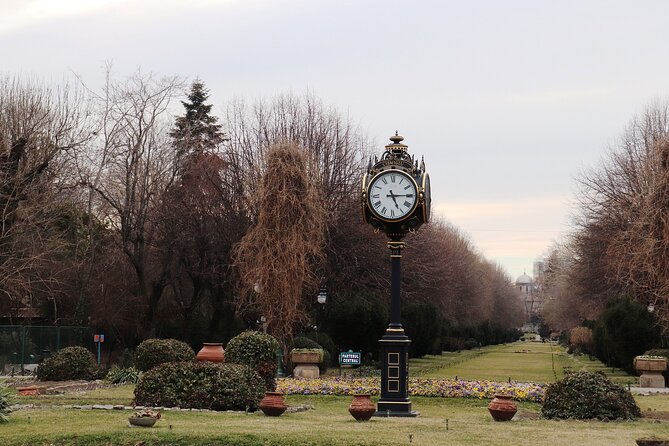
Right at the entrance of the park, the tour adds Gheorghe Lazăr National College. Education is described as the key to everything, and this stop is meant to underline that message.
You’re told Lazar is the best quoted highschool in the city, and the quick stop serves as a reminder that learning and public institutions are part of the larger social story—not separate from it.
This is the kind of stop that feels small on a map but matters in context. When the guide ties education to the Roma narrative, it changes how you think about opportunity and access in a city’s history.
Holocaust Memorial: remembering Roma victims during World War II
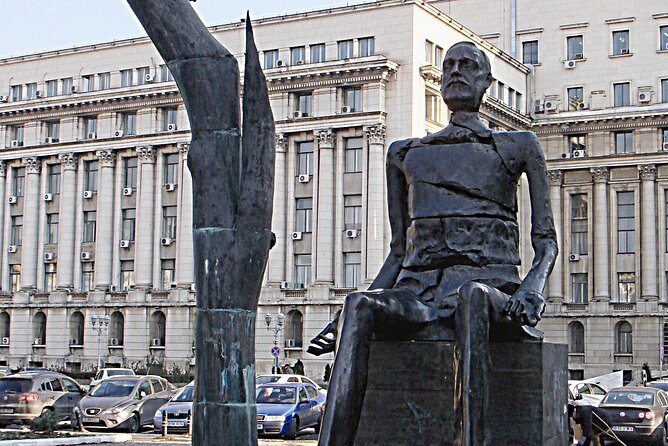
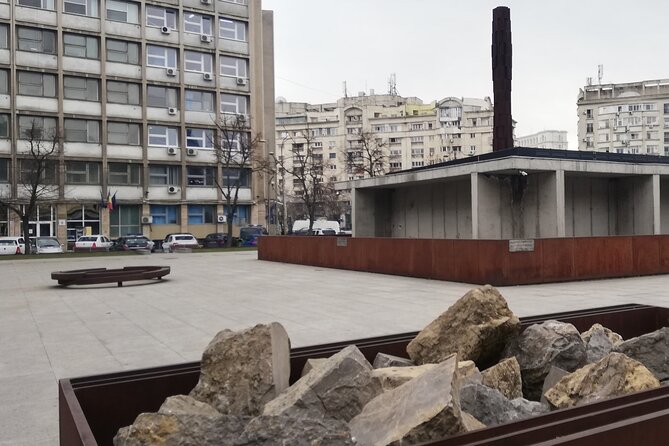
Stop 6 is one of the most important moments on the route: the Holocaust Memorial. Here the tour focuses on the rough story of Roma during World War II and refers to what’s known as The Forgotten Holocaust.
The monument is described as the most impressive monument built in memory of the victims of Holocaust in Romania. Whether or not you’ve seen other Holocaust memorials in Europe, this one carries weight because it’s pointed directly at Roma victims—an angle that’s easy to miss in mainstream history tours.
I recommend you take the stop slowly. Don’t treat it like a quick photo moment. Even within the short 15-minute window, the guide’s framing helps you notice what the memorial is doing: it is forcing remembrance into the public landscape.
Piața Mihail Kogălniceanu: a named writer linked to early accounts about Roma
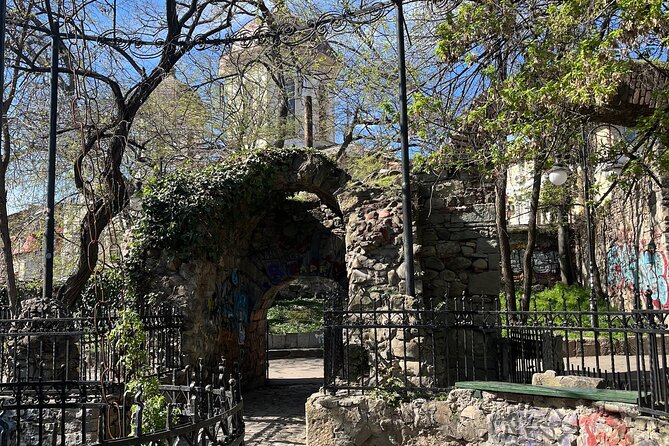
Stop 7 is Piața Mihail Kogălniceanu, a public square connected to Mihail Kogălniceanu, described here as one of the most famous politicians and writers in Romanian history.
The tour specifically highlights that Kogălniceanu is the first one to write about Romanian Gypsies. That gives this stop a different flavor than the memorial. Instead of remembrance through a monument, you get history through writing—how ideas were recorded and spread.
Because this is only a 10-minute stop, you’ll likely get the key points in a tight bundle. If you’re interested in reading more after the tour, jot down the name Kogălniceanu right away so you can search later.
Mesteshukar ButiQ (MBQ): crafts, culture, and a meaningful end point
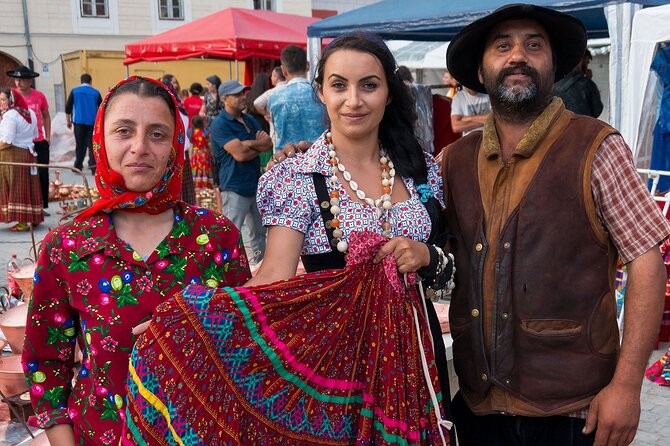
The tour ends at Mesteshukar ButiQ [MBQ], a small shop described as featuring authentic pieces hand-crafted by authentic Roma. This final stop is about culture and craft—showing tangible skills rather than only stories and dates.
It’s a smart ending because it balances the heavier parts of the tour. You get a place where you can actually see what craftsmanship looks like, ask questions, and (if you want) buy a piece that supports Roma artisanship.
This is also where the tour becomes personal in a good way. You’re leaving with something visual and physical, not just notes in your phone. For some people, that’s the easiest memory anchor after three hours of history.
If you want a practical tip: take your time here. The shop time is about 20 minutes, and it feels longer because you’re browsing instead of listening.
What comes with the tour: guide, snacks, and the walk-time buffer
Included in the experience are a professional English-speaking guide and a cake snack. Coffee and tea aren’t included, though the tour notes a short stop on the way where you can cover your own costs.
The duration is about 3 hours, and the tour uses the remaining time for walking between stops. That’s important because it tells you what the “work” of the tour is: you’ll be on your feet moving through Bucharest’s central areas. It’s manageable for most people, but the listing asks for a moderate physical fitness level.
Group size caps at a maximum of 15 people, which helps keep questions possible and keeps the pace from turning chaotic. You also get a mobile ticket and group discounts, which is a good sign for value if you’re traveling with friends.
Price and value: what $127.37 is really buying
At $127.37 per person for roughly three hours, this isn’t a free street-walk. But the value comes from a few factors that matter.
First, you’re paying for a guide who can explain a difficult topic across multiple places—art, politics, education, and memorial space—without losing the thread. That’s not something you get from just following a map.
Second, the stops are presented with admission tickets free at each scheduled highlight. That means the ticket price isn’t loaded with museum fees that could inflate your total day costs.
Third, the end stop at Mesteshukar ButiQ gives you an on-the-ground cultural connection. Even if you don’t buy anything, you’re still seeing the kind of craft the guide wants you to understand.
If you’re choosing between a general Bucharest overview and a targeted history walk, this one makes sense when you specifically want Roma history and the theme of myths and truths, rather than a broad highlights tour.
Who this Bucharest Roma history tour suits best
This is a great fit if you:
- Want a structured walking experience with multiple named stops instead of one museum
- Care about Roma history in Romania, including the World War II focus at the Holocaust Memorial
- Prefer small-group pacing (up to 15) with a guide who can keep the story clear in English
- Like ending with a culture stop you can browse and ask about
I’d treat it as a no-go if you:
- Need a fully seated experience for most of the tour (there are frequent standing periods and walking)
- Get overwhelmed by memorial settings and need a lighter theme
A quick planning checklist for your day
Plan for comfy walking shoes and bring water if the weather is warm. Wear layers if you’re going in shoulder season, because park time in Cismigiu can shift from cool to warm quickly.
If you like photos, you can take them, but keep the memorial stop respectful. The point of that stop isn’t speed—it’s attention. For the shop at the end, check whether you’ll want a card or cash so you’re not rushed at the last minute.
Also, this tour starts at 10:00 am and ends at Mesteshukar ButiQ at Bulevardul Mihail Kogălniceanu 12, București. If you’re chaining plans afterward, set yourself a little buffer to browse or step into a café for tea on your own.
Should you book this walking tour?
Book it if you want a Bucharest route that connects art and institutions to Roma history, including the guided visit to the Holocaust Memorial. The pacing works well for a short, focused day, and the ending at Mesteshukar ButiQ is a practical way to see craft culture in real life.
Skip it only if you can’t handle a serious historical memorial segment or if you don’t want a mostly on-your-feet experience.
FAQ
How long is the tour?
The tour is about 3 hours.
What is the price per person?
The price is $127.37 per person.
Where does the tour start and end?
It starts at Teatrul „Ion Creangă” – Sala Mare, Strada Piața Amzei 13, București, and ends at Mesteshukar ButiQ [MBQ], Bulevardul Mihail Kogălniceanu 12, București.
What time does the tour begin?
The start time is 10:00 am.
What language is the tour offered in?
The tour is offered in English.
What’s included in the tour price?
Included are a professional English-speaking guide and a cake snack.
Is coffee or tea included?
No. Coffee and/or tea are not included, and there is a short stop on the way where that expense would be on you.
Are admissions included for the stops?
The tour lists admission ticket free for each of the main stops.
What group size should I expect?
The maximum group size is 15 participants.
Is free cancellation available?
Yes, you can cancel for a full refund up to 24 hours in advance of the experience start time.
More Tour Reviews in Bucharest
- Bucharest: Dracula’s Castle, Peles Castle, & Brasov Old Town
★ 4.5 · 17,858 reviews - Bucharest: Dracula Castle, Peles Castle & Brasov Old Town
★ 4.6 · 10,891 reviews - Bucharest: Dracula’s Castle, Peleș Castle & Brașov Day Trip
★ 4.4 · 6,100 reviews - Bucharest: Palace of Parliament Tickets and Guide
★ 4.3 · 3,182 reviews - Bucharest: Day Trip to Dracula Castle, Peles Castle & Brașov
★ 4.4 · 3,049 reviews - Bucharest to Dracula Castle, Peles Castle and Brasov Guided Tour
★ 4.5 · 2,933 reviews