
REVIEW · BUCHAREST VINTAGE CAR & DRIVING TOURS
Private: RedPatrol Bucharest Contrasts Tour in a Vintage Car
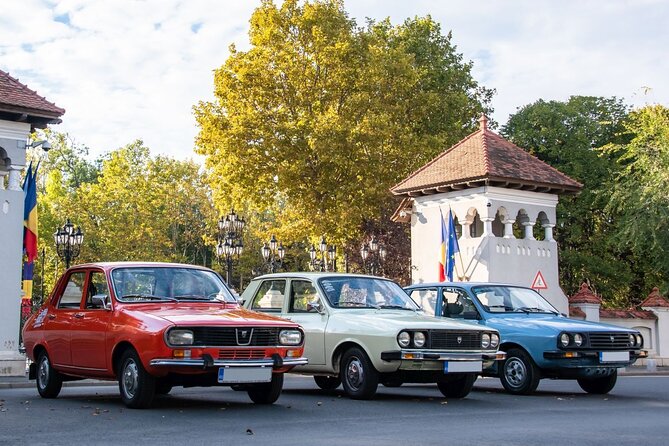
Bucharest changes fast, one neighborhood at a time. This private RedPatrol contrasts tour lets you see the city’s big political shifts through real streets, not postcards, all from a restored Dacia with hotel pickup and drop-off. I like how it pairs quick stops with human stories, so the contrasts make sense instead of feeling random.
I also love the way the route builds momentum: you start near places tied to royal-era Romania, then move into working-class communist-era blocks, and end up in areas shaped by industrial collapse and Soviet influence. You might even hear vivid local framing from guides such as Ivan Crinu, and you may ride with drivers like Mihai, both noted for keeping the ride friendly and clear. One thing to weigh: some sights require extra entrance tickets, and the car is a classic without modern comfort features like AC—though winter cars are heated.
In This Review
- Key things I think you’ll enjoy
- Why Bucharest makes more sense from a vintage Dacia
- The 3–4 hour format (and why it works)
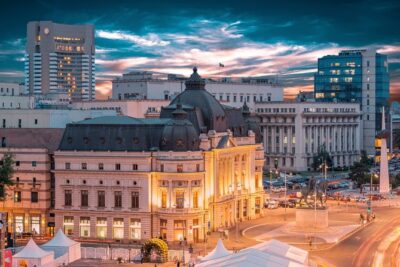
- Royal Bucharest: Academia Română and the Uranus area
- Fântână: a bourgeois neighborhood that grew from royal origins
- Cotroceni Palace’s gardens: the belle époque vibe in Modern Monarchy times
- A quick contrast tip
- Drumul Taberei: communist blocks, working-class life, and a mall on ruins
- Ferentari and Rahova: the City Machala side of Bucharest
- Fosta Uzină Rocar: the socialist factory ruins left behind
- Broscuțe Park and the Colonel’s Quarter: life in a Stalinist era neighborhood
- Palace of Parliament: the world’s biggest civil building, rebuilt after demolition
- What’s included vs. what you may pay extra
- Who this tour fits best (and who might want something else)
- Should you book RedPatrol’s Bucharest of Contrasts Tour?
- FAQ
- How long is the RedPatrol Bucharest Contrasts Tour?
- Is hotel pickup and drop-off included?
- Is this a private tour?
- Will I drive the Dacia car?
- What language is the tour offered in?
- Are entrance tickets included for all stops?
Key things I think you’ll enjoy
- Private group only: your group is the only one in the car.
- Restored Dacia ride: you won’t drive, but you’ll get the experience plus safety-minded handling.
- Sharp socio-economic contrasts: royal Bucharest to communist blocks to Ferentari.
- Photo-friendly stops: short timed windows designed for quick look-and-learn moments.
- Tickets are mixed: some entrances are included, others aren’t.
- Winter comfort: cars are heated during the colder season.
Only your group, at your own speed
- Castles of Transylvania: Private Day Trip from Bucharest★ 4.5 · 248 reviews
- Dracula’s Castle, Peles Castle and Brasov – Private Day Trip from Bucharest★ 5.0 · 211 reviews
- Best of Bucharest | Private Walking Tour★ 5.0 · 199 reviews
- Bucharest Panoramic Sightseeing – Private City Tour★ 5.0 · 128 reviews
Why Bucharest makes more sense from a vintage Dacia
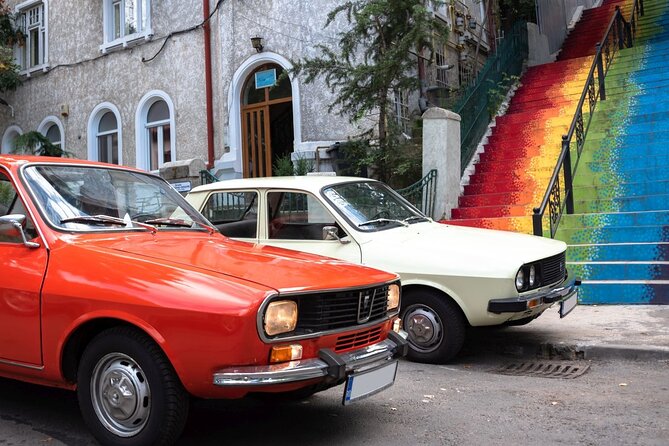
This tour’s core idea is simple: Bucharest’s history isn’t just in museums. It’s in how neighborhoods were planned, demolished, rebuilt, and repurposed. Riding in a vintage Dacia makes that feel more immediate. It’s slow enough to notice details, and it gives the whole experience a “time travel” vibe without turning into a theme park.
You’ll get professional local guidance while the driver handles the circuit around the city. In a city like Bucharest—where the differences between districts can feel almost theatrical—having someone connect the dots saves you from playing guessing games with architecture and street names. And because it’s private, the guide can pace the story to your interests, whether you care more about politics, daily life, or the visible traces of the past.
One practical note: this is a classic Dacia 1300/1310. It doesn’t come with modern comfort tech like AC, ABS, GPS navigation, or power steering, and it’s not automatic. That’s part of the charm. It’s also why you should dress like you’re riding in a machine from the 70s or 80s, because weather will matter.
The 3–4 hour format (and why it works)
The timing is built for a tight, concentrated “see and understand” run. Expect about 3 to 4 hours total with hotel pickup and drop-off across Bucharest. That time window is long enough to feel the day’s arc—palaces to blocks to industrial ruins—but short enough that you’re not exhausted after one neighborhood.
Each stop is timed in a way that encourages quick observation and short explanations—think 15 to 30 minutes at most points. So you’ll want to be ready with:
- comfortable shoes for brief walks
- your camera charged
- a quick decision on whether you want to linger at a church, façade, or viewpoint
The tour is offered in English, and confirmation is received at booking. There’s also a mobile ticket, which is handy for keeping everything in one place.
Royal Bucharest: Academia Română and the Uranus area
The first stop sets a tense tone. You’ll visit Academia Română and the Uranus area, tied to the kind of demolition work that Ceaușescu started in the 1980s—then stopped after the Romanian Revolution. The key value here isn’t just the building itself. It’s the story about how political power reshaped space, and how abruptly that control ended.
This also works well as a “before and after” anchor for the rest of the day. Once you understand that the city was actively being reorganized by force, the later communist and post-communist scars feel less like random ugliness and more like a pattern.
This stop runs about 20 minutes, and the admission ticket is not included, so you may need to budget a bit if the site draws you in.
Fântână: a bourgeois neighborhood that grew from royal origins
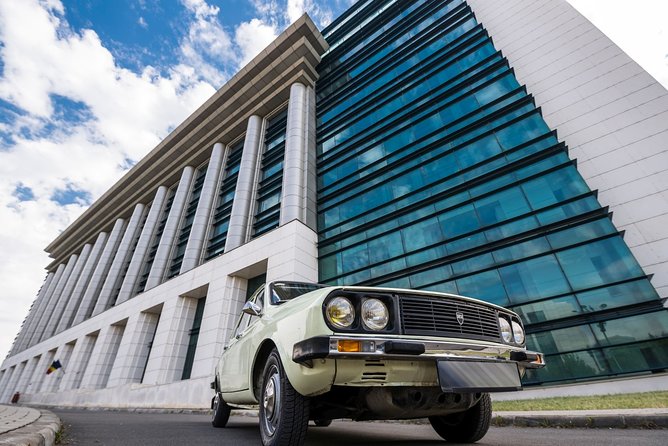
Next comes Fântână, described as a bourgeoisie neighborhood that started in the 19th century from the first Royal Palace of Romania. This is an easier stop—about 15 minutes—and it helps you see the city when it was growing through wealth and status, not through party planning or industrial rebuilding.
I like that this isn’t just architecture talk. It gives you context for why some streets and districts feel orderly and polished compared with what comes later. It’s also where you’ll start noticing how Bucharest’s social layers show up in property styles and street character.
Here, the admission is free, which makes it low-stress. You can spend your energy on listening and looking instead of wondering what costs extra.
The city from a vintage Dacia or a Ferrari




Cotroceni Palace’s gardens: the belle époque vibe in Modern Monarchy times
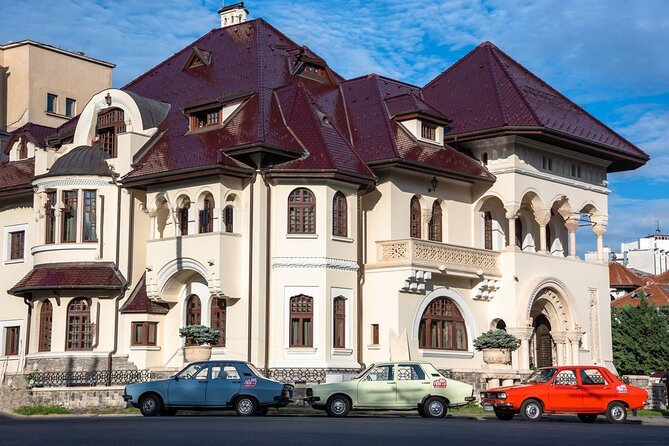
The route then moves into Cotroceni Palace’s gardens, tied to the first Royal Palace of Romania and the Modern Monarchy era. Expect a 30-minute stop with a brief presentation of belle époque Bucharest.
This is where the tour gets visually pleasant. Even before the communist-era blocks roll in, you’re given a sense of how Bucharest once projected elegance and civic identity. Gardens also change the pace—you get a more “pause and absorb” moment—so it’s a good transition from street-level stories to bigger ideas about how governments wanted the city to look.
Admission here is not included, so if you’re the type who wants to go inside or spend extra time, plan for that cost.
A quick contrast tip
As the day moves from palace-era to later districts, keep comparing three things:
1) how grand buildings are sited
2) how public space is used
3) who the city seems designed for
That’s the contrast logic the tour is built around.
Drumul Taberei: communist blocks, working-class life, and a mall on ruins
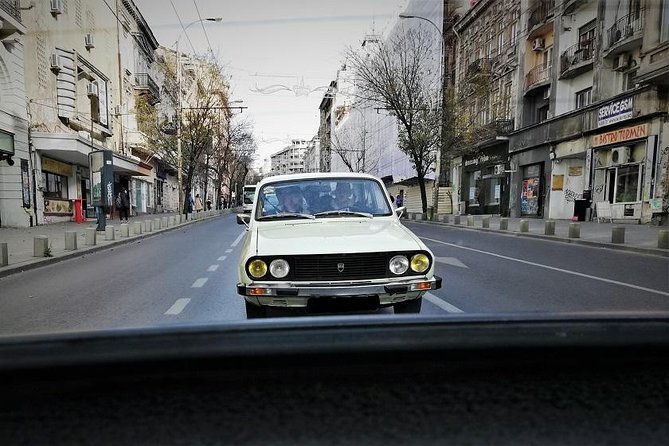
Parcul Drumul Taberei is one of the most interesting points because it mixes ideology with everyday practicality. You’ll get a presentation of working-class communist apartment blocks, plus a story about how a shopping mall was built on the ruins of a communist canteen.
This is the kind of detail that makes history feel current. It’s not only about what used to exist—it’s about what was erased, and what replaced it. A city can keep moving forward while still carrying layers of what came before.
The stop is about 20 minutes for photos and stories. Admission is listed as not included. Since it’s a photo-focused stop, I’d come prepared to take pictures quickly rather than expecting long viewing time.
Ferentari and Rahova: the City Machala side of Bucharest
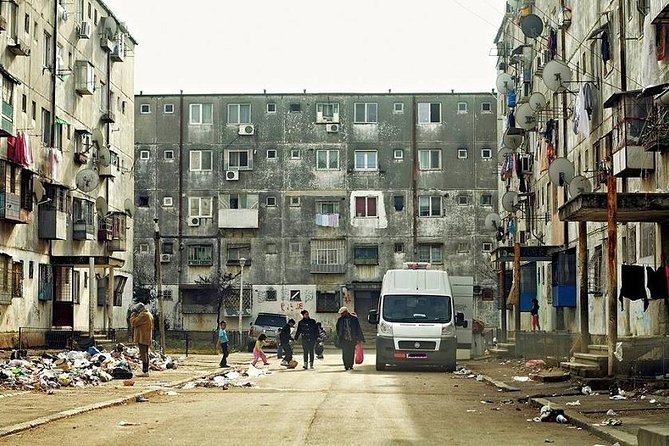
Then the tour enters the area people describe as one of Bucharest’s most contrasting districts. Ferentari is portrayed as a fallen industrial zone built by communists in the 1970s, later transforming after the socialist period into something harsher—often described as a city ghetto, with high poverty and visible economic struggle.
The day includes an exploration around Piața Rahova and Ferentari blocks of flats. This part is about 30 minutes, and it includes a visit to a peasant market. That market element matters: you’ll see daily life in motion, not just the exterior of buildings.
Admission is not included for this stop, so your main focus should be on behavior and observation. If you photograph, do it respectfully. If you’re unsure, wait for the guide’s lead. These areas are real neighborhoods with real people—not a set.
Why I like this section: the tour doesn’t treat hardship as an aesthetic. It ties it to post-socialist shifts—workers’ areas becoming something else as economies changed. You start understanding that “contrast” is not only visual; it’s structural.
Fosta Uzină Rocar: the socialist factory ruins left behind
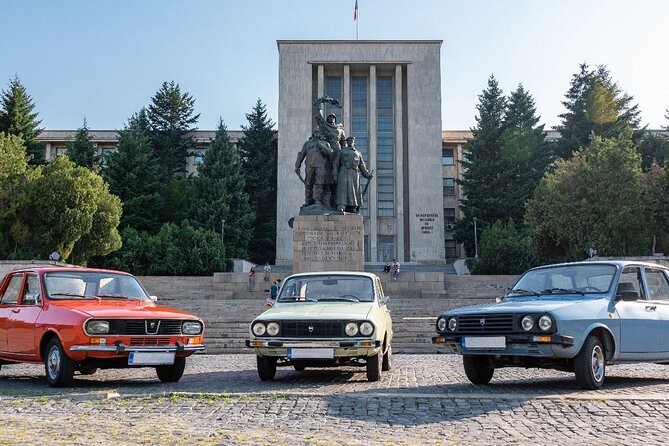
After the market district, you’ll step into the remains of socialist industry at Fosta Uzină Rocar. This stop is about 20 minutes and the tour notes admission included.
Factory ruins can be emotionally heavy, but they’re also one of the clearest ways to understand how a city reorganizes when industry collapses. This is where the “built by communists, abandoned after the factories fell” theme becomes concrete. You can almost see time layers at once: the original purpose, the later abandonment, and the ways surrounding life adapts around the empty shell.
This is a good stop for anyone who likes turning buildings into evidence. Look at what’s missing. Look at what still holds its shape. And listen to the stories about how the neighborhood rose and fell.
Broscuțe Park and the Colonel’s Quarter: life in a Stalinist era neighborhood
Next is Broscuțe Park, tied to the Colonel’s Quarter, the early Soviet occupation-era neighborhood. Expect a 20-minute presentation about life in Stalinist days in Bucharest, with admission included for this stop.
This is the part of the tour that helps you connect the dots from earlier communist planning to Soviet-era realities. Even when you’re not studying politics directly, the city can teach it. Housing patterns, the feel of streets, and the organization of neighborhoods all become part of the story.
If you like learning by atmosphere, this stop works well because it’s short but focused: a guided explanation plus a quick sense of place.
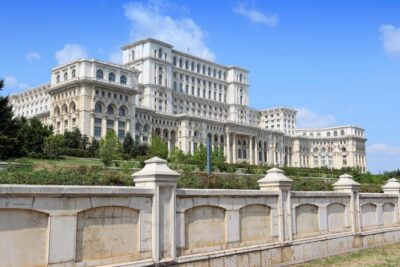
Palace of Parliament: the world’s biggest civil building, rebuilt after demolition
The final major anchor is the Palace of Parliament. The tour frames it as the biggest civil building from the world, set in a neighborhood of 20 square kilometers that was completely rebuilt after a complete demolition.
This is a stop where the guide’s storytelling matters. The point isn’t only scale. It’s what the scale meant—how power signaled itself through construction, and how the city’s physical fabric was remade to fit that message.
You’ll have around 20 minutes at this stop, and admission is not included. If you want to go inside and not just take exterior photos, you’ll need to plan for that additional cost.
What’s included vs. what you may pay extra
This tour is priced at $126.43 per person for a private car-based circuit with hotel pickup and drop-off around Bucharest. For many people, the value is that you get a guide + driver + transport + water, without needing to coordinate multiple sights on your own.
Included in the experience:
- hotel pickup and drop-off
- a professional local guide & driver in your car
- transport through the guided circuit
- water in the car
- a tour personalized gift
- heated cars during wintertime
What is explicitly not included:
- food and drinks beyond what’s offered in the car
- personal shopping
- admissions for some stops (listed as not included in the stop details)
Admissions may be required at:
- Academia Română (not included)
- Cotroceni Palace’s Gardens (not included)
- Drumul Taberei area (not included)
- Piața Rahova / Ferentari market area (not included)
- Palace of Parliament (not included)
Admissions are included at:
- Fosta Uzină Rocar
- Broscuțe Park
Because tickets are mixed, I’d treat this tour as a guided “see the story” experience first, and decide on entrances as you go based on what interests you most.
Who this tour fits best (and who might want something else)
This is a strong fit if you want:
- real neighborhood contrasts, not just monuments
- a guided explanation that connects politics to streets
- photo stops and short walks in multiple districts
- a unique transport experience via a restored classic car
It may be less ideal if:
- you strongly need modern comfort features like AC (classic car; heated only in winter)
- you prefer longer museum-style visits
- you get uncomfortable in places that show poverty and post-industrial decay (even though the tour keeps it respectful and story-based)
Also, RedPatrol notes cars are safe and meet traffic rules, but you should expect the feel of a vintage vehicle. And the operator does not allow pets or children under 10.
Should you book RedPatrol’s Bucharest of Contrasts Tour?
I’d book it if you’re trying to understand Bucharest in one concentrated sweep. The route is built to show how the city’s identity changed across monarch-era elegance, communist-era planning, Soviet occupation-era housing, and the post-socialist reality of industry left to crumble and neighborhoods transformed.
I’d hesitate only if you hate classic-car comfort limits or you’re hoping every stop is fully inside-and-outside ticketed without extra costs. Since several key sights list admissions as not included, you’ll get the best experience if you’re okay treating entrances as optional.
If you’re curious about how Bucharest got from palace gardens to apartment blocks to the Palace of Parliament scale game, this tour does that job fast—humor included, but the lessons land.
FAQ
How long is the RedPatrol Bucharest Contrasts Tour?
It runs about 3 to 4 hours.
Is hotel pickup and drop-off included?
Yes. Pickup and drop-off are included from addresses across Bucharest.
Is this a private tour?
Yes. It’s private, so only your group participates.
Will I drive the Dacia car?
No. You won’t drive the Dacia. A professional local guide and driver will take care of the driving.
What language is the tour offered in?
The tour is offered in English.
Are entrance tickets included for all stops?
No. Admissions are not included for some stops (like Academia Română, Cotroceni Palace’s Gardens, Drumul Taberei, Piața Rahova, and the Palace of Parliament). Admissions are included for Fosta Uzină Rocar and Broscuțe Park.
More Tour Reviews in Bucharest
- Bucharest: Dracula’s Castle, Peles Castle, & Brasov Old Town
★ 4.5 · 17,858 reviews - Bucharest: Dracula Castle, Peles Castle & Brasov Old Town
★ 4.6 · 10,891 reviews - Bucharest: Dracula’s Castle, Peleș Castle & Brașov Day Trip
★ 4.4 · 6,100 reviews - Bucharest: Palace of Parliament Tickets and Guide
★ 4.3 · 3,182 reviews - Bucharest: Day Trip to Dracula Castle, Peles Castle & Brașov
★ 4.4 · 3,049 reviews - Bucharest to Dracula Castle, Peles Castle and Brasov Guided Tour
★ 4.5 · 2,933 reviews
Bucharest from the Driver's Seat
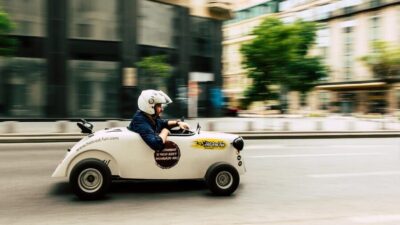
- Bucharest: CityTour in one of a kind mini hot rod
★ 5.0 · 165 reviews - Bucharest: City Tour by a Mini Hot Rod
★ 4.9 · 110 reviews - Private -RedPatrol Tour of Bucharest with a Romanian Vintage Car
★ 5.0 · 74 reviews - Full Day Private Snow Mobile in Carpathain Mountains
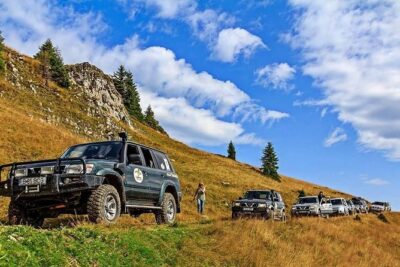
★ 5.0 · 21 reviews - 4×4 Driving Experience at Flying Altitudes – 7 Days
★ 5.0 · 13 reviews - Private – Romanian Vintage Car Driving Tour of Bucharest 120 min
★ 5.0 · 12 reviews
Just the Party You Came With: More Private Days
- Castles of Transylvania: Private Day Trip from Bucharest
★ 4.5 · 248 reviews - Dracula’s Castle, Peles Castle and Brasov – Private Day Trip from Bucharest
★ 5.0 · 211 reviews - Best of Bucharest | Private Walking Tour
★ 5.0 · 199 reviews - Bucharest Panoramic Sightseeing – Private City Tour
★ 5.0 · 128 reviews - THERME “Take It Easy” Pack: Full Spa Access + Private Transfers
★ 4.0 · 117 reviews - 4h Bucharest Private Tour (2h by Car and 2h Walking in Old Town)
★ 5.0 · 90 reviews
Just In: The Latest Bucharest Reviews

Bucharest Vintage Car & Driving Tours, compared.
 ★ 5.0CityTour in one of a kind mini hot rodFrom $95165 reviews
 ★ 4.9City Tour by a Mini Hot RodFrom $91110 reviews
 ★ 5.0Private -RedPatrol Tour of Bucharest with a Romanian Vintage CarFrom $12074 reviews
 ★ 5.0Full Day Private Snow Mobile in Carpathain MountainsFrom $20821 reviews
Snowmobile Carpathian’s Mountains & Cable Car RideFrom $7016 reviews
★ 5.0Full Day Private Snow Mobile in Carpathain MountainsFrom $20821 reviews
Snowmobile Carpathian’s Mountains & Cable Car RideFrom $7016 reviews
 ★ 5.04×4 Driving Experience at Flying Altitudes – 7 DaysFrom $2,05413 reviews
 ★ 5.0Private – Romanian Vintage Car Driving Tour of Bucharest 120 minFrom $11512 reviews
 ★ 5.0Shooting Range in Bucharest with Hotel PickupFrom $28811 reviews
Browse the lists this tour appears in