
Poenari turns a myth into a workout. This full-day trip from Bucharest follows the Vlad the Impaler story through Targoviste and Curtea de Arges, then sends you up to Dracula’s fortress ruins with big mountain views. I especially like how the day ties the famous legends to real places you can stand on, and I love the balance of myth + medieval landmarks. One heads-up: it’s a long day with a very serious climb near the end.
If you’re the type who enjoys history with steps and views, this one lands well. The monastery stop is gorgeous and quietly eerie, and the drive to Vidraru Lake puts a scenic exclamation point on the adventure. The possible drawback is simple: bring comfortable shoes and expect a lot of walking, because this isn’t a sit-on-a-bus-and-snip-photos tour.
In This Review
- Key Highlights Worth Your Time
- Dracula Myths Meet Real Wallachia
- Targoviste on the Ialomiţa River and the Golden Chindia Tower
- Curtea de Arges Monastery: Beauty With a Ghoulish Legend
- The Poenari Fortress Climb: Dracula’s Ruins and the Real Work
- Vidraru Lake and Transfăgărășan’s High-Mountain Road
- Price and What You Get for $187
- The Guide Matters: Serban Riga and a Day That Flows
- Who This Tour Fits Best (and Who Should Skip It)
- Should You Book the In the Footsteps of Dracula Day Tour?
- FAQ
- What time does the tour pick you up in Bucharest?
- How long is the tour?
- Is the guide English-speaking?
- Are entrance fees included in the $187 price?
- How many steps is the Poenari climb?
- What if I can’t climb the steps to Poenari?
Key Highlights Worth Your Time
- Vlad the Impaler story in the places it actually happened around Wallachia
- Curtea Domnească’s Chindia Tower in Targoviste, including the golden Sunset Tower
- Curtea de Arges Monastery and the eerie legend tied to its builders
- Poenari Citadel climb of about 1,480 steps (often counted as 1,488) with sweeping views
- Vidraru Lake by the Transfăgărășan mountain road, built in the 1960s
More runs out to Bran and Dracula country
- Bucharest: Dracula’s Castle, Peles Castle, & Brasov Old Town★ 4.5 · 17,858 reviews
- Bucharest: Dracula Castle, Peles Castle & Brasov Old Town★ 4.6 · 10,891 reviews
- Bucharest: Dracula’s Castle, Peleș Castle & Brașov Day Trip★ 4.4 · 6,100 reviews
- Bucharest: Day Trip to Dracula Castle, Peles Castle & Brașov★ 4.4 · 3,049 reviews
Dracula Myths Meet Real Wallachia
This tour is built around one question: where did the Dracula story come from, and what does it look like on the ground?
You start in Bucharest with pickup around 08:00, then head toward Wallachia’s former power centers. The guide’s job here isn’t just to recite dates. It’s to connect the dots between Vlad the Impaler (Prince of Wallachia from 1431 to 1477) and the later Bram Stoker fiction that most people know. Vlad’s nickname Dracula is tied to the myths that followed, and hearing the story in the same region where he ruled makes it feel less like a movie set and more like a genuine piece of medieval history.
A big part of the value is timing. You’re not rushing between random stops. You’re moving through a chain of sites that each explains a different layer of Wallachian life: royal courts, sacred centers, and fortresses. By the time you’re climbing stone steps at Poenari, it helps that you already understand what you’re seeing.
One practical note I appreciated: you’re not forced into the climb if you can’t do it. If you feel you can’t manage the steps to Poenari Fortress, you can wait for the rest of the group at the foot of the hill. That small option matters if your legs are having a tough day.
Targoviste on the Ialomiţa River and the Golden Chindia Tower
Targoviste is one of those places that rewards a slower look. The tour heads there first, crossing into the world of Wallachia’s older capitals, with the Ialomiţa River nearby.
What I liked here is that Targoviste isn’t just treated as a dot on a map. It’s described as a major city of Wallachia and a capital in the 15th and 16th centuries. When you hear that, the next stop makes sense: the Curtea Domnească complex and its remaining royal-court structures.
In particular, you’ll see the Chindia Tower, also called the Sunset Tower because of the way it catches light. It’s a striking detail in an otherwise stone-and-history kind of day. Even if you’ve seen towers before, this one feels anchored to a specific story: a royal center, a defensive mindset, and rulers who needed visibility and power all in one place.
The drive toward Targoviste also comes with context. The guide shares Romanian history on the way, so you’re not arriving “cold.” It’s the difference between sightseeing and making the places click in your mind.
The only drawback at this early stage is the usual one: you’ll be up and moving early. Pickup is around 08:00, and you’ll want breakfast in Bucharest that actually sticks with you.
Curtea de Arges Monastery: Beauty With a Ghoulish Legend
After Targoviste, the tour moves to another medieval Wallachian center: the monastery of Curtea de Arges. This is the kind of stop where you slow down even if your schedule doesn’t.
The monastery is described as one of the most beautiful monastic sites in Romania, and you can see why fast. It’s a major visual break from just towers and fortresses. Here the mood turns quieter—stone walls, sacred spaces, and a sense of careful craftsmanship.
What makes it more than pretty architecture is the legend you hear around the workers who built it. The story is ghoulish, and the point isn’t to shock you for no reason. It’s to show how medieval life mixed faith, fear, and labor—how people explained the unexplainable with myth. When you hear those kinds of tales at a real building, it changes how you look at the carvings and structure. Suddenly it feels like the place holds both spiritual purpose and human desperation.
Lunch is in the day somewhere before the Poenari climb (the exact timing isn’t the focus here, but it comes before you start up the steps). This is smart planning. You need energy before the uphill portion.
If you enjoy architecture and legends tied to craftsmanship, this is one of the stops that delivers the most “oh wow” per hour.
The Poenari Fortress Climb: Dracula’s Ruins and the Real Work
This is the big moment: the climb to Poenari Citadel, described as Dracula’s real castle and one of Romania’s most infamous characters’ fortress ruins.
After lunch you start the ascent—1,480 steps to the top, with the climb taking about 20–30 minutes. One review figure puts it at 1,488 steps, which tells you something important: don’t get hung up on the exact count. Think in ranges and, more importantly, think in effort.
Here’s what makes the climb worth it for me. The views aren’t just scenic wallpaper. They explain why a fortress like this matters. From the heights, the mountains and valleys of the Argeș region stretch out in a way that makes defense and control feel real. It’s easy to understand how this location could dominate its surroundings—especially when you’re sweating on the steps and suddenly appreciate the whole point.
Also, you get the story in the right emotional order. You don’t hear all the Vlad material and then never see the terrain. You climb while the guide ties the fortress to the character and the myths. By the time you reach the top, you’re not just looking at ruins. You’re looking at context.
A practical consideration: this is not suitable for people with mobility impairments, and it’s not a gentle stroll. You’ll want comfortable shoes with grip. If your knees don’t love stairs, this is where you adjust your plan early.
The tour offers a fallback: if you can’t climb, you can wait at the foot of the hill and still enjoy the rest of the day with the group.
And yes, if you’re wondering, the photos are great—but the views feel better when you earn them.

Vidraru Lake and Transfăgărășan’s High-Mountain Road
After Poenari, the day shifts from effort to reward.
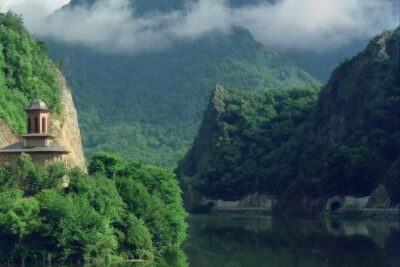
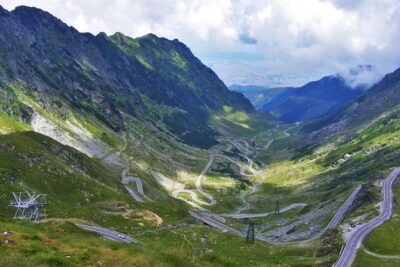
On the way back to Bucharest, you stop at Vidraru Lake, built in the 1960s, right next to the famous Transfăgărășan mountain road across some of Romania’s highest areas. This part is less about medieval power and more about how dramatic the country feels beyond the Dracula route.
Why it works as the final chapter: you’ve been in history mode for hours. Now you get a reset. The lake stop gives your legs a chance to breathe while you still hold on to the “big Romania” feeling—the kind you remember later when you’re comparing other travel days.
It’s also a good emotional landing. Poenari can be intense. Vidraru is your breath after the climb, with scenery that feels cinematic even without dramatic storytelling.
If you love road trips, you’ll appreciate seeing how Transfăgărășan connects the region’s towns and natural features. You don’t have to ride the full road for it to leave an impression.
Price and What You Get for $187
At $187 per person for a 1-day tour, the price sits in the mid-range for private sightseeing out of Bucharest—especially when you compare what’s included versus what you’ll likely pay on top.
Included:
- Transportation by car or minibus
- English-speaking driver (and a live guide format during the day)
Not included:
- Entrance fees, roughly EUR 15 per person (approximate)
What that means in real terms is this: you’re paying mainly for the route, the stops, and someone to guide the stories. Since the big draws are multiple sites and a long day, the private transport value adds up. You’re not spending your energy figuring out logistics between far-flung places.
The private group format also helps. It tends to make the day feel less rushed, and it’s easier to ask questions, especially with a guide who enjoys explaining the layers behind Vlad the Impaler and Wallachia’s major centers.
One more value note: pickup around 08:00 means you’re using the day efficiently. You’re not losing half the morning assembling the group or waiting around.
If you’re comfortable with stairs and a packed day, the cost feels more like “pay for access and context” than “pay just to go places.”
The Guide Matters: Serban Riga and a Day That Flows
One detail I took from the best feedback is the impact of the guide. The name Serban Riga shows up in the strongest reviews as a friendly, good guide who kept the day moving and explained the historical material clearly.
You’ll feel that right away on a tour like this. When you’re staring at ruins, a tower, and a monastery, the difference between a basic tour and a memorable one is narration quality. The guide you need is the one who can turn facts into something you can picture.
The tour’s value also comes from how the storytelling is layered by location: royal court (Targoviste), sacred center (Curtea de Arges), and fortress defense (Poenari). When those connections get explained well, the day stops feeling like a checklist.
So if you’re the type who wants context, not just photos, this is the tour style that tends to satisfy.
Who This Tour Fits Best (and Who Should Skip It)
This tour is a strong match if you want:
- A Dracula-themed day grounded in real Wallachian locations, not just props
- A mix of monastery beauty, royal-court architecture, and fortress ruins
- A satisfying chunk of movement that feels earned when you reach Poenari
- A scenic finish at Vidraru Lake near Transfăgărășan
It’s less of a match if:
- You have mobility limitations that make stair climbing hard (Poenari is the big barrier)
- You want a mostly flat, low-walking day
- You’re not interested in history that connects Vlad the Impaler to later Dracula myths
If you’re on the fence, consider your legs first. The climb is the defining moment. Everything else supports it.
Should You Book the In the Footsteps of Dracula Day Tour?
If you’re staying in Bucharest and you want one full day that feels both authentic and memorable, I’d say this is an easy yes—with one condition: you’re up for the climb to Poenari.
The biggest reasons to book are practical. You get a full Wallachia route in one day, with multiple historical stops that connect to the Vlad/Dracula story. You also get the kind of finale that doesn’t feel like an afterthought: Vidraru Lake and the Transfăgărășan area.
On the other hand, don’t book if you hate stairs or if the Poenari climb would be miserable. The option to wait at the foot of the hill exists, but the heart of the tour is reaching those ruins.
If you want a Dracula day that’s more grounded than gimmicky—and you don’t mind earning your views—this tour is worth your time.
FAQ
What time does the tour pick you up in Bucharest?
Pickup is around 08:00 from your hotel or any address in Bucharest.
How long is the tour?
It runs for 1 day.
Is the guide English-speaking?
Yes. You’ll have an English-language live guide/driver for the tour.
Are entrance fees included in the $187 price?
No. Entrance fees are not included, and they’re approximately EUR 15 per person.
How many steps is the Poenari climb?
You’ll climb about 1,480 steps (some people count it as 1,488), and it typically takes 20–30 minutes.
What if I can’t climb the steps to Poenari?
If you feel you cannot climb the steps, you can wait at the foot of the hill for the rest of the group. The tour also isn’t suitable for people with mobility impairments.
More Tour Reviews in Bucharest
- Bucharest: Dracula’s Castle, Peles Castle, & Brasov Old Town
★ 4.5 · 17,858 reviews - Bucharest: Dracula Castle, Peles Castle & Brasov Old Town
★ 4.6 · 10,891 reviews - Bucharest: Dracula’s Castle, Peleș Castle & Brașov Day Trip
★ 4.4 · 6,100 reviews - Bucharest: Palace of Parliament Tickets and Guide
★ 4.3 · 3,182 reviews - Bucharest: Day Trip to Dracula Castle, Peles Castle & Brașov
★ 4.4 · 3,049 reviews - Bucharest to Dracula Castle, Peles Castle and Brasov Guided Tour
★ 4.5 · 2,933 reviews
Bran and the Dracula Trail
- Bucharest: Dracula’s Castle, Peles Castle, & Brasov Old Town
★ 4.5 · 17,858 reviews - Bucharest: Dracula Castle, Peles Castle & Brasov Old Town
★ 4.6 · 10,891 reviews - Bucharest: Dracula’s Castle, Peleș Castle & Brașov Day Trip
★ 4.4 · 6,100 reviews - Bucharest: Day Trip to Dracula Castle, Peles Castle & Brașov
★ 4.4 · 3,049 reviews - Bucharest to Dracula Castle, Peles Castle and Brasov Guided Tour
★ 4.5 · 2,933 reviews - Dracula’s Castle, Peles Castle and Brasov Day Trip from Bucharest
★ 4.5 · 1,804 reviews
Just In: The Latest Bucharest Reviews

Dracula & Bran Castle Day Trips, compared.
 ★ 4.5Dracula’s Castle, Peles Castle, & Brasov Old TownFrom $4017,858 reviews
 ★ 4.6Dracula Castle, Peles Castle & Brasov Old TownFrom $4010,891 reviews
 ★ 4.4Dracula’s Castle, Peleș Castle & Brașov Day TripFrom $366,100 reviews
 ★ 4.4Day Trip to Dracula Castle, Peles Castle & BrașovFrom $453,049 reviews
 ★ 4.5Bucharest to Dracula Castle, Peles Castle and Brasov Guided TourFrom $332,933 reviews
 ★ 4.5Dracula’s Castle, Peles Castle and Brasov Day Trip from BucharestFrom $331,804 reviews
 ★ 4.5Transylvania and Dracula Castle Full Day Tour from BucharestFrom $351,589 reviews
 ★ 4.5From Bucharest: Brasov Peles & Dracula’s Castle Day TourFrom $651,244 reviews
Browse the lists this tour appears in