REVIEW · BUCHAREST
Eastern Orthodox Church Art in Bucharest
Eastern Orthodox art in Bucharest is like a visual time machine, and this focused church-walk makes you read it the right way. You start near the Old Princely Court, then fan out across central streets for Byzantine-style painting, Orthodox icon culture, and churches that are still used today—not staged for tourists.
I especially loved how the guide connects what you’re seeing to real church traditions, not just dates and names. And I liked the variety of churches in such a short loop, from older preserved fresco work to a neo-Baroque 19th-century finish at Saint Demetrios.
One thing to keep in mind: all stops are active churches, so you’ll need modest dress and quiet behavior, even if you’re used to fast sightseeing.
In This Review
- Quick hits before you go
- Why this kind of church-art tour works in Bucharest
- Meeting at the Anton icon shop: a practical start point
- Saint Anton Church: start with the Wallachian Middle Ages vibe
- Lipscani Street and the Saint George Km0 Church fresco
- The hard-to-find feeling: Saint Elias and The Lady’s Church
- Saint Elijah (Saint Elias) Orthodox Basilica
- The Lady’s Church and older preserved frescoes
- Stavropoleos Monastery and Saint Cyprian Church: the monastic mood
- Saint Demetrios: neo-Baroque 19th-century finish
- What $57 gets you: value for art lovers and busy schedules
- The guide matters: Helen, Elena, and how the best tours feel
- Dress and behavior rules you actually need to plan for
- Who should book this Eastern Orthodox church-art walk?
- Should you book Eastern Orthodox Church Art in Bucharest?
- FAQ
- Where does the tour meet?
- How long is the tour?
- How much does it cost?
- How big is the group?
- What languages are offered?
- What churches are included?
- Is food or drinks included?
- Are these museums or active churches?
- What should I wear?
- What is the cancellation policy?
Quick hits before you go
- Byzantine and Orthodox art, explained clearly while you stand in front of the paintings
- Active churches where you get a real sense of how people worship now
- A smart central route: Old Princely Court to Lipscani Street and back into calmer pockets
- Hard-to-find church stops that locals don’t even point out casually
- Small group size (up to 10) so you can ask questions without shouting over everyone
- Guides named Helen or Elena in recent tours, with a personable, flexible approach
Still deciding? Line this one up against a few Bucharest favourites first.
- Bucharest: Dracula’s Castle, Peles Castle, & Brasov Old Town★ 4.5 · 17,858 reviews
- Bucharest: Dracula Castle, Peles Castle & Brasov Old Town★ 4.6 · 10,891 reviews
- Bucharest: Dracula’s Castle, Peleș Castle & Brașov Day Trip★ 4.4 · 6,100 reviews
- Bucharest: Palace of Parliament Tickets and Guide★ 4.3 · 3,182 reviews
Why this kind of church-art tour works in Bucharest
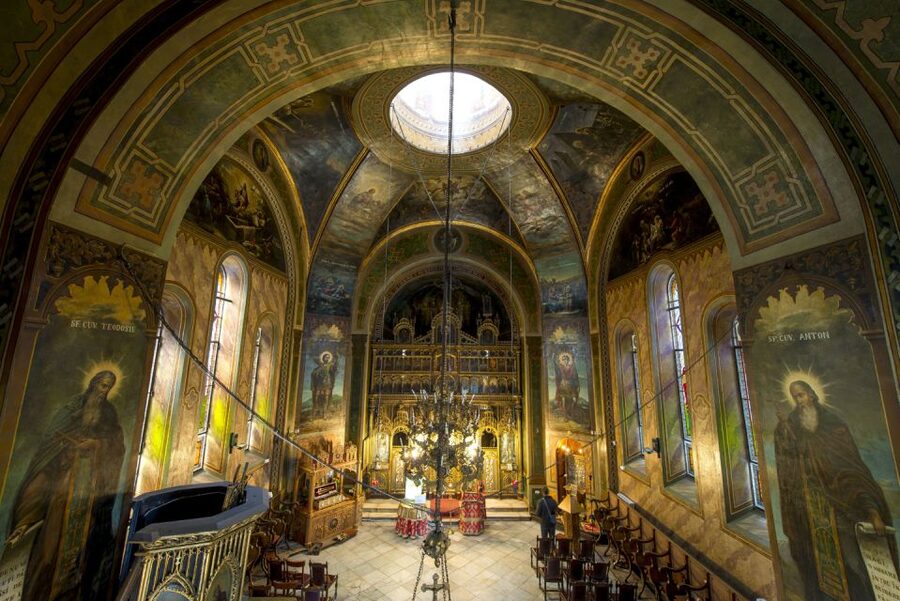
Bucharest can feel like a stop-and-snap city. This tour does the opposite. You slow down enough to notice how Orthodox art works: the layout, the faces, the symbols, and the way frescoes and icons carry meaning inside a living tradition.
What makes it compelling is that you’re not just looking at buildings. You’re learning how to see. You’ll hear why these paintings were made the way they were, how church art supports worship, and why certain styles are still used. That matters, because if you come in only expecting pretty colors, you’ll miss the point.
The pacing also fits the reality of church neighborhoods. In about 2.5 hours, you cover enough ground to see major styles without burning your whole afternoon. And because the group stays small, you’re more likely to get specific answers about what you’re looking at right then.
Meeting at the Anton icon shop: a practical start point
Your tour begins in front of the Anton icon shop. That’s more than just a random meeting place. It puts you in the right mood immediately: icons aren’t an afterthought here. They’re part of daily religious life and local culture.
From there, the group heads toward the Old Princely Court area. I like meeting points like this because they’re easy to orient around once you’re already in the historic center. If you’ve ever wandered Bucharest while trying to find a tour group, you know how much a clear anchor helps.
Bring comfortable shoes. Even with a planned route, you’ll walk between churches and stand still for looks and explanations. This is not a sit-on-a-bus kind of tour.
Saint Anton Church: start with the Wallachian Middle Ages vibe
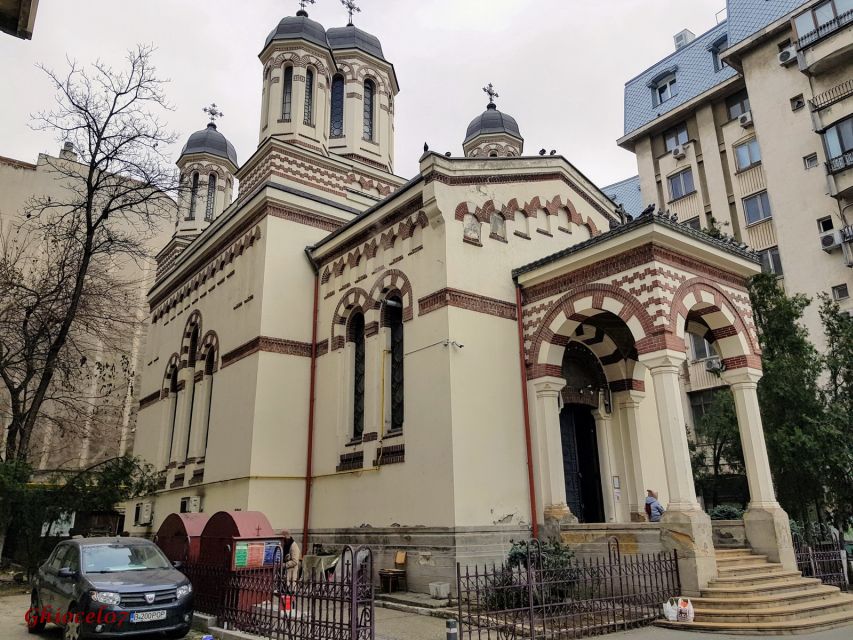
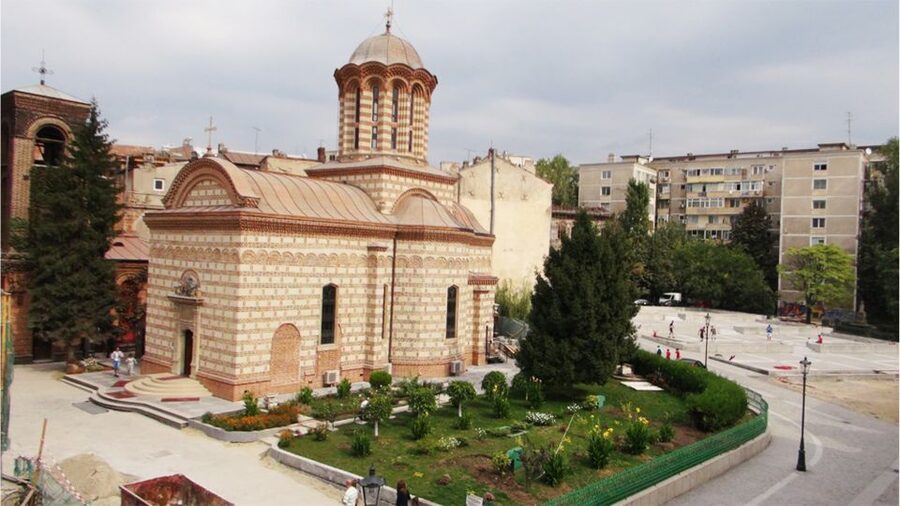
The first stop is Saint Anton Church, near the Old Princely Court. This is the kind of church that sets the tone fast. You get that “Wallachian Middle Ages” feeling right away—stone, paint, and a sense that Bucharest’s story goes far beyond what you see on the main boulevards.
Even if you’re not an art person, you’ll enjoy this part if you like atmosphere. The guide’s job here is to teach you what to look for before you move on. That way, the next frescoes don’t blur together.
A small drawback to mention: early stops can feel like a lot of input at once. If you’re the type who gets overwhelmed, focus on one thing per church—faces and expressions at one stop, composition and layout at another.
Lipscani Street and the Saint George Km0 Church fresco
Next you continue along Lipscani Street to Saint George Km0 Church. The highlight here is a fresco by one of Romania’s greatest church painters. The exact name isn’t provided in your tour info, but the point is: you’re seeing work that’s meant to be read in layers, not just admired.
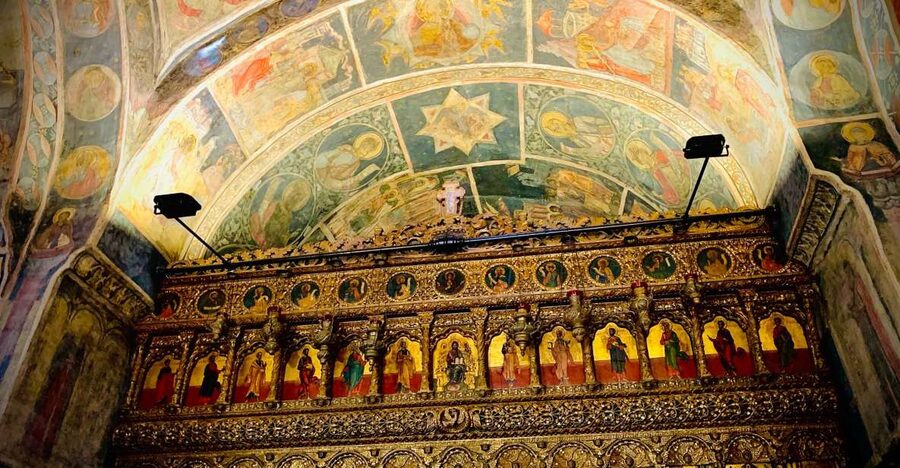
This stop is valuable because it teaches you the difference between “church art as decoration” and “church art as a visual language.” Orthodox frescoes aren’t only about beauty. They’re about storytelling, spiritual meaning, and sacred memory—placed right where worshippers gather.
Also, Lipscani Street is a good corridor for this tour style. It’s central, easy to walk, and it gives you a street-to-church rhythm. You’ll feel like you’re moving through living neighborhoods, not bouncing from landmark to landmark.

The hard-to-find feeling: Saint Elias and The Lady’s Church
After the main central stretch, the tour gets more interesting by heading toward churches that can be hard even for locals to find. That’s one reason the experience feels special: you’re not just recycling the same famous spots.
Saint Elijah (Saint Elias) Orthodox Basilica
You’ll visit Saint Elijah, described as an Orthodox basilica and noted as one of two in the city. That “only one of its kind” detail matters. When a building is relatively rare, you usually get something more distinct in style, space, or how the interior feels.
This is a good stop for slowing down. Let the guide explain the Orthodox artistic approach, then look around with that framework in mind. The more you understand what you’re seeing, the more the church interior starts to make sense as a whole.
The Lady’s Church and older preserved frescoes
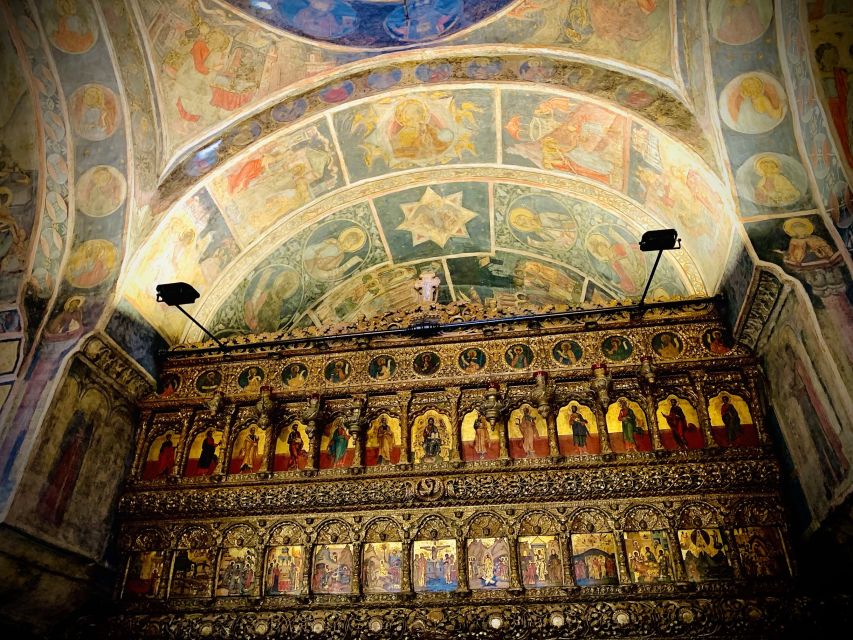
Your next big moment is The Lady’s Church, known for having some of the oldest preserved original frescoes in Bucharest. Older frescoes change the tone of the experience instantly. Even without a museum label, you’re seeing work that has lasted—so the art feels less like a display and more like a continuity.
For me, this stop is where the tour earns its name. If you’ve been to churches before and felt they were all basically the same, this is the moment that can flip your perspective. The guide gives context so the frescoes don’t feel random.
If you’re sensitive to crowd noise: these churches can be active worship spaces, so the quiet level can vary. Just be ready to adapt your volume and posture.
Stavropoleos Monastery and Saint Cyprian Church: the monastic mood
The tour then moves to Stavropoleos Monastery. Even in a city like Bucharest, monasteries can feel like a different world. Here, you get an eclectic church-and-monastery atmosphere that connects Orthodox life with the specific visual language of the tradition.
Monasteries are also a strong place for learning because the art often has a “system” to it. You can start noticing how elements repeat and how the church interior supports a spiritual rhythm.
Right next to this stop, Saint Cyprian Church is included in the experience. The pairing makes sense. When you see two churches near each other back-to-back, you can compare styles and choices without having to travel across town.
Practical tip: if you like taking photos, be respectful. These are active churches. Even when photography rules aren’t spelled out in your tour notes, the safest move is to keep your camera low unless the guide indicates it’s okay.
Saint Demetrios: neo-Baroque 19th-century finish
Your last stop is Saint Demetrios, described as a neo-Baroc 19th-century gem. That final contrast is smart. Earlier stops lean more directly into Byzantine and older fresco traditions. Finishing with neo-Baroque work gives you a sense of how Orthodox art and church aesthetics evolve over time in Romania.
This is where you can step back and ask yourself: what changed, what stayed? You’ll likely catch details in the architecture and interior that you didn’t notice earlier. And because it’s at the end of the loop, it functions like a closing lesson—pulling the tour’s art themes together.
It also makes a nice landing point for plans afterward. You’ll be back in the central area, ready to continue your day with a café or meal at your own pace.
What $57 gets you: value for art lovers and busy schedules
At $57 per person for about 2.5 hours, you’re paying for three things: expert interpretation, a tight route across multiple churches, and a small group that stays under 10 participants.
Is it a bargain? If you tried to do this same route alone, you’d still see the churches—but you’d probably spend time figuring out what to look for. Church art is easy to misunderstand. A guided explanation turns “paint on walls” into something you can actually read.
The guide’s quality is the big value driver. In recent tours, guides like Helen and Elena have been praised for being flexible, personable, and genuinely good at connecting Orthodox art to the broader Church context. One review even mentions that the guide took time to help with an icon shop visit, which is a nice bonus if you’re collecting something meaningful rather than random souvenirs.
One more practical angle: this is a small-group format, so you don’t get stuck in a crowded herd. You can ask a question and get an answer you can use on the next stop.
The guide matters: Helen, Elena, and how the best tours feel
You’ll be with a live guide in English, Spanish, and Romanian. That’s important because church art has a lot of vocabulary and symbolism. If you get explanations in your language, you’ll walk away understanding more than just the visual surface.
Recent feedback highlights two guide strengths that really affect your experience:
First, knowledge with a human pace. A good guide doesn’t lecture. They point, explain, and then let you look again with better eyes.
Second, flexibility. One review describes the guide tailoring the outing for a friend using a crutch and someone using a walking stick. That doesn’t guarantee every tour will be the same, but it signals that the guide is attentive to group needs.
There’s also one caution from a negative review: a Catholic visitor felt the guide was condescending. I wouldn’t assume that’s the norm. Still, if you’re visiting with a different faith background, go in ready to focus on art, architecture, and context. The best learning happens when you and the guide are on the same page about what the art is trying to do.
Dress and behavior rules you actually need to plan for
This tour includes active churches, so you should plan your outfit like you’re entering a worship space, not a sightseeing-only site.
You can expect restrictions like:
- No short skirts
- No sleeveless shirts
- Avoid tight clothing and ripped clothing
- Skip strong fragrances
- Keep behavior and sound modest
Also, pets aren’t allowed.
The easiest way to handle this: wear long pants or a longer skirt, a shirt with sleeves, and shoes you can stand in comfortably. Bring a layer if you run cold in churches—your guide will still be giving explanations even when the temperature drops.
Who should book this Eastern Orthodox church-art walk?
I’d recommend this tour if you:
- Like religious art but find it hard to interpret without help
- Want a short, organized way to cover several major churches in Bucharest
- Prefer small groups and a guided route over wandering alone
- Enjoy learning from a guide who can explain Church context, not just art facts
It’s also a good fit for people who want a meaningful souvenir moment. The tour starts by an icon shop, and one guide (Helen) is praised for taking time to help with icon shopping for someone’s list.
You might consider skipping if you:
- Hate walking and standing during explanations
- Need a tour with zero dress restrictions (this one has real church rules)
- Expect a purely secular art lecture rather than a faith-based context
Should you book Eastern Orthodox Church Art in Bucharest?
If you want more than photos, book it. The format—small group, 2.5 hours, and multiple church interiors with guided interpretation—makes the art understandable instead of just pretty. The standout value is the combination of Byzantine/Orthodox art focus with a route that includes churches that can be tricky to locate on your own.
I’d book this tour especially if you’re spending limited time in Bucharest and want your afternoon to leave you with clear takeaways: how frescoes function, why icons matter, and how Romanian Orthodox church art expresses worship.
Just come prepared for active-church etiquette. If you do, you’ll likely feel like you saw Bucharest through a lens most visitors don’t bother to use.
FAQ
Where does the tour meet?
The meeting point is in front of the Anton icon shop.
How long is the tour?
The duration is 2.5 hours.
How much does it cost?
The price is listed as $57 per person.
How big is the group?
It’s a small group limited to 10 participants.
What languages are offered?
The tour guide provides live interpretation in English, Spanish, and Romanian.
What churches are included?
Included stops are Saint Anton Church, Saint George Km0 Church, Saint Elijah, The Lady’s Church, Stavropoleos Monastery, and Saint Cyprian Church.
Is food or drinks included?
No food or drinks are served on this tour, but you can stop in cafés, bars, or restaurants nearby.
Are these museums or active churches?
All the churches are active, not museums, so modesty in dress and behavior is required.
What should I wear?
Wear comfortable shoes and dress modestly: no short skirts, sleeveless shirts, tight clothing, or ripped clothing.
What is the cancellation policy?
Free cancellation is available up to 24 hours in advance for a full refund.
More Tour Reviews in Bucharest
- Bucharest: Dracula’s Castle, Peles Castle, & Brasov Old Town
★ 4.5 · 17,858 reviews - Bucharest: Dracula Castle, Peles Castle & Brasov Old Town
★ 4.6 · 10,891 reviews - Bucharest: Dracula’s Castle, Peleș Castle & Brașov Day Trip
★ 4.4 · 6,100 reviews - Bucharest: Palace of Parliament Tickets and Guide
★ 4.3 · 3,182 reviews - Bucharest: Day Trip to Dracula Castle, Peles Castle & Brașov
★ 4.4 · 3,049 reviews - Bucharest to Dracula Castle, Peles Castle and Brasov Guided Tour
★ 4.5 · 2,933 reviews