
A Dracula story trip sounds spooky, but this one is more practical: you’ll pair real medieval sites with the big-scope wonder of an underground salt world. Two things I really like: the guided storytelling that explains Vlad the Impaler and Wallachia as you travel, and the chance to walk through Slănic’s huge salt chambers with a built-in learning track via audio guides. One thing to plan for: the day can run longer than the headline 6 hours, especially with traffic and weather.
This is a strong pick if you want a “close to Bucharest” outing that still feels like a proper change of scenery. You’ll get a small-group feel (limited to 8 people), multiple pickup options across central areas, and the comfort of air-conditioned transport. Just remember: the salt mine is cool and stair-heavy, so it’s not the best match if you need an easy-walk day.
In This Review
- Key Things That Make This Tour Worth Your Time
- From Bucharest to Snagov: How Vlad’s Legend Gets Grounded
- Snagov Tips: Photos, Timing, and What to Ask Your Guide
- Slănic Prahova Salt Mine: The Underground World That Changes Your Pace
- How the Mine Fits the Day’s Story
- What You’ll Learn: Audio Guides That Actually Help
- Transport, Timing, and Why the Day Might Feel Longer Than 6 Hours
- Group Size and Comfort: Small-Group Without the Chaos
- Price and Value: Is $46 a Fair Trade for Two Major Stops?
- Who This Tour Suits Best (and Who Should Skip It)
- A Quick Note on Mine Closure Days
- Should You Book Dracula’s Tomb & Slănic Salt Mine From Bucharest?
- FAQ
- How long is Dracula’s Tomb & Slanic Salt Mine, starting from Bucharest?
- Where are the pickup locations in Bucharest?
- What’s included in the tour price?
- Are entrance fees included?
- What languages are available for the live guide and audio guide?
- Do I need headphones for the audio guide?
- What should I wear in the Slanic Salt Mine?
- Is the salt mine accessible for people with mobility issues?
- When is the Slanic Salt Mine closed?
- Does the tour include food and drinks?
Key Things That Make This Tour Worth Your Time
- Snagov Monastery’s Vlad connection: a calm island setting linked to the Dracula legend, plus guided context on medieval Wallachia.
- Slănic Salt Mine scale underground: you descend to vast chambers and galleries, not a small, short show cave.
- Guides in multiple live languages: English/Italian/Spanish, with audio guides for 20+ languages via app/device (bring your own headphones).
- Small group size (max 8): enough attention for questions, without feeling crowded on walks and photo stops.
- Skip-the-ticket-line approach: less time waiting means more time looking around, especially at the mine.
- Photo stops and free time: structured guiding plus time to wander on your own in both locations.
More runs out to Bran and Dracula country
- Bucharest: Dracula’s Castle, Peles Castle, & Brasov Old Town★ 4.5 · 17,858 reviews
- Bucharest: Dracula Castle, Peles Castle & Brasov Old Town★ 4.6 · 10,891 reviews
- Bucharest: Dracula’s Castle, Peleș Castle & Brașov Day Trip★ 4.4 · 6,100 reviews
- Bucharest: Day Trip to Dracula Castle, Peles Castle & Brașov★ 4.4 · 3,049 reviews
From Bucharest to Snagov: How Vlad’s Legend Gets Grounded
The morning starts with pickup from central Bucharest options like Piata Unirii 4, Piata Romană 5, Piața Victoriei, or major hotels along Bulevardul areas. You’ll ride north in an air-conditioned minivan or coach, and the route itself matters here: it’s one of those day trips where the travel time is part of the switch from city pace to countryside calm.
Snagov Monastery is the first anchor. It’s traditionally linked to Vlad the Impaler, the historical figure who inspired the Dracula legend. The monastery setting is peaceful and visually rewarding—lake and forest around the island—so even if you’re not a hardcore vampire fan, you’ll still get a sense of why this place became a story magnet.
What you’ll actually do at Snagov is practical and easy to follow: a guided visit with time to take photos, some free time to look around, and a walk that helps you take in the monastery grounds at your own pace. The guide fills in the context—medieval Wallachia, monastic life, and how the Dracula myth took shape—so you’re not just collecting spooky vibes. You’re building a timeline and understanding the cultural ingredients.
A small but useful thought: Dracula legends can sometimes feel like pure fantasy when you visit on a screen first. Here, the guided framing gives the myth a grounded human background. That makes the experience more than a photo stop.
Snagov Tips: Photos, Timing, and What to Ask Your Guide
Snagov is the kind of place where good questions turn a visit into something memorable. If you care about the legend, ask your guide how the Wallachian setting connects to the Dracula stories. If you care about architecture or daily religious life, ask what monastic routine looked like and how the site functioned beyond the legend.
One extra idea from real-world visitor experience: there may be an opportunity for a paid photo option at a small church associated with the Dracula burial tradition. If it’s offered when you’re there, decide based on your priorities. If photography matters to you, it can feel like a worthwhile add-on. If you’re traveling lighter, skip it and focus on the main monastery spaces.
Also, don’t assume you’ll get unlimited time at each stop. This trip builds in a clear structure—guided portions plus free time—so I’d treat Snagov as your place for photos and questions, not as a long hangout.
Slănic Prahova Salt Mine: The Underground World That Changes Your Pace
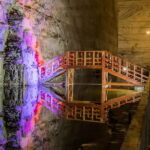
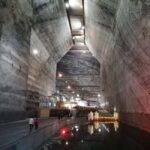
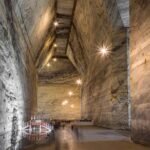
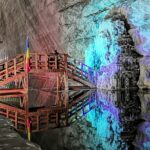
Then comes the part that usually wins people over fast: Slănic Prahova Salt Mine. This is one of Europe’s largest salt mines, and the key point for planning is what you’ll experience once you’re underground—hundreds of meters below the surface, vast salt chambers, galleries, and open walk-through areas where the air feels different.
You’ll descend and follow a guided tour through enormous caverns and sculpted salt walls. The mine’s microclimate is part of the pitch and part of the reality: it stays around 12°C (cool, constant). That matters because the mine isn’t just a visual stop. It’s a physical one—your body will notice the temperature shift right away.
Here’s what I’d plan around: wear layers. A light jacket isn’t optional if you run warm on the surface. If you don’t bring something, you’ll spend too much of the tour trying to stay comfortable instead of looking closely.
You’ll also get short breaks and photo stops, plus free time to explore the underground spaces. That combination is a good formula: guided narration to help you understand what you’re seeing, then time on your own so you can move at your pace and re-check the views.
How the Mine Fits the Day’s Story
This isn’t a random cave visit stuck onto a Dracula stop. Salt mining ties into Romanian culture and the local economy, and the tour explains the importance of salt and the history of mining while you’re surrounded by the product itself. That’s what makes it feel coherent: the underground walls are not just scenery; they’re evidence of work that shaped livelihoods.
Down into the old salt mines, more trips
What You’ll Learn: Audio Guides That Actually Help
A big advantage here is the way information is built in. Even with a live guide in English/Italian/Spanish, the mine and monastery visits are supported by audio guides available in 20+ languages (delivered via app/device). The list is broad—English, German, French, Russian, Chinese, Croatian, Danish, Dutch, Finnish, Greek, Hebrew, Italian, Latvian, Lithuanian/Latvian forms as listed, Polish, Portuguese, Serbian, Slovak, Spanish, Swedish, Turkish, and Bosnian.
For you, that means two things:
- You can keep moving and still get context without waiting for translations every time.
- If you miss a detail during walking sections, you can catch up through the audio guide.
Practical note: you’ll want your own headphones. The tour provides the audio guide, not your listening gear.
If you’re the type who likes to know what you’re looking at, this setup makes the trip feel “complete” instead of checklist-driven.
Transport, Timing, and Why the Day Might Feel Longer Than 6 Hours
This outing is sold as about 6 hours, but the real working range is roughly 6–7 hours depending on traffic and season. The important consideration is that the day can run long in conditions that slow everyone down—winter weather, snow, or simply city-to-country traffic patterns.
So don’t schedule a tight next appointment right after you return to Bucharest. Give yourself slack. If you like to travel with momentum, you’ll still be happy here, but you’ll enjoy it more if you’re not watching the clock.
Also keep in mind the physical side. The mine involves stairs and walking. That’s normal for this kind of attraction, but it matters if you have severe mobility issues.
Group Size and Comfort: Small-Group Without the Chaos
With a group limit of 8 people, this doesn’t feel like a mass-tour flow where you can’t hear or ask anything. The tradeoff is that you’ll still share time and space with others—so listen when the guide gives meeting points for free time.
Your transport is air-conditioned, and pickup/drop-off are handled from selected central locations. This is a big value point because you don’t have to coordinate taxis, and you don’t spend your energy on navigation between stops.
If you’re a solo traveler, the small group size is comforting. If you’re traveling as a couple or small group, you’ll likely appreciate the calmer pace.
Price and Value: Is $46 a Fair Trade for Two Major Stops?
At around $46 per person, you’re paying for two things that are hard to recreate on your own: guided storytelling at two different attractions and coordinated transport with central pickups.
Here’s what’s included:
- Air-conditioned transport from Bucharest
- An English/Spanish-speaking live guide (live guide languages listed as English/Italian/Spanish)
- Audio guide in 20+ languages
- Guided visits at Snagov Monastery and Slanic Salt Mine
- Cultural and historical storytelling
- Pickup and drop-off from selected central locations
- Audio guide support plus skip-the-ticket-line approach
What’s not included:
- Entrance fees at Snagov and Slănic Salt Mine
- Food and drinks
- Personal expenses
That entrance-fee detail matters for your real budget. Even so, the guided structure and the mine experience often justify the price if you’re not planning your own day-trip logistics. And if you’re traveling with limited time in Bucharest, this is one of those deals where you’re buying efficiency: fewer hassles, more “looking time.”
One practical value tip: since food and drinks aren’t included, plan on eating either before you go or during the day where you can. Some visitors suggest that if there’s any flexibility in visit order, doing the mine earlier can help you get food afterward at the mine restaurant. You can ask your guide if the schedule can adapt to conditions.
Who This Tour Suits Best (and Who Should Skip It)
This trip makes sense if you:
- Want Dracula-themed culture without getting stuck in pure fantasy
- Like history explanations that connect places to the legend of Vlad the Impaler
- Want a major underground attraction with real walking and big chambers
- Prefer a small group and multilingual audio support
- Need a half-day-ish outing that’s still substantial
You might skip it if:
- You need a very easy walk or have severe mobility limitations (the mine involves stairs and walking)
- You hate cold environments and don’t want to bring layers (mine stays around 12°C)
It also works well if you’re traveling with friends who have mixed interests. One person gets the legend; the other gets the underground scale and salt-mine story.
A Quick Note on Mine Closure Days
The Slănic Prahova Salt Mine is closed every Monday and Tuesday. If your dates land on those days, your tour won’t include the mine stop. It will either focus on the remaining attractions or be rescheduled—so double-check your calendar before you book.
Should You Book Dracula’s Tomb & Slănic Salt Mine From Bucharest?
If you’re in Bucharest and you want one outing that combines story, guided interpretation, and a real wow-factor underground space, I think this tour is a smart buy. The biggest strengths are the pairing: Snagov Monastery gives you the legend in a calm, historical setting, and the Slănic Salt Mine delivers a physical, visually intense underground experience at a constant cool temperature.
Book it if you value structure, multilingual audio support, and small-group comfort. Consider skipping or rethinking if you’re very limited on mobility or you’re scheduling a super tight agenda, because the day can run longer than the headline.
If you go, show up with layers, bring headphones, and ask your guide questions—this is the kind of day where curiosity pays off.
FAQ
How long is Dracula’s Tomb & Slanic Salt Mine, starting from Bucharest?
It lasts about 6 hours, with a practical range of roughly 6–7 hours depending on traffic and season.
Where are the pickup locations in Bucharest?
Pickup is from selected central locations, including options such as Piata Unirii 4, Piata Romană 5, Piața Victoriei, Arcul de Triumf, and several major hotel addresses.
What’s included in the tour price?
Transportation in an air-conditioned minivan or coach, an English/Italian/Spanish live guide, audio guide in 20+ languages, guided visits at Snagov Monastery and Slanic Salt Mine, storytelling throughout, and pickup/drop-off from central locations.
Are entrance fees included?
No. Entrance fees for Snagov Monastery and Slanic Salt Mine are not included.
What languages are available for the live guide and audio guide?
Live guide languages are English, Italian, and Spanish. Audio guides are available in 20+ languages via app/device, and include languages such as English, German, French, Russian, Chinese, Spanish, Italian, and many others listed.
Do I need headphones for the audio guide?
Yes. The audio guide is via your smartphone or device, so you should bring your own headphones.
What should I wear in the Slanic Salt Mine?
The mine temperature is constant and cool, around 12°C. Bring a light jacket or warm layers.
Is the salt mine accessible for people with mobility issues?
It’s not recommended for severe mobility issues because there are stairs and walking in the mine.
When is the Slanic Salt Mine closed?
Slănic Prahova Salt Mine is closed every Monday and Tuesday.
Does the tour include food and drinks?
No. Food and drinks are not included, so you’ll want to plan accordingly.
More Tour Reviews in Bucharest
- Bucharest: Dracula’s Castle, Peles Castle, & Brasov Old Town
★ 4.5 · 17,858 reviews - Bucharest: Dracula Castle, Peles Castle & Brasov Old Town
★ 4.6 · 10,891 reviews - Bucharest: Dracula’s Castle, Peleș Castle & Brașov Day Trip
★ 4.4 · 6,100 reviews - Bucharest: Palace of Parliament Tickets and Guide
★ 4.3 · 3,182 reviews - Bucharest: Day Trip to Dracula Castle, Peles Castle & Brașov
★ 4.4 · 3,049 reviews - Bucharest to Dracula Castle, Peles Castle and Brasov Guided Tour
★ 4.5 · 2,933 reviews
Underground: The Salt Mine Trips
- Bucharest: Salt Mine Day Trip to Slănic
★ 4.6 · 869 reviews - From Bucharest: Slănic Prahova Salt Mine Ticket and Transfer
★ 4.6 · 790 reviews - Slanic Salt Mine Day Trip from Bucharest
★ 4.5 · 142 reviews - Private Tour to Salt Mine, Lunch at Winery and Dracula Grave
★ 5.0 · 60 reviews - Bucharest Day Trip: Slanic Salt Mine & Tomb of Dracula
★ 5.0 · 27 reviews - Small-group max 7, Salt Mine, Lunch at Winery & Dracula Grave
★ 5.0 · 25 reviews
Bran and the Dracula Trail
- Bucharest: Dracula’s Castle, Peles Castle, & Brasov Old Town
★ 4.5 · 17,858 reviews - Bucharest: Dracula Castle, Peles Castle & Brasov Old Town
★ 4.6 · 10,891 reviews - Bucharest: Dracula’s Castle, Peleș Castle & Brașov Day Trip
★ 4.4 · 6,100 reviews - Bucharest: Day Trip to Dracula Castle, Peles Castle & Brașov
★ 4.4 · 3,049 reviews - Bucharest to Dracula Castle, Peles Castle and Brasov Guided Tour
★ 4.5 · 2,933 reviews - Dracula’s Castle, Peles Castle and Brasov Day Trip from Bucharest
★ 4.5 · 1,804 reviews
Just In: The Latest Bucharest Reviews

Dracula & Bran Castle Day Trips, compared.
 ★ 4.5Dracula’s Castle, Peles Castle, & Brasov Old TownFrom $4017,858 reviews
 ★ 4.6Dracula Castle, Peles Castle & Brasov Old TownFrom $4010,891 reviews
 ★ 4.4Dracula’s Castle, Peleș Castle & Brașov Day TripFrom $366,100 reviews
 ★ 4.4Day Trip to Dracula Castle, Peles Castle & BrașovFrom $453,049 reviews
 ★ 4.5Bucharest to Dracula Castle, Peles Castle and Brasov Guided TourFrom $332,933 reviews
 ★ 4.5Dracula’s Castle, Peles Castle and Brasov Day Trip from BucharestFrom $331,804 reviews
 ★ 4.5Transylvania and Dracula Castle Full Day Tour from BucharestFrom $351,589 reviews
 ★ 4.5From Bucharest: Brasov Peles & Dracula’s Castle Day TourFrom $651,244 reviews
Browse the lists this tour appears in