
Bucharest tells its darkest stories in footsteps. This self-guided English audio route moves you past major landmarks and adds meaning to each one, from the fundraising legend behind the Romanian Athenaeum to the myth-making around Dracula. I especially like the offline access and the in-app map/photos that help you spot each stop fast.
One thing to consider: this tour is fully self-guided, with no human guide to answer questions or fix confusion on the spot. If you’re the type who likes deeper political context or quick explanations in real time, plan to slow down at the big stops and use the audio playback as your guide.
In This Review
- Key highlights you should care about
- Price and what $6.69 buys you in Bucharest
- Starting at the Romanian Athenaeum: the fundraising story with teeth
- Ceaușescu’s secret police headquarters: fear as a surveillance system
- Ceaușescu’s rise, the chaos of his fall, and what came next
- A caravan palace in Bucharest: Ottoman trade made architectural
- Bucharest’s oldest restaurant since 1879: eat, then connect the dots
- The Roman she-wolf statue: Latin roots in a single symbol
- “Little Paris” in Bucharest: French-style architecture you can read on foot
- The church from the 1500s: miraculous preservation during communist rule
- A monastery built by a wealthy Greek monk: architecture with calm energy
- The royal crown forged from Ottoman cannons: independence in metal
- Vlad the Impaler and the Dracula legend: where the ruins fit the myth
- Ceaușescu’s dream realized: the Palace of Parliament finale
- How to plan your 3-hour walk so it feels smooth
- Who this tour is best for (and who might want something else)
- Should you book Bucharest: From Dictator to Dracula?
- FAQ
- How long is the Bucharest self-guided tour?
- Where does the tour start and end?
- Is it available in English, and do I need internet?
- Do I need a human tour guide?
- Are headphones included?
- Can I get a full refund if I cancel?
Key highlights you should care about
- Offline audio for a 3-hour loop you can replay as many times as you want during your 1-year access
- Stop photos plus an interactive map so you spend less time hunting the right corner
- Ceaușescu’s story in clear chapters, from rise to downfall and what happened after
- Iconic symbols packed into the route, including the Roman she-wolf and a crown linked to Ottoman cannons
- A “read the city” approach, where architecture, churches, and even food stops connect to larger themes
- Audio-first design that’s easy to use, even if you’re new to phone-based tours
More runs out to Bran and Dracula country
- Bucharest: Dracula’s Castle, Peles Castle, & Brasov Old Town★ 4.5 · 17,858 reviews
- Bucharest: Dracula Castle, Peles Castle & Brasov Old Town★ 4.6 · 10,891 reviews
- Bucharest: Dracula’s Castle, Peleș Castle & Brașov Day Trip★ 4.4 · 6,100 reviews
- Bucharest: Day Trip to Dracula Castle, Peles Castle & Brașov★ 4.4 · 3,049 reviews
Price and what $6.69 buys you in Bucharest
At $6.69 per person for about 3 hours, you’re paying for interpretation, not logistics. What you get is an audio-and-text guide with an app map, plus mobile ticket access delivered by email from Tourific. In practical terms, that means you’re buying time savings: you skip the stop-by-stop guesswork and you get a guided storyline that strings the sites into one narrative.
You’re also paying for flexibility. The tour includes 1-year access on iOS and Android, and once downloaded you can use it without internet. That’s valuable in Bucharest because Wi‑Fi can be hit-or-miss, and your phone battery is the real travel currency.
Starting at the Romanian Athenaeum: the fundraising story with teeth
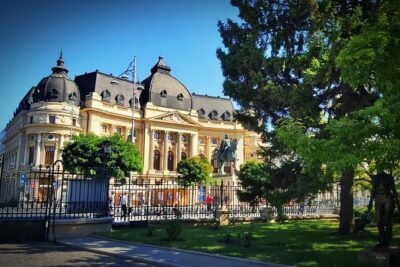
Your walk begins at the Romanian Athenaeum, and the audio starts with a detail I love: ordinary Romanians funding this majestic concert hall through a unique campaign. It’s not just a “pretty building” introduction. The point is to show how public imagination and public money can create cultural power, even under a political climate that later gets much darker.
The audio also ties this hall to what dictators liked—especially its stunning acoustics. That contrast is the tone-setter for the whole tour. You’re not just seeing landmarks; you’re learning how power tried to borrow beauty.
Tip: arrive at the start point with enough time to stand still for 2 minutes. The audio begins the story, but you’ll understand it better once you take in the building’s scale.
Ceaușescu’s secret police headquarters: fear as a surveillance system
One of the most chilling stops is the feared headquarters connected to Ceaușescu’s secret police. The audio frames the location around methods of surveillance and intimidation, which turns the building from a static site into a lesson.
What’s useful here is the approach. Instead of vague horror, you get the idea that fear was operational—used to control what people said, did, and dared to imagine. If you’ve ever wondered how a regime turns everyday life into a trap, this stop gives you that mechanism in plain language.
Practical note: take your time. Even if you’re walking fast, this is one stop where the audio deserves full attention because the whole tour’s later contrasts depend on this one.
Ceaușescu’s rise, the chaos of his fall, and what came next
The tour’s Ceaușescu section doesn’t treat him like a single villain moment. You move through his origins—from poverty to absolute power—then the dark side of his ruthless regime. Finally, you stand at the place tied to when he lost control amid chaos, reliving the dramatic moments that changed Romania’s history.
This part works because it’s chronological. You’re not just memorizing names; you’re tracing how power builds, how it tightens, and how it breaks. That also makes the last big “dream fulfilled” story hit harder, since you’ll have the emotional groundwork from earlier.
Worth a look before you lock in this Bucharest tour:


A caravan palace in Bucharest: Ottoman trade made architectural
Next comes a different kind of drama: a legendary caravan palace once used by Ottoman merchants. The audio invites you to step into a setting that feels made for movement—goods, people, deals, gossip—right in Bucharest’s heart.
Why this stop is worth it: it shows a Bucharest that isn’t only about 20th-century politics. It’s a city shaped by trade routes and cultural mixing. Even if you only spend a few minutes here, you’ll get a new lens for the whole walk.
Bucharest’s oldest restaurant since 1879: eat, then connect the dots
The tour includes a stop at Bucharest’s oldest restaurant, famous since 1879, where you can discover local dishes loved by Romanians for generations. Even though you’re not locked into a meal, this is smart planning built into the route.
Food is where history becomes personal. The audio pushes you to notice that recipes and restaurant culture can outlast governments and ideologies. So when you finish a somber stretch of the walk and reach this stop, you’re given a way to reset without turning the tour into a museum-only experience.
If you want the best value: keep this stop meal-friendly. Have a plan for what you’ll order nearby, because you’ll likely want something simple and local rather than trying to multitask with another stop immediately.
The Roman she-wolf statue: Latin roots in a single symbol
You’ll also find a famous Roman she-wolf statue standing in Bucharest. The audio explains why it symbolizes Romania’s Latin roots, which is a useful way to connect identity to public art.
This is one of those stops where people sometimes rush for photos. Don’t. Give the audio 1–2 minutes, then look again. Symbols like this work because they compress a whole argument about heritage into something you can actually see.
“Little Paris” in Bucharest: French-style architecture you can read on foot
The tour asks you to understand why Bucharest was called Little Paris. The audio points you toward elegant architecture inspired by the romantic French capital, which makes you look at streets with a different set of questions.
Instead of asking only what buildings look like, you start asking why they were built that way—what people wanted to borrow, and what they wanted to signal. It’s an identity story told through stone and street lines.
Walking tip: slow down on the boulevard-style areas. If you’re moving too fast, you’ll miss the architectural rhythm the audio is trying to help you notice.
The church from the 1500s: miraculous preservation during communist rule
Another key stop is Bucharest’s oldest standing church dating from the 1500s, and the story of how it was preserved during communist rule. This is where the tour gets emotionally grounded again.
The value here isn’t just that the church is old. It’s the fact that its survival was not guaranteed. The audio frames preservation as something fought for—directly relevant to how regimes treat religion, memory, and community.
If you like your travel with meaning, this will land well because it connects architecture to resistance and endurance.
A monastery built by a wealthy Greek monk: architecture with calm energy
The route then moves to a monastery built by a wealthy Greek monk. The audio emphasizes a peaceful setting and highlights it as one of Bucharest’s most beautiful examples of Romanian architecture.
This stop is a smart “breather.” After political weight, you get quiet and craft: stonework, layout, and the feeling of a place built for contemplation. Even if you’re not religious, monasteries are often where you can think clearly in a new city.
Tip: use this stop to reset your pace. If you’re behind schedule, you can still catch the final dramatic segments because the monastery helps you re-center without feeling like you’re losing momentum.
The royal crown forged from Ottoman cannons: independence in metal
One of the more unique audio segments explains the tale behind Romania’s royal crown, forged from Ottoman cannons, and why it’s a symbol of independence.
I like this kind of tour writing because it turns a historical object into a political message you can actually interpret. The crown isn’t just decorative. It’s described as independence turned into physical form, which adds a sharp edge to what you might otherwise view as a museum-only artifact.
Vlad the Impaler and the Dracula legend: where the ruins fit the myth
The audio connects Vlad the Impaler to the legend of Dracula and points you to ruins marking Bucharest’s symbolic birthplace. This isn’t about proving folklore in a lab. It’s about understanding how legends attach themselves to real places and how those places become story-machines.
Even if you already know the general Dracula idea, you’ll get more from the route if you listen closely for how the tour frames the connection between history, legend, and local identity.
Ceaușescu’s dream realized: the Palace of Parliament finale
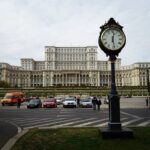
The tour ends at the Palace of Parliament, with the audio focused on a dictator’s ambitious dream turning into reality, then asking who actually fulfilled that ultimate wish.
This ending matters because you’ll have walked through the human arc already: rise, control, fear, downfall, survival stories, and symbols of identity. So the last stop becomes more than architecture. It becomes a question: how long do political fantasies last, and who benefits after the people pay the price?
Standing in front of the Palace of Parliament is a fitting end to a route that keeps returning to how power uses spaces—concert halls, headquarters, churches, and monuments.
How to plan your 3-hour walk so it feels smooth
This is set up as a self-paced loop, but 3 hours is still a real time box. For a better experience, I’d treat it like this:
- Start at the Romanian Athenaeum and listen early without multitasking.
- When the audio turns serious, don’t rush to the next pin. Pause first.
- For food, decide beforehand if you want to snack there or treat it as a sampling point for later.
Also remember: no physical devices or headphones are included. That means you’ll likely want your own listening setup for comfort, especially in busy areas.
And because you can download for offline use, it’s smart to do that before you head out. You’ll get fewer interruptions, and you won’t waste time troubleshooting while walking.
Who this tour is best for (and who might want something else)
This self-guided route is great if you:
- like walking city centers at your own pace
- enjoy audio storytelling more than reading long plaques
- want a single thread through Bucharest’s politics, symbols, and architecture in about three hours
It’s less ideal if you:
- want a human guide to answer questions on the fly
- dislike phone-based navigation or hearing a story through earbuds/speaker
- expect a lot of free time at each stop
Should you book Bucharest: From Dictator to Dracula?
If you’re visiting Bucharest for the first time and you want a fast way to understand the city’s big themes—power, fear, identity, and legend—this tour is a strong value. The offline audio, the map/photo stop matching, and the clear chapter-like storytelling make it easy to stay oriented.
I’d book it if you like your travel structured but not rigid. I wouldn’t book it as a replacement for a guided history tour if you crave detailed explanations from a live person. But for $6.69, this is an efficient way to leave Bucharest with stories you can remember, not just photos.
FAQ
How long is the Bucharest self-guided tour?
The tour lasts about 3 hours.
Where does the tour start and end?
It starts at the Romanian Athenaeum on Strada Benjamin Franklin 1-3, București, and ends in front of the Palace of Parliament on Strada Izvor 2-4, București.
Is it available in English, and do I need internet?
The tour is offered in English. You can also use it offline after downloading it, with no internet connection needed once it’s downloaded.
Do I need a human tour guide?
No. There is no human tour guide included; it’s audio and written guidance in the app.
Are headphones included?
No. Headphones (and other physical devices) are not included.
Can I get a full refund if I cancel?
Yes. Cancellation is free, and you can cancel up to 24 hours before the experience for a full refund. If you cancel less than 24 hours before, the amount paid is not refunded.
More Self-Guided Tours in Bucharest
- Life in Communist Bucharest: Self-Guided Puzzle Quest
★ 5.0 · 6 reviews - Bucharest 1989 Revolution Walking Tour with Smartphone App
★ 3.9 · 3 reviews - 3-Days in Bucharest: Smart Audio Guide with Travel Instructions
★ 5.0 · 3 reviews
More Tour Reviews in Bucharest
- Bucharest: Dracula’s Castle, Peles Castle, & Brasov Old Town
★ 4.5 · 17,858 reviews - Bucharest: Dracula Castle, Peles Castle & Brasov Old Town
★ 4.6 · 10,891 reviews - Bucharest: Dracula’s Castle, Peleș Castle & Brașov Day Trip
★ 4.4 · 6,100 reviews - Bucharest: Palace of Parliament Tickets and Guide
★ 4.3 · 3,182 reviews - Bucharest: Day Trip to Dracula Castle, Peles Castle & Brașov
★ 4.4 · 3,049 reviews - Bucharest to Dracula Castle, Peles Castle and Brasov Guided Tour
★ 4.5 · 2,933 reviews
Bran and the Dracula Trail
- Bucharest: Dracula’s Castle, Peles Castle, & Brasov Old Town
★ 4.5 · 17,858 reviews - Bucharest: Dracula Castle, Peles Castle & Brasov Old Town
★ 4.6 · 10,891 reviews - Bucharest: Dracula’s Castle, Peleș Castle & Brașov Day Trip
★ 4.4 · 6,100 reviews - Bucharest: Day Trip to Dracula Castle, Peles Castle & Brașov
★ 4.4 · 3,049 reviews - Bucharest to Dracula Castle, Peles Castle and Brasov Guided Tour
★ 4.5 · 2,933 reviews - Dracula’s Castle, Peles Castle and Brasov Day Trip from Bucharest
★ 4.5 · 1,804 reviews
Just In: The Latest Bucharest Reviews


Dracula & Bran Castle Day Trips, compared.
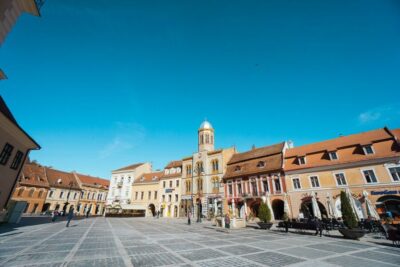 ★ 4.5Dracula’s Castle, Peles Castle, & Brasov Old TownFrom $4017,858 reviews
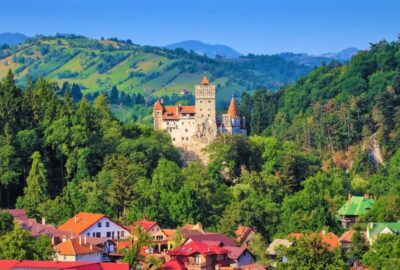 ★ 4.6Dracula Castle, Peles Castle & Brasov Old TownFrom $4010,891 reviews
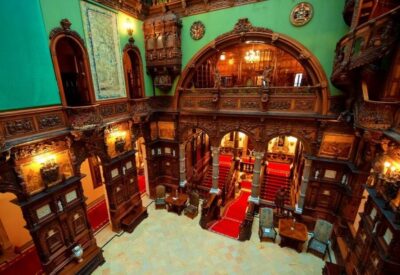 ★ 4.4Dracula’s Castle, Peleș Castle & Brașov Day TripFrom $366,100 reviews
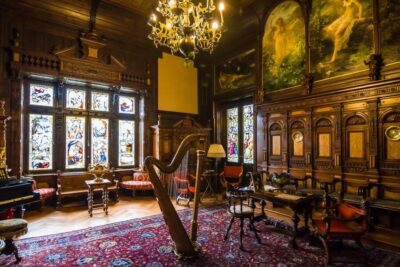 ★ 4.4Day Trip to Dracula Castle, Peles Castle & BrașovFrom $453,049 reviews
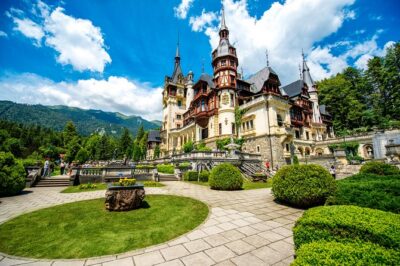 ★ 4.5Bucharest to Dracula Castle, Peles Castle and Brasov Guided TourFrom $332,933 reviews
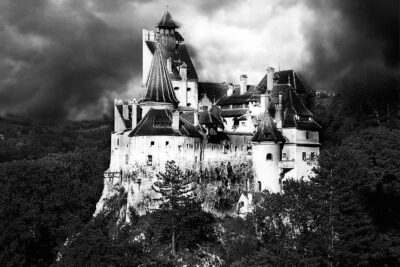 ★ 4.5Dracula’s Castle, Peles Castle and Brasov Day Trip from BucharestFrom $331,804 reviews
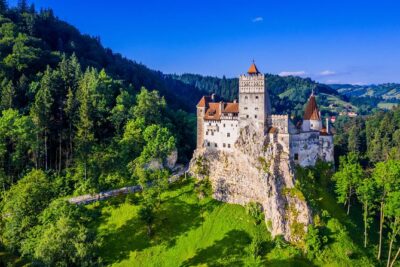 ★ 4.5Transylvania and Dracula Castle Full Day Tour from BucharestFrom $351,589 reviews
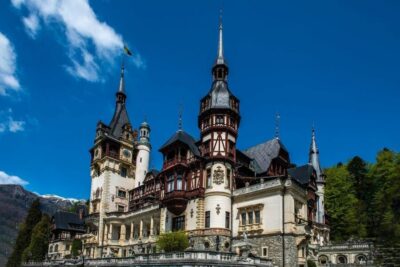 ★ 4.5From Bucharest: Brasov Peles & Dracula’s Castle Day TourFrom $651,244 reviews
Browse the lists this tour appears in