
REVIEW · BUCHAREST LANDMARKS & MONUMENTS
Bucharest: Romanian Athenaeum Guided Tour
Neoclassical Bucharest has a surprisingly emotional story. A private Romanian Athenaeum tour turns architecture into a chapter of national identity, with local guide Iana guiding you from the façade into the concert hall.
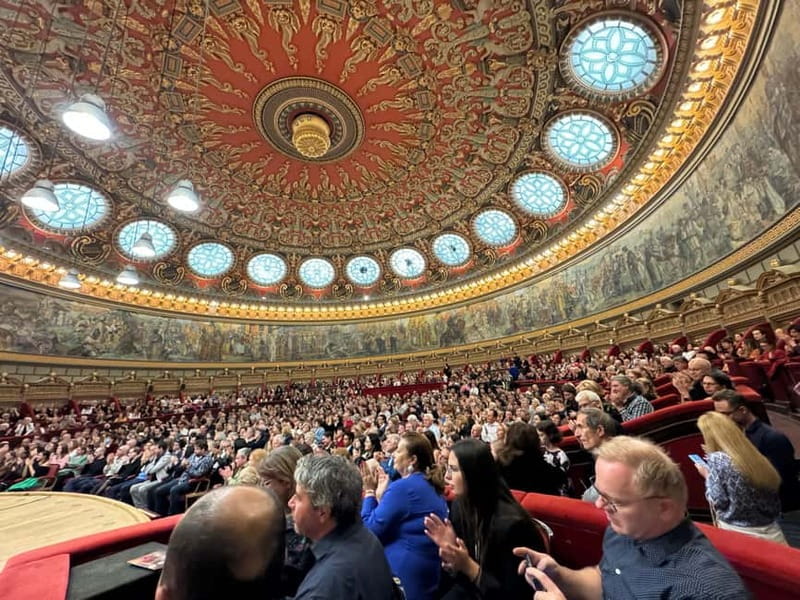
I love how the tour starts on the street level with the Ionic columns and the famous give-a-leu campaign, then keeps moving into the luminous interior details. I also love the panoramic fresco by Costin Petrescu, where Romanian history runs like a film across one curved space.
One drawback: it’s only 1.5 to 2 hours, so if you want to stare at every ornament for ages, plan a little extra time before or after.
- Artists’ entrance start: meet on the side right by the front steps, so you skip the guesswork
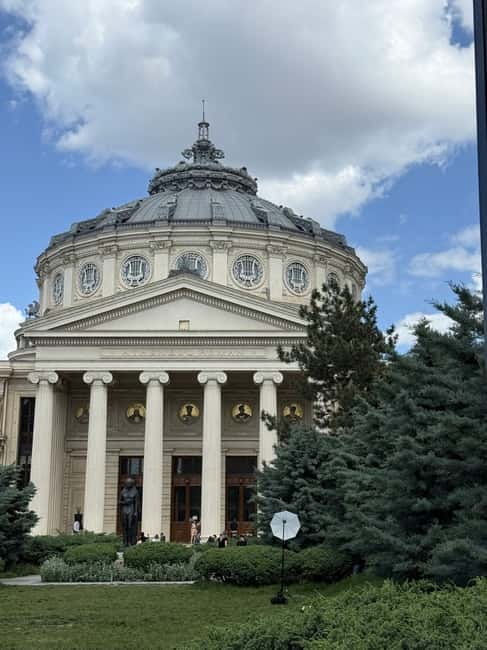
- Six Ionic columns with a purpose: you’ll connect Greek temple design to Romanian symbolism
- Dome and sound link: the guide explains why the hall’s shape matters for music
- Costin Petrescu’s panoramic fresco: Romanian history scenes in one sweeping view
- George Enescu Philharmonic context: you’ll hear how this building still shapes culture
In This Review
- From Side Steps to Six Ionic Columns: The Tour’s Best Opening
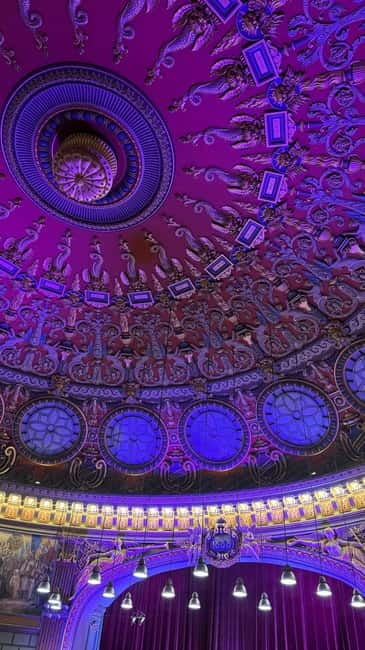
- The Vestibule and Dome: Where Light Meets Acoustics
- The Horseshoe Concert Hall: Seats, Shape, and Sound
- The Costin Petrescu Panoramic Fresco: Romanian History in One Sweep
- Why the George Enescu Philharmonic Matters Today
- Price, Timing, and What to Bring for a Smooth Visit
- What Makes This Tour Feel Different in Bucharest
- Should You Book the Romanian Athenaeum Guided Tour?
- FAQ
- Where is the meeting point for the Romanian Athenaeum tour?
- How long does the guided tour last?
- What languages is the tour offered in?
- Is flash photography allowed inside the Athenaeum?
- Is the tour private or small group?
- Is the tour suitable for young children?
From Side Steps to Six Ionic Columns: The Tour’s Best Opening
You start at the side entrance on the right, just beside the front steps of the Romanian Athenaeum. It’s called the artists’ entrance, and that little detail matters: you begin with a feel for how the building works for performers, not just tourists. Your guide, Iana, waits outside and keeps the pace easy.
The first big moment is the façade. Those six Ionic columns aren’t just decoration. You’ll learn how their classical inspiration signals wisdom and balance, and how the monument was pulled together by public will—not only official planning. In the 19th century, a campaign called Give a leu for the Athenaeum united ordinary people to fund the project. That kind of origin story makes the building feel personal, not museum-like.
Even before you go inside, you’ll get a framework for what you’re looking at. The guide helps you notice symbolism and craftsmanship rather than treating the façade like a photo stop.
The Athenaeum, the Arch and more landmarks
- Bucharest: Arch of Triumph Entry Ticket★ 4.0 · 64 reviews
- Princely Court of Târgoviște and Curtea de Argeș Monastery★ 4.5 · 50 reviews
- Experience Athenaeum on Private Bucharest Walking Tour★ 5.0 · 24 reviews
- Quest Experience in Bellu Cemetery Bucharest★ 4.5 · 18 reviews
The Vestibule and Dome: Where Light Meets Acoustics
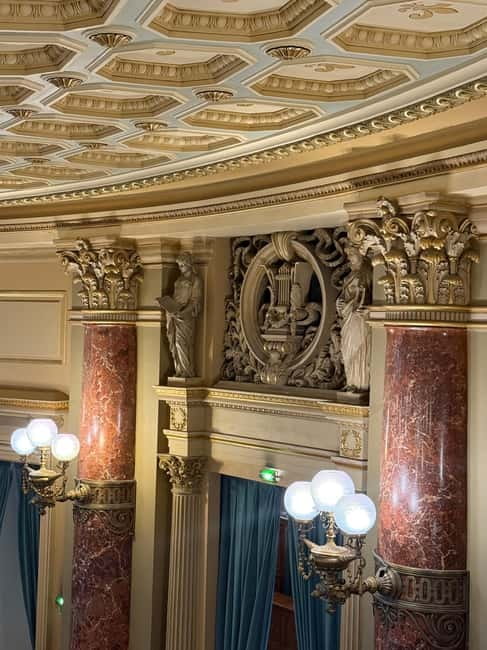
Inside, the mood shifts quickly. The circular vestibule feels bright and airy, with marble floors and careful decorative detail that rewards slow attention. This is a good place to take photos—just keep in mind flash photography isn’t allowed.
Then comes the dome. You’ll see how it’s not only impressive to look at; it plays a role in how sound behaves. The tour ties visual design to listening quality, which is one reason this kind of guided visit is worth it. Instead of only admiring beauty, you start thinking like a musician: how does the space shape voice, strings, and chorus?
You’ll also hear the building’s story in layers. The Athenaeum is described as a temple of culture and music, and that idea becomes clearer once the guide connects exterior symbolism to interior form. The hall was designed for performance, so the architecture isn’t neutral. It’s part of the show.
The Horseshoe Concert Hall: Seats, Shape, and Sound
The main concert space has an auditorium that’s horseshoe-shaped and seats nearly 800 people. That’s the kind of detail you don’t always pick up on your own. With Iana, you’ll understand why the room’s shape is central to the listening experience.
The guide explains architectural harmony as more than a phrase. You’ll hear how the design supports acoustics so music carries clearly and evenly. That’s why the tour isn’t just about sightseeing; it’s about understanding the venue as an instrument.
One thing I appreciate about this stop is that it helps you predict what you’ll notice later if you attend a performance. Even if you don’t see a concert, you’ll walk away with a practical mental map: where sound would travel, why seating layout matters, and how the hall’s proportions influence clarity.
If your timing lines up, you might also catch a rehearsal moment. Some visits have included chances to hear orchestra practice or Christmas singers rehearsal material, but it’s dependent on what’s scheduled. Either way, the guide’s background turns those brief sounds into something meaningful.
The Costin Petrescu Panoramic Fresco: Romanian History in One Sweep
The fresco is one of those artworks that’s hard to explain until you see it in place. Painted by Costin Petrescu in the 1930s, it offers a panoramic look at Romanian history through multiple eras—Roman conquest, medieval times, and the Great Union of 1918.
Here’s what makes this section work for you. The guide doesn’t just name scenes. You’ll get symbolism and historical significance for what you’re seeing, so the painting stops feeling like random chronology. Instead, it reads like a guided timeline wrapped in art.
Think of it as narrative architecture. The building is built as a monument to culture, and the fresco reinforces that theme by presenting national memory visually. If you care about history but find it heavy, this is the lighter route that still gives substance.
Also, because it’s a panoramic view, it’s easier to understand when you slow down. If you rush, you’ll miss transitions and recurring themes. Give yourself a bit of time here.
Why the George Enescu Philharmonic Matters Today
The Romanian Athenaeum isn’t only a landmark. It’s part of current cultural life. During the tour, you’ll learn it’s home to the George Enescu Philharmonic Orchestra and has a role on the international stage through major concerts and events.
This context changes how you read the venue. Without it, you’d probably treat the hall as pretty stone and historic walls. With it, you start seeing why the room still matters: the same acoustic design that impressed people when it was new is used to make music today.
You’ll also hear stories about how Romanian cultural life evolved around this space. Some tours include extra context about how the arts were affected during communism, which helps explain why certain themes, venues, and institutions played different roles across decades.
If you’re a music lover, you’ll likely leave wanting to attend a concert. Even if you’re not, it’s still a meaningful stop because the building is presented as living culture, not just heritage.



Price, Timing, and What to Bring for a Smooth Visit
At $44 per person for about 1.5 to 2 hours, the value comes from focus. You’re not spending all day in transit or doing a long checklist of unrelated stops. You’re getting a guided tour built around one highly symbolic building: architecture, acoustic design, and a major fresco.
The private format (or small groups, depending on what’s available) helps too. Iana can spend more time on the details that matter to you: decorative features, historical connections, and how the hall’s layout links to sound. If you like asking questions, this kind of tour tends to give you room to do it without feeling rushed.
Practical stuff to pack:
- Comfortable shoes (the interior surfaces and hall areas benefit from stable footing)
- A camera (flash is not allowed)
- Water
And a quick note on suitability: it isn’t suitable for children under 6, so plan accordingly if you’re traveling with little ones.
If you want the best experience, arrive ready to look, not just snap. This tour rewards attention. The guide’s job is to turn small cues—columns, dome details, fresco composition—into a coherent story.
What Makes This Tour Feel Different in Bucharest
Bucharest has plenty of pretty buildings, and you’ll see plenty of them fast. This experience is different because it teaches you how to read one building like a document. The stories connect funding (the give-a-leu campaign), design (Ionic columns and dome shape), and meaning (the panoramic fresco and national identity).
Iana’s approach also seems to land well with visitors who care about either art or history. Based on the experience many people describe, she takes time with decorative features and explains them in a way that makes the place feel understandable rather than distant.
You may also appreciate the pacing. The tour is short enough to fit into a packed schedule, but long enough for photos, questions, and careful viewing—especially inside the hall.
If you’re choosing between a quick exterior photo stop and a deeper cultural look, this is the one that turns your photos into memories with context.
Should You Book the Romanian Athenaeum Guided Tour?
Book it if you want one of Bucharest’s top cultural icons explained in a way that connects architecture to music and history. The cost makes sense when you consider what you get: private or small-group guiding, access to key interior highlights, and focused attention on the fresco and the concert hall’s role.
Don’t book it if you’re hunting for lots of different sites in one day. This isn’t a multi-stop spree. It’s a concentrated, high-quality visit to a single landmark.
My final tip: if you can, schedule it for a time when the venue might have activity. You might get extra moments like rehearsal sounds, and the guide will help you make sense of them on the spot.
FAQ

Where is the meeting point for the Romanian Athenaeum tour?
Meet at the side entrance on the right, just beside the front steps of the Romanian Athenaeum. This is the artists’ entrance, and your guide Iana will wait outside.
How long does the guided tour last?
The tour runs about 1.5 to 2 hours.
What languages is the tour offered in?
The live tour guide offers English and Romanian.
Is flash photography allowed inside the Athenaeum?
No flash photography is allowed, but photography is allowed without flash.
Is the tour private or small group?
It can be private or in small groups, depending on availability.
Is the tour suitable for young children?
The tour is not suitable for children under 6 years old.
More Tour Reviews in Bucharest
- Bucharest: Dracula’s Castle, Peles Castle, & Brasov Old Town
★ 4.5 · 17,858 reviews - Bucharest: Dracula Castle, Peles Castle & Brasov Old Town
★ 4.6 · 10,891 reviews - Bucharest: Dracula’s Castle, Peleș Castle & Brașov Day Trip
★ 4.4 · 6,100 reviews - Bucharest: Palace of Parliament Tickets and Guide
★ 4.3 · 3,182 reviews - Bucharest: Day Trip to Dracula Castle, Peles Castle & Brașov
★ 4.4 · 3,049 reviews - Bucharest to Dracula Castle, Peles Castle and Brasov Guided Tour
★ 4.5 · 2,933 reviews
The City's Landmarks and Monuments
- Bucharest: Arch of Triumph Entry Ticket
★ 4.0 · 64 reviews - Princely Court of Târgoviște and Curtea de Argeș Monastery
★ 4.5 · 50 reviews - Experience Athenaeum on Private Bucharest Walking Tour
★ 5.0 · 24 reviews - Quest Experience in Bellu Cemetery Bucharest
★ 4.5 · 18 reviews - Hiking to the Poenari Fortress and Princely Court of Târgoviște
★ 5.0 · 6 reviews - Bucharest Rooftop Tour
★ 5.0 · 6 reviews
Just In: The Latest Bucharest Reviews



Bucharest Landmarks & Monuments, compared.
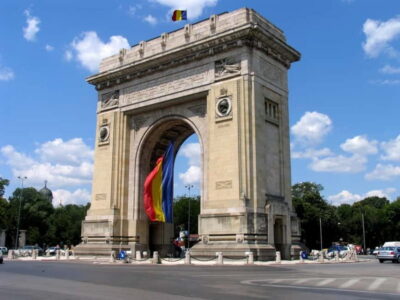 ★ 4.0Arch of Triumph Entry TicketFrom $464 reviews
 ★ 4.5Princely Court of Târgoviște and Curtea de Argeș MonasteryFrom $21050 reviews
 ★ 5.0Experience Athenaeum on Private Bucharest Walking TourFrom $5424 reviews
 ★ 4.5Quest Experience in Bellu Cemetery BucharestFrom $718 reviews
 ★ 5.0Hiking to the Poenari Fortress and Princely Court of TârgovișteFrom $1776 reviews
Bucharest Rooftop TourFrom $306 reviews
★ 5.0Hiking to the Poenari Fortress and Princely Court of TârgovișteFrom $1776 reviews
Bucharest Rooftop TourFrom $306 reviews
 ★ 4.7Cathedral of Salvation & Parliament TourFrom $504 reviews
 ★ 5.0Bison Sanctuary, Vlad the Impaler Princely Court & Dracula GraveFrom $1534 reviews
Browse the lists this tour appears in