REVIEW · BUCHAREST
Best of Romania in 10 Days
Romania is best seen by road. This tour strings together UNESCO monasteries, Transfagarasan Highway views, Saxon towns, and the big-name castles, all with a max group size of eight and an English-speaking guide. I love how it packs real variety into just 10 days, and I also like that the schedule is built around included transport and paid sights so you are not constantly figuring things out. The main drawback to consider: you will spend a lot of time in the car, so if you hate long drives, this may feel like work.
What makes the trip feel worth it is the pacing. You check in for nine nights in centrally located hotels, then let the guide handle routes, tickets, and timing while you focus on the places themselves.
In This Review
- Key Highlights You’ll Feel Fast
- Why This 10-Day Best of Romania Route Works
- The Small-Group Advantage (And Why It Matters)
- Day 1 Into Sibiu: Curtea de Argeș, Transfăgărășan, and Piata Mare
- Day 2: Corvin Castle, Alba Iulia, Turda Salt Mine, and Cluj-Napoca
- Days 3–4 in Bucovina: Voronet, Moldovița, Sucevița, and Iasi
- Day 5: Neamț Fortress and Piatra Neamț by Cable Car
- Day 6: Bicaz Gorges, Red Lake, Corund Pottery, and Biertan’s Fortified Church
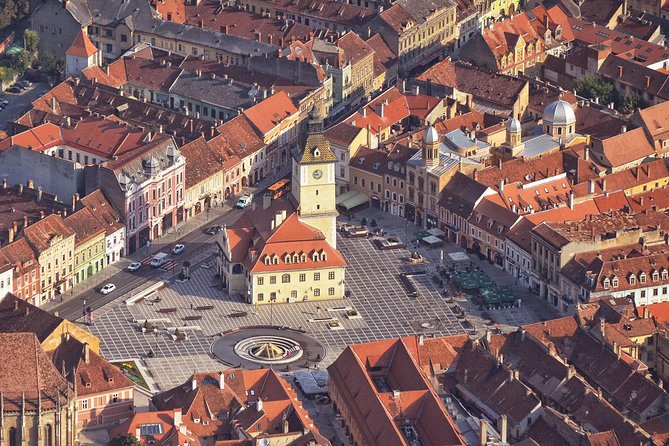
- Day 7: Viscri Fortified Church, Prince Charles, and Brasov’s Old Streets
- Day 8: Bran Castle, Peles Castle, and a Night Back in Bucharest
- Day 9 Bucharest: Palace of the Parliament and the Village Museum
- Day 10: Airport Transfer Timing
- Price and Value: What You Get for $2,907.69
- Who This Tour Suits Best
- Should You Book This Best of Romania in 10 Days?
- FAQ
- How many people are in the group?
- Where does pickup happen?
- How long is the tour?
- What accommodation is included?
- What meals are included?
- Are entrance fees included?
- Is transportation and airport transfer included?
Key Highlights You’ll Feel Fast
- Small group of 8 keeps stops calmer and makes it easier to ask questions.
- 9 nights in centrally located hotels means less time commuting once you reach each city.
- Curated route from Bucharest and back saves planning and helps you see far more than a city-only trip.
- UNESCO-painted monasteries in Bucovina with the famous Blue of Voronet.
- Transfagarasan Highway for big mountain views and photo stops.
- Guide-led castles and town walking with entrances included for major sites.
Still deciding? Line this one up against a few Bucharest favourites first.
- Bucharest: Dracula’s Castle, Peles Castle, & Brasov Old Town★ 4.5 · 17,858 reviews
- Bucharest: Dracula Castle, Peles Castle & Brasov Old Town★ 4.6 · 10,891 reviews
- Bucharest: Dracula’s Castle, Peleș Castle & Brașov Day Trip★ 4.4 · 6,100 reviews
- Bucharest: Palace of Parliament Tickets and Guide★ 4.3 · 3,182 reviews
Why This 10-Day Best of Romania Route Works
This is a Romania tour built for limited vacation time. Instead of picking one region, you ride a loop that covers Wallachia, Transylvania, and Bucovina, with Bucharest at both ends. In practice, it means you are not just seeing famous names on a map. You also get a sense of how Romania’s different regions look, sound, and feel.
The best part is that the trip is structured around ticketed stops and scheduled time in each place. You do not have to guess which museum is worth the line, or whether a fortress is open when you arrive. Entrance fees are included, so your day budget stays simpler.
The Small-Group Advantage (And Why It Matters)
A maximum of eight people changes the vibe in a big way. On long road days, you want a guide who can keep things organized, and a group size that does not turn every stop into a herd. With a smaller group, you also get more chances to hear context while you walk, not just at the bus door.
You are also dealing with a route that jumps across mountain roads and historic towns. That is where having a modern vehicle and a driver who can handle the schedule matters. In one highlight from a guest experience, the guide Emil stood out not just for history and local jokes, but also for driving skills that helped the day feel smoother.
You will still be on a timetable. This is not a slow travel “choose your own pace” trip. But it feels controlled in a good way.
Day 1 Into Sibiu: Curtea de Argeș, Transfăgărășan, and Piata Mare
Day 1 is a classic Romania starter: legend, royal monuments, and then a dramatic highway.
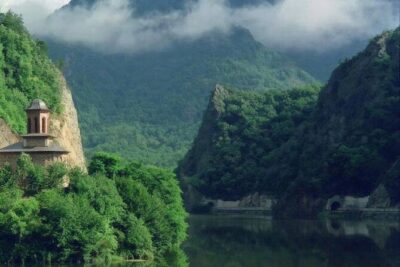
First, you visit Curtea de Argeș Monastery, built between 1512 and 1517. It is famous for the legend of Manole, a story about creation and sacrifice that people still connect to Romanian identity. The monastery also serves as a resting place for members of the Royal House of Romania, which adds a sense of continuity between myth and real history.
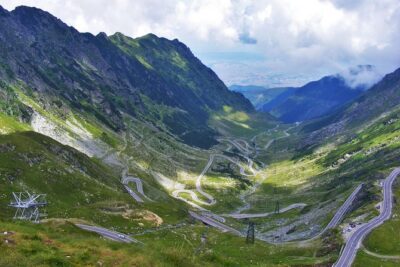
Next comes the big scenic payoff: the Transfăgărășan Highway. You drive through the Southern Carpathians and reach heights around 2042 meters, giving you that “how is this real” mountain perspective. If you care about photos, this is one of your best photo moments, even if you are not a photographer.
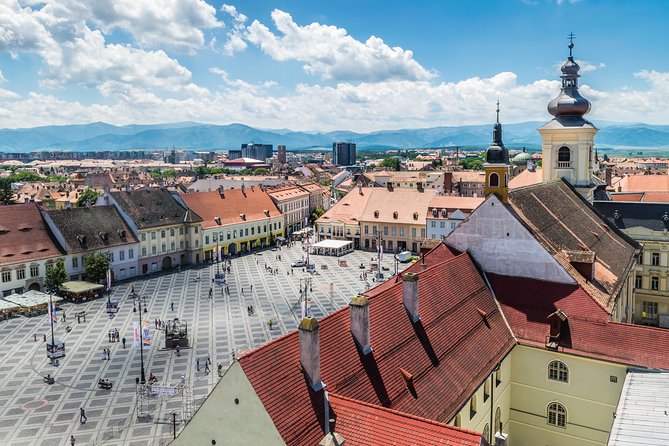
Then you finish in Sibiu, with a walking tour through the historical center and a stop around Piata Mare (Big Square). Sibiu is a nice place to land because it has a living city feel without being overwhelming. In summer it links to the International Theatre Festival, and in winter it is known for an impressive Christmas market, so the city has seasonal energy even beyond the tour dates.
Possible consideration: Day 1 is not short on geography. Even if each stop is around an hour, the driving means you may feel “on” from morning onward.
Day 2: Corvin Castle, Alba Iulia, Turda Salt Mine, and Cluj-Napoca
Day 2 pushes into central Transylvania with a satisfying mix of castle drama, union-era history, and something you probably did not expect: an underground playground.
You start at Corvin Castle in Hunedoara, also called Hunyad Castle. It is one of Romania’s largest castles, and the charm here is that it does not feel like a single-purpose movie set. It has a distinctive presence you can appreciate while walking its grounds.
Then you go to Alba Iulia and visit Alba Carolina Fortress, built between 1715 and 1738 in the Vauban style. The setting matters here because the town is strongly connected to the Union of Transylvania with Romania. You will hear how tens of thousands of peasants were involved in the fortress project, which gives the site a grounded, human scale rather than pure monument vibes.
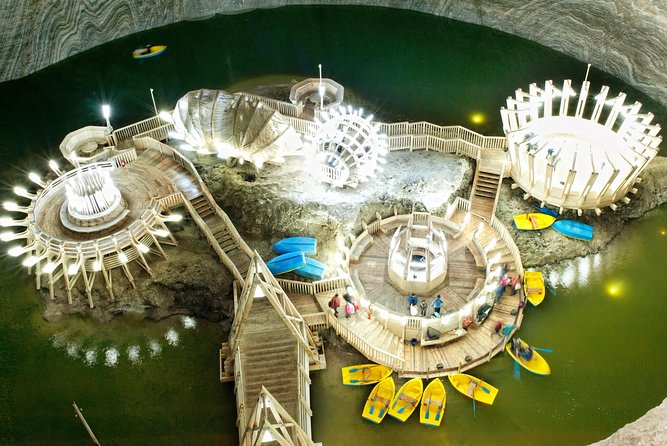
After that, the tour gets fun in a practical way at Turda Salt Mine. You go underground through 13 underground floors and find a theme park setup: a Ferris wheel, mini-golf, tennis court, and a lake. That combination makes it a strong break from castle and monastery days. If you travel with anyone who gets museum fatigue, this stop often helps.
You end in Cluj-Napoca, with a walking tour of the Old City Center and then free time to explore nearby cafes and bohemian restaurants around the hotel. That free time is important because it lets you reset after a day of structured stops.

Days 3–4 in Bucovina: Voronet, Moldovița, Sucevița, and Iasi
If Romania has a signature look, Bucovina is where you see it. The painted monasteries are not just pretty walls. They are working cultural landmarks tied to UNESCO recognition and centuries of tradition.
On Day 3 you stop in Bistrița before heading toward Bucovina. There is a tourism information stop connected to Bram Stoker’s world—specifically a nod to Jonathan Harker. Even if you are not a Dracula superfan, it is a clever way to make the region feel connected to the stories people carry.
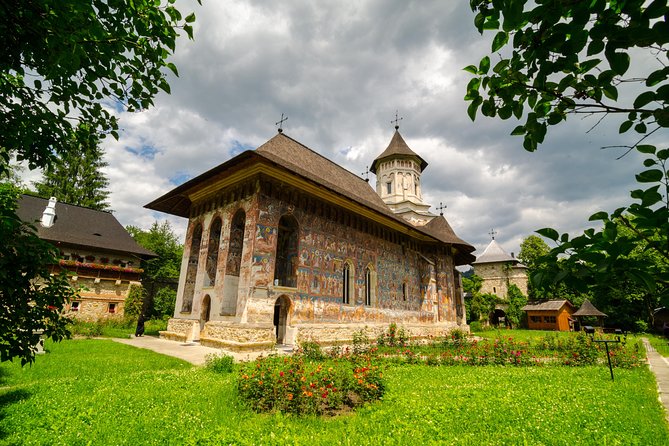
Then you visit Voroneț Monastery, one of the 8 UNESCO Painted Monasteries of Bucovina. The monastery is known for its unique blue, often referred to as the Blue of Voroneț, and the building dates back to 1488. This is the kind of site where guided commentary helps a lot, because you are learning what you are looking at, not just snapping pictures and moving on.
In the evening you reach the hotel and enjoy a traditional Romanian dinner. That included meal matters because it gives you one less thing to plan and lets you try local flavors when you are tired from the day’s drive.
Day 4 continues with Moldovița Monastery and Sucevița Monastery. Moldovița is known as one of the oldest monastic settlements in the area, built between 1532 and 1537 and listed in UNESCO in 1993. Sucevița, built in 1585, comes with a legend involving materials brought by a woman using a cart pulled by oxen to redeem her sins. These stories add texture to the stones.
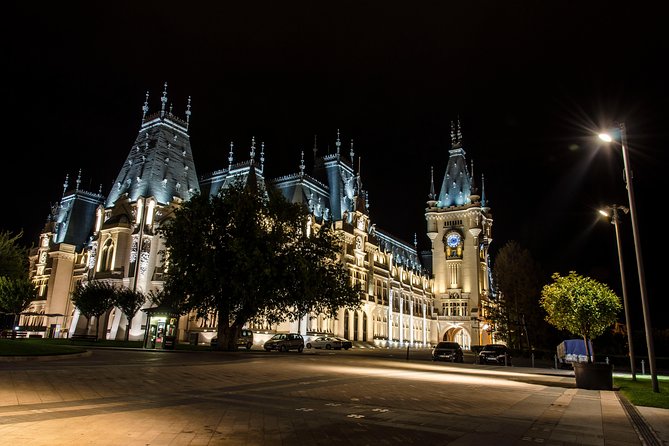
Then you arrive in Iași and get a short city tour before checking in. Iași is Romania’s second-largest city and the birthplace of many Romanian personalities, so it gives you an urban contrast after days of monastery landscapes.
Day 5: Neamț Fortress and Piatra Neamț by Cable Car
Day 5 starts with Neamț Fortress near Târgu Neamț. The site was built during the reign of Peter I (1375–1391). Fortresses like this are where you can picture medieval power in a very direct way: walls, vantage points, and a sense of how geography mattered.
Next is Piatra Neamț, where you get an evening cable car ride before checking in. The value of this stop is that it gives you a different perspective without requiring a long hike. Even if you consider yourself not very athletic, a cable car option can still deliver the views that people usually work for.
Practical tip: Wear comfortable shoes anyway. Even with shorter walks, you will be on uneven surfaces in historic areas.
Day 6: Bicaz Gorges, Red Lake, Corund Pottery, and Biertan’s Fortified Church
This day is all about the switch from dramatic nature to living craft to stone defense.
You drive through the Bicaz Gorges to reach Red Lake, known for its unusual color. The tour explains that Red Lake formed in 1837 when heavy storms fractured Mt. Ucigasu and debris blocked streams, leaving deposits with a reddish tint. Hearing the story helps you understand why the lake looks the way it does, rather than treating it as a random roadside stop.
Then you reach Corund, one of Transylvania’s pottery centers. The clay for the pottery is extracted from a nearby stream, and locals also work in woodworking and trade. If you like souvenirs that feel tied to place and process, this kind of stop is where you can actually make a thoughtful choice.
After Corund, you visit Biertan Fortified Church, a UNESCO Village with Fortified Churches of Transylvania. Saxon settlers founded the area in the 13th century, partly because the soil supported winemaking. That detail matters because it connects architecture to everyday life—food and agriculture shaping where people built and how they defended themselves.
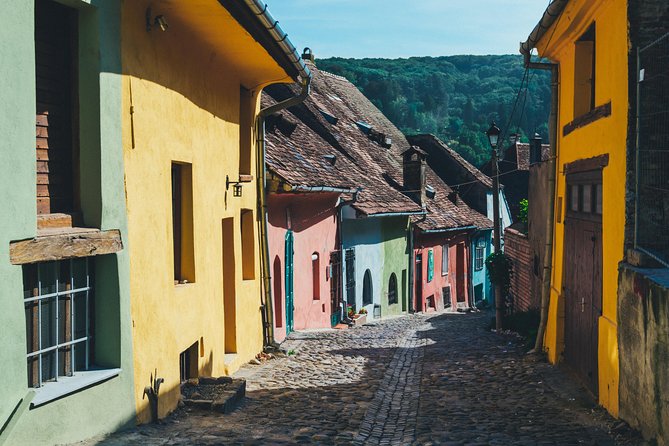
The day ends in Sighișoara, walking through the historic center. Sighișoara is known for having the last inhabited citadel in Europe, and it is also UNESCO-listed. That combination of “defended and lived in” makes it feel more human than a pure ruin.
Day 7: Viscri Fortified Church, Prince Charles, and Brasov’s Old Streets
Day 7 shifts into the softer side of Transylvania: villages, traditions, and a beautiful city stop.
You start in Viscri, a village that locals preserved in a traditional way. The tour notes that it charmed Prince Charles through the simplicity and care for local customs. You visit Viscri Church and also spend time meeting women known for their culinary skills. That household-level craft is part of the real reason these fortified villages matter; it is not just walls and towers.
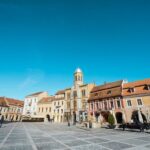
Then you move to Brașov for a short walking tour in the historical center. Brașov is a great “breather” city after fortress and monastery days. The streets are easier to wander, and you get a sense of modern rhythm on top of medieval structure.
Day 8: Bran Castle, Peles Castle, and a Night Back in Bucharest
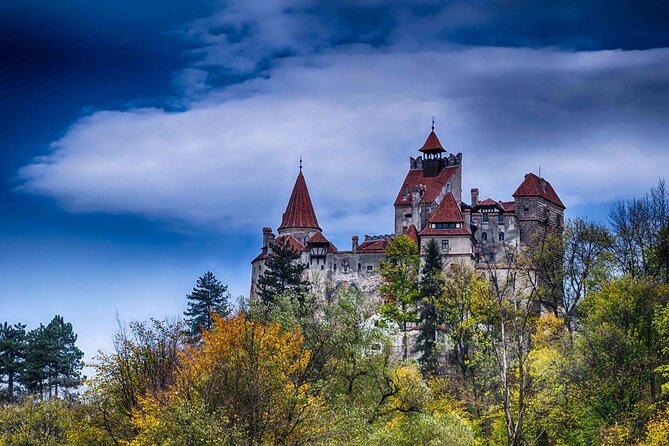
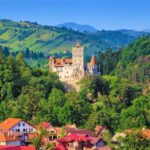
Day 8 is when Romania’s biggest name-brand landmarks show up, and the order helps. You begin with Bran Castle, about 30 minutes from Brașov. The tour connects Vlad the Impaler and his connection to Bram Stoker’s Dracula, which is useful if you ever felt like Dracula lore floats free from real places.
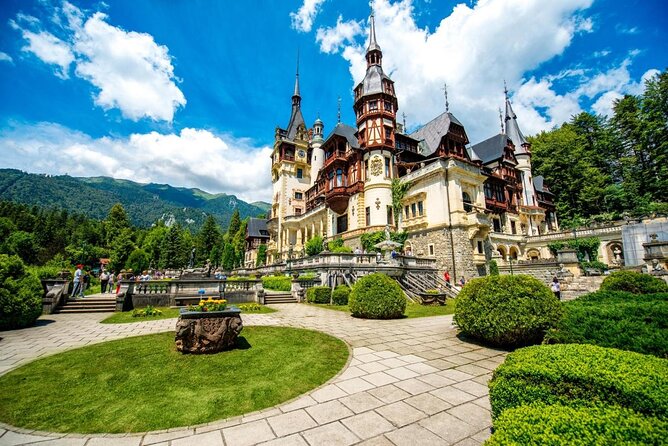
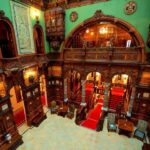
From there, you head to Sinaia to visit Peles Castle. The tour describes it as the first fully electrified castle in Europe. You also learn concrete details that make it more tangible: around 160 rooms, over 30 bathrooms, and a footprint of about 3200 square meters. It also houses an important collection of paintings and a notable set of European and Oriental weaponry, over 4000 pieces. Even if castles are not always your thing, the specificity makes Peles feel like a museum you can actually picture.
Then at night you return to Bucharest, with free time around the Old Town. That evening break is a good way to shift gears from country sites to city atmosphere.
Day 9 Bucharest: Palace of the Parliament and the Village Museum
Bucharest on Day 9 is built around two major contrasts: monumental power and everyday life.
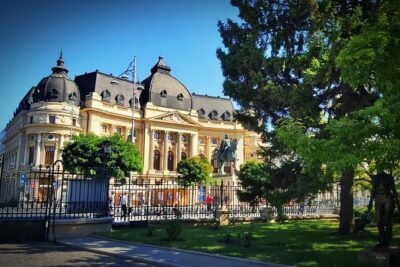
First you tour the Palace of the Parliament, described as the People’s House and one of the largest buildings in the world. The tour explains it was designed during Nicolae Ceaușescu’s era to house state institutions, with claims about earthquake resistance and protection from nuclear attacks. Whether you agree with every interpretation of that era, the building is impossible to ignore. It is a real lesson in how governments can shape architecture.
Next you go to the Old Town area for free time for lunch. This is your chance to pick what you want rather than staying on the guide’s pace.
Finally, you visit the Bucharest Village Museum. It spans about 14 hectares and includes 380 monuments, 60,000 traditional objects, and over 250,000 archived documents related to traditional Romanian life. This stop is valuable because it is a bridge between what you saw in the countryside (villages, churches, crafts) and what those traditions look like when preserved in one place.
Day 10: Airport Transfer Timing
On the last day, you are transferred to the airport (Otopeni), timed to your flight schedule. The practical value here is simple: after 9 full days of sightseeing, you do not want to add stress by trying to figure out transport on your own.
The tour keeps the logistics clean at the end, so you can leave Romania without the usual scramble.
Price and Value: What You Get for $2,907.69
At $2,907.69 per person, this tour is not a budget impulse buy. But the price also covers a lot that adds up quickly when you travel independently: nine nights of centrally located hotel accommodation, professional English-speaking guiding, modern transportation, airport pickup and drop-off, entrance fees, and breakfast for nine days. You also get one included dinner during the itinerary.
If you have ever priced a trip where you cover multiple regions and pay for guides, drivers, and tickets, you know how fast the total grows. The real value here is that you are paying for the coordination. That is what turns Romania from a pile of far-apart destinations into a workable route that fits 10 days.
One more detail: the price is based on two people sharing a double room. If you travel solo, you will need to pay a single supplement fee. So the best value shows up when you can share.
Who This Tour Suits Best
I think this works best if you:
- have about 10 days and want to see more than one region of Romania
- prefer guided structure over constant planning
- like a mix of scenery, historic sites, and a few hands-on moments (like the salt mine)
- are comfortable with a moderate physical fitness level, mostly for walking in historic centers and uneven surfaces
It may not be ideal if:
- you want long, slow stays in only one or two places
- you get cranky after many hours on the road
- you expect meals and timing to be entirely self-directed (some meals are included, but not all)
Should You Book This Best of Romania in 10 Days?
If your goal is a fast, well-paced Romania highlight reel from Bucharest to Bucharest, I would book this. The small group size helps, and the combination of painted monasteries, fortified churches, major castles, and a real day in Bucharest gives you a satisfying cross-section of the country.
I would think twice if you dislike road travel. This is a tour where the journey is part of the experience, and you should be willing to spend time in the car to reach the next landmark.
If you do book, pack for walking and photos, keep a flexible attitude for mountain roads, and lean into the guide’s storytelling. In particular, Emil’s mix of history, local jokes, and good driving is the kind of guiding that turns “we saw it” into “we understood it.”
FAQ
How many people are in the group?
The tour has a maximum of 8 travelers.
Where does pickup happen?
Pickup is offered from any hotel in Bucharest, and the tour starts at 9:00 am.
How long is the tour?
The duration is approximately 10 days.
What accommodation is included?
You get 9 nights of included accommodation in centrally located hotels.
What meals are included?
Breakfast is included for 9 days, and dinner is included (as listed in the inclusions).
Are entrance fees included?
Yes, entrance fees are included.
Is transportation and airport transfer included?
Yes. You get transportation in a modern vehicle, plus airport pick-up and drop-off.
More Tour Reviews in Bucharest
- Bucharest: Dracula’s Castle, Peles Castle, & Brasov Old Town
★ 4.5 · 17,858 reviews - Bucharest: Dracula Castle, Peles Castle & Brasov Old Town
★ 4.6 · 10,891 reviews - Bucharest: Dracula’s Castle, Peleș Castle & Brașov Day Trip
★ 4.4 · 6,100 reviews - Bucharest: Palace of Parliament Tickets and Guide
★ 4.3 · 3,182 reviews - Bucharest: Day Trip to Dracula Castle, Peles Castle & Brașov
★ 4.4 · 3,049 reviews - Bucharest to Dracula Castle, Peles Castle and Brasov Guided Tour
★ 4.5 · 2,933 reviews