REVIEW · BUCHAREST
9 days Balkans Tour from Bucharest to Sofia and Budapest
Nine days, four countries, one steady route.
This tour strings together big sights without the usual rerouting, thanks to a one-way plan and a climate-controlled coach. I especially like how it keeps you moving through Romania, Bulgaria, North Macedonia, Albania, Montenegro, Bosnia, Serbia, and Hungary with guided walking blocks in key cities.
Two things I’d book for: the daily hotel breakfasts and the way the tour leans on local guidance in multiple places (including Romania, Sofia, Skopje, Tirana, and Sarajevo). If you like seeing places with the right context, that handoff between guide teams helps.
One drawback to factor in: transport comfort and schedule timing. There’s at least one report of an uncomfortable small van and issues with the front windshield, plus complaints that the day’s start times were late, which can steal daylight from sightseeing.
In This Review
- Key takeaways before you go
- The route is built for efficiency, not slow wandering
- From Bucharest pickup to Lovech’s caves and waterfall country
- Sofia at walking pace: the gold dome mix-and-match evening
- Rila Monastery then Skopje: two UNESCO-style anchors without extra fuss
- Skopje’s Old Bazaar + Ohrid’s lakefront: a change of tempo
- Tirana: big square energy, then back on the road
- Kotor’s Stari Grad: arriving in the evening helps the vibe
- Mostar’s bridge story and Sarajevo’s two-empires layout
- Belgrade and Novi Sad to land in Budapest
- Hotels and breakfast: 4-star comfort, but not all “4-star” feels equal
- Transport and walking pace: where expectations need to be honest
- Price and value: what you’re actually paying for
- Tips to make this tour feel smooth, not exhausting
- Should you book this Balkans route?
- FAQ
- Where do I start this tour in Bucharest?
- When and where does the tour end?
- What’s included in the tour price?
- Are entrance fees included?
- What’s the walking level like?
- How large is the group?
- Do I need a passport?
- How much are tips for the tour staff?
- What’s the cancellation deadline for a full refund?
Key takeaways before you go
- One-way routing cuts backtracking and keeps transfers more efficient
- Breakfast + 4-star hotels for 8 nights reduces daily planning stress
- Local city guides in several countries help you understand what you’re seeing
- Multiple UNESCO highlights land in the itinerary without extra hunting
- Moderate walking (often 2–4/5 hours) means good shoes matter
- Small group max 46 keeps the experience from feeling like a stampede
Still deciding? Line this one up against a few Bucharest favourites first.
- Bucharest: Dracula’s Castle, Peles Castle, & Brasov Old Town★ 4.5 · 17,858 reviews
- Bucharest: Dracula Castle, Peles Castle & Brasov Old Town★ 4.6 · 10,891 reviews
- Bucharest: Dracula’s Castle, Peleș Castle & Brașov Day Trip★ 4.4 · 6,100 reviews
- Bucharest: Palace of Parliament Tickets and Guide★ 4.3 · 3,182 reviews
The route is built for efficiency, not slow wandering
This is a true “cover ground” trip. You’re not just doing a few day trips and calling it a vacation. You’ll move from Bucharest toward Sofia, then push through the Balkans all the way to Serbia and Hungary, ending in Budapest.
The big advantage is that it’s arranged as a linear route. That helps you avoid that common Balkan-tour problem: the same roads twice, the same scenery twice, and more time wasted than you expected. The trade-off is that you should accept more coach time between stops.
If you like a plan that’s tight but not frantic, and you’re okay trading a long lie-in for a full day, this works well. If you dream of wandering at your own pace all day, this format will feel more structured than you might want.
From Bucharest pickup to Lovech’s caves and waterfall country
Day 1 starts from the pickup point at Bulevardul Regina Elisabeta 7, București 030167 (meeting time listed as 08:30am overall, with Day 1 described as departing at 08:00 from a bus stop near University Square). From there, you’ll head for Bulgaria’s cave-and-waterfall scenery.
Devetashka Cave is the kind of place that’s easier to enjoy than it sounds. It’s a karst cave near waterfalls, and one of the reasons it’s popular is that it’s well lit and covered with greenery on the floor. In spring and summer, it can feel almost like a forest space that happens to be underground. Entrance is not included, so expect to pay for the ticket on-site.
Next comes Krushunskiye Waterfalls, described as Bulgaria’s biggest travertine cascade. The key idea here is not just height (about 20 meters for the main waterfall), but the terraces and small mineral pools. It’s the sort of stop where photos do justice, but you’ll also want time to slow down and look at the rock formations.
After those two nature stops, you end the day in Lovech, with an overnight stay in a 4-star hotel. This is a smart placement: you get the nature hit early, then settle in before the city days start.
Practical note: if you’re sensitive to timing, remember Day 1 involves multiple stops before the hotel. Pack a small water bottle and wear shoes that work on uneven surfaces.
Sofia at walking pace: the gold dome mix-and-match evening
Sofia is a short stop, but it’s a satisfying one. In the evening you arrive and then do a 3-hour city center walking tour with major sights clustered close enough that the walk actually feels like an orientation, not a long haul.
You’ll see the Alexander Nevsky Cathedral with its gold dome, plus the Sveta Sofia Church. Then the tour shifts gears across religions and eras, including the Banya Bashi Mosque and the Sofia Synagogue, and wraps with time on the Vitosha shopping street.
The best part of this evening plan is the contrast. In a few hours you get Orthodox Christianity, Ottoman-era Islamic architecture, and a visible Jewish presence in the city’s center. It’s a quick way to understand why Sofia feels like a crossroads rather than a single-theme capital.
Tip: for this kind of walk, plan for weather. The itinerary doesn’t promise a long indoor schedule, and evening in cities can swing fast from comfortable to chilly.
Rila Monastery then Skopje: two UNESCO-style anchors without extra fuss
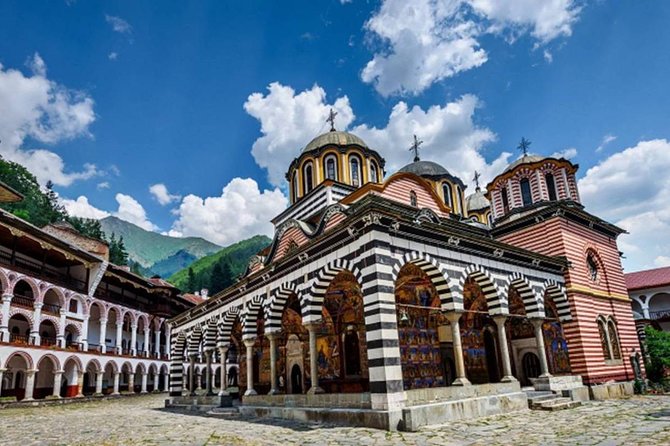
After breakfast, the tour heads to Rila Monastery, Bulgaria’s best-known monastery site and a UNESCO World Heritage stop. It’s tied to the 10th-century Saint Ivan Rilsky (St John of Rila), and the monastery is framed as a major center of Bulgarian culture and Orthodox belief for over 1,000 years.
You’re also told the visit includes the Church, noted for artistic value and decorated by prominent 19th-century masters from regional schools of painting and woodcarving. Even if you’re not a museum person, monasteries like this are often about the details: iconography, woodwork, and the overall sense of space.
The entrance is listed as free in the itinerary for this stop, which matters for value. Monastery tickets can add up on multi-country trips.
Then you move to Skopje for an orientation tour before your centrally located hotel. Orientation is only useful if it helps you find your bearings later, and Skopje’s plan is exactly that: riverfront, Old Bazaar lanes, and key landmarks so you can understand the city layout when you return on foot.
Skopje’s Old Bazaar + Ohrid’s lakefront: a change of tempo
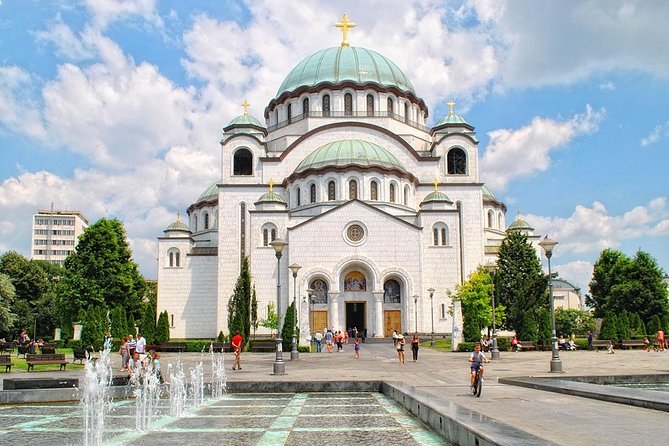
Skopje Day 4 doubles down with a walking tour after breakfast. You’ll cover the Vardar river quay, the Old Bazaar (described as the biggest preserved bazaar in the Balkans), and the Memorial House of Mother Teresa. There’s also Kale Fortress, plus Macedonia Square with the statue of Alexander The Great on horseback.
This is one of the tour’s strongest “culture in layers” days. Skopje isn’t just a pretty old town; it’s a place where different time periods sit side-by-side, and the walk is structured to show that.
Then you continue to Ohrid, another UNESCO World Heritage site, located on the shores of Lake Ohrid. This is one of those destinations where the first sight can be enough to slow you down. The itinerary frames it as the border area of Macedonia and Albania, with the old city and churches, monasteries, and basilicas included in the walk.
Highlights on the walking route include the Ancient Theater, Sveti Sofia Church, Tsar Samuil’s Fortress, and a pedestrian shopping street. Ohrid’s “old lake” angle is also included: it’s described as Europe’s oldest lake, formed over three million years ago. Even if that number doesn’t land emotionally, it gives you a sense of scale.
Real talk: Ohrid walks can be charming but also tiring. If you have moderate fitness, plan to take it slow on hills and cobblestones.
Tirana: big square energy, then back on the road
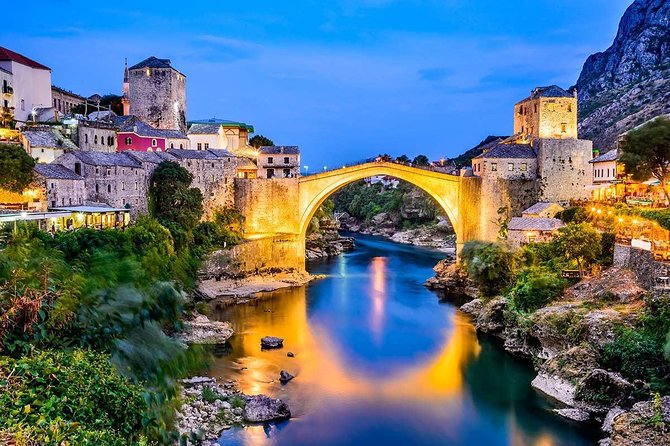
Day 5 brings you to Tirana, Albania’s capital, after crossing the Macedonian–Albanian border. Your city center walk focuses on major landmarks: Skanderbeg Square, the National History Museum, Et’hem Bey Mosque, and the Skanderbeg statue.
This is a good “quick understanding” stop. Tirana can feel different from the Orthodox-heavy rhythm of Bulgaria and North Macedonia, and the walk emphasizes a more public, square-and-monument style of city identity.
If you like photos with architecture and open space, Tirana’s main square is a strong anchor. Just remember you’re still in transit mode: you’ll leave again the same tour cycle.
Kotor’s Stari Grad: arriving in the evening helps the vibe
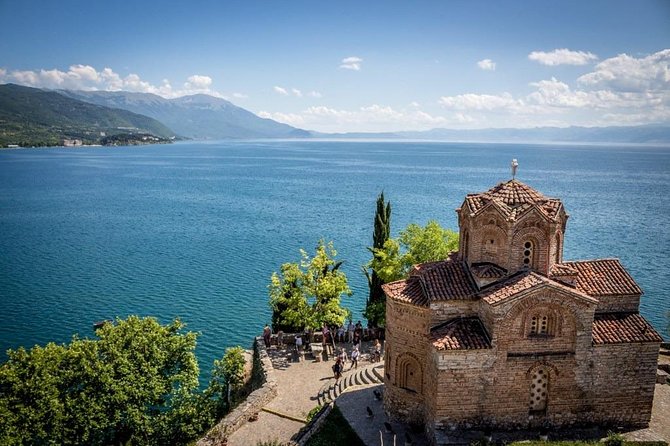
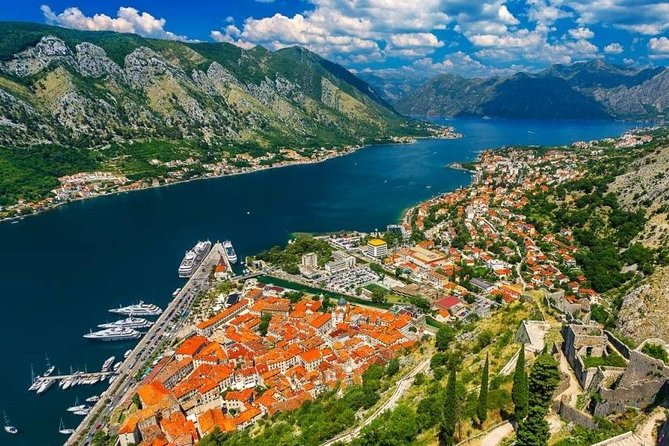
On Day 6, you arrive in Kotor and spend the evening exploring Stari Grad (Old Town), a UNESCO World Heritage site. The important detail here is how Kotor works at night: once people thin out, those fortress walls and narrow streets can feel much more atmospheric.
The itinerary gives a 3-hour walk window. That’s enough to get a feel for the old town without trying to turn it into a full-day hike.
Practical note: even though it’s an old town walk, it’s still a walk. Wear shoes you can trust on uneven ground. And keep water handy, because you don’t want “castle steps dehydration” to spoil the evening.
Mostar’s bridge story and Sarajevo’s two-empires layout
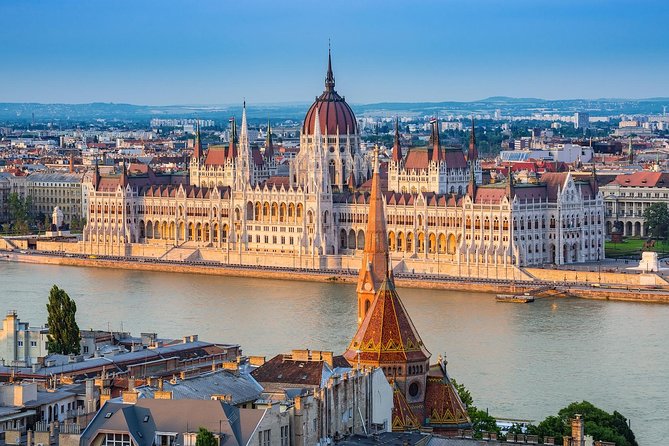
Day 7 starts with Mostar after breakfast. The walk centers on the Old Bridge of Mostar. The story matters here: the bridge was built in 1566, and it became central to Mostar’s development. It was destroyed in November 1993 during the Siege of Mostar, and the walking tour is specifically framed to cover the reasons and the facts behind that destruction.
Then the itinerary adds a striking human tradition: since the bridge’s reconstruction, there’s been bridge diving, with young divers competing to earn a few euros by jumping off in front of visitors.
This is one of those stops where you’ll probably feel two things at once: beauty and heaviness. The bridge is a landmark, but it also points back to a painful modern chapter.
Next comes Sarajevo. The drive is described as scenic, passing by Jablanica Lake and the Neretva River canyon. Once you arrive, you get a 2.5-hour walking tour of the old part and city center, covering Ottoman and Austria-Hungarian parts, including markets, bazaars, mosques, churches, and synagogues.
Key points included: the Latin Bridge, the story about how WWI was triggered there, plus Sarajevo’s 1984 Winter Olympics and life during the Siege of Sarajevo.
This day is memorable because Sarajevo is taught like a city of contrasts. You see how empires shaped the street grid and architecture, and how religions share the same walking space.
If you’re the kind of person who likes a little context before you take photos, Sarajevo is where the tour’s guiding time can pay off most.
Belgrade and Novi Sad to land in Budapest
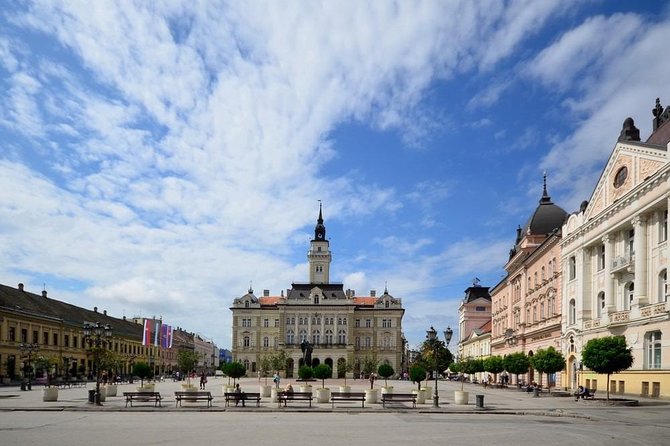
Day 8 pushes into Serbia with Belgrade in the afternoon and an extensive city walk: Republic Square, National Theater, National Museum, Skadarlija (bohemian quarter), the Ottoman-heritage oldest part, an only mosque in the city, plus Kalemegdan Park and the fortress area. You’ll also pass Victor, and see the confluence of the Sava and Danube rivers.
This is an important transition day because you’re moving from Balkan city stories into the more central Danube-world feel.
Day 9 adds a stop in Novi Sad before Budapest. Novi Sad’s plan includes Zmaj Jovina Street, the promenade, the ornate Palace of the Orthodox Bishop, and Dunavska street with its 19th-century houses. You also get the Danube embankment and an exterior look at Petrovaradin Fortress on the other bank.
Then in the evening you arrive in Budapest and have a 3-hour introduction to the city described as the Queen of Danube. Exact sights aren’t listed in the summary here, but the tour gives you a walking orientation so you can build the rest of your trip with confidence.
If you’re finishing the tour, Day 9 is best treated as a landing day. You’ll be tired. That’s normal. Use the final evening walk to decide what you want to return to tomorrow.
Hotels and breakfast: 4-star comfort, but not all “4-star” feels equal
This tour includes 8 nights of accommodation in 4-star hotels with breakfast (8). That’s a big part of the value. Breakfast is one less meal you have to think about during a day that already has a full schedule.
Still, “4-star” doesn’t mean the same thing everywhere, and even within the same country, hotel quality can vary. At least one past guest report flagged hotels as not good, while also saying the tour guide was attentive.
My practical take: expect clean rooms and basic comfort, but don’t count on a hotel being the best part of your trip. On a route this busy, most of your time is spent outside, which is exactly why the breakfast inclusion matters.
Transport and walking pace: where expectations need to be honest
You’ll travel by an air-conditioned vehicle for the entire tour. That’s the promise for long distances.
But there’s a caution worth taking seriously: one report complained about a very uncomfortable small van, hard seating, and even a broken front windshield that put safety in question, plus complaints about driving speed. I can’t verify vehicle condition for your exact date, but you can protect yourself by asking questions at check-in: seat comfort, safety checks, and what vehicle type you’ll use.
On foot, the tour is described as easy walking with moderate physical effort. The itinerary includes walking tours often in the 2 to 4/5 hour range, and you may need to carry your bag up a few steps when entering hotels (elevators usually exist). Example distances given: Sofia 1.5 hours equals about 4 km, and Skopje 1.5 hours equals about 3 km.
So bring shoes that handle cobblestones and slopes. If you want to take photos often, build in tiny pauses. That keeps the day enjoyable instead of just “completed.”
Price and value: what you’re actually paying for
The price listed is $1,191.42 per person for about 9 days. That’s not cheap, but it’s not random either.
Here’s what you’re getting for that money, based on the included features:
- 8 nights in 4-star hotels
- Breakfast included 8 times
- Air-conditioned transport across the whole route
- Professional tour leader
- Walking tours in the major cities
- A mobile ticket
- English-speaking operation
What’s not included matters, too:
- Tips for driver/tourguide: 5 euro/day/person
- Food and drinks
- Museum or site entrance fees in general
- And specifically, entrance tickets are marked as not included for Devetashka Cave and Krushunskiye Waterfalls
When I look at value, the key is logistics. Multi-country routes are expensive mainly because of transit time and hotel costs. This package reduces decision fatigue: you get hotels and transfers handled, and you buy less time on your own figuring-out.
If you’re comfortable with group travel, this price can be reasonable for what’s included. If you hate coach days or hate scheduled walking blocks, you might feel it’s overpriced because your main goal becomes “endure the plan.”
Tips to make this tour feel smooth, not exhausting
A tour like this works best when you travel smart, not when you try to out-stamina it.
- Pack light enough to handle short stair carries. The plan notes you may carry your bag some steps into hotels.
- Bring a rain layer and a small day bag. Coastal and lakeside cities can change fast.
- Use the walks to ask questions, not just take photos. Sarajevo and Sofia especially reward guided context.
- Keep some flexibility for timing. Day 1 starts early in the description, but there’s a reported issue of late starts. Build cushion into your expectations.
- Plan for entrance fees even when some sites are listed as free. Two major nature stops are specifically not included.
Should you book this Balkans route?
Book it if you want a structured, one-way route with good hotel comfort, included breakfasts, and guided city walks across a wide geographic sweep. It’s also a solid fit if you care about seeing religious and imperial layers in places like Sofia, Skopje, Sarajevo, and Belgrade, without spending your vacation building an itinerary day by day.
Hold off or choose a different style if you’re sensitive to transport comfort or if you rely on tight daily schedules to feel satisfied. Also, if you hate walking tours in the 3–5 hour range, this may feel too much.
If you do book, treat the tour like a starter kit. You’ll finish with a strong map in your head, and then you can return on your own to the places you want to linger.
FAQ
Where do I start this tour in Bucharest?
The start meeting point is Bulevardul Regina Elisabeta 7, București 030167, Romania, with a listed start time of 8:30am.
When and where does the tour end?
The tour ends in Budapest, with the end point listed as Kerepesi út 2, 1087 Hungary, near the Train Station in Budapest.
What’s included in the tour price?
Included features are 8 nights in 4-star hotels, breakfast (8), transport by air-conditioned vehicle, a professional tour leader, and walking tours in the included stops. It is offered in English, and includes a mobile ticket.
Are entrance fees included?
Entrance fees are not included in general. In the itinerary, admission tickets are not included for Devetashka Cave and Krushunskiye Waterfalls, while several other stops are listed as admission free.
What’s the walking level like?
It’s described as an easy walking tour (moderate pace) for people with good general fitness. Walking tours range from about 2 hours up to 4/5 hours, and the plan mentions you might carry your bag on some steps when entering hotels (elevators are usually available).
How large is the group?
The tour lists a maximum group size of 46 travelers.
Do I need a passport?
Yes. A current valid passport is required on the day of travel.
How much are tips for the tour staff?
Tips for the driver/tour guide are listed as 5 euro/day/person and are not included.
What’s the cancellation deadline for a full refund?
You can cancel up to 6 days in advance of the experience for a full refund, with the cut-off based on local time.
More Tour Reviews in Bucharest
- Bucharest: Dracula’s Castle, Peles Castle, & Brasov Old Town
★ 4.5 · 17,858 reviews - Bucharest: Dracula Castle, Peles Castle & Brasov Old Town
★ 4.6 · 10,891 reviews - Bucharest: Dracula’s Castle, Peleș Castle & Brașov Day Trip
★ 4.4 · 6,100 reviews - Bucharest: Palace of Parliament Tickets and Guide
★ 4.3 · 3,182 reviews - Bucharest: Day Trip to Dracula Castle, Peles Castle & Brașov
★ 4.4 · 3,049 reviews - Bucharest to Dracula Castle, Peles Castle and Brasov Guided Tour
★ 4.5 · 2,933 reviews