
REVIEW · BUCHAREST
Bucharest: The Italian emigration in Romania
Italian roots on Bucharest streets tell a story. This 2-hour guided walk traces the Italian emigration’s impact from the riverfront to Victory Road, with stops that connect buildings to real people. I especially like how the tour crosses the Dambovita River early, because it gets you into the right stretch of the city before the highlights stack up.
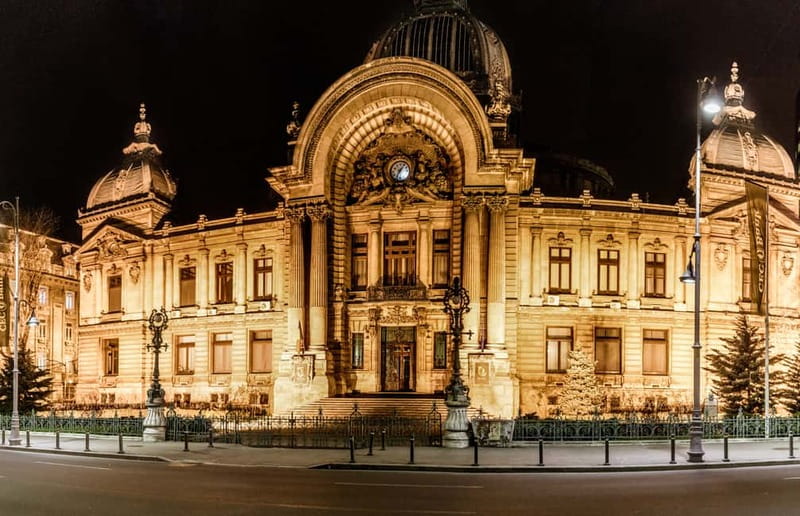
I also like the mix of big landmarks with small story details: the CEC Palace area, Revolution Square, the old Senate house, and the Atheneum/Italian Church cluster along the avenue. One drawback to plan for: the start is at a specific office address (Bulevardul Natiunile Unite 4, Bloc 107/A), and it can be hard to spot, so arrive a few minutes early near Piata Natiunile Unite.
In This Review
- Key things you’ll notice on this tour
- Italian emigration in Bucharest: what this 2-hour walk is really doing
- Starting at Transylvanian Wonders and getting oriented near Piata Natiunile Unite
- Crossing the Dambovita River: the best way to start a city story
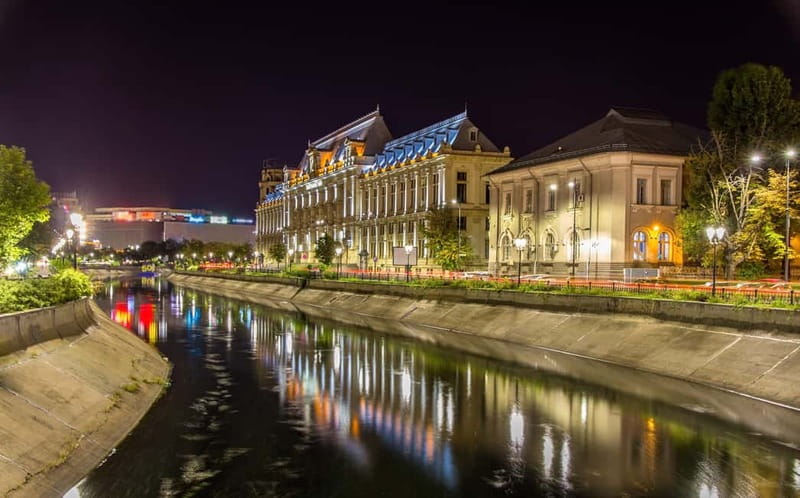
- Palace of Justice and the riverfront: law, gravity, and city power
- CEC bank building, Revolution Square, and the old Senate house
- Victory Road on foot: where the Italian footprint becomes visible
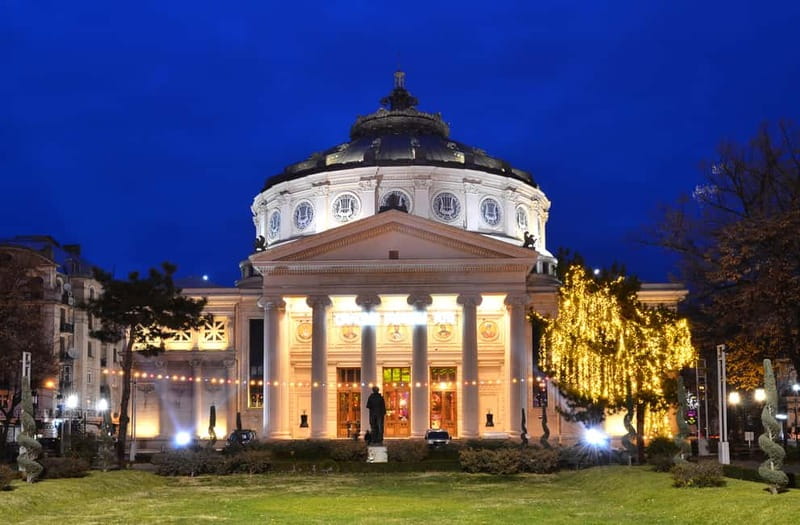
- Atheneum and the culture signal
- Italian Church: the easiest clue to miss
- Ending back in the Old Town: why the wrap-up matters
- Price and value: is $34 for a themed walking tour fair?
- Practical tips: shoes, rules, and the Italian-language reality
- What to bring
- What not to do
- Language
- Who should skip
- Should you book this Italian Bucharest walking tour?
- FAQ
- How long is the Bucharest: The Italian emigration in Romania walking tour?
- Where do I meet the guide?
- What language is the tour guide in?
- What should I bring?
- Is audio recording allowed?
- Can I cancel for a refund or pay later?
Key things you’ll notice on this tour
- Victory Road: the walk that turns architecture into a family-tree story of Italian influence
- Dambovita River sights: power and planning along the river banks right from the start
- CEC Palace and Revolution Square: institutions that shaped the city’s modern identity
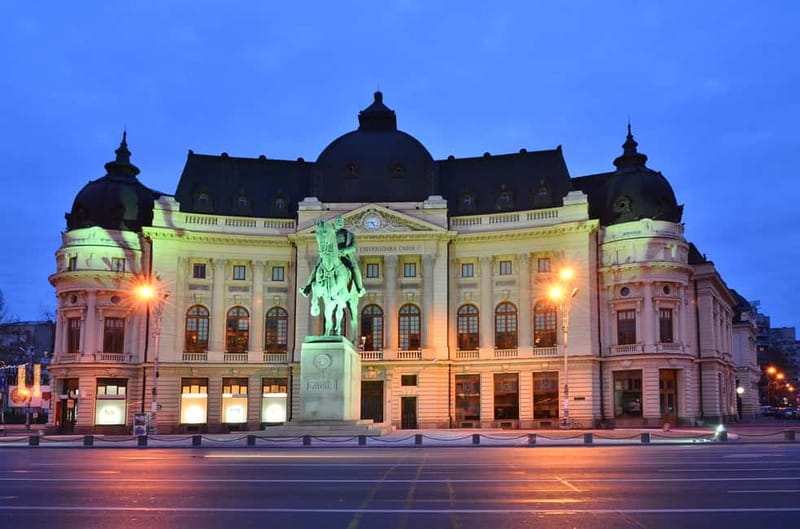
- National History Museum and Atheneum area: culture stops that make the neighborhood feel alive
- Italian Church: the religious footprint that’s easy to miss without a guide
- Old Town wrap-up: a quick recap to tie the immigration theme to what you just saw
Italian emigration in Bucharest: what this 2-hour walk is really doing
This is not a random “see the monuments” stroll. The point is to follow the traces of Italian immigration in Bucharest—especially from the late 18th century into the early 19th century—and see how those communities helped shape parts of the city you’ll otherwise treat like background.
Think of it like a map for your eyes. Once someone connects a street name, a landmark, and an architectural style to a wave of people moving through history, you start noticing patterns: which buildings feel formal, which areas feel cultural, and where “official” Bucharest meets “everyday” Bucharest.
You’ll also get the added bonus of walking through some of Bucharest’s most recognizable structures: the Palace of Justice on the Dambovita River, Revolution Square, and the long, famous stretch known as Victory Road. The guide’s job is to make those stops feel tied to a single human story instead of separate photo ops.
Starting at Transylvanian Wonders and getting oriented near Piata Natiunile Unite
The tour begins at the Transylvanian Wonders office at Bulevardul Natiunile Unite 4, Bloc 107/A, with the practical note that you meet by Piata Natiunile Unite, about 100 meters from the office.
This part matters more than it seems. When you’re walking 2 hours, you don’t have time to wander trying to find the exact spot. One tricky lesson from real-world experience: the office location isn’t always obvious, so plan to arrive early, check your map twice, and give yourself a buffer.
If you like having a plan, do this: stand near Piata Natiunile Unite first, then walk the last 100 meters to the address. That way you’re not trying to hunt down a street-level office while you’re already late.
Crossing the Dambovita River: the best way to start a city story
Right after meeting, you cross the Dambovita River and step into what the tour describes as a surreal-feeling world along Victory Road.
I like this setup because the river works like a mental divider. On one side you’re orienting yourself to Bucharest’s formal, civic power. On the other side, the avenue becomes the stage where architecture and communities line up in a way that’s easier to read on foot.
You’ll feel this change quickly, and it also helps with pacing. In two hours, you want the guide to point you toward the right “lens” early—and this route does that by moving you from the riverfront into the heart of the historic corridor.
Palace of Justice and the riverfront: law, gravity, and city power
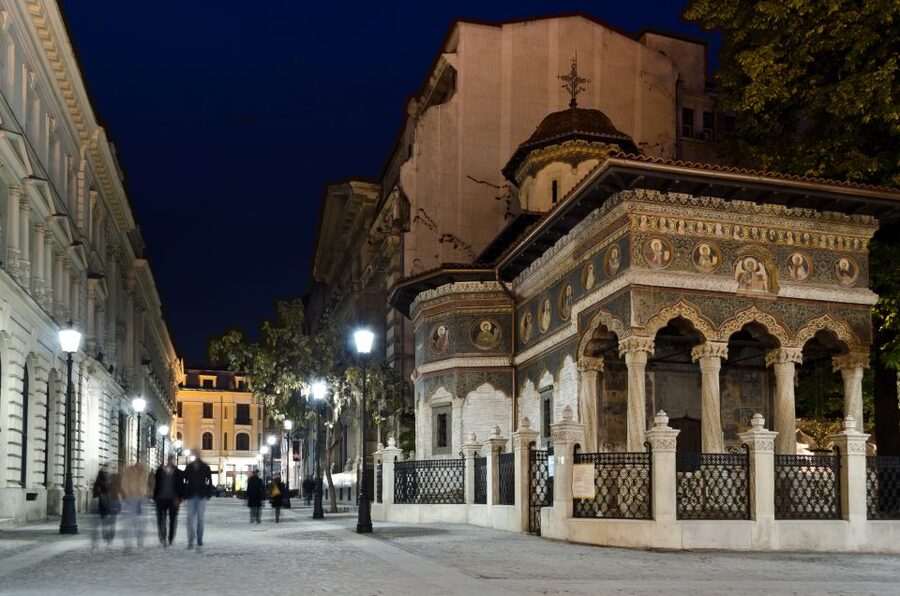
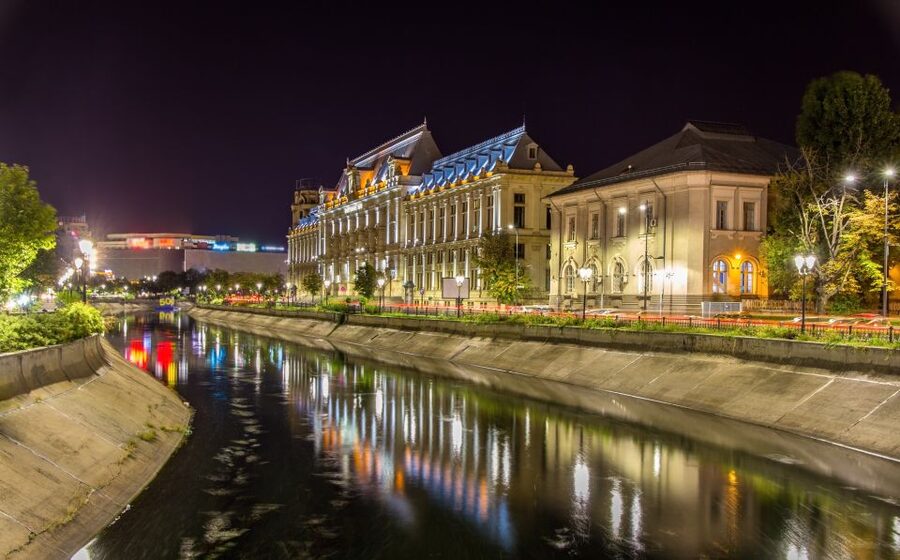
One of the tour’s highlight points is the Palace of Justice on the banks of the Dambovita. Even if you’ve seen major European courthouse buildings before, this stop tends to work because it’s so grounded in its setting.
Here’s what you should look for: the courthouse is not just a dramatic facade. It represents the official side of the city—institutions that tend to grow alongside migrations, trade, and reforms. When the guide connects the immigration theme to why certain areas developed, the Palace of Justice stop stops being a photo background and turns into a clue.
Also, since this is an outdoor walking tour, you can enjoy it in a simple way: watch how the river and the building relate, then let the guide place the landmark into the wider city story.
CEC bank building, Revolution Square, and the old Senate house
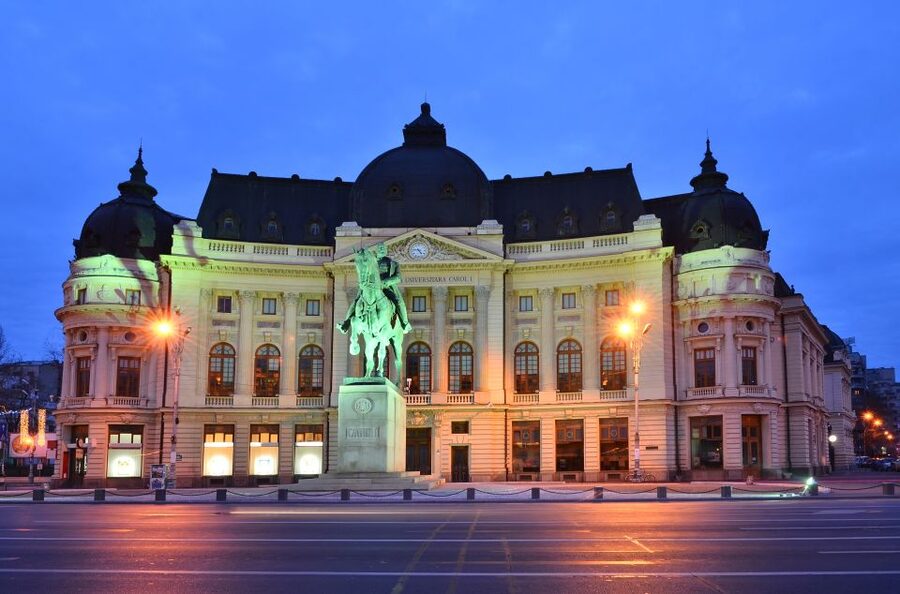
As you move through the central sights, you’ll hit a cluster of places that feel like Bucharest’s “decision makers.” The tour includes:
- CEC bank building
- Revolution Square
- The old Senate house
And you also pass by the National History Museum and the CEC Palace area along the way.
What these stops mean for you is perspective. Immigration isn’t only about people settling—it’s also about systems. Banks, government buildings, and cultural institutions are the infrastructure of a growing city. By weaving these landmarks into a single walking narrative, the tour helps you understand how a community’s influence can show up in built form and civic life.
A small practical note: these are “must-see” zones. That means you’ll likely want to keep your phone ready for quick shots, but don’t let camera time steal from what the guide is explaining. The tour is only 2 hours, so the value is in the connections, not in long stands around statues.
Victory Road on foot: where the Italian footprint becomes visible
The heart of the tour is Victory Road, where the Italian migration story and the city’s architecture start to line up in your mind.
Along this avenue, you’ll pass major cultural and religious landmarks, including:
- Atheneum
- Italian Church
- National History Museum
- Other points tied to how Italians left a mark on Bucharest’s development
This is the part where I think the tour earns its name. Victory Road gives you a long, legible route—great for walking, great for spotting patterns, and great for making sense of a theme.
Here’s how to get more out of it: as you walk, ask yourself what kind of buildings you’re seeing. Is this civic Bucharest? Cultural Bucharest? Religious Bucharest? When you sort the stops in your head, the immigration story becomes more tangible than just a timeline.
Atheneum and the culture signal
The Atheneum stop fits because it shifts the mood from government power to public culture. If the guide explains how certain groups helped shape the city’s development, the Atheneum is an example of what that kind of influence can look like: institutions that turn “people” into “public life.”
Italian Church: the easiest clue to miss
Religious landmarks often catch you off guard because they don’t always look like what you expect from a different country. With a guide, though, the Italian Church becomes more than an exterior. It becomes proof—something you can point to—that communities planted roots strong enough to build places for worship and identity.
Ending back in the Old Town: why the wrap-up matters
The tour ends in Bucharest’s old town, with a quick recap of the historic importance of Italian immigration in both Bucharest and Romania.
That wrap-up is more useful than it sounds. When you only walk 2 hours, your brain can blur a route of landmarks into a list. A recap helps you leave with a mental “map,” not just photos.
I like this structure because it doesn’t end abruptly. It gives you a chance to connect the earlier civic stops—riverfront power, banks, squares, legislative buildings—to the later avenue sights like the Atheneum and the Italian Church. Then the old town finish helps you feel like you returned to the city’s deeper layers, not just the modern headline sights.
Price and value: is $34 for a themed walking tour fair?
At $34 per person for about 2 hours, this is priced like a focused walking experience rather than a long excursion. Whether it’s a bargain depends on what you want from Bucharest.
If you want:
- architecture context,
- a clear historical theme,
- and a route that uses walking to connect sites,
…then the price-to-time ratio makes sense. You’re paying for a professional local guide to link places that would otherwise feel disconnected.
If you mainly want:
- freeform wandering,
- deep museum time,
- or a long list of stops without much explanation,
…then this may feel short, because the tour is built around a tight theme and a tight duration.
One more value angle: it’s described as a professional local guide experience, and a guide named Daniel has been noted for being punctual, friendly, and able to answer questions. In at least one case, Daniel also arranged to start the tour for a specific group from a hotel—so the guide side can be flexible when possible.
Practical tips: shoes, rules, and the Italian-language reality
A themed walk only works if you’re comfortable. Here’s what you should plan around based on the tour’s rules and what you’ll need day-to-day:
What to bring
- Comfortable shoes (this is a walking tour)
- Weather-appropriate clothing (it’s outdoors)
What not to do
- No alcohol and drugs
- No audio recording
- No bare feet
Language
The live guide is Italian. If you don’t read Italian well, I’d still book if you’re comfortable using body language and listening for key facts, but don’t expect full translation coverage unless you can confirm that directly with the operator.
Who should skip
It’s not suitable for people over 95 years.
Should you book this Italian Bucharest walking tour?
I’d book it if you want Bucharest to feel more human. The Italian emigration theme gives you something solid to look for as you walk: why certain institutions exist where they do, how culture shows up in landmark buildings, and how a community’s presence can become part of the city’s identity.
I’d hesitate if you:
- hate structured walking routes,
- need a lot of museum time,
- or are easily thrown off by finding small offices. In that case, plan extra time to locate the meeting spot near Piata Natiunile Unite.
If you’re set on it, arrive early, wear good shoes, and lean into the guide’s connections. This tour works best when you treat the buildings like evidence in a story.
FAQ
How long is the Bucharest: The Italian emigration in Romania walking tour?
It lasts about 2 hours.
Where do I meet the guide?
Meet at the Transylvanian Wonders office at Bulevardul Natiunile Unite 4, Bloc 107/A, and the meeting area is about 100 meters from Piata Natiunile Unite.
What language is the tour guide in?
The live tour guide language is Italian.
What should I bring?
Bring comfortable shoes and weather-appropriate clothing.
Is audio recording allowed?
No, audio recording is not allowed.
Can I cancel for a refund or pay later?
Yes. You can cancel up to 24 hours in advance for a full refund, and you can reserve now and pay later.